
The Works of the Father and the Prayer of Sinners
Augustine of Hippo Sermon
The Works of the Father and the Prayer of Sinners
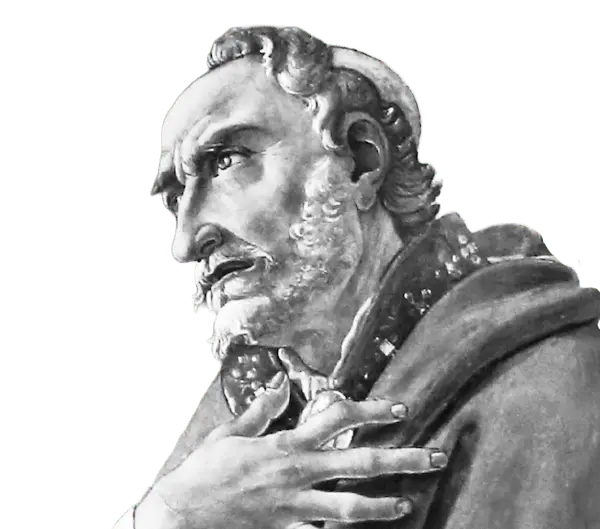
Augustine of Hippo Sermon
The Works of the Father and the Prayer of Sinners
Christ's Relationship to the Father
1. The Lord Jesus, as we heard when the Holy Gospel was being read, opened the eyes of a man who was born blind. Brothers, if we consider our hereditary punishment, the whole world is blind. Therefore Christ the Enlightener came, because the devil had been the Blinder. The devil made all people to be born blind when he led the first human into sin. Let them run to the Enlightener; let them run, believe, and receive the clay made of saliva. The Word is like saliva; the Flesh is the earth. Let them wash their face in the pool of Siloam.
It was the Evangelist's place to explain to us what Siloam means, and he said, "which is by interpretation, Sent" (John 9:7). Who is this Sent One but He who in this very passage said, "I have come to do the works of Him who sent Me" (John 9:4)? There is Siloam—wash your face, be baptized, that you may be enlightened and that you who before could not see may now see.
2. First open your eyes to what is said: "I have come," He says, "to do the works of Him who sent Me." Here at once the Arian stands forth and says, "Here you see that Christ did not do His own works but the Father's who sent Him." Would he say this if he could see—that is, if he had washed his face in the One who was sent, in Siloam? What do you say? "Look," he says, "Christ Himself said it." What did He say? "I have come to do the works of Him who sent Me." Are they not, then, His own? No.
What then is that which Siloam Himself says, the Sent One Himself, the Son Himself, the Only-Begotten Himself, whom you accuse of being inferior? What is it that He says? "All things that the Father has are Mine" (John 16:15). You say that He did another's works because He said, "I must do the works of Him who sent Me"—as if to say, "not My own works but 'the works of Him who sent Me.'" But I say that the Father had the things of another. I'm speaking according to your own principles. Why would you claim that Christ said, "I have come to do His works," meaning "not My own works but those of Him who sent Me"?
3. I ask You, O Lord Christ, resolve this difficulty; end this dispute. "All things," He says, "that the Father has are Mine" (John 16:15). Are they then not the Father's if they are Yours? For He doesn't say, "All things that the Father has, He has given to Me," although if He had said even this, He would have shown His equality. But the difficulty is that He said, "All things that the Father has are Mine." If you understand it correctly: All things that the Father has are the Son's; all things that the Son has are the Father's. Hear Him in another place: "All Mine are Yours, and Yours are Mine" (John 17:10).
The question is settled regarding the things the Father and Son have: they have them in unity; do not introduce division. What He calls the works of the Father are His own works, for "Yours are Mine," for He speaks of the works of that Father to whom He said, "All Mine are Yours, and Yours are Mine." So then, "My works are Yours, and Your works are Mine."
"For whatever the Father does"—the Lord has said it, the Only-Begotten has said it, the Son has said it, the Truth has said it. What has He said? "Whatever the Father does, the Son also does in like manner" (John 5:19). Powerful expression! Powerful truth! Powerful equality! "Whatever the Father does, these the Son also does." Would it be enough to say, "Whatever the Father does, these the Son also does"? It's not enough; I add, "in like manner." Why do I add "in like manner"? Because those who don't understand and who walk with eyes not yet opened are prone to say, "The Father does them by way of command, the Son by way of obedience, therefore not in like manner." But if "in like manner," as the One does, so does the Other; so what things the One does, the same does the Other.
4. "But," he says, "the Father commands so that the Son may execute." Your thinking is indeed of the flesh, but without prejudice to the truth, I'll grant this to you. Look, the Father commands and the Son obeys. Is the Son therefore not of the same Nature because one commands and the other obeys? Give me two human beings, father and son. They are two human beings: the one who commands is human; the one who obeys is human. The one who commands and the one who obeys have one and the same nature.
Doesn't the one who commands beget a son of his own nature? Does the one who obeys, by obeying, lose his nature? Now for the moment, as you take these two humans, father commanding and son obeying, consider the Father and Son as God and God. But the first two together are two humans, while the Latter together is but One God. This is a divine mystery.
Meanwhile, if you want me to acknowledge the obedience, first acknowledge with me the same Nature. The Father begot what He Himself is. If the Father begot something different from what He Himself is, He did not beget a true Son. The Father says to the Son, "From the womb before the daystar, I begot You" (Psalm 110:3). What does "before the daystar" mean? The daystar signifies times. So then before times, before all that is called "before," before all that is not, or before all that is.
For the Gospel does not say, "In the beginning God made the Word," as it says, "In the beginning God made the heaven and the earth" (Genesis 1:1). Nor does it say, "In the beginning the Word was born," or, "In the beginning God begot the Word." But what does it say? "He was, He was, He was" (John 1:1). You hear "He was"—believe it. "In the beginning was the Word, and the Word was with God, and the Word was God" (John 1:1). So often you hear "was"—don't look for time, because He always "was." He then who always was and was always with the Son, for God is able to beget without your help, said to the Son, "From the womb before the daystar I begot You."
What does "from the womb" mean? Did God have a womb? Are we to imagine that God had physical organs? God forbid! Why then did He say, "From the womb," if not to make us understand that He begot Him from His own Substance? So then from the womb came what was the same as the One who begot. For if what was begotten was one thing, and what came from the womb was another, it would be a monstrosity, not a Son.
5. Therefore let the Son do the works of Him who sent Him, and let the Father also do the works of the Son. "At least," you say, "the Father wills, the Son executes." Look, I show you that the Son wills and the Father executes. Do you ask, "Where do you show this?" I show it at once. "Father, I will" (John 17:24). Now here, if I wanted to quibble, I could say, "Look, the Son commands and the Father executes." What do You will? "That where I am, they may be also with Me" (John 17:24).
We have escaped—we shall be there, where He is; we shall be there—we have escaped. Who can undo the "I will" of the Almighty? You hear the will of His power; now hear the power of His will. "As the Father," He says, "raises the dead and gives them life, even so the Son gives life to whom He will" (John 5:21). "To whom He will." Don't say, "The Son gives life to those whom the Father commands Him to give life." "He gives life to whom He will." So then to whom the Father wills and to whom the Son wills—because where there is One Power, there is One Will.
Let us then with a heart no longer blind hold firmly that the Nature of the Father and the Son is One and the Same, because the Father is truly Father, the Son is truly Son. What the Father is, that He begot, because the Begotten was not inferior.
6. There is something in the words of that man who was blind that may cause confusion and perhaps make many who don't understand them correctly despair. For among the rest of his words, this same man whose eyes were opened said, "We know that God does not hear sinners" (John 9:31). What shall we do if God doesn't hear sinners? Dare we pray to God if He doesn't hear sinners?
Give me someone who may pray: here is One to hear. Give me someone who may pray; examine the entire human race from the imperfect to the perfect. Move up from spring to summer, as we just sang: "You have made summer and spring" (Psalm 74:17). That is, "You have made those who are already spiritual and those who are still fleshly," for the Son Himself says, "Your eyes have seen my imperfect being" (Psalm 139:16). That which is imperfect in My Body, Your eyes have seen.
And what then? Do those who are imperfect have hope? Absolutely they do. Hear what follows: "And in Your book all shall be written" (Psalm 139:16). But perhaps, brothers, the spiritual pray and are heard because they are not sinners? What then must the fleshly do? What must they do? Should they perish? Should they not pray to God? God forbid!
Consider that tax collector in the Gospel. Come, tax collector, stand forth, show your hope, so that the weak may not lose hope. The tax collector went up with the Pharisee to pray, and with face down upon the ground, standing at a distance, beating his chest, he said, "Lord, be merciful to me, a sinner" (Luke 18:13). And he went down justified rather than the Pharisee. Was he speaking truth or falsehood when he said, "Be merciful to me, a sinner"? If he spoke truth, he was a sinner, yet he was heard and justified.
What then do we make of what you said—you whose eyes the Lord opened—"We know that God does not hear sinners"? Look, God does hear sinners. But wash your inner face; let that be done in your heart which has been done for your eyes, and you will see that God does hear sinners. Your imagination has deceived you. There's still something for God to do for you.
We see that this man was cast out of the synagogue. Jesus heard about it, came to him, and said to him, "Do you believe in the Son of God?" And he said, "Who is He, Lord, that I might believe in Him?" (John 9:35-36). He saw, and yet did not see; he saw with his eyes, but not yet with his heart. The Lord said to him, "You have both seen Him" (that is, with your eyes), "and He who talks with you is He." The man fell down and worshiped Him (John 9:37-38). Then he washed the face of his heart.
7. Apply yourselves earnestly to prayer, you sinners. Confess your sins, pray that they may be blotted out, pray that they may be diminished, pray that as you increase, they may decrease. Yet do not despair, and sinners though you are, pray. For who has not sinned?
Begin with the priests. To the priests it is said, "First offer sacrifices for your own sins, and then for the people" (Hebrews 7:27). The sacrifices convicted the priests that if anyone should call himself righteous and without sin, it could be answered, "I don't look at what you say but at what you offer. Your own sacrifice convicts you. Why do you offer for your own sins if you have no sins? Are you lying to God in your sacrifice?"
But perhaps the priests of the ancient people were sinners, while those of the new people are not sinners. In truth, brothers, because God has so willed it, I am His priest, and I am a sinner. With you I beat my chest, with you I ask for pardon, with you I hope that God will be merciful.
But perhaps the holy Apostles, those first and highest leaders of the flock, shepherds, members of the Shepherd—perhaps they had no sin? Yes, indeed, even they had sin; they are not angry at this, for they confess it. I would not dare to say otherwise. First, hear the Lord Himself saying to the Apostles, "Pray in this way" (Matthew 6:9). As those other priests were convicted by their sacrifices, so these are convicted by prayer. And among the other things He commanded them to pray for, He established this also: "Forgive us our debts, as we also forgive our debtors" (Matthew 6:12).
What do the Apostles say? Every day they pray for their debts to be forgiven. They come in as debtors, they go out absolved, and they return as debtors to prayer. This life is not without sin, so that whenever prayer is made, sins are forgiven.
8. But what shall I say? Perhaps when they learned the prayer, they were still weak. Someone might perhaps say this: when the Lord Jesus taught them that prayer, they were still infants, weak, fleshly. They were not yet spiritual, who have no sin. What then, brothers? When they became spiritual, did they stop praying? Then Christ should have said, "Pray in this way now," and should have given them, when spiritual, another prayer. It's one and the same prayer. He who gave it is One and the Same. Use it, then, in prayer in the Church.
But we'll settle all controversy. When you say the Holy Apostles were spiritual, until the time of the Lord's Passion they were fleshly—this you must admit. The truth is, as He was hanging on the cross, they were alarmed, and the Apostles despaired when the thief believed (Luke 23:40-43). Peter dared to follow when the Lord was led to His suffering. He dared to follow, but when he came to the house, he grew tired in the courtyard and stood by the fire, where he was cold—he stood by the fire, frozen with chilling fear.
Being questioned by the servant girl, he denied Christ once. Being questioned a second time, he denied Him. Being questioned a third time, he denied Him (John 18:17, 25-27). Thank God the questioning stopped—if it had continued, the denial would have been repeated.
So then after Christ rose again, He strengthened them; then they became spiritual. At that time did they have no sin? The Apostles, now spiritual, wrote spiritual letters and sent them to the Churches. "They had no sin," you say. I don't believe you; I ask them themselves.
Tell us, O holy Apostles, after the Lord rose again and strengthened you with the Holy Spirit sent from heaven, did you cease to have sin? Tell us, please. Let us hear, so that sinners may not despair, so that they may not stop praying to God because they are not without sin. Tell us. One of them speaks. And who? The one whom the Lord loved the most, who lay on the Lord's breast and drank in the mysteries of the kingdom of heaven, which he was to pour forth again.
I ask him: "Do you have sin or not?" He answers and says, "If we say that we have no sin, we deceive ourselves, and the truth is not in us" (1 John 1:8). Now it is the same John who said, "In the beginning was the Word, and the Word was with God, and the Word was God" (John 1:1). See what heights he had reached, that he could attain to the Word! Such a one, and so great, who like an eagle soared above the clouds, who in the clear serenity of his mind saw, "In the beginning was the Word"—he has said, "If we say that we have no sin, we deceive ourselves, and the truth is not in us. But if we confess our sins, He is faithful and just to forgive us our sins and to cleanse us from all unrighteousness" (1 John 1:8-9). Therefore, pray.