
Three Responses to Christ's Call
Augustine of Hippo Sermon
Three Responses to Christ's Call
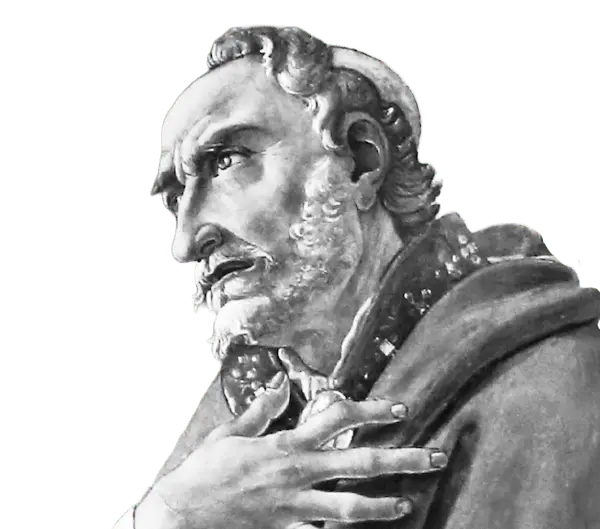
Augustine of Hippo Sermon
Three Responses to Christ's Call
Following Christ Without Looking Back
1. Listen to what the Lord has given me to say about today's Gospel reading. We read that the Lord Jesus responded differently to three people: one man offered to follow Him and was turned away; another didn't dare to offer himself, and Jesus encouraged him; a third wanted to delay, and Jesus rebuked him.
Consider the first man who said, "Lord, I will follow You wherever You go" (Luke 9:57). What could be more eager, more active, more ready, more appropriately disposed to such a great good as "following the Lord wherever He would go" ? You might wonder at this, asking, "How is it that someone so ready found no favor with the Good Master and Lord Jesus Christ, though He was inviting disciples to give them the kingdom of Heaven?"
Since Jesus was the kind of Master who could foresee things to come, we understand, brothers and sisters, that if this man had followed Christ, he would certainly have "sought his own interests, not the interests of Jesus Christ" (Philippians 2:21). For Jesus Himself has said, "Not everyone who says to Me, 'Lord, Lord,' shall enter the kingdom of heaven" (Matthew 7:21). This man was like that, though he didn't know himself as well as the Physician knew him. If he saw himself now as a pretender, if he had known himself at that time to be full of duplicity and deceit, then he didn't realize who he was talking to.
Jesus is the one of whom the Evangelist says, "He had no need for anyone to testify about man, for He knew what was in man" (John 2:25). What did Jesus answer him? "Foxes have holes and birds of the air have nests, but the Son of Man has nowhere to lay His head" (Luke 9:58). Where doesn't He have a place? In your faith. For in your heart, foxes have holes—you are full of deceit; in your heart, birds of the air have nests—you are full of pride. Full of deceit and self-importance as you are, you cannot follow me. How can a deceitful person follow Simplicity itself?
2. Then immediately to another person who was silent, who said nothing and promised nothing, Jesus says, "Follow Me" (Luke 9:59). Jesus saw as much evil in the first man as He saw good in this one. "Follow Me," You say to someone who has no desire for it. Here is a person who seems completely ready— "I will follow You wherever You go" —yet You say to someone else who shows no such desire, "Follow Me."
"I reject the first," He says, "because I see in him holes and nests." But why do You urge this other person, whom You challenge to follow You, when he makes excuses? You even press him, and he doesn't come; You exhort him, and he doesn't follow.
For what does he say? "I will go first to bury my father" (Luke 9:59). The faith in his heart was evident to the Lord, but his sense of duty made him hesitate. But when the Lord Christ is preparing people for the Gospel, He will not allow any excuse from natural and temporal affections to interfere.
It's true that God's law prescribes these duties, and the Lord Himself rebuked the Jews because they violated this very commandment of God. The Apostle Paul stated in his letter, "This is the first commandment with promise" (Ephesians 6:2). Which one? "Honor your father and your mother." God certainly spoke this.
This young man, then, wanted to obey God and bury his father, but each matter must be considered according to its proper time and context. A father must be honored, but God must be obeyed. We must love the one who begot us, but we must prefer the One who created us.
"I am calling you," Jesus says, "to My Gospel; I need you for another work. This is a greater work than what you wish to do. 'Let the dead bury their dead'" (Luke 9:60). Your father is dead; there are other dead people to bury the dead.
Who are the dead who bury the dead? Can a dead man be buried by dead men? How can they prepare him for burial if they're dead? How can they carry him if they're dead? How can they mourn him if they're dead? Yet they do prepare him, carry him, and mourn him—and they are dead because they are unbelievers.
What is written in the Song of Songs teaches us, when the Church says, "Set love in order within me" (Song of Solomon 2:4). What does "Set love in order within me" mean? Establish the proper priorities and give to each what is due. Don't put what should come first below what should come after. Love your parents, but prefer God to them.
Consider the mother of the Maccabees, who said, "My sons, I don't know how you appeared in my womb" (2 Maccabees 7:22). "I could conceive you, I could give you birth, but I could not form you. Listen to Him, therefore; prefer Him to me. Don't worry that I must remain here without you." This is what she taught her children, and this is what the Lord Jesus Christ taught the one to whom He said, "Follow Me."
3. Now see how another disciple presented himself, to whom no one had said anything. He said, "Lord, I will follow You, but let me first go and bid farewell to those at my house" (Luke 9:61). I think he meant, "Let me tell my friends, lest they look for me as usual." And the Lord said, "No one, having put his hand to the plow, and looking back, is fit for the kingdom of God" (Luke 9:62). The East calls you, and you're looking toward the west.
In this passage we learn that the Lord chooses whom He will. But He chooses them, as the Apostle says, both according to His own grace and according to their righteousness. For these are the Apostle's words: "Consider," he says, "what Elijah says: 'Lord, they have killed Your prophets and torn down Your altars, and I alone am left, and they seek my life.' But what does the divine response say to him? 'I have reserved for Myself seven thousand men who have not bowed the knee to Baal'" (Romans 11:3-4).
You think you're the only servant working faithfully. There are others, too, who fear Me, and they are not few. For I have "seven thousand" there. Then Paul added, "Even so then, at this present time also" (Romans 11:5). For some Jews believed, though most were rejected—like the man who had holes for foxes in his heart.
"Even so then," he says, "at this present time also there is a remnant according to the election of grace" (Romans 11:5). That is, there is the same Christ even now as then, who also said to Elijah, "I have reserved for Myself." What does "I have reserved for Myself" mean? I have chosen them, because I saw their hearts—that they trusted in Me and not in themselves, nor in Baal. They remain unchanged; they are as I made them.
And you who are speaking, unless you had placed your trust in Me, where would you be? Unless you were filled with My grace, wouldn't you too be bowing your knee to Baal? But you are filled with My grace because you haven't put your trust at all in your own strength, but entirely in My grace. Therefore, don't boast as if you have no fellow servants in your service. There are others whom I have chosen, as I have chosen you—those who put their trust in Me.
As the Apostle says, "Even now also a remnant is saved through the election of grace" (Romans 11:5).
4. Beware, O Christian, beware of pride. Though you may follow the saints, always attribute it entirely to grace. The fact that there is any "remnant" in you has been accomplished by God's grace, not by your own merits. The prophet Isaiah, having this remnant in view, had already said, "Unless the LORD of hosts had left us a seed, we would have become like Sodom, and we would have been made like Gomorrah" (Isaiah 1:9).
"So then," says the Apostle, "at this present time also a remnant according to the election of grace has been preserved. But if it is by grace, then it is no longer of works" (that is, don't be lifted up anymore by your own merits); "otherwise grace is no longer grace" (Romans 11:5-6).
For if you build on your own work, then a reward is given to you as something owed, not as grace freely bestowed. But if it is grace, it is given freely. I ask you then, O sinner, "Do you believe in Christ?" You say, "I do believe." "What do you believe? That all your sins may be forgiven you freely through Him?" Then you have what you have believed. O grace freely given!
And you, righteous person, what do you believe? That you cannot maintain your righteousness without God? Then ascribe your righteousness entirely to His mercy; but your sinfulness, attribute to your own wrongdoing. Be your own accuser, and He will be your gracious Deliverer. Every crime, wickedness, or sin comes from our own negligence, and all virtue and holiness come from God's gracious goodness.
Let us turn to the Lord.