
Understanding Christ and Living Worthy of Him
Augustine of Hippo Sermon
Understanding Christ and Living Worthy of Him
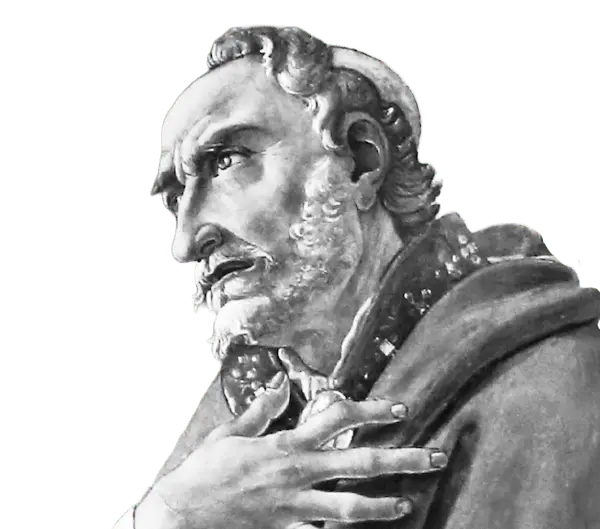
Augustine of Hippo Sermon
Understanding Christ and Living Worthy of Him
The Mystery of Christ and Our Response
1. When the Jews were asked (as we just heard in the Gospel reading) how our Lord Jesus Christ, whom David himself called his Lord, could be David's Son, they were unable to answer. For what they saw in the Lord, that they knew. He appeared to them as the Son of man, but as the Son of God He was hidden from them. This is why they believed they could overcome Him, and why they mocked Him as He hung upon the cross, saying, "If He is the Son of God, let Him come down from the cross, and we will believe in Him" (Matthew 27:42).
They saw one aspect of who He was but didn't know the other, "for had they known, they would not have crucified the Lord of glory" (1 Corinthians 2:8). Yet they knew that the Christ was to be the Son of David. Even now they still hope for His coming. They don't recognize that He has already come, but their ignorance is willful. For even if they failed to acknowledge Him on the cross, they should have recognized Him on His throne.
In whose name are all nations called and blessed, if not in the name of Him whom they refuse to believe was the Christ? For this Son of David, who is "of the seed of David according to the flesh" (Romans 1:3), is also the Son of Abraham. Now if it was said to Abraham, "In your seed all the nations shall be blessed" (Genesis 22:18), and they see now that in our Christ all nations are blessed, why do they wait for what has already come, and not fear what is yet to come?
Our Lord Jesus Christ, using a prophetic testimony to assert His authority, called Himself "the Stone" . Such a stone "that whoever falls on it will be broken; but on whomever it falls, it will grind him to powder" (Matthew 21:44). When this stone is stumbled against, it lies low; by lying low, it "breaks" the one who stumbles against it; when lifted on high, by its coming down it "grinds" the proud "to powder."
Already the Jews have been "broken" by that stumbling. It remains for them to be "ground to powder" by His glorious return—unless they recognize Him while they are still alive, so they won't die. For God is patient, inviting them day by day to faith.
2. When the Jews couldn't answer the Lord's question asking "whose Son they said Christ was," and they answered, "the Son of David," He continued with another question: "How then does David in the Spirit call Him 'Lord,' saying: 'The LORD said to my Lord, "Sit at My right hand, till I make Your enemies Your footstool"'? If David then calls Him 'Lord,' how is He his Son?" (Matthew 22:43-45).
He didn't say, "He is not his Son," but "How is He his Son?" When He says "How," it's a word not of denial, but of inquiry—as if He were saying to them, "You say correctly that Christ is David's Son, but David himself calls Him Lord; how can the one he calls Lord be his son?"
Had the Jews been instructed in the Christian faith that we hold, had they not closed their hearts against the Gospel, had they wanted spiritual life within them, they would have answered this question as instructed in the Church's faith and said, "Because in the beginning was the Word, and the Word was with God, and the Word was God" (John 1:1). See how He is David's Lord. But because "the Word became flesh and dwelt among us" (John 1:14), see how He is David's Son.
But being ignorant, they were silent. When they closed their mouths, they also failed to open their ears, so that what they couldn't answer when questioned, they might learn through instruction.
3. It's a profound mystery to understand how He is both David's Son and David's Lord—how one Person is both human and God, how in human form He is less than the Father, in divine form equal with the Father. How on the one hand He says, "The Father is greater than I" (John 14:28), and on the other, "I and My Father are one" (John 10:30).
Since this is such a great mystery, our conduct must be shaped so we can comprehend it. It remains closed to the unworthy but is opened to those who are ready for it. We don't knock at the Lord's door with stones, clubs, fists, or heels. It's our life that knocks; it's to our life that the door opens. The seeking is with the heart, the asking is with the heart, the knocking is with the heart, and the opening is to the heart.
Now the heart that asks, knocks, and seeks rightly must be godly. It must first love God for His own sake (for this is godliness), not expecting any reward from Him other than God Himself. For there is nothing better than God. What precious thing can someone ask from God when they hold God Himself in low regard?
When God gives earthly blessings and you rejoice, you lover of earth who have yourself become earth, how much more should you rejoice when He gives you Himself, the maker of heaven and earth? So then God must be loved for His own sake. The devil, not knowing what was in Job's heart, brought this as a serious accusation against him, saying, "Does Job fear God for nothing?" (Job 1:9).
4. If the adversary brought this charge, we should fear having it brought against us. We deal with a very slanderous accuser. If he tries to invent what isn't true, how much more will he point out what actually is true? Nevertheless, let's rejoice that we have a Judge who cannot be deceived by our accuser.
If we had a human judge, the enemy might invent whatever he wanted. For no one is more subtle at invention than the devil. He's the one who even now fabricates all false accusations against the saints. He knows his accusations have no impact with God, so he scatters them among people.
But what does this accomplish, when the Apostle says, "Our boasting is this: the testimony of our conscience" (2 Corinthians 1:12)? Yet don't think he doesn't spread these false charges with cunning. He knows what harm he'll cause if the watchfulness of faith doesn't resist him.
He spreads evil charges against good people so the weak will think there are no good people. They give themselves up to be carried away by their desires, saying to themselves, "Who actually keeps God's commandments? Who maintains purity?" Thinking no one does, they become that "no one" themselves.
This is the devil's strategy. But Job was such a man that no charges could be invented against him; his life was too well-known and evident. But because he had great wealth, the devil brought the accusation that if there was any fault, it would lie in Job's heart and not appear in his behavior. Job worshiped God and gave to the poor, but with what motive he did this, no one knew—not even the devil himself, but God knew.
God testifies to His servant; the devil slanders God's servant. Job is permitted to be tested, he is proven faithful, the devil is confounded. Job is found to worship God for His own sake—to love Him for His own sake, not because God gave him anything, but because God didn't take away Himself. Job said, "The LORD gave, and the LORD has taken away; as it seemed good to the LORD, so it was done. Blessed be the name of the LORD" (Job 1:21). The fire of temptation approached him, but it found him gold, not straw. It burned away the impurities but didn't reduce him to ashes.
5. To understand the mystery of God—how Christ is both human and God—the heart must be cleansed. It's cleansed by good conduct, a pure life, chastity, holiness, love, and "faith working through love" (Galatians 5:6). All I'm speaking of is like a tree with its root in the heart. Actions only proceed from the heart's root. If you plant desire, thorns spring forth; if you plant love, good fruit grows.
After the question that the Lord proposed to the Jews, which they couldn't answer, He immediately spoke about good actions. He wanted to show why they were unworthy to understand what He had asked them. When those proud, wretched men couldn't answer, they should have said, "We don't know; Master, tell us." But no—they were speechless when questioned and didn't open their mouths to seek instruction.
So the Lord, referring to their pride, immediately said, "Beware of the scribes who love the best seats in the synagogues and the best places at feasts" (Mark 12:38-39). Not because they have these positions, but because they love them. In these words He accused their heart. No one can accuse the heart except the One who can see into it.
It's appropriate that God's servant who holds an honorable position in the Church should be given the first place. If it weren't given to him, it would be wrong for the person who refused to give it. Yet it doesn't benefit the one who receives it. It's right for Christian leaders to sit in prominent places in the congregation, so they may be distinguished by their seat and their office properly marked. But they shouldn't be proud of their position; instead, they should consider it a burden for which they must give an account.
But who knows whether they love this honor or not? This is a matter of the heart, which can have no judge but God. Now the Lord warned His disciples not to fall into this "leaven," as He calls it in another place: "Beware of the leaven of the Pharisees and the Sadducees" (Matthew 16:6). When they thought He said this because they had brought no bread, He answered, "Have you forgotten how many thousands were fed with the five loaves? Then they understood," it says, "that He called their doctrine leaven" (Matthew 16:9-12). They loved present temporal goods, but neither feared eternal evils nor loved eternal goods. With their hearts closed, they couldn't understand what the Lord asked them.
6. What must the Church of God do to understand what it has first obtained grace to believe? It must make the mind capable of receiving what will be given. God suspends the fulfillment of His promises but hasn't taken them away. He suspends them so we might stretch ourselves out; we stretch ourselves out so we may grow; we grow so we may reach them.
Look at the Apostle Paul stretching himself toward these suspended promises: "Not that I have already attained, or am already perfected; but I press on... forgetting those things which are behind and reaching forward to those things which are ahead, I press toward the goal for the prize of the upward call of God in Christ Jesus" (Philippians 3:12-14). He was running on earth; the prize hung suspended from heaven. He ran on earth, but in spirit he ascended. See him stretching himself out, straining for the suspended prize. "I press on," he says, "for the prize of the upward call of God in Christ Jesus."
7. We must journey onward, but for this we don't need to anoint our feet, look for transportation, or prepare a vessel. Run with the heart's affection, journey with love, ascend through charity. Why ask for directions? Hold fast to Christ, who by descending and ascending has made Himself the Way.
Do you wish to ascend? Hold onto Him who ascends. You can't rise by yourself. "For no one has ascended to heaven but He who came down from heaven, that is, the Son of Man who is in heaven" (John 3:13). If no one ascends except the One who descended—that is, the Son of Man, our Lord Jesus—do you wish to ascend too? Be a member of Him who alone has ascended.
For the Head, with all the members, is one Man. And since no one can ascend except the one who in His Body has been made a member of Him, it's fulfilled that "no one has ascended but He who descended." You can't say, "Why have Peter, Paul, and the apostles ascended, if no one has ascended but He who descended?"
The answer is: "What do Peter, Paul, and the rest of the apostles, and all the faithful hear from the Apostle? 'Now you are the body of Christ, and members individually' (1 Corinthians 12:27). If Christ's Body and His members are one unit, don't make two of them. For 'He left His father and mother and joined to His wife, that the two might become one flesh' (Ephesians 5:31). He left His Father, in that here He didn't show Himself as equal with the Father, but 'emptied Himself, taking the form of a servant' (Philippians 2:7). He also left His mother, the synagogue from which He was born according to the flesh. He was joined to His Wife, that is, to His Church.
In the place where Christ Himself cited this testimony, He showed that the marriage bond should not be dissolved: 'Have you not read,' He said, 'that He who made them at the beginning made them male and female, and said, "For this reason a man shall leave his father and mother and be joined to his wife, and the two shall become one flesh"? So then, they are no longer two but one flesh. Therefore what God has joined together, let not man separate' (Matthew 19:4-6). And what does 'They are no longer two but one flesh' mean? He goes on to say: 'So they are no longer two but one flesh.' Thus 'no one has ascended, but He who descended.'"
8. You should understand that the Bridegroom and the Bride are one according to Christ's flesh, not according to His divinity. According to His divinity, we cannot be what He is, since He is the Creator and we are the creature, He the Maker and we His work, He the Framer and we framed by Him. But in order that we might be one with Him, He graciously became our Head by taking from us flesh in which to die for us.
To know that this whole is one Christ, He said through Isaiah, "He has placed on me a crown as on a bridegroom, and adorned me with ornaments as a bride" (Isaiah 61:10). He is at once the Bridegroom in Himself as the Head, and the Bride in His body. "The two," He says, "shall become one flesh; so then they are no longer two, but one flesh."
9. Since we are His members, in order to understand this mystery as I've explained, brothers, let us live holy lives, let us love God for His own sake. The One who shows us the form of a servant during our pilgrimage reserves the form of God for those who reach their homeland. With the form of a servant He has established the way; with the form of God He has prepared the home.
Since it's difficult for us to comprehend this, but not difficult to believe it, as Isaiah says, "Unless you believe, you will not understand" (Isaiah 7:9, LXX), let us "walk by faith while we are away from the Lord, until we come to sight where we shall see face to face" (2 Corinthians 5:7). As we walk by faith, let us do good works. In these good works, let there be a free love of God for His own sake and an active love for our neighbor.
We can do nothing for God, but because we can do something for our neighbor, we gain God's favor, who is the source of all abundance, through our service to those in need. Let everyone do what they can for others; let them freely give from what they have. One has money: let them feed the poor, clothe the naked, build a church, and do all the good they can with their money.
Another has good counsel: let them guide their neighbor, let them by the light of holiness drive away the darkness of doubt. Another has learning: let them draw from the Lord's storehouse, minister food to their fellow servants, strengthen the faithful, bring back the wandering, seek the lost, and do all the good they can.
There is something even the poor can give to one another. Let one lend feet to the lame, another give eyes to guide the blind, another visit the sick, another bury the dead. These are things all can do, so that it would be hard to find anyone who has no means of doing good to others. And finally, there's that important duty the Apostle speaks of: "Bear one another's burdens, and so fulfill the law of Christ" (Galatians 6:2).