
Walking on Water: Faith, Doubt, and God's Strength
Augustine of Hippo Sermon
Walking on Water: Faith, Doubt, and God's Strength
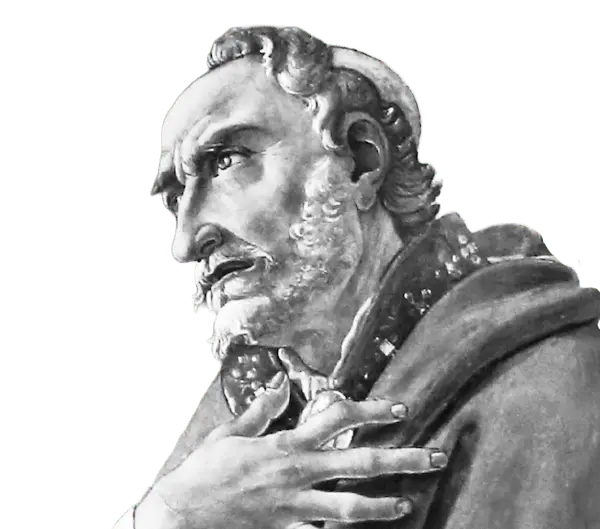
Augustine of Hippo Sermon
Walking on Water: Faith, Doubt, and God's Strength
Faith Amid the Storms of Life
1. The Gospel reading about the Lord Christ walking on the waters of the sea—and the Apostle Peter, who began to sink as he walked because of fear, but rose again through confession—teaches us that the sea represents the present world, and the Apostle Peter represents the one Church. For Peter, who was first among the apostles and foremost in love for Christ, often speaks alone on behalf of all the others.
When the Lord Jesus Christ asked whom people said He was, the disciples gave various opinions. Then the Lord asked again, "But who do you say that I am?" Peter answered, "You are the Christ, the Son of the living God" (Matthew 16:15-16). One person gave the answer for many—unity expressed through many. The Lord then said to him, "Blessed are you, Simon Bar-Jonah: for flesh and blood has not revealed it to you, but My Father who is in heaven" (Matthew 16:17).
Then He added, "And I say to you." It was as if He said, "Because you have said to Me, 'You are the Christ, the Son of the living God,' I also say to you, 'You are Peter.'" Before this, he was called Simon. The Lord gave him this name of Peter as a symbol that he would represent the Church. Since Christ is the Rock (Petra), Peter is the Christian people. Rock (Petra) is the original name. Therefore, Peter is named from the rock, not the rock from Peter, just as Christ is not named from Christian, but Christian from Christ.
"Therefore," He says, "you are Peter; and on this Rock" which you have confessed, on this Rock which you have acknowledged when you said, "You are the Christ, the Son of the living God, I will build My Church" (Matthew 16:18). That is, I will build My Church on Myself, the Son of the living God. I will build you upon Myself, not Myself upon you.
2. For those who wanted to be built upon men said, "I am of Paul; and I of Apollos; and I of Cephas" (1 Corinthians 1:12), who is Peter. But others who did not want to be built upon Peter but upon the Rock said, "But I am of Christ." When the Apostle Paul realized that he was being chosen and Christ was being rejected, he said, "Is Christ divided? Was Paul crucified for you? Or were you baptized in the name of Paul?" (1 Corinthians 1:13). And, as they were not baptized in the name of Paul, neither were they baptized in the name of Peter, but in the name of Christ—so that Peter might be built upon the Rock, not the Rock upon Peter.
3. This Peter, who had been called "blessed" by the Rock, this man who represented the Church and held the chief place among the apostles—a very short time after he had heard he was "blessed," a very short time after he had heard he was "Peter," a very short time after he had heard he would be "built upon the Rock"—displeased the Lord when he heard about Christ's coming suffering. Jesus had told His disciples that His suffering was approaching. Peter feared losing through death the One he had just confessed as the fountain of life. He was troubled and said, "Far be it from You, Lord; this shall not happen to You" (Matthew 16:22). Spare Yourself, O God; I don't want You to die.
Peter said to Christ, "I don't want You to die," but Christ more wisely replied, "I want to die for you." Then Christ immediately rebuked the man He had just commended, and called him "Satan" whom He had pronounced "blessed." "Get behind Me, Satan," He said. "You are an offense to Me, for you are not mindful of the things of God, but the things of men" (Matthew 16:23).
What would Christ have us do in our present state, when He finds fault with Peter because Peter was thinking as humans do? Do you want to know what He would have us do? Listen to the Psalm: "I said, 'You are gods, and all of you are children of the Most High'" (Psalm 82:6). But by thinking like mere humans: "You shall die like men" (Psalm 82:7).
This same Peter was blessed one moment and called Satan the next, all within a few words! Are you surprised at how quickly his name changed? Notice the reasons behind the changes. Why was he blessed? "Because flesh and blood has not revealed this to you, but My Father who is in heaven." Therefore, Peter was blessed because flesh and blood had not revealed it to him. If flesh and blood had revealed this to him, it would have come from himself. But since flesh and blood did not reveal it, but "My Father who is in heaven," the revelation came from God, not from Peter himself.
Why from God? "Because all things that the Father has are Mine" (John 16:15). So you have heard why Peter is "blessed" and why he is "Peter." But why was he called something that makes us shudder to repeat? Why, except that it came from himself? "For you are not mindful of the things of God, but those that are of men."
4. Looking at ourselves in this member of the Church, let us distinguish what comes from God and what comes from ourselves. Then we will not waver but will be founded on the Rock, fixed and firm against winds, storms, and floods—by which I mean the temptations of this present world. Yet look at this Peter, who was our representative: at one moment he trusts, at another he wavers; at one moment he confesses Christ as immortal, at another he fears Christ will die. Why? Because the Church of Christ has both strong and weak members, and cannot exist without either. This is why the Apostle Paul says, "We who are strong ought to bear with the weaknesses of the weak" (Romans 15:1).
When Peter said, "You are the Christ, the Son of the living God," he represented the strong. But when he wavered, not wanting Christ to suffer, fearing death for Christ and not recognizing Life itself, he represented the weak members of the Church. So in this one apostle, Peter—first and foremost among the apostles, in whom the Church was represented—both types had to be portrayed: the strong and the weak. For the Church cannot exist without both.
5. This is also seen in what we just read: "Lord, if it is You, command me to come to You on the water" (Matthew 14:28). "I cannot do this through my own power, but only through Yours." Peter recognized what came from himself and what came from the One through whose will he believed he could do something no human weakness could accomplish. "If it is You, command me" to come, because when You command, it will be done. "What I cannot do by my own effort, You can do by giving the command." And the Lord said, "Come" (Matthew 14:29).
Without hesitation, at the word of the One who commanded him, in the presence of the One who supported and guided him, Peter immediately stepped onto the water and began to walk. He was able to do what the Lord was doing, not in his own strength, but in the Lord's. "For you were once darkness, but now you are light in the Lord" (Ephesians 5:8). What no one can do through Paul, no one through Peter, no one through any other apostle, they can do through the Lord. Therefore, Paul rightly said with healthy self-denial and exaltation of the Lord, "Was Paul crucified for you, or were you baptized in the name of Paul?" (1 Corinthians 1:13). So then, you are not in me, but together with me; not under me, but under Him.
6. Peter walked on water at the Lord's command, knowing he couldn't do this by his own power. Through faith, he had strength to do what human weakness could not. These are the strong members of the Church. Pay attention to this, hear it, understand it, and act accordingly. When dealing with the strong, we must not handle them in any way that would make them weak; but we must handle the weak in ways that will make them strong. But many are hindered from gaining strength because they presume on their own strength. No one will receive strength from God unless they recognize their own weakness.
"God sets apart a special rain for His inheritance" (Psalm 68:9). Why do you, who know what I was about to say, anticipate me? Let your quickness be moderated so that slower minds can follow. I said, and I say again: hear it, receive it, and act on this principle. No one is made strong by God except those who recognize their own weakness. God sets apart a "special rain" for His inheritance. The Psalm says it's "special"—it doesn't come from our merits but is freely given. "A special rain God sets apart for His inheritance; for it was weak, but You have restored it" (Psalm 68:9-10). Because You have set apart a special rain for it, not depending on human merit but on Your own grace and mercy.
This inheritance was weakened and acknowledged its weakness, so that it might be strong in You. It would not be strengthened if it were not weak, and through You it would be "restored."
7. Look at Paul, a small part of this inheritance. See him in his weakness when he said, "I am not worthy to be called an apostle, because I persecuted the church of God" (1 Corinthians 15:9). Why then are you an apostle? "By the grace of God I am what I am" (1 Corinthians 15:10). "I am not worthy, but by God's grace I am what I am." Paul was "weak," but God "restored" him. Now because "by the grace of God he is what he is," look what follows: "And His grace toward me was not in vain, but I labored more abundantly than they all" (1 Corinthians 15:10).
Be careful not to lose through presumption what you have gained through weakness. This is good, very good, that "I am not worthy to be called an apostle. By His grace I am what I am, and His grace toward me was not in vain." This is all excellent. But then he says, "I labored more abundantly than they all." It seems you've begun to attribute to yourself what you earlier gave to God. Pay attention to what follows: "Yet not I, but the grace of God that was with me" (1 Corinthians 15:10). Well done! You who are weak will be exalted to exceeding strength, since you are not ungrateful. You are the same Paul, small in yourself but great in the Lord.
You are the one who three times pleaded with the Lord to remove "the thorn in the flesh, a messenger of Satan to buffet you" (2 Corinthians 12:7). What was said to you? What did you hear when you made this request? "My grace is sufficient for you, for My strength is made perfect in weakness" (2 Corinthians 12:9). For Paul was "weak," but the Lord "restored" him.
8. Peter also said, "Command me to come to You on the water." I who dare this am only human, but it is no human I am asking. Let the God-man command, so that a human might do what humans cannot do. "Come," Jesus said. Peter went down and began to walk on the water. Peter was able to do this because the Rock had commanded him. See what Peter was in the Lord; what was he in himself? "When he saw that the wind was boisterous, he was afraid; and beginning to sink he cried out, 'Lord, save me, I am perishing'" (Matthew 14:30).
When Peter looked to the Lord for strength, he had strength from the Lord. As a mere human, he faltered, but he returned to the Lord. "If I said, 'My foot is slipping'" (Psalm 94:18)—these are words from a Psalm, notes from a holy song. If we acknowledge them, they are our words too. Yes, if we choose, they are ours as well. "If I said, 'My foot is slipping.'" How is it slipping? Because it's my own. And what follows? "Your mercy, O Lord, held me up" (Psalm 94:18). Not my own strength, but Your mercy.
Would God abandon Peter as he tottered when He heard him calling? Where then is that promise, "Who has called upon God and been forsaken by Him?" Where is that other promise, "Whoever calls on the name of the Lord shall be saved" (Joel 2:32)? Immediately stretching out His right hand to help, the Lord lifted Peter up as he was sinking, and rebuked his doubt: "O you of little faith, why did you doubt?" (Matthew 14:31). You once trusted in Me; why have you now doubted Me?
9. Well, brothers and sisters, my sermon must end. Consider the world to be the sea; the wind is boisterous, and there is a mighty storm. Each person's particular desire is their own storm. If you love God, you walk on the sea with the world's turmoil under your feet. If you love the world, it will swallow you up. The world knows only how to devour its lovers, not to carry them. But when your heart is tossed about by desire, call upon Christ's divine power to overcome those desires.
Do you think the wind is contrary only during life's adversities? When there are wars, tumult, famine, plague, or even when personal calamity strikes individuals—then the wind is thought to be contrary, and that's when people think they should call on God. But when the world displays the smile of temporal happiness, it seems as if there's no contrary wind.
But don't look to the calmness of the times; look to your own desires. See if there is tranquility within you. See if there's no inner wind overturning you. This is what matters. It takes great virtue to struggle with prosperity, lest that very prosperity attract, corrupt, and overthrow you. Yes, it takes great virtue to struggle with prosperity, and great happiness not to be overcome by prosperity.
Learn to tread upon the world; remember to trust in Christ. And if your foot slips, if you waver, if there are things you cannot overcome, if you begin to sink, say, "Lord, I am perishing, save me." Say, "I am perishing," so that you will not perish. For only Christ can deliver you from bodily death—He who died in body for you.