
Climbing the Mountain
Charles Spurgeon Sermon
Climbing the Mountain
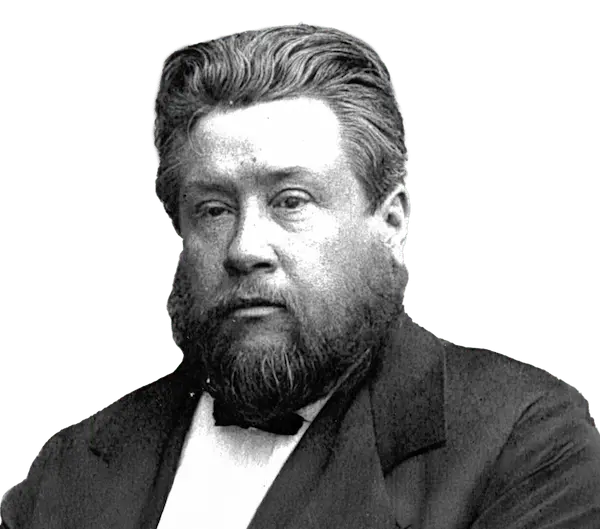
Charles Spurgeon Sermon
Climbing the Mountain
THERE is little doubt that this Psalm has a primary reference to the Lord Jesus Christ. He it is who alone ascended up on high by His own merits and by virtue of a perfect obedience stands in God’s holy place. He alone of mortal race has clean hands and a pure heart. He has not lifted up His soul unto vanity, nor has He sworn deceitfully. Therefore has He received the blessing and righteousness from the God of His salvation.
At His ascension, the glorified spirits flooded heaven with music while they sang the language of the seventh verse, “Lift up your heads, O ye gates; and be ye lift up, ye everlasting doors; and the King of glory shall come in.” It would be a delightful theme for Christian meditation to consider the ascension of Christ, its relation to His work, what we obtain by it, and the glories with which it was accompanied, when, with a shout of sacred joy, He returned to His own throne and sat down forever, having finished the labor which He had undertaken to perform.
But this morning, I must take the text apart from its connection, for I desire to make it the basis of a set of parables or illustrations with regard to Christian life. I think we may fairly compare the life of a Christian to the ascent of a mountain, and we may then ask the question, “Who shall ascend into the hill of the LORD?” This has been, in fact, a favorite metaphor, and even that mighty master of allegory, John Bunyan, who needed never to borrow from another, must have the Hill Difficulty somewhere or other to make his story complete. He must tell how the pilgrim “fell from running to going, and from going to clambering upon his hands and knees because of the steepness of the place.” Without putting any strain upon the text, I conceive I may use it as a most serious question, while I picture our course to heaven as an ascent into the hill of the Lord.
Behold, then, before your eyes, believer, the hill of God. It is a high hill even as the hill of Bashan, on the top thereof is that Jerusalem which is from above, the mother of us all. That rest—
“To which our laboring souls aspire, With fervent pangs of strong desire.”
This mount of which we speak is not Mount Sinai, but the chosen hill whereon are gathered the glorious company of angels, the spirits of the just made perfect, the church of the first-born, whose names are written in heaven. And we are the pilgrims, full often joyous with faith, but sometimes weary and footsore making the best of our way to the top of this mountain of God, where we shall see His face, and rejoice in Him for evermore.
I, your fellow pilgrim, propose the question, “Who shall ascend into the hill of the LORD?” No sooner does the question escape my lips, than I hear a jubilant shout from a company yonder who cry, “We shall—assuredly we shall. There is no doubt about our eternal safety. We shall most certainly attain the summit, rest our wearied feet thereon, and dwell with God forever.” Well, confidence is good if it be good, but if it is presumption, nothing can be worse. Let us, then, look at those who are so sure that they shall ascend into the hill of the LORD. I notice, first, that some who speak thus are young beginners. They have not yet trodden the rough part of the mountain. They have only as yet danced upon the green knolls which are at the base of it—no wonder that their untried sinews find it easy work to ascend an easy pathway. Their limbs are supple, their muscles strong, and the marrow in their bones is as yet not dried up. They laugh at difficult, and they defy danger. “Ah!” they say, “whatever the danger may be, we can brave it, and however stern the toil, we are sufficient to surmount it.” Ah! young man, but be you warned—if you speak thus in your own strength, you shall soon find it fail you—for the boastful man who journeys in his own strength is like the snail which, though it does but crawl, yet spends its own life and wastes itself, while it makes but sorry way. Your strength is perfect weakness. And your weakness such that difficulties shall soon subdue you and terror shall cow your spirit.
Oh! do you not know there are troubles to come and you have not endured them yet? There are attacks of Satan. There are temptations from without and from within. You will find it go hard with you if you have nothing but your own strength. You will lie down to die of despair before you have reached one-tenth of the way and the summit you shall never see.
Oh, young man! There are rocks most sharp and steep which mortal strength can never climb, and there are rugged ravines so tangled with briars and so bestrewn with flint stones that they shall cut your feet, nay, cut your very heart and make it bleed, if you have not something better to trust to than your own strength.
How much of our early courage in the Christian life is the courage of the flesh. And though it be a sorrowful thing to lose this, yet it is a blessed loss. To be weak is to be strong, but to be strong is to be weak. It may seem a paradox, but we are never really so mighty as when our might has fled, and never so truly weak as when we are filled with our own strength, and are reckoning upon ease and security.
Be not so bold—take warning and look you to a superior arm.
“For they that trust their native strength Shall melt away and droop and die;”
whilst those who trust in the Lord,
“Swift as the eagle cuts the air, Shall mount aloft to His abode; On wings of love their souls shall fly, Nor tire amidst the heavenly road.”
In looking upon this group who are so confident that they shall ascend the hill of the Lord, I detect some others who speak out of sheer ignorance . “Oh,” say they, “it is not far to heaven. It is little matter to be a Christian—you have but to say—‘God be merciful to me,’ and the thing is done—it is but a mere trifle. As for the new birth,” say they, “no doubt it is a great mystery, but possibly it may be of very little importance. It will be, no doubt, found after all, that ministers and Christians make much ado about nothing, for it is a mere run to the mountain summit.” Ah, poor ignorant soul, your folly is too common. To the unaccustomed traveler, there is nothing more deceptive than a lofty Alp. You say, “I could reach the mountaintop in half-an-hour,” and you find it to be a day’s full journey, for its twisting roads and rugged sides, and precipitous acclivities come not into the reckoning of a distant observer.
And so is it with religion—men think it so simple, so easy—but when they once begin to ascend, they find it stern work to climb to glory. The young soldier puts on his armor, and says, “One rush and I will win the battle,” but when his banner is torn, and his armor is indented and battered with the heavy blows of the adversary, he finds it quite another thing.
I beseech you, count the cost—you who say that you can ascend into the hill of the Lord. I tell you, sirs, that it is so hard a thing, that the righteous are scarcely saved—and where shall the ungodly and the wicked appear? It is by the skin of their teeth, and often so as by fire, that many who are saved enter into the eternal rest.
I will not merely say it is hard , but I will say it is impossible . It is as easy for a camel to go through the eye of a needle, as for any man to enter into the kingdom of heaven, if he rely in any degree upon his own strength, or think that the passage thereto is easy, and he needs no help that he may pass through it.
Be you persuaded, O ignorant man, that the hill of God is higher than you dream. That is not the summit which you see—the mountain’s brow is far beyond your eyesight. It is higher than your understanding, it is loftier than your groveling conceptions. The eagle’s wing has not reached it, nor has his eye beheld it. To the spiritual only is it manifest and they know that it is higher than the clouds. Be not so ignorantly brave, but learn the road from the lips of Jesus, and then ask Him to help you to run therein.
But among this very presumptuous group I perceive others who say, “We shall ascend into the hill of the LORD,” for in their hearts they imagine that they have found out a smooth grassy way which they shall avoid all the roughness of the road. Some new prophet has preached to them a new salvation. Some modern impostor has declared to them another way besides the good old path, and they think that they shall now, without wearying their limbs and blistering their feet, be able to ascend to the summit.
Take care, take care, presumptuous soul, for rest assured the greener the path may look the more is the danger of it. On the sloping sides of the lofty mountains there are verdant spots, so deliciously green that one never saw the grass itself after the shower look like them. But only put your foot upon them for a moment, only venture your weight, and you will be swallowed up, unless there is someone near at hand to lay hold upon you.
The green mantle covers a tremulous mass of mire, the verdant carpet is only a coverlet for a deadly bed of bottomless bog, for the bogs and quagmires are deceptive enough. And so these new systems of divinity, these new schemes of getting to heaven by some universal fatherhood, or by part-obedience, or gorgeous ceremonies—I tell you, sirs, these are but quagmires which shall swallow up your souls. Green deceptions—they may seem to be like velvet beneath your feet, but they shall be as hell if you dare to trust them.
Still to this day, “Strait is the gate and narrow is the way, and few there be that find it.” Still as there is no royal road to learning, there is no royal road to heaven—no way by which you can pamper your sins and yet be saved—indulge the flesh and yet inherit eternal life. There is no way by which you can avoid the new birth and still escape from the wrath to come. No way by which you may enter into heaven with iniquity hidden in your soul.
Corruptions must be taken away. Lust must be denied. The right arm must be cut off and the right eye must be plucked out. There is no new, no easier path to heaven, and you who think you have found it are mistaken in very deed.
Some few others I mark in this group who say, “We shall ascend into the hill of the LORD,” and why, sirs? You look as if you had a heavy load to carry. “Ay! Ay!” say they, “but these are necessaries for the journey. We have half a dozen staves under our arm, that if one of them should break we may take another, and we have bottles of rich wine that we may refresh ourselves. We have food so that when we grow weary, we may recruit our strength. We have excellent garments, that when a storm comes on we may cover ourselves from it. We are fully provided for the journey—we shall certainly ascend the mountain.” This is just the way in which the worldly-wise and self-sufficient talk, and those who are rich and cumbered with much serving in this world. “Ah!” say they, “we shall readily ascend to heaven. We are not poor—we are not ignorant—we are not led away by the depraved vices of the vulgar mass. We shall be able to climb certainly, for we have all things and abound.” Yes, but this is what makes your climbing difficult. You have a load to carry, you would ascend better if you had it not. One staff is good for a traveler, a competence you may seek for, but a bundle of staves must be heavy to carry. And multiplied riches make it hard to climb the narrow way of life, for they bring many cares and many sorrows, and thus they cause the feet to slip when they might stand fast.
Say not because of your wit and your wisdom, and your own moral strength, that you are the better equipped for the journey. These are your dangers—your confidences are your weaknesses. That on which you rest shall give you no rest and that on which you depend—if it be anything but God—shall pierce you to your very soul.
O sirs, if you can say, “I shall ascend into the hill of God”—if with your hand upon your heart, you can appeal to heaven and say, “The ground-work of my confidence is not in myself, but in the promise; not in the flesh, but in the Spirit; not in man, but in God; not in what I am, but in what God has promised to do for me”—then be as confident as you will. Then let no stammering stop you of your boasting, for the joy of the Lord is your strength.
But if this confidence springs from anything short of a firm, fixed, simple, unmingled faith in Christ—I pray you give it up—for it is a deadly snare, and will certainly destroy your soul.
We have thus paused to listen to the group who are so sure of ascending the hill of the Lord. But hark! I can hear groans, and sobs, and moans. I look around, and certainly my eyes are gladdened with the aspect of these who seem to be so sad.
Why mourn you, brethren? Why are you sad? “Oh,” say they, “we shall never ascend the hill of God.
We shall never reach the topmost height.” Brethren, if I had been allowed to judge, I should have thought you the very men who would ascend, and yet you say you shall not? And if I had looked at the other group, I should have thought they never would gain the top, and yet they say they shall.
How amazing it is! Men so often misjudge their own state, that the most unlikely think themselves sure, while the most holy are the most afraid. Come, my brethren, I would stop your mourning and wipe your eyes. I would put a song into your mouths instead of those notes of lamentation. Let me have your reasons why you think you shall you never ascend the hill of God.
The first reply is, “I shall never get there, for I am weak , and the hill is exceeding high. And sir, you have told us that godliness is a great steep, and that true religion is a towering alp, and I am so weak. To will is present with me, but how to perform I find not. I can do nothing, I am entirely emptied—I know that this can never be performed by me. To perfect holiness and perfect rest I can never come, for I am the weakest of the entire family, and that steep is too lofty to be attained by tottering feet like mine. My bones ache, my knees bend, hot sweat drenches my garments, my head is giddy, and I drag my bleeding feet with anguish from crag to crag.” Oh! my dear brother, be of good cheer. If that be your only cause of mourning, lay it aside, for remember whilst you are weak, it is not your strength which is to carry you there, but God’s. If nature had undertaken to ascend into the celestial mountain, indeed, you might despair—but it is grace, all-conquering grace that is to do it.
“Weak as you are, yet through His might, You all things shall perform.”
It is true the hill is steep, but then God is omnipotent. It is certain that the Alp is high, but higher still is the love and grace of God. He has borne you, He has carried you, and He will carry you even to the end—when you cannot walk He will take you in His arms. And when the road is so rough that you cannot even creep along it, He will bear you as on eagles’ wings till He bring you to His promised rest.
Again, I say, if it were yourself that you had to look to, it would be right in you to mourn, but you are not to look to self. Trust in the Lord forever, for in the Lord JEHOVAH is everlasting strength.
“Ah! but” says a second, “my difficulty is this—not only am I weak, but I am so sorely tried, the road is very rough to me. You spoke of grass just now—there is none where I am—I have looked at that promise, ‘He maketh me to lay down in green pastures,’ and I cannot say it is true of me. Instead of it I must say He leads me by the rough torrents, and allows me not to lie down at all, but upon the steep ascents where the stones cut my feet, He leads my weary and sorrowful way. I am the man who has seen affliction by the rod of His wrath—all His waves and His billows have gone over me. If the road be rough like this, I shall never ascend into the hill of God.” O Christian, Christian! I beseech you take down your harp from the willow now, for if this be all your fear, it is a foolish fear indeed. Why, “the road is rough”—is this a new thing? The road to heaven never was anything else but rough, and so you may be the better assured that this is the right way. If your road were smooth, you might fear that you were like the wicked who stand in slippery places.
Because your pathway is rough, the better foothold for a mountain-climber. There is nothing so much to be feared as that smooth glass-faced rock on which the foot slips back and slides. No, those stones and flints give foothold. Stand, then, strong in the strength of God and be of good courage.
Your afflictions are proofs of your sonship. Bastards may escape the rod, but the trueborn child of God must not—would not if he might. You know, too, that these afflictions are working for your good.
They are rough waves, but they are driving your ship into port—they are blustering winds, but they make your ship scud over the briny deep into the eternal rest which remains for your soul.
Your troubles, I tell you, are your best mercies. Where did the Israelites get their jewels, their earrings, and necklaces? Why, from Egypt, only from Egypt. And so you, too, though you have lain among the pots, shall yet be as the dove whose wings are covered with silver, and her feathers with yellow gold.
Let not the roughness of the road dismay you—it is the better proof that it is the right road to heaven.
Why, you will have a worse trouble yet, perhaps. That is poor consolation, you say—but then, save your tears till you get to it. Cease your weeping now, and if this be poor comfort, yet methinks it is true common sense.
You will come to places soon where you will have to crawl on your hands and knees, and when you think to grasp the root of some tree to drag you up, you will grasp a thorn, and every thorn shall pierce your flesh. But even then, those thorns shall be heavenly lancets to let out your bad blood. And that roughest part of the road shall be the speediest way to heaven—for the steeper the road—the sooner we shall be at the summit.
So be of good cheer, and mourn not, until you come where there is more cause to mourn, and then mourn not, for you shall come to a place where there is more cause for joy. The more sorrow, the more consolation. Therefore up, you poor dispirited one, you shall yet ascend into the hill of God!
“ But I ,” says another—“I have been sorely tempted. Across my path there is a torrent—a swollen torrent. and I cannot wade through it. I fear the deep waters would carry me down and dash me on the rocks. I shall never be able to ascend.” During last week, while in one of the wild valleys of Cumberland, we were rained up for two or three days, so that we could not get home. And I feared I would not be able to arrive in town to preach today. For across a high mountain pass which we had to traverse, the little brooks had been swollen by the heavy rains, till they roared like thundering rivers, and it would have been impossible for any creature to pass without great danger of being swept away.
So it sometimes happens in the Christian’s career. Temptation gets swollen to its brim, nay, bursts its banks—and roaring like an angry torrent—it bears all before it. Ah, well, Christian, the Lord knows how to deliver you out of your trouble. He never did yet send temptation without making a way of escape.
I was pleased to notice but last Thursday, how, across these brooks, the sheep which fed upon the mountainside could spring from stone to stone, rest a moment in the middle, while the angry flood roared on either side, and then leap and spring again. You would think they would be drowned, but yet their feet were fast and firm.
I thought then of that text, “He maketh my feet like hind’s feet, and maketh me to stand on my high places.” Do you not know, tried Christians, that others have gone through as much temptation as you, and they did not perish?—nor will you. Job was sorely tried—the brook was swollen, indeed, but it did not carry him away. He was safe, for he could say, “Though he slay me, yet will I trust in him.” Come, now, there are stepping-stones across the brook, if you have but faith enough to find them, you shall leap from stone to stone—though they be wide apart—they shall not be too wide for you. And though they shall seem as though they would be moved, yet they shall never be, till you have safely passed by the swelling danger.
“Ah,” says another, “but my trouble is worse than that. I have lost my way altogether. I cannot see a step before me, a thick fog of doubt and fear hangs over me. I shall never ascend into the hill of the Lord.” And we, too, have passed through the damp and clinging mists. The dense mists on the mountain summit wet you through very speedily, ruin the prospect, and cause alarm to the timid.
The descent on the left hand seems bottomless, and the ascent on the right appears to be lost in clouds. Mist is the mother of exaggeration, all things loom out in indefinite greatness. The little brook magnified by the haze swells into a river, and the tarn enlarges into a tremendous lake, while the mountaintops are in the seventh heavens. Every stone becomes a rock in the mist—such is the exaggeration which an imagination can perform when nature wears her veil.
So when a poor Christian gets into doubts and fears, everything looks bad and black against him.
“Oh,” he says, “I shall surely fall by the hand of the enemy.” It is only a cart-rut—he is sure he will be drowned in it. It is only a stone, which he might put into a sling and throw at some Goliath, but he fears it is a tremendous rock and shall never be able to pass by it.
He is in a mist and sees no light, and knows not his way. Well, Christian, so you say you shall never get to the top because of this? Why, man, there have been tens of thousands who have been in quite as thick a mist as you, and yet they have found their way. Many a Christian has had quite as black doubts and fears as you, and yet has come right at last.
Doubts and fears never kill the Christian. They are like a toothache—they are very painful—but they are never mortal. So doubts and fears are very grievous to a believer, but a myriad doubts and fears will not suffice to kill him, or deprive his soul of his interest in Christ.
Come, man, do you not know what the text says? “If any man walk in darkness and see no light, let him”—do what? Let him despair? No—“let him trust in the Lord!” Now is the season for faith. When you have nothing else to trust—put your hand within the hand of the Eternal God, and He will wisely lead, and powerfully sustain, and bring you on your way to the promised rest. Let not these doubts fret you, nor distress you, nor cast you down. It is this very mist through which David passed, and all God’s people have been surrounded with more or less of it, and it does not prove that you are out of the way.
“But” says another, “my woe is worse. I have been going downhill. My faith is not as strong as it was—I am afraid my love has grown cold. I never felt so much of the blackness of my nature as I do now. I think I have grown worse. My depravity has broken up like the floods in the days of Noah. I am sure now it is all over with me. I thought I was vile when I begun, but I know I am depraved now. I shall never ascend to the hill of God.” And so, believer, you have been going down hill, have you? Know you not that most men who have to go uphill must sometimes descend? You say, “How is that?” Well, in climbing a mountain, it often occurs that the path winds downward for a season, to enable the traveler to avoid a precipice, or climb a beetling crag, or reach another peak of the range.
Part of the road to Mont Blanc, the king of the Alps, is a descent—and on the great mountain passes there are frequent spots where the load runs readily at the horse’s heels. “But how can going down help me to get up?” you say. It is a strange paradox, but I do not believe Christians ever mount better than when they descend.
When they find out more of the baseness of their hearts, when they are taken from chamber to chamber, and shown the idolatry and blasphemy of their hearts—it is then they are growing in divine grace. “Oh,” say they, “it is all over with me now.” It would have been all over with you if you had not come here. “Ah,” they say, “the Lord is about to slay me now.” No, no—only to slay your pride . He is putting you in your proper place.
“If today He deign to bless us, With a sense of pardoned sin; He tomorrow may distress us, Make us feel the plague within. All to make us Sick of self, and fond of Him.”
It is all uphill, brethren, even when it is downhill. It is all towards God, even when sometimes it seems to be away from Him. And when we are discovering most our own baseness and vileness, it is only that our eyes washed with tears may be like the eyes of doves washed with milk and fitly set—that we may behold the King in His beauty—seeing less of self and more of Him.
I will not keep you much longer on that point, for I fear by the looks of some of your countenances that I weary you, and yet I know not why I should, for surely this is a question which is important to each of us, and I seek to put it in as comely a parable as I can.
I hear yet another groan. “Ah,” says one, “I shall never ascend into the hill of God.” Why? “Oh,” says he, “because, though I have come up a little way, I feel in such danger.” Brethren, do you know when a Christian looks down, it is enough to make his head swim? The Christian life is very much like the walk of Blondin upon his lofty rope.
There he is high up in the air, if he look down he must perish. Sometimes Christians with a little faith think of looking down—and what a cold shudder thrills them! The hypocrite has fallen. I may fall.
Such and such a professor has come down, I may come down, too. There is the roar of a tumultuous crowd beneath who are expecting that we may fall. Nay, they are longing to say, “Aha! aha! The eyes of Samson are put out, and the mighty are destroyed.” Now Little-faith, what business have you with looking down? Look up, man, look up! The Scripture does not say, “Let us run with trembling the race that is set before us, looking to our own tottering legs.” No, but it says, “Let us run with patience the race that is set before us, looking unto Jesus.” What if the crag be steep and the precipice be grim? What is that to you? You will never fall while your faith is fixed on your God! What if the jaws of death be open wide, and his teeth be sharp as knives—what is that to you? Because Christ lives, you shall live also. What if the fires of hell are hot, and the flames of Tophet vehement—what is that to you? There is no damnation to him that is in Christ Jesus—who walks not after the flesh, but after the Spirit.
Up Christian! look up! As the poor sea boy, climbing the giddy mast, dares not look down upon the awful deep, but upward to the calm blue sky—where shines the bright unclouded sun—so must you look up to the Father of lights, with whom there is no variableness, neither shadow of turning. Or if it be dark with you, look up to yon star of Bethlehem, who shines still calmly, lovingly above your head. He bids you silently look unto Him and stand securely. Look up, poor Little-faith, and you, Much-afraid, for you shall ascend into the hill of the Lord.
I shall crave your attention a moment or two, while I now, in the third place—having listened to those who said they could climb, and to those who said they could not climb—picture to you the man who is able to ascend into the hill of the Lord. Methinks I see him. He has nothing in himself, but he has everything in his God. Let us look at him from the sole of his feet to the crown of his head.
You notice, first, that he has put on shoes of iron and of brass. His feet are shod with the preparation of the Gospel of peace. You will want those shoes, O heavenly pilgrim! When the Lord said He would give you those shoes of iron, you thought they would be too heavy for you, but you will find out that you have to tread on stones that are hard as iron.
When He said He would give you shoes that were made of brass, you thought they would be too strong. You will find it a long way, and a very stiff ascent, and anything other than brass would be worn out. Young Christian, have you had your feet shod yet? You are of no use for climbing unless you have.
Unless you have peace with God through Jesus Christ our Lord, which is the preparation of the Gospel of peace, you can never ascend into the hill of Lord.
But observe that the pilgrim is girt about his loins to keep his garment from tripping him up—he is girt with the girdle of truth and sincerity. You, too, my hearer, must be sincere in your profession—your heart must be right in the sight of God—or else climbing will be fatal work to you, because you climb presumptuously, and you shall come down desperately.
I observe that the pilgrim has in his hand a strong staff. It is cut from the tree of life. It is called the Staff of Promise. And he knows how to thrust his Alpenstock deep into the ground, and to draw himself up thereby, or stop himself as he is going down a crag, lest his foot slipping, he fall. He has a Staff of Promise.
See to it that you get it. Get a promise every day. Don’t be content when you pray, unless you can plead the promise of God, or else you will be like a man going to the bank without a check. You must take the promise when you go to God, and you will get that bestowed upon you which the promise guarantees. Go not up the mountain, pilgrim, without this staff.
Take warning once more. If yonder pilgrim is ever to ascend the summit, his shoes of iron and of brass will not be enough—his girdle not enough, his staff not enough—he must have a guide. He that travels without a guide will lose his way in this ascent to the hill of God.
It reminds me of the old story of the man who said to his advocate, when he was about to be tried— “I’ll be hanged if I don’t plead for myself.” “You will be hanged if you do,” said the lawyer. So there be some men who say they will try for themselves—they will be their own guide—they will find their own way. Ay, but they will be lost if they try it.
If they put their souls into their own keeping, and rely upon their own wisdom, they shall find their wisdom to be folly full blown. Christian, rely upon your Guide, your Comforter—the Holy Spirit. Go not one step of the way apart from His monitions and His promptings. Wait on Him. Be of good courage, saying, “I waited patiently for the Lord, for He will assuredly direct me in the path of peace.” But even with a Guide, that man will never gain the summit unless He marks the way. And what is the way? The way to the hill of God, you know, as well as I can tell you, is Christ Himself. “I am,” says He, “the way.” We begin in Christ, we must go on with Christ, we must end with Christ.
As guilty sinners we come to Christ for pardon, as needy sinners we must come to Him to receive of His fullness day by day. And at the last, when with joyful spring we shall leap to the flowery summit and be safe—that last spring must still be taken in the one blood-besprinkled way—the open side, the pierced hands and feet of Christ. There is no other way to the summit of the hill of God—there is none—and he that thinks there may be shall be mistaken now—and fatally deluded at the last.
Be wise, then, pilgrim, and with your shoe upon your foot, with your staff in your hand, your girdle about your loins, your Guide by your side, and the loving Lord before you, climb with patience into the hill of God. But take care that you lay aside every weight, and the sin that does so easily beset you, or the road will be painful to you, and your end shall not be such as you would desire.
I come, in the last place, to complete the picture, to end the allegory, and to stimulate the exertions of every climber of this heavenly mountain, by describing what is to be seen and to be enjoyed upon the summit. He who shall ever climb the hill of God, and come to heaven at last, will find, first of all, that all his toil is done—
“Servant of God, well done, Rest from thy lov’d employ, The battle’s fought, the victory’s won, Enter thy rest of joy.”
No crags, no slippery places now. No roaring torrents, nor ascending or descending paths—
Name ever dear to me, Now shall my labours have an end, In joy and peace and thee.”
Brethren, do you and I think enough of heaven? Do we not think too much of earth? Do we not think too much of the toil and too little of the time when it shall all be over? A few more days and years, and you and I, believers, shall have done fighting with Satan, have done with temptations, have done with cares, have done with woes. An hour’s work, and an eternity of rest!
One day’s toil, and when I shall have accomplished as an hireling my day, then you come, O sweet and gentle rest! “For they rest from their labours, and their works do follow them.” Courage, pilgrim, courage! Up that crag, man! Now put hand and knee to it—up!—for when you have climbed a little higher, ay, but a very little, you shall lie down to rest, and then no more fatigue or sorrow.
And there too, when we come to the top of the hill of God, we shall be above all the clouds of worldly care, and sin, and temptation. Oh! how deep is the rest of the people of God above! How calm is their sky!
“No vain discourse shall tempt my soul, Nor trifles vex my ear.”
No need to go out to a business which distracts my longing spirit. No need to toil at a labor which fatigues my body, and thus puts my soul into an ill state for prayer. No need to mix with worldly-minded men, who make a jest of my solemnities, and would engage my mind with trifles unworthy of notice.
No, above the world, above its distractions and attractions, my soul shall rise when it shall ascend into the hill of God.
And brethren, what a prospect there shall be from the summit! When we shall mount to the hill of God, what sights we shall see! You know from lofty mountains you can look on that side, and see the lakes and the rivers, and on this side, the green and laughing valleys, and far away, the wild black forest.
The view is wide, but what a view is that which we shall have in heaven!
There shall I know even as I am known. “Here we see through a glass darkly, but there face to face.” And chief and foremost—best of all—my eyes shall see the King in His beauty. We shall behold His face. We shall look into His eyes. We shall drink love from the fountain of His heart and hear the music of His love from the sweet organ of His lips.
We shall be entranced in His society, emparadised on His bosom. Up, Christian, up, Christ waits for you! Come, man, tread you the thorny way and climb—for Christ stands on the summit stretching out His hands and saying, “Come up hither, to him that overcometh will I give to sit upon my throne, even as I have overcome, and have set down with my Father upon his throne.” And there is this sweet reflection to close with—all that we shall see upon the top of the hill of God will be ours. We look from earthly mountains and we see, but we do not possess. That mansion yonder is not ours. That crystal stream belongs not to us—those wide-spread lawns are beautiful, but they are not in our possession.
But on the hilltops of heaven, all that we see we shall possess. We shall possess the streets of gold, the harps of harmony, the palms of victory, the shouts of angels, the songs of cherubim, the joy of the Divine Trinity, and the song of God as He rests in His love, and rejoices over us with singing. Nay, God the Eternal One Himself shall be ours, and ours forever and forever.
What better encouragement can I give to you poor, tired, worn-out, wearied, and all-but-despairing Christians? Take courage. The last six days have tired you very much. Put away your trials today—you have had enough to cast you down—but is not the reflection of today enough to lift you up? Oh! remember the summit will repay you for the toil in climbing it. Though rough may be the road, it is but short at the longest—and the rest, the rest, will make amends. O man! men will suffer more to get rich than you do to be found in Christ. Go on, go on, stand fast in the Lord, my dearly beloved—and having done all—still stand.
Would that some here who have never tried to climb that mountain would remember that if they climb it not now, they will have to descend forever! If now they turn not their faces to the steep ascent, and go up it like men, they will fall eternally. Good God, what a fall! On what slippery places do they stand!
I see them reeling even now! what a desperate dash was that! They fall, they fall, on through darkness, through blackest darkness, black as death and hell—on, on they fall, for the pit is bottomless!
No rest shall they ever reach. Down, down descending from the lower depths to the lowest depths, from hell to hell’s profounder deep, from eternity of woe, on, on, on to woe trebled, multiplied sevenfold!