
Enoch
Charles Spurgeon Sermon
Enoch
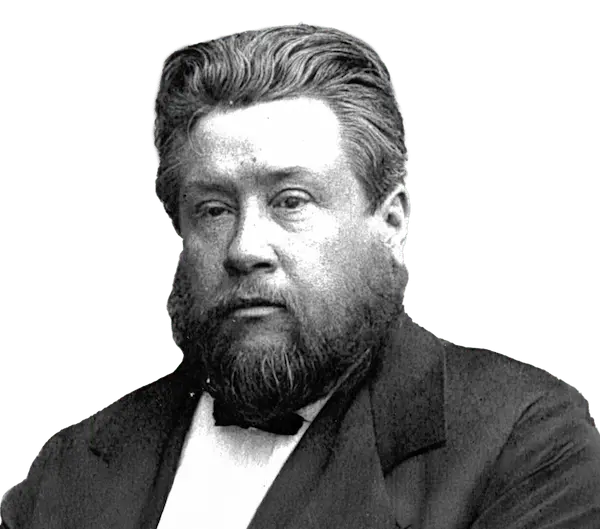
Charles Spurgeon Sermon
Enoch
THE three passages of Scripture which I have read are all the authentic information we have con- third from Adam. In the first patriarchs God was pleased to manifest to men portions of His truth in reference to true religion. These men of the olden times were not only, themselves, taught of God, but they were also teachers of their age and types in whom great truths of God were exhibited. Abel taught the need of approaching the Lord with sacrifice, the need of the atonement by blood—he laid the lamb upon the altar and sealed his testimony with his own blood. Atonement is so precious a truth of God that to die for its defense is a worthy deed and from the very first it is a doctrine which has secured its martyrs, who being dead yet speak.
Then Seth and Enos taught men the necessity of a distinct avowal of their faith in the Lord and the need of assembling for His worship, for we read concerning the days of Enos and Seth, “Then began men to call upon the name of the Lord.” Those who worshipped through the atoning sacrifice separated themselves from the rest of men, assembled a church in the name of the Lord and worshipped, calling upon the name of Jehovah. The heart must first believe in the great sacrifice with Abel and then the confession of the atonement, for he set before men the great truth of communion with God. He displayed in his life the relation of the believer to the Most High and showed how near the living God condescends to be to His own children. May our progress in knowledge be similar to the growth of the patriarchal teaching! Brothers and sisters, you know as Abel did, the sacrificial Lamb. Your confidence is in the precious blood and so by faith you bring to God the most acceptable of all offerings. Having advanced so far, the most of us have proceeded a step further, and we have called upon the name and are the avowed followers of Jesus. We have given ourselves up to the Lord in the solemn burial of baptism, when we were baptized into the name of the Father, and of the Son and of the Holy Spirit, because we reckoned ourselves dead in Christ to the entire world and risen with Him into newness of life. Henceforth the divine name is named on us and we are no more our own.
And now we gather together in our church capacity. We assemble around the table of fellowship, we unite in our meetings for prayer and worship and the center for us all is the name of the Lord. We are separated from the world and set apart to be a people who declare His name. Thus far so good—we have seen the sacrifice of Jesus as the way with Abel. We have avowed the truth with Seth. Now let us take Perhaps a meditation upon the holy patriarch’s life may help us to imitate it. While considering what he was and under what circumstances he came to be so, we may, by the Holy Spirit, be helped to reach the point to which he attained. This is the desire of every godly man! All the saints desire communion with the Father and with His Son Jesus Christ. The constant cry of our soul is to our Lord, “Abide with me.” I buried, yesterday, one of the excellent of the earth who loved and feared and served his God far better than most of us. He was an eminently devout brother. One of the last wishes of his heart he had committed to writing in a letter to a friend, when he little thought of dying. It was this, “I have longed to realize the life of Enoch and to walk with God.”—
“Oh for a closer walk with God!” He did but write what you and I feel. If such are your desires, and such I feel sure they are, as surely as
alization of your wish.
there is a mint of meaning in it. Secondly, what circumstances were connected with his remarkable life ?
These are highly instructive. And thirdly, what was the close of it ? It was as remarkable as the life itself.
I. First, then, WHAT IS MEANT BY ENOCH’S WALKING WITH GOD? Paul helps us with our well-pleasing to God . “Before his translation he had this testimony, that he pleased God.” This is evidently the apostle’s interpretation of his walking with God and it is a most correct one, for the Lord will not walk with a man in whom He has no pleasure. Can two walk together, except they are agreed? If men walk contrary to God, He will not walk with them, but contrary to them. Walking together implies amity, friendship, intimacy, love—and these cannot exist between God and the soul unless the man is had fallen with the rest of mankind in the sin of Adam. There was sin about him, as there is sin about us by nature, and he had gone astray in act and deed as all we, like sheep, have done. Therefore he needed pardon and cleansing, even as we do. Then to be pleasing with God it was necessary that he should be forgiven and justified, even as we are—for no man can be pleasing to God till sin is pardoned and righteousness is imputed . To this end there must be faith , for there can be no justification except by faith.
And as we have said, already, there is no pleasing God except our persons are justified. Right well, then, ing to God, even as we are at this day. This is worthy of earnest notice, brothers and sisters, because this talents, or by reason of marvelous achievements and miraculous works, we might have been in despair!
But if he was pleasing to God through faith , that same faith which saved the dying thief, that same faith which has been worked in you and in me—then the wicket gate at the head of the way in which men walk with God is open to us, also! If we have faith we may enter into fellowship with the Lord! How this ought to endear faith to us! The highest grades of spiritual life depend upon the lower ones and rise out of them. If you want to walk with God as a man of God, you must begin by believing in the Lord Jesus Christ, simply, as a babe in grace! The highest saintship must commence by the confession of your sinnership , and your laying hold upon Christ crucified. Not otherwise does the strongest believer live than the weakest believer—and if you are to grow to be among the strongest of the Lord’s warriors—it must be by faith which lays hold upon divine strength. Beginning in the Spirit you are not to be made perfect in the flesh . You are not to proceed a certain distance, by faith in Christ, and then to commence living by your own works—your walk is to continue as it begun. “As you have received Christ Jesus the and lived in the power of his faith. This is worth knowing and remembering, for we may yet be tempted to strive for some imaginary higher style of religious life by looking to our feelings instead of looking alone to the Lord! We must not remove our eyes from looking, alone, to Jesus, Himself, even to admire His image within ourselves—for if we do we shall go backward rather than forward. No, beloved, by presence . You cannot consciously walk with a person whose existence is not known to you. When we walk with a man, we know that he is there. We hear his footsteps if we cannot see his face. We have some very clear perception that there is a person at our side. Now, it we look to Hebrews again, Paul tells us, “He that comes to God must believe that He is, and that He is the rewarder of them that diligentand then put them up on the shelf out of the way, as too many of us do today—he was not merely orthodox in his head —but the truth of God had entered into his heart . What he believed was true to him, practically true, true as a matter of fact in his daily life. He walked with God—it was not that he merely thought of God, that he speculated about God, that he argued about God, that he read about God, that he talked about God—he walked with God, which is the practical and experimental part of true godliness!
In his daily life he realized that God was with him and he regarded Him as a living God, in whom he confided and by whom he was loved. Oh, beloved, do you not see that if you are to reach to the highest style of Christian life, you must do it through the realization of those very things which, by faith, you have received? Grasp them! Let them be to you substance and evidence. Make them sure, look upon them, handle them, taste them in your inmost soul and so know them beyond all question. You must see Him who is invisible and possess that which cannot be as yet enjoyed. Believe not only that God is, but God realized as existing, observing, judging and rewarding human deeds—a real God, really with us— this we must know, or there is no walking with God.
iar communion with the Most High. I scarcely know a communion that is more free, pleasant and cordial than that which arises out of constant walking with a friend. If I wished to find a man’s most familiar friend, it would surely be one with whom he walked daily. If you were to say, “I sometimes go into his house and sit a little while with him,” it would not amount to so much as when you can say, “I have, from day to day, walked the fields and climbed the hills with him.” In walking, friends become commu- nicative—one tells his trouble and the other strives to console him under it—and then imparts to him his own secret in return. When persons are constantly in the habit of walking together from choice, you may be quite sure there are many communications between them with which no stranger may intermeddle. If I wanted to know a man through and through, I should want to walk with him for a time, for walking communion brings out parts of the man which even in domestic life may be concealed. Walking for a continuance implies and engenders close fellowship and great familiarity between friends. But will God, people since. He tells us His secret, the secret of the Lord, which He reveals only to them that fear Him.
And we tell Him, alike, our joys in praise, our sorrows in prayer and our sins in confession. The heart unloads itself of all its cares into the heart of Him that cares for us! And the Lord pours forth His floods of goodness as He imparts to His beloved ones a sense of His own everlasting love to them. This is the very flower and sweetness of Christian experience, its lily and its rose, its calamus and myrrh. If you would taste the cream of Christian life, it is found in having a realizing faith and entering into intimate communion with the heavenly Father. So Enoch walked with God.
Next it is implied in the term, “walked,” that his communion with God was continuous . As an old divine has well remarked, he did not take a turn or two with God and then leave His company, but he walked with God for hundreds of years! It is implied in the text that this was the tenor of his life years, and doubtless he had walked with Him before. What a splendid walk! A walk of 300 years! One might desire a change of company if he walked with anybody else, but to walk with God for three centuries was so sweet that the patriarch kept on with his walk until he walked beyond time and space—and walked into paradise—where he is still marching on in the same divine society! He had heaven on earth and it was, therefore, not so amazing that he glided away from earth to heaven so easily. He did not commune with God by fits and starts, but he abode in the conscious love of God. He did not, now and then, climb to the heights of elevated piety and then descend into the marshy valley of lukewarmness, but he continued in the calm, happy, equable enjoyment of fellowship with God from day to day. Night with its sleep did not suspend it. Day with its cares did not endanger it. It was not a run, a rush, a leap, a with God!
It is implied, also, in this phrase that his life was progressive, for if a man walks either by himself or years he was not where he began. He was in the same company, but he had gone forward in the right ceived more and could give out more, for he had gone forward in all respects. A man who walks with God will necessarily grow in grace and in the knowledge of God and in likeness to Christ. You cannot suppose a perpetual walk with God, year after year, without the favored person being strengthened, spiritual progress. He went from strength to strength and made headway in the gracious pilgrimage. May God grant us to be pressing onward, ourselves.
ceedingly pleasing piece illustrating what it must be to walk with God by the figure of a father’s taking his little son by the hand, and walking forth with him upon the breezy hills. Kitto says, “As that child walks with you, so do you walk with God. That child loves you now; the world—the cold and cruel world—has not yet come between his heart and yours; his love is the purest and most beautiful he will ever feel, or you will ever receive. Cherish it well, and as that child walks lovingly with you, so do you walk lovingly with God.” It is a delight to such children with their fathers. The roughness of the way or of the weather is nothing to them—it is joy enough to go for a walk with father. There is a warm, tender, affectionate grip of the hand and a beaming smile of the eyes as they look up to father while he conducts them over hill and dale. Such a walk is humble, too, for the child looks upon its father as the greatest and wisest man that ever lived! He considers him to be the incarnation of everything that is strong and wise.
All that his father says or does he admires. As he walks along, he feels the utmost affection for his father, but his reverence is equally strong. He is very near his father, but yet he is only a child, and looks up to his father as his king. Moreover such a walk is one of perfect confidence . The boy is not afraid of missing his way. He trusts implicitly his father’s guidance. His father’s arm will screen him from all danger, and therefore, he does not so much as give it a thought—why should he? If care is needed as to the road, it is his father’s business to see to it and the child, therefore, never dreams of anxiety—why should he? If any difficult place is to be passed, the father will have to lift the boy over it, or help him through it—the child, meanwhile, is merry as a bird—why should he not be? Thus should the believer walk with God, resting on eternal tenderness and rejoicing in undoubted love! A believer should be unconscious of dread either as to the present or to the future. Beloved friends in Christ, your Father may be trusted, He will supply all your needs—
“You are as much His care as if beside No man or angel lived in heaven or earth.”
What an instructive walk a child has with a wise, communicative parent! How many of his little puzzles are explained to him, how everything about him is illuminated by the father’s wisdom! Every step the boy takes, he becomes the wiser for such companionship. Oh, happy are the children of God who found knowledge and great wisdom as to divine things. He must have dived into the deep things of God beyond most men.
His life must also have been a holy life, because he walked with God, for God never walks out of the way of holiness. If we walk with God, we must walk according to truth, justice, and love. The Lord has no company with the unjust and rebellious, and therefore, we know that he who walked with God must have been an upright and holy man.
ion! With God Himself to be with us, the way can never be dreary. “Yes, though I walk through the valley of the shadow of death I will fear no evil, for You are with me.” Granted that God is your companion and your road must be a way of pleasantness and a path of peace.
hovah! He is sun and shield! He gives grace and glory. He that dwells in the secret place of the Most High shall abide under the shadow of the Almighty. Nothing can harm the man who is walking with the Lord God at his right hand.
And oh, what an honor it is to walk with the Eternal! Many a man would give thousands to walk with a king. Numbers of people are such worshippers of dignities that if a king did but smile at then they would be intoxicated with delight! What, then, is the honor of walking with the King of kings? What a patent of nobility it is to be permitted to walk with the blessed and only Potentate all one’s life long?
Who is he that is thus favored to be the King’s companion, to walk alone with Him and to become His familiar friend? Jehovah rules earth and heaven, and hell. He is Lord of all who shall walk with Him! If safe, happy, holy, honorable, and I know not how much more that is excellent! But certainly this was a golden life—where shall we find anything to equal it?
II. Secondly, let us consider WHAT CIRCUMSTANCES WERE CONNECTED WITH ENOCH’S WALKING WITH GOD. The first remark is that the details of his life are very few. We do not know which has a history has been vexed with wars, revolutions and bloodshed. But a nation that is always his whole career, until, “he was not, for God took him.” If you go and look at a farmer’s field and you say of it when you come back, “I saw yellow flowers covering it till it seemed as a cloth of gold. And then I spied out, here and there, white flowers like silver buttons set on the golden vesture. I also saw blue corn-flowers looking up with their lovely eyes, causing the whole field to sparkle,” you would think that it is a very pretty field if you are a child. But the farmer shakes his head, for he knows that it is in bad condition and overrun with weeds! But if you come back and simply say, “It is as fine a wheat field as ever grew and that is all,” then your description, though brief, is very satisfactory. Many of those dazzling events and striking incidents and sensational adventures which go to make up an interesting biography may attract attention, but they do not minister to the real excellence of the life. No life can surpass that of a man who quietly continues to serve God in the place where providence has placed him. I believe that in the judgment of angels and all pure-minded beings, that a woman’s life is most to be admired which consists simply of this—“She loved the Lord and did all she could for Him.” And that life has no adventures. But is it not adventure, enough, for a man to walk with God? What ambition can crave a nobler existence than abiding in fellowship with the Eternal?
placed in very advantageous circumstances for piety.” Now, observe that this was not so, for first, he was a public man . He is called the “seventh from Adam.” He was a notable man and looked up to as one of the fathers of his age. A patriarch in those days must have been a marked man, loaded with responsibility as well as with honor. The ancient custom was that the head of the family was prophet, priest and king in his household. And abroad, if he was a man of station and substance, he was counselor, magismay be sure he had his trials and bore the brunt of opposition from the powerful ungodly party which opposed the ways of godliness. He is mentioned among a noble list of men. Some have unwisely thought, “I could walk with God if I had a little cottage, if I lived in a quiet village, but you see I am a public man, I occupy a position of trust and I have to mix with my fellow men. I do not see how I am to his time and full of public cares, yet he lost not the thread of sacred converse with heaven, but held on in his holy course through a life of centuries.
Some have said, “Ah, you cannot live as you like if you have a lot of children about you. Do not tell me about keeping up your hours of prayer and quiet reading of the Scriptures if you have a large family of little ones. You will be disturbed and there will be many domestic incidents which will be sure to try your temper and upset your equanimity. Get away into the woods and find a hermit’s cell—there, with your brown jug of water and your loaf of bread, you may be able to walk with God—but with a wife, not always amiable, and a troop of children who are never quiet, neither by day nor night, how can a man be expected to walk with God?” The wife, on the other hand, exclaims, “I believe that had I remained a single woman I might have walked with God. When I was a young woman I was full of devotion. But now with my husband, who is not always in the best of tempers, and with my children who seem to have an unlimited number of needs and never to have them satisfied, how is it possible that I can walk with 365years.” Thus, you see, he was a public man and he was a family man—and yet he walked with God for more than 300 years. There is no need to be a hermit, or to renounce married life in order to live near to God.
ning to cover the earth. It was not very long before the earth was corrupt, and God saw fit to sweep the You know that from his prophecy, as recorded by Jude. He prophesied, saying, “The Lord comes with ten thousands of his saints, to execute judgment upon all, and to convince all that are ungodly among them of all their ungodly deeds which they have ungodly committed, and of all their hard speeches which ungodly sinners have spoken against Him.” He lived when few loved God and when those who professed to do so were being drawn aside by the blandishments of the daughters of men. Church and State were proposing an alliance, fashion and pleasure ruled the hour and unhallowed compromise was the order of the day. He lived towards the close of those primitive times wherein long lives had produced great sinners—and great sinners had invented great provocations of God. Do not complain, therefore, of your times and of your neighbors and other surroundings, for amid them all you may still walk with God.
enth from Adam prophesied.” He could not be silent! The fire burned within his soul and could not be restrained. When he had delivered his testimony, it is clear that he encountered opposition. I am certain that he did so from the context in Jude, because the passage in Jude has to do with murmurers and brought in as having had to do with such persons. His sermon shows that he was a man who stood firm amidst a torrent of blasphemy and rebuke, carrying on the great controversy for the truth of God against the wicked lives and licentious tongues of the scoffers of his age. He says, “Behold, the Lord comes with myriads of His saints, to execute judgment upon all, and to convince all that are ungodly among them of all their ungodly deeds which they have ungodly committed.” It is clear that they spoke against ing against God, for he speaks “of all their hard speeches which ungodly sinners have spoken against Him.” He saw their ungodly lives and bore witness against them. It is remarkable that his great subject should have been the second advent! And it is still more noteworthy that the two other men whom one would select as living nearest to God, namely, Daniel and John, were both men who spoke much concerning the coming of the Lord and the great judgment day. I need not quote the words of Daniel, who tells us of the judgment which is to be set, and of the Ancient of Days who shall come upon His throne.
Nor need I repeat the constant witness of John concerning the Lord’s second coming. I will only mention his fervent exclamation, “Even so, come quickly, Lord Jesus!” above that which falls to the lot of most of you. And yet, with that and all the rest put together, he could please God until his life’s end! If I may speak of an end to a life which ran into an endless state of joy— he continued as long as he was here to walk in faith, to walk in a manner in which God was pleased— and so his communion with the Lord was never broken.
III. This brings us to conclude with the third head—WHAT WAS THE CLOSE OF ENOCH’S WALK?
good, sure, progressive walk, that he traveled faster and reached home sooner than those of us who walk with God, sometimes, and with the world at other times! Three hundred and sixty-five years would have been a long life to us, but it was a short life for that period when several patriarchs attained to nearly a 35 years in these short-lived ages—in fact, the best parallel to it is the life of our Lord. As with the excomparison with such lives as ours. He passed away comparatively a young man, as our dear brother and elder Verdon, just departed, has done, and we do not wonder that he did. They say, “Whom the gods their career so soon because they had done their lifework so diligently that they finished early. Some workmen, if they have a job to do in your house, are about it all day long, or rather all week long and make no end of confusion! No wonder that some people live a long while, for they need to do so much to do anything at all! But this man did his work so well and kept so close to God that his day’s work was longer. You have borne your testimony; you have lived your life; through all the ages men will look upon you as a model man, and therefore, you may come home.” God never keeps His wheat out in the fields longer than is necessary! When it is ripe, He reaps it at once! When His people are ready to go home, He will take them home. Do not regret the death of a good man while he is young. On the contrary, bless God that there is still some early ripening wheat in the world and that some of His saints are sanctified so speedily!
to speak of men as dying, but he, alone, and one other of all the human race are all that have entered the heavenly Canaan without fording the river of death! We are told concerning him that, “he was not.” Those gentlemen who believe that the word, “to die,” signifies to be annihilated, would have been still more confirmed in their views if the words in my text, “he was not,” had been applied to all departed men, for if any expression might signify annihilation in their mode of translation—this is the one! “He was not” does not, however, mean that he was annihilated! And neither does the far feebler term of dying signify anything of the kind! “He was not,” that is to say, he was not here— that is all. He was gone from earth, but he was there— there where God had translated him. He was, he is with God! And that without having tasted death! Do not grudge him his avoidance of death. It was a favor, but not by any changed. “We shall not all sleep,” says the apostle, “but we shall all be changed.” The flesh and blood of and I will have to undergo in the day of the resurrection. And so, though he was not on earth, he was translated or transplanted from the gardens of earth to paradise above. Now, if there is any man in the world that shall never die, it is he who walks with God. If there is any man to whom death will be as nothing, it is the man who has looked to the second advent of Christ and gloried in it. If there is any man who, though he passes through the iron gates of death, shall never feel the terror of the grim foe, it is the man whose life below has been perpetual communion with God! Go not about by any other way to escape the pangs of death but walk with God, and you will be able to say, “O death, where is your sting? O grave, where is your victory?” visible manner. I should not wonder. Perhaps the whole of the patriarchs saw him depart, even as the apostles were present when our Lord was taken up. However that may be, there was some special rapture, some distinct taking up of this choice one to the throne of the Most High. “He was not, for God took him.” Note that he was missed . This is one thing which I could not overlook. He was missed , for the apostle says he, “was not found.” Now, if a man is not found, it shows that somebody looked for him. When Elijah went to heaven, you remember, 50 men of the sons of the prophets went and searched for him. I do not wonder that they did—they would not meet with an Elijah every day—and when he was gone good man is missed. A true child of God in a church like this, working and serving his Master, is only one among five thousand—but if he has walked with God, his decease is lamented. The dear brother whom we have just buried, we shall miss. His brother elders will miss him. The many who have been converted to God and helped by his means will miss him. And assuredly I shall miss him. I look towards the spot where he used to sit—I trust that someone else will sit there who will be half as useful as he was. It will be almost more than I can expect. We do not want to live and die so that nobody will care with God.
God took him,” but this—there is a future state. Men had begun to doubt it, but when they said, “Where that there was a God, and that there was another world. And when they asked, “But where is his body?” there was another lesson. Two men had died before him, I mean two whose deaths are recorded in Scrip- ture—Abel was killed and his witness was that the seed of the serpent hates the woman’s seed. Adam, capable of immortality! He could not bear testimony to resurrection, for he did not die—for that we have way towards it, for it bore evidence that the body was capable of being immortal and of living in a heavenly condition. “He was not, for God took him.” His departure also was a testimony to mankind that there is a reward for the righteous, that God does not sit with stony eyes, regardless of the sins of the wicked, or of the virtues of His saints. It proved that He sees and is pleased with His people who walk with Him—and that He can give them, even now, present rewards by delivering them from the pangs of death—and therefore He will certainly give rewards to all His people in some way or other. Thus you see, living and dying—no, not dying, again I am misus, whether we live or whether we sleep, may be witnesses for God. Oh that we could live as my good brother, Verdon, whom we have lately buried, lived, whose soul was on fire with love to Christ! He had a very passion for souls! I scarcely think there is one among us who did as much as he, for though he had to earn his daily bread, his evenings were spent with us in the service of the Lord, or in preaching the gospel! And then, all night long he frequently paced the weary streets, looking after the fallen, that he might bring them in! He often went to his morning’s work weary, except by the rest which he found in the service of Christ. He would sometimes meet a brother with eyes full of joy, and say, “Five souls won for Christ last night!” At other times, after a sermon, here he was a great soul hunter, and would fetch inquirers downstairs into the prayer meeting. And when he had squeezed my hand he would say in his Swiss tones, which I cannot imitate, “Jesus saved some more last night! More souls were brought to Jesus.” For him to live was to win souls! He was the youngest in our eldership, but the gray-heads do him honor. As we stood weeping about his tomb, there was not one among us but what felt that we had lost a true brother and a valiant fellow soldier. May the Lord raise up others among you to do what Elder Verdon did! May the Lord quicken the older brothers and sisters to be more active than they are, and make the young ones more devoted; our ranks are broken; who shall fill up the gap? We are getting fewer and fewer as the Lord takes one and another home of the best-instructed, and of the bravest-hearted.
But, by His grace, recruits are daily coming in! May others come forward—yes, Lord, bring them forward by Your Holy Spirit to be leaders in the front ranks, that as the vanguard melts into the church triumphant, the rear may continually find additions! Translated to the skies are some; may others be translated out of darkness into marvelous light, for Christ’s sake. Amen.