
Faith’s Way of Approach
Charles Spurgeon Sermon
Faith’s Way of Approach
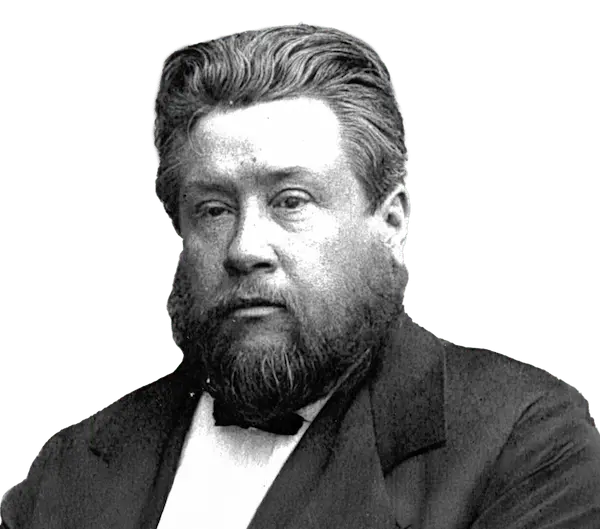
Charles Spurgeon Sermon
Faith’s Way of Approach
[Another Sermon by C. H. Spurgeon upon the same text is #1031, How Can I Obtain Faith?] ACCORDING to the Christian religion, faith is the great essential thing. “Without faith it is impossible to please God.” Whatever we may do or may be, we cannot be acceptable with the Most High unless we believe in Him. Even prayer can only be a mockery if it be not the prayer of faith. “He that cometh to God must believe that he is, and that he is a rewarder of them that diligently seek him,” or else he does not really pray.
The Lord Jesus Christ has died to save men, but it is certain that no man will be saved without faith.
Even the blood of Jesus Christ does not save any except those who believe in it. “God so loved the world” is a very wide expression, but we must not make it wider than Scripture makes it, for remember how the verse goes on, “God so loved the world, that he gave his only begotten Son, that whosoever believeth in him should not perish, but have everlasting life.” Without faith Christ is not ours. His blood cannot cleanse us, His life cannot quicken us. We must have faith to get at the blessings of salvation.
Suppose we could be brought into touch with Christ without faith for a while, yet, if we had not continuous faith, we would not have a continued connection with the Savior, and consequently should not abide in eternal life, for it is written, “The just shall live by faith.” They not only begin to live by faith, but continue to live in the same manner.
In our holy religion, everything is by faith—faith for life and faith for death. Even the first tears of repentance must be salted with faith and the last song on earth shall be full of faith. You must have faith or you must perish. “He that believeth and is baptized shall be saved, but he that believeth not shall be damned,” is the declaration of Jesus Christ the Savior Himself.
I. So, first, LET US DISCOVER WHAT FAITH IS.
We have seen that it is essential. It is very important to understand its nature. Well, faith with regard to God is the same as faith with regard to anything else . It is the same act of the mind, though it differs as to its object. When I believe in God, it is the same kind of mental act as when I believe in my friend. I believe with the same mind.
’Tis true that all saving faith is the work of the Holy Ghost in us, but be it always recollected that we ourselves believe, and that the Holy Ghost does not believe for us. What has the Holy Ghost to believe about? It is not written that He is to believe in the Lord Jesus Christ. No, but we are to believe in Him.
He leads us to faith, but the faith is our own act and deed—and if there could be supposed to be a faith which was not our own act and deed, it could not possibly be the faith which saves the soul.
If I understand aright the faith which saves, it is just this. God has revealed such and such truth, I believe it to be true, and I so believe it to be true that I act upon it. God has said that He has laid sin upon Christ—I believe He has done so. He tells me that, if I trust Christ, I may be assured that my sin was laid upon Christ. I trust Christ, that is, I rely upon Him, and the reliance which springs out of belief is the essence of faith.
When a man believes a bank to be safe, he will put his money into it if he has need to do so. When a man believes in the honesty of another, the practical issue of it is he takes his word and trusts him. I believe in the truthfulness of God, in the truthfulness of certain narratives given by the four evangelists.
I believe that Christ was born at Bethlehem, that He was the Son of God, and that He lived and died as the Savior of men. I believe that His sufferings were expiatory, that He suffered in the stead of sinners to make recompense to the justice of God for our sins, and believing that, I trust my soul upon His sacrifice, I rest on it, and that faith saves me.
Now, mark, if I do readily rest in Christ I shall do what Christ bids me. Faith must lead to obedience. He bids me forsake sin—and I shall do it by His help. He bids me follow Him—and I shall do it if I really believe in Him. A doctor says, “Now, trust me, my man, and I will cure you.” Very good. I trust him. He sends me medicine and I take it. But suppose I do not take the medicine? Well, then, I never trusted him. My neglect proves that I cannot have done so.
The only trust that saves the soul is that practical trust which obeys Jesus Christ. Faith that does not obey is dead faith—nominal faith. It is the outside of faith, the husk of faith, but it has not the vital corn of faith in it. Sinner, if you will be saved, you must give yourself up to Jesus Christ to be His servant and to do all that He bids you. You must rely alone upon Him. Trust not in fiction, but in reality—not by profession merely, but with your whole heart—and you must continue to lean, rest, and lie upon Him, trusting alone in Him. This is what saving faith is.
Now, there are some who say they wish they could get this faith. They declare that they would do anything to get it. They earnestly long to believe, but somehow they cannot get a grip of faith, cannot quite make out what it is or if they know what it is, they are still puzzled—they cannot exercise it.
Albeit faith is the gift of God, it is always the act of man—while faith is a privilege, it is always a natural duty. Men are bidden to believe in Jesus and are sinful if they do not believe in Jesus. Where faith does exist, it is the gift of God, but where it does not exist, it is because men will not believe in Him, but shut their eyes to His light. If they would but see it, that light would convince them.
II. LET US, THEREFORE, CLEAR AWAY SOME DIFFICULTIES WITH REFERENCE TO FAITH.
You want faith, you say. You are not a skeptic—you accept the Word of God. You are not one of those who are unsound about the deity of Christ, you receive that. Still, you cannot, you say, get at faith in Jesus Christ. Listen, then, to these observations.
First, recollect that it will be your wisdom not to think so much about faith as about the object of faith. If I want to believe a thing that is in the newspaper, it is no use my sitting down and reading it over and saying, “I should like to believe it and I will try to believe it.” My proper way is to begin to look into the matter—not into my faith, but into the matter itself. And when I have looked into the matter itself, I shall see whether it is reasonable—whether it looks true, and by and by, perceiving the truthfulness of it, faith will come to me as a matter of course.
You are to believe in Jesus. Now, forget the believing and think only of Jesus. If I wanted to love a person, it would be useless for me to sit in my chamber and say, “I shall try to love such and such a person.” You cannot pump love up out of your heart in that way. But suppose that person is exceedingly beautiful, has a delightful character, and has lived a charming life? Well, I gaze upon that person’s face.
I hear the story of his life and I feel that, what I could not make myself do, I do without attempting to make myself do it. Love comes of itself.
“If a man would give all the substance of his house for love, it would be utterly contemned.” So it is with faith. Speaking naturally, it comes of itself, through the work of the Spirit of God, from the force of the evidence which is presented to the mind. “Faith cometh by hearing.” Look then, more at what is to be believed than at the mere act of believing.
And next, be solemnly persuaded that what you want is faith and that you must have it. Do not, therefore, begin confounding faith with something else . Some of you want an impression . You want a revelation . You want a feeling . You want a sensation. Now that is not faith—it has nothing to do with faith. It is feeling, it is seeing, but it is not believing. What you really need is to believe in God—and if you do that—you shall be saved.
But instead of that, you begin to cry, “Oh, that I felt as Mr. Bunyan felt on such an occasion!” That is not the matter in hand, and you are but turning aside from the point you should aim at when you look to those things instead of faith. All other good things will follow faith, but for you who are unsaved, the first, the only matter is faith in Jesus Christ.
Many persons are anxious to be saved, which is a good thing, but they have mapped out the way in which they want God to save them—which is a bad thing. They have read the biographies of eminent Christians and they have discovered that some of them, before they found Christ, were sorely tried by horrible thoughts, doubts and fears, temptations to blaspheme and so on.
Possibly they have read Bunyan’s Grace Abounding to the Chief of Sinners and have noted that he went through a very terrible season of distress before he found peace with God. Perhaps some of you, my dear friends, have fallen into the idea that, if ever you are to be saved, you must feel just as John Bunyan did. And although you have been told, over and over again, that simple faith in Jesus Christ will save you, and save you just as you are, yet you still think it cannot be so, but that you must have a deep law work and most dreadful feelings before you can come to the Savior.
I would exhort you earnestly to pray for help in this matter of believing. Ask the Lord to give you faith, but I ask you to remember that prayer without faith will not save you , and that the Gospel is not, “He that prays shall be saved,” but “He that believeth on the Son hath everlasting life.” Some have unbelievingly made a kind of Savior of their prayers and their tears—but that will not do. Away with your prayers if they stand in the room of Christ! It is not what you ask for, or feel, or do—it is what Christ suffered on the cross that is to save you. And the way you are to appropriate the merit of Christ is by faith. So keep to that. Know what it is you want and press forward to get that.
Now we come more closely to the text. Faith is the thing we want. We shall get it according to God’s order, and God’s order is this—“Faiths cometh by hearing, and hearing by the word of God.” Faith does not come by sacraments. Nobody ever got faith through a sacrament. It does not say, “Faith comes by seeing.” Those processions are very pretty, very pretty indeed. And very fine are those banners and very sweet the smoke of that incense—but faith does not come that way. Eyegate is closed, and through Eargate eternal life comes into the soul of man. “Faith cometh by hearing.” The religion of Jesus Christ is not a religion of performances. It has its ordinances which belong to believers, but it never attempts to change the moral nature by mechanical acts. Eating and drinking and washing cannot possibly be the means by which men are reconciled to God and taught to love the Redeemer. There is a moral means wanted—a spiritual means, and the moral and spiritual means are as simple as possible—“Faith cometh by hearing, and hearing by the word of God.” The text suggests two things, then, as to faith’s way of approach. If I want to get faith I must hear, but I must mind what I hear. And I must mind how I hear.
III. LET US REMEMBER, THEN, THAT FAITH COMES THROUGH THE WORD OF GOD.
Soul, would you have faith? Then mind what it is you do hear, for the hearing must be “by the word of God.” Faith comes by hearing, but not by hearing anything and everything. The hearing is “by the word of God” and only as the preaching is according to the Word of God will God bless it. God never blessed a falsehood to the creation of a newborn spirit. The truth has vitality in it—only the Word of God is the living seed in the soul.
“Well,” you say, “how am I to hear the Word of God, then?” I reply, first, hear the Word of God as you have it in the Bible . Reading is tantamount to hearing. Be sure, then, if you would find faith, to study much this priceless, matchless Book. Study it all. But if you would find Christ, dwell most on those four inestimably precious Books which tell us most about Him. Read the story of His life and His death as given by the four evangelists—and if you would have a comment upon them—read the epistles and study them.
Remember, the point about the Word of God is this—that God has spoken to men through this Book.
Men wrote it, but they wrote as they were inspired and moved by the Holy Ghost. Especially about the Lord Jesus Christ has God spoken to us by chosen witnesses. There were first the apostles who have written a considerable part of the New Testament. These men saw Christ. John says, “The Word was made flesh and dwelt among us, and we beheld his glory.” There were many of them and they saw the miracles of Christ, so that they were sure He was divine.
They saw His holy, guileless life. They saw Him in His death, and what is best of all and most to be remembered, is that they saw Him risen again, they watched Him at intervals during forty days, and they saw Him till a cloud received Him out of their sight.
They were simple-minded men who could not have invented the story. They were mostly unlettered men, and they and hundreds of others so believed it that they died for preaching what they believed.
They gained nothing by the statement except scorn and shame. If there is a fact in human history which is verified beyond a doubt, it is the death and resurrection of the Son of God.
Does not that help you believe? “Ah!” say you, “I do believe these facts.” Well, if you do believe them in very deed and truth, what follows from your belief? Why, that you must hate God in your heart, or else you would be saved, because this glorious One of whom they speak came here to save men and will save all that trust Him. You perceive Him to be a divine person—can you not trust Him? If not, it must be because you have some hatred to Him and prefer to be damned rather than owe your salvation to the free grace of God.
Let it not be so! But rather, I pray you, hear His Word by attentively reading it, until at last, as you read it, the glory of the inspired truth which shines in the pages, shall flame into your soul and you shall say, “I do believe it. How could I have rejected it? It speaks for itself—the deity is in the Word.” Next to that, however, hear the preachers of God’s Word, for though they are not inspired, yet they can do something for you. We can bear witness to what we have known and felt of the work of Jesus Christ in men’s hearts, and this will supplement the witness of the inspired men, and may help you to believe. As one has well said, “If you question a convert, you will generally find that he owes his conversion to a text of Scripture.” It is God’s Word, not man’s comment on God’s Word, that generally saves souls. If you long to be saved, go, therefore, to those that keep to the Gospel, that keep to the real Gospel, and have nothing else to say. That is what you want.
Seek also to hear the preacher who preaches experientially, one who can tell you that he knows he is a sinner, but that he has believed in Jesus, and is saved, and knows he is saved. For your healing, you want to have, not a surgeon who has never seen a case like yours before, but one who knows about it.
And if he has gone through a similar experience himself, then he is the man for you. If a man has not had anything done for his soul, he cannot tell you of anything that has been done. If he has never seen himself to be a sinner and has never passed from death unto life, if he has never known the bitter pangs of soul trouble, and has never looked to the precious Savior on the cross, and leaped to find himself set free, why, what is the good of him as a preacher?
Let him go and bake bread, or break stones on the road—what has he to do with preaching a Gospel of which he knows nothing? Therefore I say again to you—if you would get faith, hear that Gospel that speaks to your soul, because he who preaches it speaks from his soul about something that he knows for himself.
And if you have your choice, hear one who speaks earnestly, for to hear a cold preacher is the surest way of getting cold yourself. He that trifles with his ministry will make men trifle with their souls. If I am speaking to any who preach the Gospel, I would say that, if we do not preach earnestly, people will conclude at once that there is nothing in what we preach—and their blood will lie at our door. We have a weighty theme and we must speak with all our heart and soul.
To you, sinner, I would also say, hear the preacher who speaks pointedly. Do not feel vexed with one who exposes your faults. What do you go to a place of worship for but to have your heart laid bare? A doctor, who never makes an examination of his patient, or who, knowing that there is an evil somewhere, is too delicate to allude to it, is a disgrace to his profession. The man who desires to heal men will be plain and honest with them, and will not at all attempt to palliate an evil thing.
Take heed what you hear, for if you hear the Word of God preached in the power of the Spirit of God, then faith comes by such hearing.
IV. LET US BE ASSURED THAT FAITH WILL COME BY HEARING.
If we would get faith, we must take care how we hear, as well as what we hear. The hearing is itself almost as important as the preaching. Faith does not come by every sort of hearing. There have been persons who have heard the Gospel for many years, but they have really heard nothing, for it has gone in at one ear and out at the other. Faith does not come by such hearing.
Brethren, if we really seek faith, we ought to hear the Gospel aiming at the sense of it first. It is what a preacher says, not how he says it, that is the vital thing. I am certain, however, that nine-tenths of our hearers are more taken up with how we say it than with what we say. Of course, we all hear a thing the better if it is put well, but woe to the man who cares only about delicacy of diction and lets his hearers go down to hell! Woe unto him in the great day of account! If, however, the preacher preaches Christ, yet he does not preach Him as you would like to hear Him preached, but somewhat uncouthly, yet listen to him, whoever he may be, for it is the truth that he declares. Do not regard his manner so much as his matter—and pray that it may be blessed.
You who have not believed, hear every sermon with the desire to get faith through the sermon . I believe that our hearers generally get what they come for. If a man goes fishing, he will generally catch fish according to his bait. Some come expecting to get something to find fault with. Well, they are sure to find it.
But when a man comes with this design—“I want to find Jesus. I want to get good for my soul. I want to be saved”—then, if the preacher is what he should be, the man cannot go away disappointed. If the minister does not preach at all, but only reads part of a chapter, there will be a blessing. If it be only a hymn that is sung, the seeking soul will lay hold of Christ in a hymn—especially if it be such a hymn as, “Just as I am, without one plea,” or “Rock of ages, cleft for me,” or “Jesu, Lover of my soul.” If you want faith, you need not be long wanting it if you really come anxiously desiring to obtain it.
Dear friends, the kind of hearing that brings faith is attentive hearing . I have heard of a child who used to always lean forward to catch every word the preacher said. And his mother asked him why he did so. He replied, “Because, mother, I heard the preacher say that, if there was anything in the sermon by which God meant to bless us, the devil would try to draw our attention some other way when it was being said. And I was so afraid that some good thing that would have blessed me might escape me if I was inattentive.” It is a great joy to preach to a house full of people like that—people who are praying as the preacher speaks, “Oh, for a blessing, Lord! Oh that the Word might come with power to my soul!” Then, take care to hear retentively . Lay hold upon the Word. Keep it, treasure it. Perhaps you say, “I have a bad memory.” Well, the very best thing to do when you have a bad memory is to do as the man did who never could recollect what he owed—so he took care to always pay as he went.
If you cannot recollect, go and do at once what you are bidden to do, and then you will not forget it.
“Be ye doers of the word, and not hearers only.” If you get the substance, never mind the words. If you have a bad habit and it is preached against, never mind the sermon—go and break off the evil habit. If you have been neglectful of prayer, never mind the sermon, pray more.
And if Jesus Christ is lifted up before you, and you cannot recollect what the preacher says—never mind—look to Jesus. There is Christ upon the cross and if you look to Him at this moment, you shall live forever. What memory is needed if you look to Him now ?
Now, poor sinner, turn your eye, and you shall have heard the Gospel in a most retentive manner, indeed.
“There is life for a look at the Crucified One; There is life at this moment for thee; Then look, sinner—look unto Him and be saved, Unto Him who was nail’d to the tree.”
Lastly, hear the Gospel with deep reverence and earnest prayer . It is no small matter that God should deal with your soul at all, but that He should condescend to speak to you on terms of love is a wonderful thing. That His own Son should bleed and die for sinners—is not this a miracle of mercy?
With such great themes under discussion in the pulpit, you ought to be greatly reverent during the hearing of the Word.
You should be, indeed, like the earth in the dry weather, that opens wide its mouth, chapped and parched as it is, to suck in every drop of rain that falls. If you are sitting under the sound of the Gospel thus, parched and dry, but opening your soul to receive it and saying, “Drop from above, O sacred dew.
Come out of heaven, O showers of grace, and fall on me,” it will not be long that you will so wait.
Your chief business is to believe, and my business is to ask you, in the name of the eternal God, whether you will believe Him or whether you will make Him a liar? One of the two it must be. He that makes God a liar involves himself in awful guilt, but he that believes in Him has glorified Him.
God accepts the act of believing in Him as one of the noblest acts of man—so great an act that He sees His own Spirit’s work in it wherever He perceives it. “Believe on the Lord Jesus Christ, and thou shalt be saved.” Believe on Him now. Our witness is that He does save—He saves from the guilt of sin.
He saves from the dread and wrath of hell. He saves from the anger of God. He saves from despair. He saves at once. He saves all who come to Him. Come you to Him.
Now we are going our several ways—what report am I to carry back to my Master, whose message I have been trying to deliver—
“Is it nothing to you, all ye that pass by, To you is it nothing that Jesus should die?”
Young man yonder, is it nothing to you that Jesus should die? I ask your heart, young woman, for my dear Lord and Master. And you, old friend, your life is drawing to its close—it would have been better if you had given Christ the morning of your days—yet He will accept you even now if you will come to Him. May He give you the grace to rest upon Him now, to trust Him this very hour! Then, where He is, there shall you be also, through the efficacy of His great atoning sacrifice. God grant it, for Jesus’ sake! Amen.
EXPOSITION BY C. H. SPURGEON HEBREWS 11
In this chapter, we read of the wonders of faith. But I have never read a chapter setting forth the wonders of unbelief. Unbelief is barren, impotent, a mere negation, a dead and accursed thing. But faith bears fruit, faith produces good works, faith achieves marvels.
Verse 1. Now faith— That is, belief, trust in God,— 1. Is the substance of things hoped for, It gets a grip of them and holds them fast.
1. The evidence of things not seen.
The sight of what we cannot see with our mortal eyes.
2. For by it the elders obtained a good report.
Those who lived in the olden time gained fame and glory from God Himself by faith.
3. Through faith we understand that the worlds were framed by the word of God, so that things which are seen were not made of things which do appear.
By faith, we know more about the creation of the world than philosophy can ever teach us. It has invented the most remarkable and ridiculous theories of how the worlds were made and men produced.
We have the truth here—the worlds were framed by the Word of God, not made of things which existed previously, but spoken out of nothing by the voice of the Almighty.
4. By faith Abel offered unto God a more excellent sacrifice than Cain, by which he obtained witness that he was righteous, God testifying of his gifts: and by it he being dead yet speaketh.
Faith teaches us how to worship God aright. Faith brings the appointed sacrifice, which is therefore accepted.
5-6. By faith Enoch was translated that he should not see death; and was not found, because God had translated him: for before his translation he had this testimony, that he pleased God. But without faith it is impossible to please him: for he that cometh to God must believe that he is, and that he is a rewarder of them that diligently seek him. [See Sermons #107, Faith; #2100, Faith Essential to Pleasing God; #2513, How to Please God; and #2740, What is Essential in Coming to God?]
The way to please God, then, is to believe in Him. And if there be any possibility of entering heaven without seeing death, faith alone can point the way. You cannot be Enochs unless you please God, and you cannot please God unless you have faith in Him.
7. By faith Noah, being warned of God of things not seen as yet, moved with fear, prepared an ark to the saving of his house; by which he condemned the world, and became heir of the righteousness which is by faith. [See Sermon #2147, Noah’s Faith, Fear, Obedience, and Salvation]
Noah was the second great father of men as Adam was the first. In the flood, all died except Noah and his family. Faith made him build the great ship on dry land, into which he went with his wife and family and all manner of living creatures, and when the rest of mankind were destroyed, they outlived the Flood.
8-18. By faith Abraham, when he was called to go out into a place which he should after receive for an inheritance, obeyed; and he went out not knowing whither he went. By faith he sojourned in the land of promise, as in a strange country, dwelling in tabernacles with Isaac and Jacob, the heirs with him of the same promise: for he looked for a city which hath foundations, whose builder and maker is God. Through faith also Sara herself received strength to conceive seed, and was delivered of a child when she was past age, because she judged him faithful who had promised. Therefore sprang there even of one, and him as good as dead, so many as the stars of the sky in multitude, and as the sand which is by the sea shore innumerable. These all died in faith, not having received the promises, but having seen them afar off, and were persuaded of them, and embraced them, and confessed that they were strangers and pilgrims on the earth. For they that say such things declare plainly that they seek a country. And truly, if they had been mindful of that country from whence they came out, they might have had opportunity to have returned. But now they desire a better country, that is an heavenly: wherefore God is not ashamed to be called their God: for he hath prepared for them a city. By faith Abraham, when he was tried, offered up Isaac: and he that had received the promises offered up his only begotten son, of whom it was said, That in Isaac shall thy seed be called:
The great trouble of Abraham was not his fatherly instinct, hard as it was to overcome that, and to be the slayer of his only son. His great difficulty was, “How can God’s promise be kept? He has given me a promise that in Isaac shall my seed be called, yet He tells me to offer up my son. How can this be?” But by faith he did it,—
19. Accounting that God was able to raise him up, even from the dead; from whence also he received him in a figure.
The doctrine of the resurrection is a precious jewel that Faith wears as a ring on her right hand. “God can raise the dead,” says Faith and that is a most comforting truth. O you bereaved ones, wear that ring!
O you who fear to die, wear that priceless jewel! It will be better than any amulet or talisman that the
ancients ever wore. 20-21. By faith Isaac blessed Jacob and Esau concerning things to come. By faith Jacob, when he was dying, blessed both the sons of Joseph; and worshipped, leaning upon the top of his staff. [See Sermon #1401, Jacob Worshipping on His Staff]
Faith can bless other people as well as the believer himself. It not only brings good cheer into a man’s own heart, but it enables him to speak words of love and consolation to his children. Dying Jacob pronounces living blessings upon his sons and upon their sons generation after generation.
22. By faith Joseph, when he died, made mention of the departing of the children of Israel; and gave commandment concerning his bones. [See Sermon #966, Joseph’s Bones]
He would not have his bones buried away from those of his godly ancestors, for he never forgot that he belonged to the chosen nation.
23. By faith Moses, when he was born, was hid three months by his parents, because they saw he was a proper child; and they were not afraid of the king’s commandment. [See Sermon #1421, The Hiding of Moses by Faith]
They were not afraid to brave the consequences of disobeying Pharaoh’s command because of their faith.
24-26. By faith Moses, when he was come to years, refused to be called the son of Pharaoh’s daughter; choosing rather to suffer affliction with the people of God, than to enjoy the pleasures of sin for a season; esteeming the reproach of Christ greater riches than the treasures in Egypt: for he had respect unto the recompense of the reward. [See Sermons #163, Moses’ Decision and #2030, Moses—His Faith and Decision]
Nothing but faith could have brought him to that decision.
27-29. By faith he forsook Egypt, not fearing the wrath of the king: for he endured, as seeing him who is invisible. Through faith he kept the passover, and the sprinkling of blood, lest he that destroyed the first-born should touch them. By faith they passed through the Red Sea as by dry land, which the Egyptians assaying to do were drowned.
For faith can do what unbelief must not attempt to do—and when unbelief tries to follow in the footsteps of faith, it becomes its own destroyer. You must have real faith in God or you cannot go where faith would take you. But with faith you may go through the cloud or through the sea, and find yourself safe on the other side.
30. By faith the walls of Jericho fell down, after they were compassed about seven days.
You could not see faith at work on those solid walls. Those huge ramparts and battlements seemed to stand fast and firm, yet they “fell down, after they were compassed about seven days.” No battering rams played upon them, but faith can do better work than battering rams or dynamite.
31-33. By faith the harlot Rahab perished not with them that believed not, when she had received the spies with peace. And what shall I more say? for the time would fail me to tell of Gideon, and of Barak, and of Samson, and of Jephthae, of David also, and Samuel, and of the prophets: who through faith subdued kingdoms, wrought righteousness, obtained promises, stopped the mouths of lions,—
Remember Daniel in the lions’ den and then ask yourself, “What is there that faith cannot do?” 34. Quenched the violence of fire, Think of Shadrach, Meshach, and Abednego, and remember how the fierceness of Nebuchadnezzar’s fire was quenched for them.
34-36. Escaped the edge of the sword, out of weakness were made strong, waxed valiant in fight, turned to flight the armies of the aliens. Women—
For faith works equal wonders in women as in men. “Women”—
35-38. Received the dead raised to life again: and others were tortured, not accepting deliverance; that they might obtain a better resurrection: and others had trials of cruel mockings and scourgings, yea, moreover of bonds and imprisonment: they were stoned, they were sawn asunder, were tempted, were slain with the sword: they wandered about in sheepskins and goatskins; being destitute, afflicted, tormented; (of whom the world was not worthy:) they wandered in deserts and in mountains, and in dens and caves of the earth.
This is the grandest roll of heroes that ever lived and every one among them was a man or woman of faith. Faith made them so mighty. They were not greater and in some respects, not better than the rest of us, but they believed in God, they were firm in faith, and this became the basis of their conquering character, and thus their names are imperishably recorded here. They did not win the Victoria Cross, but they bore the cross for their Lord and He has honored them with an everlasting crown, which shall never be taken from them.
39. And these all, having obtained a good report through faith, received not the promise:— They passed away before Christ’s day, so they did not see the fulfillment of the promises concerning His coming.
40. God having provided some better thing for us, that they without us should not be made perfect.
They are waiting up yonder for us. The choirs of heaven cannot be completed without you and me.
Heaven’s full complement—the perfect number of the divine family of love—can never be made up till we who have believed go up yonder to join all those who have had like precious faith. By God’s grace, we shall all be there that they with us may be made perfect.