
Fine Pleading
Charles Spurgeon Sermon
Fine Pleading
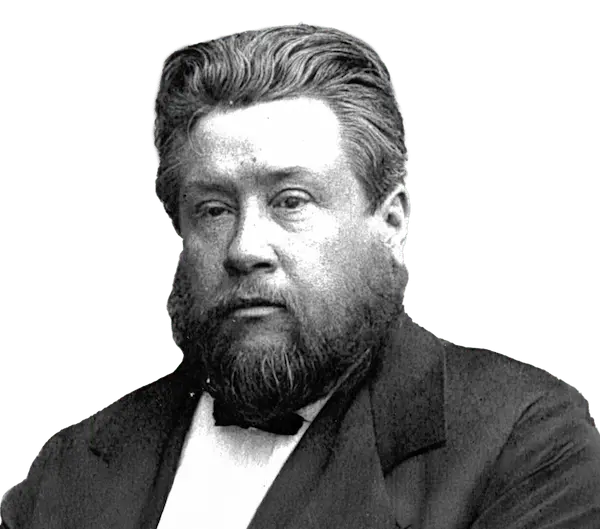
Charles Spurgeon Sermon
Fine Pleading
HOW gracious a thing it is on God’s part to make prayers for us! He puts them into our mouths. No one need say, “I cannot pray because I am unable to compose a sentence.” Here is a prayer already composed, which would be suitable for the lip of any one here present—high or low, rich or poor, saint or sinner. And it is a yet greater mercy that the God who thus gives us the form of prayer waits to give us the spirit of prayer, “for the Holy Spirit helpeth our infirmities.” Whereas we know not what we should pray for, as we ought, He “maketh intercession for the saints according to the will of God.” When He gives you the prayer, and gives you the power to pray it, what a sweet blessing!
But that is not all, for when the prayer is thus presented on earth aright, there waits one above, quick of ear and ready of plea, who takes the supplication, presents it before His Father’s throne, perfected by His wisdom, and perfumed by His merit, and then the Father smiles, and the prayer is answered with abundant blessing.
My prayer tonight is that many here present may take the words of our text and have them laid upon their souls like burning coals, and that then the smoking incense of holy prayer may go up to heaven, and the Lord may smell in it, through Jesus Christ, a sweet savor of rest.
We shall regard our text tonight in three lights—first, as a suitable prayer for every Christian, secondly, as a very fitting petition for distressed souls —I mean Christians who are desponding and have lost their evidences, and thirdly, as a very suitable cry for an awakened, seeking sinner .
My dear brethren in the faith, will you join me, then, under the first head, while we consider—
I. HOW SUITABLE THIS PRAYER IS FOR EACH OF US WHO ARE IN CHRIST JESUS.
You will observe that he who prays here asks for no exceptional favor . He says, “Remember me with the favour that thou bearest unto thy people.” It is not an ambitious prayer that asks to be distinguished beyond the rest of the beloved family. It is not a discontented prayer that seeks to have some special blessing which shall be denied to the rest of the Christian brotherhood. It is a prayer for benedictions common to all the saints.
“Remember me with the favour which thou bearest to thy people.” And this is a lesson for us in our prayers. For instance, nature suggests to me that I should pray to be saved of all bodily pain, but that is not a favor which God bears towards His people. Many of His people here endure even excruciating pain—some in the pangs of martyrdom, and others through His laying His hand upon them in natural sickness. He never intended to keep His people from pain. He had a Son without sin, but He never had a Son without suffering.
The perfected One, the Firstborn, must have hands and feet pierced, and every nerve must become the means of fresh agony to Him. I dare not, therefore, pray, “Lord, keep me from all physical pain.” Why should I ask to have what He has not given to the rest of His people? Nay, if there be a cup on the table that tastes of the bitter, and He means it for the sons, let me have my share, and His love with it.
So too, I have no right to ask God to preserve me in riches, or in a comfortable position, or to keep me from poverty. I may ask this, but it must always be with complete submission to the divine will, for who am I that I should not be poor? Better ones by far than I have been poor—much poorer than I am likely to be. Why am I to expect to go to heaven by a smooth, grassy road, while others have had to tread the flints that cut their feet?
“Must I be carried to the skies, On flowery beds of ease, While others fought to win the prize, And sailed through bloody seas?”
To desire to escape from every form of trial is natural to us, but it is not a dictate of grace that we should turn it into prayer. No, be content with the common lot of God’s people. “Shall the disciple be above his Master? Shall the servant be above his Lord?” Let this content you, “Father, whether healthy or sick, whether rich or poor, whether honored or despised, extend to me the favor which You have toward Your people; and my largest desires can ask no more.” But please observe, next, that while this prayer asks for nothing more than the common blessing, it also is content with nothing less.
“Extend to me that favor, Lord, Thou to Thy people dost afford.”
It is the same favor that is extended to them that is asked for, for brethren, anything short of this will not answer our turn. I would desire, and I know you do, my brethren, to have that favor from God which is eternal—that favor which has no beginning—that everlasting favor which was in the Divine mind or ever the earth was. You want to have also immutable favor, the favor that never changes. Though we change, yet it abides the same. What would you do if the favor of God were changeable? Of what avail would His love be, if that love could come and go—could sometimes give, and then again could take away itself?
You want immutable favor. And I know you want boundless favor, for your wants are unlimited.
You want the love of Christ that passes knowledge, you want it in all its heights and all its depths, you want the very heart of God, you want His bowels of compassion, you want a Savior to be one with you, and yourself to be one with Him. You would not like to be put off with a crown, you would not like to be put off with an empire, or with all that earth calls good and great. You want no more, but you want no less than such favor as the Lord extends towards those that He loves, who are the objects of His sacred choice. No more. No less.
You must note, next, in the prayer what is peculiarly to be observed—that he who is praying in this case asks for blessings on the same footing as the rest of the saints . You will observe that it is on the footing of grace. He asks that he may have the favor which God bears towards His people. “Favor.” If there be one saved who has been a great offender against God’s law, immoral, debauched, and depraved, it must be by favor.
And, dear Christian friend, whoever you may be, there is no other way in which you can be saved, and you know it. When the Lord extends the blessings of the covenant to gross sinners, it is clear that they are given to them simply because He will have mercy on whom He will have mercy. But to you, also, the favor comes in precisely the same way. I am sure you dare not ask God to deal with you on the ground of merit, for what were your merits, O you saints—what were your merits, but to merit the eternal flames?
You ask the Lord that He would extend to you, not the dealings of His justice, but that He would remember you with the compassions of His grace, is there any professed Christian here that refuses to stand on such terms as these, and come to God and ask for favor—for gratuitous mercy? Then, friend, you are no child of God. Whatever else the children differ in, they never disagree in this—that “salvation is of the Lord,” and is of grace, and of grace alone.
Your spot is not “the spot of His children,” unless you look at even the bread you eat and the raiment you wear as the gift of divine charity, and unless you found all your hope for pardon of sin, and for acceptance at the last, entirely upon the free, undeserved, spontaneous favor of the Lord your God.
Well then, you see, what we ask for is what He gives to all His people—no more, no less, and we ask for that, not as our due, but as a favor—a favor for which we will bless Him in life, and bless Him in death, if He will but remember to grant it to us.
Still looking at our text as the Christian’s prayer, I would observe that he wishes, according to the text, that the same results may follow as in the case of all God’s people, for he adds, “Visit me with thy salvation.” Beloved, God’s favor ends in salvation, and that word “salvation” is a very extensive term. If you read the psalm you will see that the psalmist evidently uses it, first, in the sense of deliverance. The children of Israel came to the Red Sea, and they were afraid that there they should be destroyed, but God led them through the deeps as through the wilderness.
Well then, when I pray this prayer, “O Lord, remember me with the favour that thou bearest thy people,” I mean this—“When I come into any trouble, I ask You to help me to go through it. As You did make a way through the Red Sea for Your people of old, make a way for me.” Oh! how often does God do this for us! When it seems as if the obstacles were almost insurmountable—when our wit seems to have failed us, and we can do no more—we have been ready to say, “Alas! Master, what shall we do?” Then our extremity has been the divine opportunity, and through the depths of the sea He has led His rejoicing people. Then the word salvation is meant in the psalm evidently to include the forgiveness of sins, for you remember, as we read the psalm, how the sins of Israel were mentioned over and over again.
But it is added, “Nevertheless, when they cried unto him, he heard their prayers.” So if I use this prayer, I am to mean just this, “Lord, You are accustomed to forgive Your people. Forgive me. You do blot out their sins like a cloud. Blot out mine. You do, moreover, help Your children to overcome their sins. Help me, sanctify me, spirit, soul, and body. You do preserve Your people in temptation and bring them out of it. Gracious Shepherd, keep me as one of Your flock. You do save your children in the hour of great peril, and as their day, so is their strength. Oh! infinite preserver of Your beloved, cover me with Your feathers, and under Your wings permit me to trust. Let Your truth be my shield and buckler!” I think it is a very, very sweet prayer. “Visit me with Your salvation when I am on my bed, tossing to and fro, and raise me up if it is Your will. Visit me when I am slandered, and my name is cast out as evil, and cheer Your servant’s heart. Visit me when I am in the deep waters and the depths overflow me—when I sink in deep mire where there is no standing. Come and prove Your saving might. Visit me when I come to die. When the chill floods of the last river are about me, visit me with Your salvation.
Then deal with me as You have dealt with Your saints whenever they have passed through the Valley of the Shadow of Death. May Your rod and Your staff comfort me. Visit me with Your salvation.” I suggest, Christian brethren, that this prayer will do for you living, and will do for you dying. It is a suitable prayer for the morning and for the evening, for the young and for the old, for days of joy and days of distress. Blessed prayer, let it be often on your lips!
Only one more remark we will make upon it in reference to the Christian. You observe that all through it is a personal prayer . Our prayers must not always be personal. Our Savior has taught us not to say, “My Father,” but “Our Father which art in heaven.” Yet, for all that, he who never prays for himself in the singular never prayed aright for others in the plural. If you have never said, “Lord, remember me,” you have not got so far as the thief on the cross. You are not qualified at all to go as far as Abraham on the plains of Mamre, when he interceded for others. He that has the largest heart must look to it that his own personal salvation is secure.
So, dear friend, professing Christian, let me ask you to take the prayer in the first person singular, and say, “Lord, remember me with the favor which thou bearest unto thy chosen.” I pray it. If You call me, Lord, to minister to this great people, as my day is, so may my strength be. As You have dealt with others of Your servants in a like position, deal so with me. elders and deacons, with your responsibility upon you, pray that the God of Stephen and the God of Philip will be with you, and extend to you the favor which He gave to elders and deacons of old!
Mothers, fathers, ask for the grace that He gives to Christian parents. Children, servants, ask for the grace that He has been wont to give to those in your position. You who are rich, pray often that you may not miss the divine favor, for these things are often dangerous. You that are poor, pray that you may have this to sweeten all—to make your little to be enough.
You that are in health, pray this, lest the vigor of your body be the weakness of your soul. And you upon whose cheek there is the hectic flush of consumption—you that are weak and near departure—you have got already your death-song ready. Here it is—“Lord, remember me! Remember me, O LORD, with the favor which thou bearest toward thy people: O visit me with thy salvation.” I leave that prayer with every Christian heart here and ask that it may be engraven there by the Holy Spirit.
This prayer is also—
II. A FITTING PRAYER FOR DEPRESSED, DESPONDING SOULS.
They are God’s people and we give to them now this prayer, and we trust that as they pray it they may have “the oil of joy given them for mourning, and the garment of praise, instead of the spirit of heaviness.” I ask them to look very briefly, but with all their eyes, at this prayer. You will note that here is a case in which a good man may seem to be forgotten . It is a good man that wrote this psalm—an inspired man, and yet he says, “Remember me, O LORD.” Did he think himself forgotten? He feared he was.
There have been others of God’s saints who have endured this fear. Yea, a whole church has sometimes labored under it. Zion said, “My God hath forsaken me. My God hath forgotten me.” Thus you may be, as you think, forgotten, and yet you may be very dear to God—as dear as ever you were.
Notice, next, that when you, child of God, come into this condition, the very best prayer you can pray is a sinner’s prayer . Why do I call this a sinner’s prayer? Why, because it so reminds me of the dying thief. “Lord, remember me,” was such a suitable prayer for him.
Oh! child of God, if you doubt your own salvation, do not dispute about it, but go as a sinner, use a sinner’s prayer, begin where the dying thief began with, “Lord, remember me.” I would recommend to every Christian who is in the dark, and has lost his evidences, to go at once by the old track that sinners have trodden so long. “I will go to Jesus, though my sin doth, like a mountain, rise. I know His courts; I will enter in.” Go to Him. Go even now.
And you will observe too, that for a desponding soul it is good to remember that everything it can obtain in the future by God must be by favor . “Remember me, O LORD, with the favor.” I dwelt on this when speaking to the child of God in the light, but it is even more important that we should dwell on this when speaking to the child of God in the dark, for the danger is when you are desponding to begin to become legal.
Your own conscience and Satan together will be setting you upon legal methods of getting comfort.
They are all fruitless. Go on the track of grace. Free grace is what you want, and nothing else will suit you. Cry, “Lord, remember me with Your favor. Give me what You could not give me as a mere matter of justice! Deal with me as you could not deal with me if You did see me in myself as guilty before You! Deal favorably with Your servant. Have a favor towards me, for this alone can restore me.” And then, next, it is good for a person who is in distress to remember that God’s favor towards His own people does not change, for evidently this good man, though he asked God to remember him, had not any doubt whatever that God had a favor towards His own people. Nothing like being sound in doctrine to help you towards comfort. If a man shall doubt the perseverance of the saints, and believe that God will cast away His people, I really do not see what he has to do when he is brought into distress of mind.
But if he still holds to this, “Truly the LORD is good to Israel—to such as be of a clean heart. As for me, He may have forgotten me. I fear I am not one of His, but I know He would not forget His own”— why, then the fact of the immutability of God towards His people becomes, as it were, as an argument, and we come before the Lord with better heart and greater hope, and say, “Lord, since You never change towards them, introduce me into their number, and let Your eternal love pour forth itself on my poor, broken, disconsolate spirit. Remember me—poor, fallen, backsliding me—with the favor, the free grace which You have towards Your people.” It is well to hold to truth, for it may serve us like an anchor in the day of storm.
Once again. Let me speak to the depressed, and remind them that the prayer is instructive, for it shows that all that is wanted for a forsaken, forgotten spirit is that God should visit it again . “Remember me, O LORD . Anybody else’s remembering can do me no good, but if You only give one thought toward Your servant, it is all done. Lord, I have been visited by the pastor, and he tried to cheer me. I have had a visit in the preaching of the Gospel in the morning and the evening of Your day. I went to Your table, and I did not get encouragement even there. But, Lord, You visit me!” A visit from Christ is the cure for all spiritual diseases. I have frequently reminded you of that in the address to the church at Laodicea. The church at Laodicea was neither cold nor hot, and Christ said that He would spew it out of His mouth, but do you know how He speaks of it as if He would cure it?
“Behold, I stand at the door and knock. If any man hear my voice and open the door, I will come in and sup with him, and he with me.” That is not an address to sinners. It is sometimes used so, but it is rent out of its context. It is evidently an address to a church of God, or a child of God, who has lost the presence and the light of God’s countenance. All you want is a visit from Christ. All you want is that once again your communion should be restored, and I do bless the Lord that He can do that of a sudden, in a moment! He can make your soul, “before it is aware, like the chariots of Amminadib.” You may have come here tonight about as dead in soul as you could be, but the flashes of eternal life can reach you, and kindle a soul within, within the ribs of your old dead nature once again. You may have felt as if it was all over, and the last spark of grace had gone out, but when the Lord visits His people, He makes the wilderness and the solitary place to rejoice, and the desert to blossom as the rose. I do pray it may be such a happy hour to you that the prayer may be fulfilled, “Visit me with thy salvation.” I have great sympathy with those that are cast down. God, the comfort of those that are cast down, comfort you! May He bring you out who are bound with chains, and you solitary ones, may He set you in families! And I do not know a wiser method for you to pursue than incessantly to cry unto Him, and let this be the prayer, “Remember me— me —with the favour which thou bearest unto thy people: O visit me with thy salvation.” And now our last point. This is—
III. A VERY PROPER PRAYER FOR THE AWAKENED, BUT UNFORGIVEN SINNER.
There are some in this house of that character. I know there are unforgiven sinners here. I only hope that some of them are awakened to know the danger of their state. If they are, may God help them to pray this prayer, because, first, it is a humble prayer . “LORD, remember me”—as much as to say, “Lord, give one thought to me. I am a poor miserable sinner. I am not worth much thought, but Lord, do at least recollect me. Pass me not, O healer of sin-sick souls. Pass me not. Hear my cry, answer my anguish, regard the desires of my soul. Remember me!” It is an earnest prayer too. No doubt it was earnest as this inspired man prayed it. It breathes life as you read it.
Oh! dear heart, if you want a Savior, be in earnest for Him. If you can take “no” for an answer, you shall have “no” for an answer, but if it comes to this, “Give me Christ, or else I die!—I must have mercy”—you shall have it. When you will have it, you shall have it. When God stirs you up to agonize for a blessing, the blessing shall not delay.
Note that this prayer, which I can recommend to you, is not only humble and earnest, but it is a prayer directed in the right way . It is to God alone. “Remember me, O LORD . Visit me, O LORD , with thy salvation.” All our help lies yonder. There is none here. There is none in any man. No priest can help you—no friend nor minister. When you apply to us we might say what the king of Israel said to the woman in Samaria, when it was straitly shut up with siege, “If the LORD do not help thee, whence shall I help thee? out of the barn floor, or out of the winepress?” There is nothing we can do. “Vain is the help of man!” Turn your eye to God alone—to the cross where Christ suffered. Look there, and there only, and be this your prayer, “LORD, remember me!” When the thief was dying, he did not say, “John, pray for me.” John was there. He did not look on the mother of Christ and say, “Holy Virgin, pray for me.” He might have said it. He did not turn to any of the apostles, or the holy company that were around the cross. He knew which way to look, and turning his dying eye to Him who suffered on the center cross, he had no prayer but this, “LORD, remember me.” ’Tis all you want. Pray to God, and God alone, for from Him alone must mercy come to you.
Observe, again, O sinner, if you would use this prayer, that it is a personal prayer for you . “LORD, remember me.” Oh! if we could get men to think of themselves, half the battle would be over. Who are you? Who are you? I would put this prayer into your mouth, whoever you may be, “Lord, I have been a Sabbath breaker this day. All the early part of it was spent as it ought not to be, but Lord, remember me.” “O God, I have been a drunkard. I have broken all the laws of sobriety—have even blasphemed Your name, but Lord, remember me,” Is there one here into whose mouth I might put such words as these, “Lord, I stand trembling before You, for I am a woman that is a sinner. Lord, remember me. Call on me with the favor that You bear to Your people. As you did look on the woman of Samaria, so look on me”? Is there one here that has been a thief—almost ashamed to have the word mentioned, lest those who sit near should look at you? Well, this is peculiarly the thief’s prayer, “Lord, remember me.” How I wish I could come round now! I should not know who you were, but oh! if I could, I would put this right into your heart, “LORD, remember me.” Up in the back gallery, where you can hardly hear, and cannot see, it is a good place to pray in—a capital place, there hidden away in the corner, to breathe the cry, “O God, remember me!” Another thing about this prayer is that it is a Gospel prayer . It says, “Remember me with thy favour.” Everything a sinner gets must come by favor. It cannot come anyhow else, for if you get what you deserve, you will get no love, no mercy, no grace. Oh! sinner, do come to God on the footing of favor, and say, “For Your name’s sake, and for Your mercy’s sake, have pity upon poor undeserving me.” It is a Gospel prayer.
Once again. It seems to me to be an argumentative prayer . “Where is the argument?” say you. Why, here, ‘“Thou hast had favour towards thy people.’ Lord, have favor towards me.” It is always an argument for a man to do a kindness to you if he has done a kindness to others. We generally say, if we are very poor, “Such a one has been helping poor people like me.” There is a sort of implied argument that he will help you, being in the same case.
Can you see it? There are the gates of heaven. Can you bear the luster of those massive pearls? I want you not to look at them, however. Do you see them? Do you see them who are streaming through in long ranks? They go through like a mighty river. There are hundreds, there are thousands, there are tens of thousands of them. Who are they? Who are they?
They are, all of them, sinners—just such as I am, dear friend—just such as you are. They are all clothed in white now, but their robes were all black once. Ask them, and you will hear them say they washed their robes and made them white in the blood of the Lamb. Ask every one of them how it is they passed so happily through that pearly gate into the golden-streeted city, and they will all tell you, “with united breath,” that they—
“Ascribe salvation to the Lamb; Redemption to His death.”
Oh! I will e’en creep in that way. Ah! through the sinners’ Savior I hope to find a passage to the sinners’ heaven, where sinners washed white dwell forever. There is an argument in the prayer. I hope you will have skill to use it till you prevail.
Once again, I commend this prayer to the awakened sinner because it is a prayer for a helpless soul, for it says, “Oh! visit me with thy salvation.” There are patients in London who would be very glad to be received into a hospital. They would be glad if they could be carried tomorrow morning into some one of those noble institutions, there to be cared for. But there are people worse off than they are, for there are some that could not be carried to a hospital, for they would die on the road. If they are ever to be healed at all, they are in such a bad case that the doctor must come to them.
Oh! and that is a sinner’s case too, and some feel it, and hence the prayer, “Visit me with thy salvation.” “Here, Lord, I lie before You, so ruined by my sin that I can scarce turn even an eye to the cross, I am so blind. ’Tis true Your grace can save, but my hand is paralyzed, and I cannot grasp Your grace. ’Tis true Your love can penetrate my heart, but ah! my heart feels so hard, how can Your love get into it? O Savior, You must do all for me, for mine is a desperate case.” Such cases Christ loves. He came to seek and save—not the half-lost, but the lost. Commit your desperate case into His hands, who has saved desperate sinners thousands of times, and will save them yet. I do pray that before you rest tonight—before you go to your bed, and dare close your eyes—this may be your heart’s prayer, “O LORD, remember me with the favour which thou bearest to thy people. Visit me with thy salvation.” I can do no more than leave it in the hands of the Eternal Spirit. May He bless the word, for Christ Jesus’ sake. Amen.
EXPOSITION BY C. H. SPURGEON PSALM 116:10-19, SONG OF SOLOMON 2:1-7
The whole psalm is one of joyous thanksgiving because of God’s mercy to the singer. He had been in deep waters of trial and affliction, but had not been suffered to sink. He had known fierce assaults of sin that threatened tearful eyes and falling, stumbling steps, but God had upheld and strengthened. As he recalls all this, he longs to make some return by way of praise, and witness to others. Hence he now inquires.
Psalm Chapter 116. Verses 10-11. I believed, therefore have I spoken: I was greatly afflicted: I said in my haste, All men are liars.
And uncommonly near the truth he came, even though he was in a hurry in saying it, for if you trust in any men they must be liars to you. They will fail you, either from want of faithfulness, or else from want of power. There are pinches where the kindest hand cannot succor. There are times of sorrow when she who is the partner of your bosom cannot find you alleviation. Then you will have to come to God, and God alone, and you will never find Him fail you. The brooks of the earth are dry in summer, and frozen in winter. All my fresh springs are in You, my God, and there neither frost nor drought can come.
Happy man who has got right away from everything to his God.
12. What shall I render unto the LORD for all his benefits toward me?
Here we see gratitude is springing up in this man’s breast. He lives upon God, and he loves God, and now the question comes, “What shall I do for God?” Service is not first. We make a mistake when we begin with that. No, we begin as he did, with “I love the Lord.” Tell what the Lord has done for you, and then go on to, “What shall I render unto the LORD for all his benefits toward me?”
13-15. I will take the cup of salvation, and call upon the name of the LORD. I will pay my vows unto the LORD now in the presence of all his people. Precious in the sight of the LORD is the death of his saints.
We do well to notice those deaths, for God notices them. They are among His precious things. And if God thinks so much of dying saints, depend upon it He will not forget the living ones. He will help us.
He will help us to the end.
16. O LORD, truly I am thy servant; I am thy servant, and the son of thine handmaid: thou hast loosed my bonds.
What a sweet thing to be the servant of God. Well does David say it twice over. Well does he delight to look upon himself as a slave that was born in his Master’s house. “My mother,” says he, “was one of thy servants. I am the son of thy handmaid.” Oh! it is a blessed thing to be able to be God’s every way— to feel in looking back, “I am not only His by redemption and by the new birth, but I seem as if I was bound to be His by a long ancestry of men and women, whom His sovereign grace called to Himself.” Grace does not run in the blood, but it is a great mercy when it runs side by side with it, and when the handmaiden of the Lord is mother of a man who is a child of God as well as her child.
“Thou hast loosed my bonds.” You are never quite free—you have never got your bonds all loosed—till you can doubly feel the bonds of God. Read that, “I am thy servant; I am thy servant.” That is two blows. “Thou hast loosed my bonds.” There is no freedom except in perfect subjection to the will of God. When every thought is brought into captivity to the mind of God, then every thought is free.
You have heard much of the freedom of the will. There is no freedom of the will till grace has bound the will in fetters of divine affection. Then is it free, and not till then. “I am thy servant—thy servant; thou hast loosed my bonds.” 17. I will offer to thee the sacrifice of thanksgiving, and will call upon the name of the LORD.
He has been doing it. What a man has done he will do. Oh! it is a blessed thing that the children of God at last catch a habit of devotion. Just as the sinner continues in his sin, so may I venture to say, “Shall the Ethiopian change his skin, or the leopard his spots?” If so, then he that has once heartily learnt to praise his God may begin to forget to do so. Use is second nature, and the holy use to which God has put us by His grace shall be our nature forever.
18-19. I will pay my vows unto the LORD now in the presence of all his people, in the courts of the LORD’S house, in the midst of thee, O Jerusalem. Praise ye the LORD.
I see that David liked company. He would have been happy here, though we meet under conditions not wholly pleasant. He would have been glad to be in the midst of a smiling company of grateful saints, who could all say, “That is true, David. What you have written of yourself, you might have written of each one of us, and we can each one say, ‘I love the Lord because He has heard my voice and my supplications.’” SONG OF SOLOMON 2:1-7 We believe that this song sets forth the mutual love of Christ and His believing people. It is a book of deep mystery, not to be understood except by the initiated, but those who have learnt a life of sacred fellowship with Jesus will bear witness that when they desire to express what they feel they are compelled to borrow expressions from this matchless Song.
Samuel Rutherford, in his famous letters, when he spoke of the love of Christ as shed abroad in his heart, perhaps was scarcely conscious that he continually reproduced the expressions of the song, but so it is. They were naturally fresh enough from him, but they came from this wonderful book. It stands in the middle of the Bible. It is the holy of holies—the central point of all. Thus He speaks—the glorious “greater than Solomon.”
Chapter 2. Verses 1-2. I am the rose of Sharon, and the lily of the valleys. As the lily among thorns, so is my love among the daughters.
So does Christ’s church spring up singular for her beauty—as much different from the world—as much superior thereto as the lily to the thorns. Now see how she responds and answers to Him.
3. As the apple tree among the trees of the wood, so is my beloved among the sons. I sat down under his shadow with great delight, and his fruit was sweet to my taste.
To Him there is none like her, to her there is none like Him. Jesus values His people. He paid His heart’s blood for their redemption, and “unto you that believe, he is precious.” No mention shall be made of coral or of rubies in comparison with Him. Nothing can equal Him. There are other trees in the wood, but He is the one lone fruit bearing—the citron tree, whose golden apples are delicious to our taste. Let us come up and pluck from His loaded branches this very night.
4. He brought me to the banqueting house, and his banner over me was love.
You and I know what this means—at least, many here do. You know how delightful it is to feel that it is not the banner of war now, but the banner of love, that waves above your head, for all is peace between you and your God. And now you are not brought to the prison house or to the place of labor, but to the banqueting house. Act worthily of the position which you occupy. If you are in a banqueting house, take care to feast.
5. Stay me with flagons, comfort me with apples: for I am sick of love.
Oh! that I knew Him better! Oh! that I loved Him more! Oh! that I were more like Him! Oh! that I were with Him! “I am sick of love.”
6-7. His left hand is under my head, and his right hand doth embrace me. I charge you, O ye daughters of Jerusalem, by the roes, and by the hinds of the field, that ye stir not up, nor awake my love, till he please.
If He be with me, may nothing disturb Him—nothing cause Him to withdraw Himself. Our Lord Jesus is very jealous, and when He manifests Himself to His people, a very little thing will drive Him away like the hinds and the roes that are very timid, so communion is a very delicate and dainty thing. It is soon broken. Oh! may God grant tonight that nothing may happen to the thoughts of any of you by which your fellowship with Christ should be destroyed.