
Samuel—an Example of Intercession
Charles Spurgeon Sermon
Samuel—an Example of Intercession
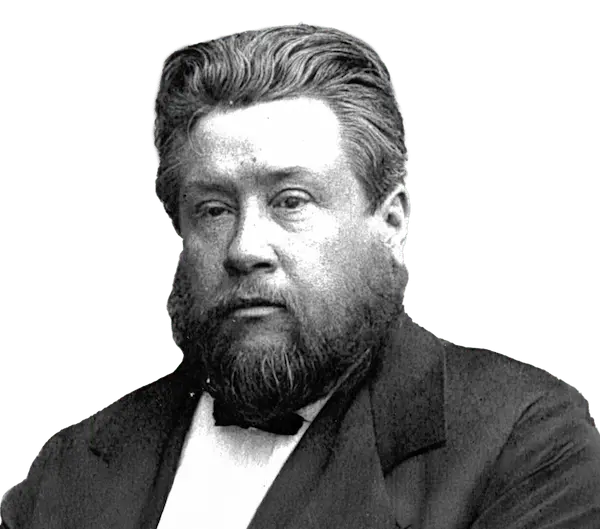
Charles Spurgeon Sermon
Samuel—an Example of Intercession
IT is a very great privilege to be permitted to pray for our fellow-men. Prayer in each man’s case must necessarily begin with personal petition, for until the man is himself accepted with God, he cannot act as an intercessor for others and herein lies part of the excellence of intercessory prayer, for it is to the man who exercises it aright a mark of inward grace and a token for good from the Lord. You may be sure that your King loves you when He will permit you to speak a word to Him on behalf of your friend.
When the heart is enlarged in believing supplication for others, all doubts about personal acceptance with God may cease; He who prompts us to love has certainly given us that love and what better proof of His favor do we desire? It is a great advance upon anxiety for our own salvation when we have risen out of the narrowness of dread about ourselves into the broader region of care for a brother’s soul. He who in answer to his intercession has seen others blessed and saved may take it as a pledge of divine love and rejoice in the condescending grace of God. Such prayer rises higher than any petition forourselves, for only he who is in favor with the Lord can venture upon pleading for others. Moreover, it shows an enlarged heart, a participation in the spirit of love and a growing likeness to Christ. Earnest longings for the good of those around us show that we are beginning to take our right position towards our fellow men and are no longer living as if we were ourselves the sole end and aim of our ownexistence.
Intercessory prayer is an act of communion with Christ, for Jesus pleads for the sons of men. It is a part of His priestly office to make intercession for His people. He has ascended up on high to this end and exercises this office continually within the veil. When we pray for our fellow sinners we are insympathy with our divine Savior who made intercession for the transgressors. It is well to remember that wondrous text from which we preached the other Sunday morning, [Sermon #1535— Christ’s Universal King- dom, and How It Comes ] “Ask of Me, and I shall give You the heathen for Your inheritance;” when we beg for conversions we are asking for Christ, and with Christ, and herein we have fellowship with Him.
Such prayers are often of unspeakable value to those for whom they are offered. Many of us trace our conversion, if we go to the root of it, to the prayers of certain godly persons. In innumerableinstances the prayers of parents have availed to bring young people to Christ. Many more will have to bless God for praying teachers, praying friends, and praying pastors. Obscure persons confined to their beds are often the means of saving hundreds by their continual pleadings with God. The book ofremembrance will reveal the value of these hidden ones, of whom so little is thought by the mass of Christians.
As the body is knit together by bands and sinews, and interlacing nerves and veins, so is the whole body of Christ converted into a living unity by mutual prayers; we were prayed for and now in turn we pray for others. Not only the conversion of sinners, but the welfare, preservation, growth, comfort, andusefulness of saints are abundantly promoted by the prayers of their brethren; hence apostolic men cried, “Brethren, pray for us.” He who was the personification of love said, “Pray one for another that you may be healed,” and our great Lord and Head ended His earthly career by a matchless prayer for those whom the Father had given Him.
Intercessory prayer is a benefit to the man who exercises it and is often a better channel of comfort than any other means of grace. The Lord turned again the captivity of Job when he prayed for his friends. Even where such prayer does not avail for its precise object, it has its results. David tells us that he prayed for his enemies. He says, in Psalm 35:13, “As for me, when they were sick, my clothing was sackcloth: I humbled my soul with fasting.” And he adds, “My prayer returned into my own bosom.” He sent forth his intercession, like Noah’s dove, but as it found no rest for the sole of its feet and noblessing came of it, it returned to him who sent it and brought back with it an olive leaf plucked off, a sense of peace to his own spirit, for nothing is more restful to the heart than to have prayed for those whodespitefully use us and persecute us. Prayers for others are pleasing to God and profitable to ourselves; they are no waste of breath, but have a result guaranteed by the faithful Promiser.
I commend, therefore, to you, my brethren and sisters in Christ, the abundant resources ofintercessory prayer. Use them without stint. My friend, hast you nothing to ask for for yourself? Then you are indeed very rich, but if you have ever come to such a height of happiness as that, now use your power in prayer for the church and for the world. Are you, like Elijah, perfectly content with the barrel of meal and the cruse of oil, which your God so marvelously multiplies for your support? Then pray Him to send a sound of abundance of rain for the sake of the multitudes that are perishing with famine. What if, like Abraham, you are yourself secure, yet pray for the cities of the plain which are soon to be overwhelmed with destruction. If. Like Esther, you dwell in the king’s palace, are you not come to the kingdom for such a time as this? Therefore, seek an audience of His royal Majesty and pray for those of your race who are in jeopardy. If like Nehemiah you hold a high position in the royal courts, turn it to account for the banished ones, and when you next wait upon the King, present to Him a petition for your brethren. It is to incite you to earnest intercession that I have selected this text. I would have you stirred up todiligent supplication by the example of Samuel, who is worthy to be placed in the very forefront ofintercessors.
I. Let us first dwell upon HIS HABIT OF INTERCESSION, for it was most manifest in Samuel. We gather this from the text. He says, “God forbid that I should sin against the Lord in ceasing to pray for you.” It is clear, therefore, that he had been in the continual habit and practice of praying for Israel; he could not speak of ceasing to pray if he had not hitherto continued in prayer. Samuel had become so rooted in the habit of prayer for the people that he seems to be amazed at the very thought of bringing his intercession to an end. The people, measuring the prophet by themselves, half suspected that he would be irritated with them and would, therefore, deny them his prayers. Therefore in the nineteenth verse we read, “All the people said unto Samuel, Pray for your servants unto the Lord your God, that we die not.” They greatly valued his prayers and felt as if their national life, and perhaps their personal lives, depended upon his pleadings. Therefore they urged him as men who plead for their lives that he would not cease to pray for them and he replied, “God forbid that I should.” The denial of his prayers does not seem to have entered his thoughts. To my mind the words represent him as astonished at the idea, horrified and half indignant at the suggestion, “What? I, Samuel, I who have been your servant from my childhood since the day when I put on the little ephod and waited for you in the house of the Lord? I that have lived for you and have loved you and was willing to have died in your service, shall I ever cease to pray for you?” He says, “God forbid.” It is the strongest expression that one can wellimagine and this, together with his evident surprise, shows that the prophet’s habit of intercession was rooted, constant, fixed, abiding, a part and parcel of himself.
If you will read of his life you will see how truly this was the case. Samuel was born of prayer. A woman of a sorrowful spirit received him from God and joyfully exclaimed, “For this child I prayed.” He was named in prayer, for his name, Samuel, signifies “asked of God.” Well did he carry out his name and prove its prophetic accuracy, for having commenced life by being himself asked of God, he continued asking of God and all his knowledge, wisdom, justice, and power to rule were things which came to him because “asked of God”. He was nurtured by a woman of prayer at the first and when he left her, it was to dwell in the house of prayer all the days of his life. His earliest days were honored by a divine visitation and he showed even then that waiting, watchful spirit which is the very knee of prayer.
“Speak, Lord, for Your servant hears” is the cry of a simple, sincere heart, such as the Lord ever accepts.
We all think of Samuel under that little figure so often painted and sculptured, in which a sweet child is seen in the attitude of prayer. We all seem to know little Samuel, the praying child. Our boys and girls know him as a familiar friend, but it is as kneeling with clasped hands. He was born, named, nurtured, housed, and trained in prayer, and he never departed from the way of supplication. In his case the text was fulfilled, “Out of the mouth of babes and sucklings You have perfected praise” and he so persevered in prayer that he brought forth fruit in old age and testified of God’s power to those who came after him.
So famous did Samuel become as an intercessor that if you will turn to the ninety-ninth Psalm, at the sixth verse, you will read a short but very fragrant eulogy of him, “Moses and Aaron among His priests and Samuel among them that call upon His name.” If Moses and Aaron are selected as beingconsecrated men, leaders of God’s Israel in service and sacrifice, Samuel is selected as the praying man, the man who calls upon God’s name. All Israel knew Samuel was an intercessor as well as they knew Aaron as a priest. Perhaps even more notably you get the same inspired estimate of him in Jeremiah 15, at the first verse, where he is again classed with Moses, “Then said the Lord unto me, though Moses and Samuel stood before Me, yet My mind could not be toward this people: cast them out of My sight and let them go forth.” Here there is no doubt an allusion to the prevalent prayer of Moses, when in the agony of his heart, he cried, “If not, blot me, I pray You, out of Your Book which you have written.” This was a high form of pleading, but such is God’s valuation of Samuel as an intercessor that He puts him side by side with Moses and by way of threat to sinful Israel, He tells Jeremiah that He would not even listen toMoses and Samuel if they stood before Him. It is well to learn the art of prayer in our earliest days, for then we grow up to be proficient in it. Early prayer grows into powerful prayer. Hear this, you young people, and may the Lord now make Samuels of you. What an honor to be called to intercede for others, to be the benefactor of our nation, or even the channel of blessing to our own households. Aspire to it, my dear young friends. Perhaps you will never preach, but you may pray. If you cannot climb the pulpit, you may bow before the Mercy Seat and be quite as great a blessing.
As to the success of Samuel’s prayers, read of his life and you will find that he worked greatdeliverances for the people. In the seventh chapter of this book we find that the Philistines grievously oppressed Israel and Samuel bravely called the people together to consider their condition and bade them turn from idolatry and worship the only true God, and he promised them his prayers as a gift which they greatly valued. These are his words, “Gather all Israel to Mizpeh and I will pray for you unto the Lord.” He then took a lamb and offered it up for a burnt offering wholly unto the Lord, “and Samuel cried unto the Lord for Israel and the Lord heard him.” This is one of the grand events of his life and yet it is fairlydescriptive of his whole career. He cried and the Lord heard. In this instance, the Israelites marched to battle, but Jehovah went before them, in answer to the prophet’s prayer. You could hear the rolling of the drums in the march of the God of armies and see the glittering of His spear, for so is the history of the battle recorded, “And as Samuel was offering up the burnt offering, the Philistines drew near to battle against Israel: but the Lord thundered with a great thunder on that day upon the Philistines anddiscomfited them; and they were smitten before Israel. And the men of Israel went out of Mizpeh and pursued the Philistines and smote them.” The conclusion of the whole is, “So the Philistines were subdued,” that is to say, the prayer of Samuel was the conquering weapon and Philistia crouched beneath its power. Oh you who know the power of prayer, write this on your banners, “So the Philistines were subdued.” Samuel’s prayers were so prevalent that the very elements were controlled by him. Oh, the power of prayer! It has been ridiculed, it has been represented as an unscientific and an unpractical thing, but we who daily try it know that its power cannot be exaggerated and do not feel even a shadow of a doubt concerning it. There is such power in prayer that it “moves the arm that moves the world.” We have but to know how to pray and the thunder shall lift up its voice in answer to our cry and Jehovah’s arrows shall be scattered abroad to the overthrowing of His adversaries. How should those be able to judge of prayer who never ask at all or never ask in faith? Let those bear witness to whom prayer is a familiar exercise and to whom answers from God are as common as the day. Over a father’s heart no power has so great a control as his child’s necessity and in the case of our Father who is in heaven it is especially so. He must hear prayer, for He cannot dishonor His own name or forget His own children.
When, in his old age, the people began to turn against Samuel and to express dissatisfaction with his unworthy sons, it is beautiful to notice how Samuel at once resorted to prayer. Look at the eighthchapter, the fifth verse. The people “said unto him, Behold, you are old and your sons walk not in your ways:
now make us a king to judge us.” The old man was sorely grieved. It was natural that he should be. But look at the next words. Did Samuel scold the people? Did he send them home in a huff? No. It is written, “And Samuel prayed unto the Lord.” He told his Master about them and his Master said to him, “Heark- en unto the voice of the people in all that they say unto you: for they have not rejected you” —do not lay it to heart as if it were a personal affront to you—“but they have rejected Me, that I should not reign over them.” This slight upon God’s servant was a rejection of God Himself and He would not have Samuel lay to heart their ingratitude to him, but think of their wicked conduct to the Lord their God.
Thus, you see, Samuel was a man of abundant prayer and in the twenty-first verse we read that after he had entered his protest and told the people of all that they would have to suffer from a king, how he would tax them and oppress them, and take their sons to be soldiers and their daughters to wait in his palace, and take their fields and vineyards, though they still persisted in saying, “Nay, but we will have a king,” he made no angry answer but returned to his God in secret communion. “Samuel heard all the words of the people and he rehearsed them in the ears of the Lord.” Oh, that we were wise enough to do the like! Instead of going about and telling one and another of the opprobrious things that have been said about us, it were well to go straight away to our closet and rehearse them in the ears of the Lord. Samuel was thus, you see, throughout his whole official life, a man mighty in prayer, and when the people left him and followed after their new-made king, our text shows that he did not cease to intercede for them.
He says, “God forbid that I should cease to pray to God for you.” Nor was this all, when Saul had turned aside and become a traitor to his divine Lord, Samuel made intercession for him. One whole night he spent in earnest entreaty, though it was all in vain, and many a time and often did he sigh for the rejected prince. The old man had been, from his youth up, anintercessor and he never ceased from the holy exercise till his lips were closed in death. Now, beloved, you are not judges of the land, else would I plead with you to pray much for the people whom you rule. You are not all pastors and teachers, else would I say that if we do not abound in prayer the blood of souls will be upon our garments. Some of you, however, are teachers of the young. Do not think that you have done anything for your classes till you have prayed for them. Be not satisfied with the hour or two of teaching in the week, be frequent in your loving supplications. Many of you are parents. How can you discharge your duty towards your children except you bear their names upon your hearts in prayer?
Those of you who are not found in these relationships have, nevertheless, some degree of ability, some measure of influence, some position in which you can do good to your fellows and these demand your dependence upon God. You cannot discharge your responsibilities as relatives, as citizens, as neighbors, no, as Christian men, unless you often make supplication for all ranks and conditions. To pray for others must become a habit to you from which you would not cease even if they provoked you to the utmost degree, for you would only cry out, “God forbid that I should cease to pray for you, for it would be a great sin in the sight of the Most High.” Thus have we enlarged upon our first head, the habit ofintercession.
II. Now, secondly, I call you to notice in Samuel’s case HIS PROVOCATION TO CEASE FROM INTERCESSION, which provocation he patiently endured.
The first provocation was the slight which they put upon him . The grand old man who had all the year round made his circuit from place to place to do justice had never looked at a bribe. He had done everything for them without fee or reward. Though he had a right to his stipend, yet he did not take it. In the generosity of his spirit, he did everything gratuitously, like Nehemiah, in later days, who said, “The former governors that had been before me were chargeable unto the people and had taken of them bread and wine, beside forty shekels of silver; yes, even their servants bare rule over the people: but so did not I, because of the fear of God.” Samuel, throughout a long life, had kept the land in peace andinnumerable blessings had come to Israel through his leadership, but now he was getting old and somewhatinfirm, though he was far from being worn out, and they seized on this excuse for setting up a king. The old man felt that there was life and work in him yet, but they clamored for a king and therefore their aged friend must give up his office and come down from his high position. It displeases him when he first hears their demand, but after a little time spent in prayer he resigns his position very pleasantly and all his anxiety is to find the right man for the throne. When the man is found, he is full of care that the Lord’s anointed shall be guided aright in the kingdom and without a thought about himself, he rejoices at the sight of one whose opening days promised so well. His deposition was a hard thing, mark you, an unkind, ungenerous thing, but he did not pray one atom the less for the people because of it. He probably prayed much more, for as his mother prayed most when the sorrow of her heart was greatest, so was it with him. You can see the son in the mother in many respects and in this point in particular that he prays most when he is most grieved. As the sandalwood tree perfumes the axe which smites it, so his bleeding heart poured out petitions for those who grieved him.
Beyond the provocation which came from slight upon himself, he felt wounded by their utter rejec- tion of his solemn protest . He stood before them and reasoned with them in the clearest possible manner, “What do you want a king for?” he seemed to say. “This will be the manner of the king that shall reign over you. He will take your sons and appoint them for himself, for his chariots and to be his horsemen; and some shall run before his chariots. He will take your daughters to be confectionaries and to be cooks, and to be bakers; and he will take your fields, and your vineyards and your olive yards, even the best of them and give them to his servants. “He will take the tenth of your seed and of your vineyards, and give to his officers and to his servants; and he will take your menservants and your maidservants and your best young men, and your asses, and put them to his work. He will take the tenth of your sheep and you shall be his servants; and you shall cry out in that day because of your king which you shall have chosen; and the Lord will not hear you in that day.” There was sound common sense in all these and every word turned out to be true in fact before long, and yet they would not listen. They said, “No, but we will have a king over us; that we also may be like all the nations; and that our king may judge us and fight our battles.” Despite their rejection of his warning, the venerable man did not grow testy. It is sometimes the infirmity of wise men of years and weight, that when they have presented a clearer case, presented it earnestly in all simplicity of heart and the thing looks as plain as that twice two make four, then if their hearers deliberately persist in defying their warning they grow peevish, or perhaps it is more fair to say they exhibit a justifiable indignation. Some aged men would have said, “Well, then, I will have nothing further to do with you; I shall go somewhere else. I shall leave Ramah and journey to some other land where, perhaps, they may hear the Word of the Lord.” Not so, he is always hopeful and if they will not do the best thing possible, he will try to lead them to do the second best. If they will not abide under the direct rule of the Lord, as their King, he hopes that they will do well under a human king who shall be a viceroy under God and so he continues hopefully to pray for them and to make the best he can of them.
At last it came to this, that the nation must have a king and their king must be crowned. They must go to Gilgal to settle the kingdom and then Samuel stood up and in the words which I read to you just now he declared how he had dealt with them, how he had never defrauded nor oppressed, nor takenanything from them, and he told them that their choice of a king was to some extent a rejection of God, that they were putting aside the best of rules and the most honorable of governments to go down to the level of the nations. Still, they rejected his last appeal and it is beautiful to my mind to see how calmly he drops the question when he has given his last address and made his most solemn appeal to heaven. Their obstinate adherence to their whim did not cause him to restrain prayer on their behalf. “God forbid,” says he, “that I should cease to pray for you.” The practical lesson of this is that when you are tempted to cease from pleading for certain persons, you must not yield to the suggestion. They have ridiculed your prayers. They tell you that they do not want them. They have even made a taunt and a jest of your pious wishes on their behalf. Never mind.
Retaliate by still greater love. Do not cease to wrestle with God for them. It may be you have been very much disappointed in them. Your heart breaks to see how they have gone aside, yet go with your deep anxieties to the Mercy Seat and cry out again for them. What will become of them if you leave them to themselves? Do not leave off interceding, though you are provoked to do so in ten thousand ways.
In addition to this, you see that, after clearly putting the case in this earnestness of your soul before them, they reject the right and they choose the evil, but let not that daunt you. Never let a sinner master you and he will have done so if by his sin he drives you to neglect prayer.
It may be that you think, partly in unbelief and partly through trembling anxiety, that really their doom is sealed and they will go on to perdition. Let this rather increase the intensity of your prayer than in the least degree diminish it. Till sinners are in hell cry to God for them. As long as there is breath in their bodies and your body, cause the voice of your supplication to be heard. When once souls pass into the spirit-world prayer is unavailing, but up to the last hour it may prevail. Perhaps you have sometimes been tempted to wish you could pray for the dead; let that vain wish stimulate you to be in earnest for the living. Agonize in prayer while your entreaties can be heard. Cry mightily unto God whatsoever happens to damp your hopes, considering that it is a temptation of Satan if it is suggested to you that you should cease to supplicate. Your husband, good woman, what if he does grow more drunken and more profane, pray for him still; for God, who can draw out leviathan as with a hook, can yet take this great sinner and make a saint of him. What if your son seems to be more profligate than ever? Follow him with many entreaties and weep before God about him still. Loving mother and gracious father, join your fervent cries day and night at the Mercy Seat and you shall yet obtain your desire. Let nothing quench the flame upon the altar, nor the hope in your souls.
As I have already said, Samuel prayed all the more because of the trouble that came upon him. Let it be so with you. Samuel never could separate himself from the people; he never tried to disentanglehimself from being one with them, but he laid their case upon his breast. He was the very heart of Israel, vitally united to the whole body and he could not be torn away from his beloved people. Herein lies the secret of intense intercession. Do, I pray you, try to make the interests of others your own interests. Do not think that it is enough that you are saved. Do not sit down and fold your arms and make a pillow for an idle head out of the sovereignty of God. No, you are a part of the family; endeavor to act as such.
Pray for men because you also are a man. A heathen philosopher once said, “I am a man and everything that concerns man interests me;” how much more should the Christian say this, since he should be like his Lord and Master, who was the standard of a generous-hearted, self-sacrificing man. The Son of man was one of our Lord’s favorite titles to denote that He linked His life with our manhood. Be you also true sons of men, brothers to all mankind. I charge you, if you know how to pray for yourselves, exercise the sacred privilege of intercession for others. Be like Abraham, who pleaded for Sodom; likeMoses, who stood in the gap for the tribes; like Elijah, who prevailed for Israel. If you have learned to pray practice the holy art till you obtain much power with God; for so shall you bring down blessings upon those who else would perish under the curse. Thus much upon the provocation which Samuel endured, under which he still remained true to his high calling.
III. I come, in the third place, briefly to notice Samuel in his persevering intercession. Though the people provoked him, he did not cease from prayer for them, for, first, then and there, he offered fresh supplication for them and that cry was heard, and Saul was dowried with a rich measure of favor to start with. Samuel did not cease his prayer for Saul when Saul had gone far astray, for we find this passage, “Then came the word of the Lord to Samuel, saying, It repents Me that I have set up Saul to be king, for he has turned back from following Me and has not performed My commandment. And it grieved Samuel and he cried unto the Lord all night.” All night. I think I see the old man in agony for Saul, whom he loved. Old men need sleep, but the prophet forsook his bed and in the night watches poured out his soul unto the Lord. Though he received no cheering answer, he still continued to cry, for we read, a littlefurther on, that the Lord said to him, “How long will you mourn for Saul?” He was pushing the case as far as ever he could push it, till the Lord gave him warning that there was no use in it. “How long will you mourn for Saul?” It is to be admired in Samuel, that even though Saul may have committed the sin which is unto death, and Samuel had some fear that his fate was fixed, yet he prayed on in desperate hope. The apostle John puts the case thus, “If any man sees his brother sin a sin which is not unto death, he shall ask and He shall give him life for them that sin not unto death. There is a sin unto death: I do not say that he shall pray for it.” He does not in such a case forbid our prayers, neither does he encourage them, but I take it that he gives us a permit to pray on. We do not know for certain that the most guilty person has indeed passed the bounds of mercy and therefore we may intercede with hope. If we have a horrible dread upon us that possibly our erring relative is beyond hope, if we are not commanded to pray, we are certainly not forbidden, and it is always best to err on the safe side, if it is erring at all. We may still go to God, even with a forlorn hope and cry to Him in the extremity of our distress. We are not likely to hear the Lord say to us, “How long will you mourn for Saul?” We are not likely to hear Him say, “How long will you pray for your boy? How long will you mourn over your husband? I do not intend to save them.” We do not have such depressing revelations and we ought to be very thankful that we do not, for now we may go on hopefully pleading for all who come in our way. We may continue, and shouldcontinue as Samuel did, to wrestle in prayer as long as we live.
When the prophet knew that Saul was hopelessly rejected, he did not cease to pray for the nation, but went down to Bethlehem and anointed David, and when David was pursued by the malice of Saul, we find him harboring David at Ramah, and exhibiting the power of prayer in his own house and in the holy place. For when Saul came down thinking to seize David, even in the seer’s house, there was a prayer meeting being held and Saul was so struck with it that he took to prophesying himself and lay down all night among them disrobed and humbled. Men exclaimed, “Is Saul also among the prophets?” Themalicious king could not venture to touch Samuel. The prophet was a gentle, mild, loving man and yet the black-hearted Saul always had an awe of him, so that he took hold of his garment for protection andafter Samuel was dead wickedly sought for his supposed spirit for guidance. The man of God hadevidently impressed the tall reprobate with the weight of his holy character. It is written that God was with him and let none of his words fall to the ground and this was because he was a praying man. He who can prevail with God for man can always prevail with man for God. If you can overcome heaven by prayer, you can overcome earth by preaching. If you know the art of speaking to the Eternal, it will be a small thing to speak to mortal men. Rest assured that the very essence of all true power over men for their good must lie in power with God in secret—when we have waited upon the Lord and prevailed, our work is well-nigh done.
I pray you, therefore, dear friends, still persevere in supplication and be supported in yourperseverance by the knowledge that it would be a sin to cease to pray for those who have been the subjects of your petitions. Samuel confesses that it would have been sinful on his part to abstain from intercession.
How so? Why, if he ceased to pray for that people, he would be neglecting his office, for God had made him a prophet to the nation and he must intercede for them or neglect his duty. It would show a want of love to the Lord’s chosen people if he did not pray for them. How could he teach them if he was not himself taught of God? How could he possibly hope to sway them if he had not enough affection for them to cry to God on their behalf? It would be in his case, too, a sin of anger. It would look as if he were in a spat with them and with God too, because he could not be all that he would wish to be. “God forbid,” he said, “I should harbor such anger in my bosom as to cease to pray for you.” It would have been a neglect of the divine glory, for whatever the people might be, God’s name was wrapped up in them, and if they did not prosper the Lord would not be glorified in the eyes of the heathen. He could not give up praying for them, for their cause was the cause of God. It would have been a cruelty to souls if he who possessed such power in prayer had restrained it. Now, brethren and sisters, it will be sin on your part if you neglect the Mercy Seat. You will grieve the Holy Spirit, you will rob Christ of Hisglory, you will be cruel to souls dead in sin, and you will be false and traitorous to the Spirit of grace and to your sacred calling. You are kings and priests unto God and what are you to offer as priests if you do not present before the Lord prayers and supplications for the children of men? Therefore stay not yourintercession lest the Lord be grieved with you.
IV. Our last point is that Samuel showed his sincerity in intercession by corresponding action, for he says in the words of the text, “God forbid that I should sin against the Lord in ceasing to pray for you:
but I will teach you the good and the right way.” So far from leaving off praying, he would be doubly diligent to teach them and he did so. He taught them by reminding them of God’s promises, that He would not forsake His people, and by directing them how to act, “Serve God in truth with all you heart.” He urged good motives upon them, “Consider the great things He has done for you,” and he added asolemn warning, “If you shall still do wickedly, you shall be consumed, both you and your king.” After praying for your friends, do try as well as you can to answer your own prayer by using the means which God ordinarily blesses. Some persons make idle prayers, for they use no effort for obtaining theirrequests. If a husbandman asks for a harvest, he also plows and sows, for else his supplications would be hypocritical. If we wish to see our neighbors converted, we shall labor for it in all ways. We shall invite them to go with us where the gospel is faithfully preached, or we shall place a good book in their way, or speak with them personally about eternal things. If I knew where gold was to be had for the picking up and I wanted my neighbor to be rich, I would tell him of the precious deposit and ask him to come and gather some of the treasure with me. But many never think of inviting a neighbor or a friend who is a Sabbath-breaker to go with them to the house of God; and there are thousands in London who only need an invitation and they would be sure to come, once, at any rate and who can tell but that once might lead to their conversion?
If I desire the salvation of anyone, I ought to tell him as best as I can what his condition is, and what the way of salvation is, and how he may find rest. All men are approachable at some time or in some way. It is very imprudent to rush at everybody as soon as you see them, without thought or ordinary prudence, for you may disgust those whom you wish to win. But those who earnestly plead for others and bestir themselves to seek them, are generally taught of God and so they are made wise as to time, manner, and subject. A man who wishes to shoot birds will, after a while, become expert in the sport, because he will give his mind to it. He will, after a little practice, become a noted marksman and know all about guns and dogs. A man who wants to catch salmon has his heart set upon his angling andbecomes absorbed in the pursuit. He soon learns how to use his rod and how to manage his fish. So he who longs to win souls and puts his heart into it, finds out the knack of it by some means and the Lord gives him success. I could not teach it to you, you must practice in order to find out, but this I will say, no man is clear of his fellows’ blood simply because he has prayed to be so. Supposed we had around this parish of Newington a number of people who were dying of hunger and we were to have a prayer meeting that God would relive their wants—would it not be hypocrisy worthy to be ridiculed and held up toreprobation if, after having prayed for these people, we all went home and ate our own dinners and did not give them a farthing’s worth of bread? The truly benevolent man puts his hand in his pocket and says, “What can I do that my prayer may be answered?” I have heard of one who prayed in New York for a certain number of very poor families that he had visited and he asked the Lord that they might be fed and clothed. His little sons said, “Father, if I were God I should tell you to answer your own prayer, for you have plenty of money.” Thus the Lord might well say to us when we have been interceding, “Go and answer your own prayer by telling your friends of My Son.” Do you sing, “Fly abroad, you mightygospel”? Then give it wings covered with silver. Do you sing, “Waft, waft, you winds, His story”? Then spend your breath for it. There is a power in your gifts. There is a power in your speech. Use thesepowers. If you cannot personally do much, you can do a great deal by helping another to preach Christ. But chief and first you ought to do something by your own hand, heart, and tongue. Go and teach the good and right way and then shall your prayers be heard.
And finally to come to a point that lies much upon my heart, I wish this evening so to speak to the crowd of strangers who will come and hear me that many may be turned unto the Lord. Many of these people will not come because they want to hear the gospel, but because they have heard that I am an odd man and they are curious to hear and see so eccentric a person. Never mind, they will hear the truth, for it shall be my earnest endeavor to preach Christ crucified and Him alone. I beseech you, every one of you, to pray for a blessing. I charge you, by everything that is kind to myself, by everything that isbenevolent to your fellow-men, by everything that is grateful to my Lord, do pray that there may be a blessing upon the word that shall be spoken. Who knows how many may be brought to the Savior’s feet? They will not be hearers of the same kind as certain of you, who have grown hardened by hearing the gospel. Many of them will be quite fresh people to whom everything will be new. What a fineopportunity to fish among so great a shoal, if we are but taught of God how to throw the net. This afternoon pray for a blessing. Come here in a company and entreat the Lord to visit us. You, who are muchoccupied, so that you could not attend a meeting, can nevertheless set apart a quarter of an hour, at any rate, for private prayer that we may obtain a blessing. In the Sunday school pray for a blessing. God hears little children and send answers which else had never come. In all departments of work let the workers cry unto God that He will this night save souls and get glory to Himself. I shall be deeply thankful to you and my Lord will bless you. Therefore do it, I pray you, for His sake. Amen.