
The Death of Christ for His People
Charles Spurgeon Sermon
The Death of Christ for His People
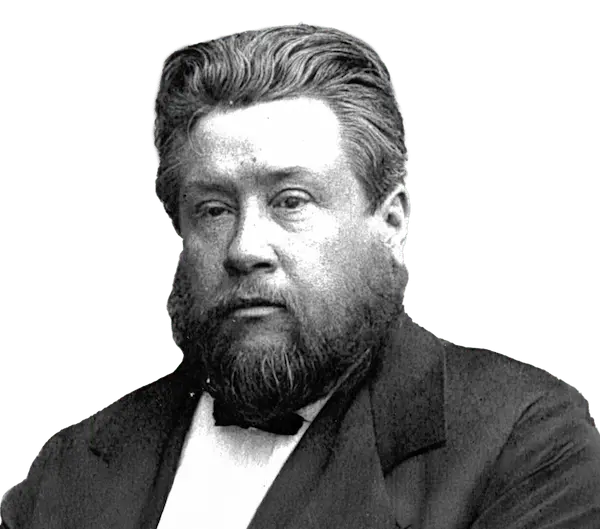
Charles Spurgeon Sermon
The Death of Christ for His People
COME, believer, and contemplate this sublime truth, thus proclaimed to you in simple monosyllables, “He laid down his life for us.” There is not one long word in the sentence. It is all as simple as it can be and it is simple because it is sublime. Sublimity in thought always needs simplicity in words to express itself. Little thoughts require great words to explain them. Little preachers need Latin words to convey their feeble ideas, but great thoughts and great expressers of those thoughts are content with little words.
“He laid down his life for us.” Here there is not much upon which any man can display his eloquence. Here is little room for metaphysical discussion or for deep thought. The text sets before us a simple yet sublime doctrine. What, then, shall I do with it? If I would speak of it profitably to myself, since I need not employ my wit to dissect it, nor my oratory to proclaim it, let me exercise my adoration to worship it. Let me prostrate all my powers before the throne, and like an angel when his work is done and he has nowhere else to fly at his Lord’s command, let me fold the wings of my contemplation and stand before the throne of this great truth and meekly bow, and worship Him who was, and is, and is to come the great and glorious One who “laid down his life for us.” It will be well for me, in commencing my discourse, to remind you that there is no understanding the death of Christ unless we understand the person of Christ. If I were to tell you that God died for us, although I might be telling you the truth and you might possibly not misunderstand what I meant, yet I would be at the same time uttering an error. God cannot die. It is, of course, impossible, from His very nature, that He could even for a moment cease to exist. God is incapable of suffering. It is true that we sometimes use words to express emotions on the part of God, but then we speak after the manner of men. He is impassive. He cannot suffer. It is not possible for Him to endure anything, much less, then, is it possible for Him to suffer death.
Yet we are told, in the verse from which our text is taken, “Hereby perceive we the love of God.” You notice that the words, “of God,” are inserted by the translators. They are in italics because they are not in the original. A better translation would be, “Hereby perceive we love.” But when we read, “of God,” it might lead the ignorant to fancy that God could die, whereas God could not.
We must always understand and constantly remember that our Lord Jesus Christ was “very God of very God” and that, as God, He had all the attributes of the Most High and could not, therefore, be capable either of suffering or death. But then He was also man, “man of the substance of his mother,” man, just like ourselves, sin alone excepted.
And the Lord Jesus died not as God, it was as man that He gave up the ghost. As man, He was nailed to the cross. As God, He was in heaven, even when His body was in the tomb. As God, He was swaying the scepter of all worlds even when the mock scepter of reed was in His hand. And the imperial robe of universal monarchy was on the eternal shoulders of His Godhead when the soldier’s old purple cloak was wrapped about His manhood. He did not cease to be God, He did not lose His omnipotence and His eternal dominion when He became man, nor did He, as God, die or suffer. It was as man that He “laid down his life for us.” Come now, my soul, and worship this man, this God. Come, believer, and behold your Savior. Come to the innermost circle of all sanctity, the circle that contains the cross of Christ, and sit down and while you worship, learn three lessons from the fact that, “He laid down his life for us.” The first lesson should be—Did He lay down his life for us? Ah! then, my brethren, how great must have been our sins that they could not have been atoned for by any other price! Secondly, did He lay down his life for us? Ah! then, beloved, how great must have been His love ! He would not stop short anywhere until life itself had been resigned. Thirdly, did He lay down his life for us? Ah! then, my soul, be of good cheer how safe are you ! If such an atonement has been offered, if such a sure satisfaction has been given to Almighty God, how secure you are. Who is he that can destroy him who has been bought with the blood of such a Redeemer?
I. Come, then, let me believingly meditate on the first sad fact. Did Christ lay down his life for me?
Then, HOW GREAT MUST HAVE BEEN MY SINS!
Ah! my brethren, I will speak a little of my own experience, and in so doing I shall also be describing yours. I have seen my sins in many different ways. I saw them once by the blazing light of Sinai and oh! my spirit shrank within me, for my sins seemed exceedingly black. When the sound of the trumpet waxed loud and long, and the lightning and fire flashed into my heart, I saw a very hell of iniquity within my soul and I was ready then to curse the day that I was born, that I should have had such a heart so vile and so deceitful. I thought that then I had seen the exceeding blackness of my sin.
Alas! I had not seen enough of sin to make me loathe it so as to leave it, for that conviction passed away.
Sinai was but a volcano and it was hushed to silence, and I began to play with sin again and loved it as much as ever.
I beheld another sight one day. I saw my sins by the light of heaven. I looked up and I considered the heavens, the work of God’s fingers. I perceived the purity of God’s character written on the sunbeams. I saw His holiness engraved upon the wide world, as well as revealed in Scripture, and as I compared myself with Him, I thought I saw how black I was. O God! I never knew the heinousness of my own guilt until I saw the glory of Your character. But now I see the brightness of Your holiness, my whole soul is cast down at the thought of my sinfulness and my great departure from the living God.
I thought that, then, I had seen enough. Ah! I had seen enough to make me worship for a moment, but my gladness was as the early cloud and as the morning dew, and I went my way and forgot what manner of man I was. When I had lost the sense of the majesty of God, I lost also the consciousness of my own guilt.
Then there came to me another view. I beheld God’s lovingkindness to me. I saw how He had dandled me upon the knee of Providence how—He had carried me all my life long—how He had strewn my path with plenty and given me all things richly to enjoy. I remembered how He had been with me in the hour of trial, how He had preserved me in the day of hurricane, and kept me safe at the moment of storm. I remembered all His goodness to me, and struck with surprise at His mercy, I looked upon my sin in the light of His grace and I said, “O sin, how base you are, what dire ingratitude do you manifest against a God so profoundly kind!” I thought, then, I had surely seen the worst of sin, when I had laid it side by side, first, with the character of God and afterwards with His bounties. I cursed sin from my inmost heart and thought I had seen enough of it. But ah! my brethren, I had not. That sense of gratitude passed away and I found myself still prone to sin and still loving it.
But oh, there came a thrice-happy, yet thrice-mournful hour! One day, in my wanderings, I heard a cry, a groan. I thought ‘twas not a cry such as came from mortal lips, it had in it such unutterable depths of wondrous woe. I turned aside, expecting to see some great sight and it was indeed a great sight that I saw. Lo, there, upon a tree, all bleeding, hung a man. I marked the misery that made His flesh all quiver on His bones. I beheld the dark clouds come rolling down from heaven, like the chariots of misery. I saw them clothe His brow with blackness. I saw even in the thick darkness, for my eyes were opened and I perceived that His heart was as full of the gloom and horror of grief as the sky was full of blackness.
Then I seemed to look into His soul and I saw torrents of unutterable anguish—wells of torment of such an awful character that mortal lips dare not sip, lest they should be burned with scalding heat. I said, “Who is this mighty sufferer? Why does He suffer thus? Has He been the greatest of all sinners, the basest of all blasphemers?” But a voice came forth from the excellent glory and it said, “This is My beloved Son, but He took the sinner’s sin upon Himself and He must bear its penalty.” O God! I thought I never saw sin till that hour, when I saw it tear Christ’s glories from His head— when it seemed, for a moment, even to withdraw the lovingkindness of God from Him—when I saw Him covered with His own blood and plunged into the uttermost depths of oceans of grief. Then I said, “Now shall I know what you are, O sin, as never before I knew it!” Though those other sights might teach me something of the dire character of evil, yet never, till I saw the Savior on the tree, did I understand how base a traitor man’s guilt was to man’s God.
O heir of heaven, lift now your eye and behold the scenes of suffering through which your Lord passed for your sake! Come in the moonlight and stand between those olives. See Him sweat great drops of blood. Go from that garden and follow Him to Pilate’s bar. See your Master subjected to the grossest and filthiest insults. Gaze upon the face of spotless beauty defiled with the spittle of soldiers. See His head pierced with thorns. Mark His back, all rent, and torn, and scarred, and bruised, and bleeding beneath the terrible lash.
And O Christian, see Him die! Go and stand where His mother stood, and hear Him say to you, “Man, behold your Savior!” Come you tonight and stand where John stood. Hear Him cry, “I thirst,” and find yourself unable either to assuage His griefs or to comprehend their bitterness. Then, when you have wept there, lift your hands and cry, “Revenge!” Bring out the traitors. Where are they? And when your sins are brought forth as the murderers of Christ, let no death be too painful for them. Though it should involve the cutting off of right arms, or the quenching of right eyes, and putting out their light forever, do it! For if these murderers murdered Christ, then let them die. Die terribly they may, but die they must.
Oh! that God the Holy Ghost would teach you that first lesson, my brethren, the boundless wickedness of sin, for Christ had to lay down his life before your sin could be wiped away.
II. Now we will come to the second head and here we will lift up our hearts from the depths of sadness to the heights of affection. Did the Savior lay down his life for me? We will read it now, “He laid down his life for me,” and I pray the Lord to help each of you, by faith, to read it so, because when we say “us,” that is dealing in generalities—blessed generalities, it is true—but let us, at this time, deal in specialities and say, each one of us, who can do so truthfully, “He laid down his life for me.” Then, HOW GREATLY HE MUST HAVE LOVED ME!
Ah, Lord Jesus! I never knew Your love till I understood the meaning of Your death. Beloved, we shall try again, if we can, to tell the story of our own experience to let you see how God’s love is to be learned. Come, saint, sit down and meditate on your creation. Note how marvelously you have been formed and all your bones fitted to one another and see love there.
Mark next, that predestination which placed you where you are, for the lines have fallen unto you in pleasant places and notwithstanding all your troubles, you have, compared with many a poor soul, “a goodly heritage.” Mark, then, the love of God displayed in the predestination that has made you what you are and placed you where you are.
Then look back and see the lovingkindness of your Lord as displayed to you in all your journey up till now. You are getting old and your hair is whitening above your brow, but He has carried you all the days of old, not one good thing has failed of all that the Lord your God has promised. Recall your life story. Go back, now, and look at the tapestry of your life, which God has been working every day with the golden filament of His love, and see what pictures of grace there are upon it. Can you not say that Jesus has loved you?
Turn your eye back and read the ancient rolls of the everlasting covenant and see your name amongst the first-born, the elect, the Church of the living God. Say, did He not love you when He wrote your name there? Go and remember how the eternal settlements were made and how God decreed and arranged all things so that your salvation should come to pass. Say, was there not love there?
Pause at the remembrance of your convictions. Think of your conversion. Recollect your preservation and how God’s grace has been working upon you in adoption, in justification, and in every item of the new covenant. And when you have summed up all these things, let me ask you this question—Do all these things produce in you such a sense of gratitude as the one thing that I shall mention now, the cross of our Lord Jesus Christ?
For, my brother, if your mind is like mine, although you will think highly enough of all these things that God has given you, you will be obliged to confess that the thought of the death of Christ upon the cross swallows them all up. This I know, my brethren I may look back, I may look forward, but whether I look back to the decrees of eternity or look forward to the pearl-gated city, and all the splendors that God has prepared for His own beloved children, I can never see my Father’s love so beaming forth, in all its effulgence, as when I look at the cross of Christ and see Him die thereon.
I can read the love of God in the rocky letters of the eternal covenant and in the blazing letters of heaven hereafter, but my brethren, in those crimson lines, those lines written in blood, there is something more striking than there is anywhere else, for they say, “He laid down his life for us.” Ah, here it is you learn love.
You know the old story of Damon and Pythias, how the two friends struggled together as to which should die for the other. There was love there. But ah! there is no comparison between Damon and Pythias, and a poor sinner and his Savior. Christ laid down his life, His glorious life, for a poor worm.
He stripped Himself of all His splendors, then of all His happiness, then of His own righteousness, then of His own robes, till He was naked to His own shame. And then He laid down his life, that was all He had left, for our Savior had not kept anything back.
Just think of that for a moment. He had a crown in heaven, but He laid that aside, that you and I might wear one forever. He had a belt of brightness—brighter than the stars, about His loins, but He took it off and laid it by, that you and I might eternally wear a belt of righteousness. He had listened to the holy songs of the cherubim and seraphim, but He left them all that we might forever dwell where angels sing. And then He came to earth and He had many things, even in His poverty, which might have tended to His comfort—He laid down first one glory and then another, at love’s demand.
At last, it came to this, He had nothing left but one poor garment, woven from the top throughout, and that was clinging to His back with blood, and He laid down that also. Then there was nothing left.
He had not kept back one single thing. “There,” He might have said, “take an inventory of all I have, to the last farthing. I have given it all up for My people’s ransom.” And there was nothing left now but His own life.
O love insatiable! could you not stay there? He had given up one hand to cancel sin and the other hand to reconcile us unto God. He had given up one foot that we might have our sinful feet forever transfixed, and nailed, ne’er to wander, and the other foot to be fastened to the tree that we might have our feet at liberty to run the heavenly race. And there was nothing left but His poor heart, and He gave His heart up too they ripped it apart with the spear and forthwith there came out blood and water.
Ah, my Lord. What have I ever given You compared to what You have given for me? Some poor things, like some rusty farthings, I have given You, but how little compared with what You have given me! Now and then, my Lord, I have given You a poor song upon an ill-toned instrument. Sometimes, my Lord, I have done some little service for You, but alas! my fingers were so black, they spoiled what I intended to have presented to You white as snow.
It is nothing I have done for You, my Lord. No, though I have been a missionary and surrendered home and friends. No, though I have been a martyr and given my body to be burned, I will say, in the last hour, “My Master, I have done nothing for You, after all, in comparison with what You have done for me. And yet, what can I do more? How can I show my love to You, for Your love to me, so peerless, so matchless? What shall I do? I will do nothing but— “Dissolved by Thy goodness, I’ll fall to the ground, That is all I can do, and that I must and will do.
III. Now, beloved, we will change the theme and go one note higher. We have run up the gamut a long way and now we have reached the height of the octave. But we have something else to get out of the text, “He laid down his life for us.” Did my Savior lay down his life for me? Then, HOW SAFE I AM!
We will have no controversy tonight with those who do not see this truth, may the Lord open their blind eyes and show it to them! That is all we will say. We, who know the Gospel, see, in the fact of the death of Christ, a reason that no strength of logic can ever shake and no power of unbelief can remove why we should be saved.
There may be men with minds so distorted that they can conceive it possible that Christ could die for a man who afterwards is lost. I say, there may be such. I am sorry to say that there are still to be found some such persons, whose brains have been so addled, in their childhood, that they cannot see that what they hold is both a preposterous lie and a blasphemous libel. Christ dies for a man and then God punishes that man again? Christ suffers in a sinner’s stead and then God condemns that sinner after all!
Why, my friends, I feel quite shocked in only mentioning such an awful error. And were it not so current as it is, I would certainly pass it over with the contempt that it deserves.
The doctrine of Holy Scripture is this, that God is just, that Christ died in the stead of His people and that, as God is just, He will never punish one solitary soul of Adam’s race for whom the Savior did thus shed His blood. The Savior did, indeed, in a certain sense, die for all, all men receive many a mercy through His blood, but that He was the Substitute and Surety for all men is so inconsistent, both with reason and Scripture, that we are obliged to reject the doctrine with abhorrence.
No, my soul, how shall you be punished if your Lord endured your punishment for you? Did He die for you? O my soul, if Jesus was not your Substitute, and did not die in your very stead, then He is no Savior to you! But if He was your Substitute, if He suffered as your Surety, in your stead, then, my soul, “Who is he that condemns?” Christ has died, yes, rather, has risen again and sits at the right hand of God, and makes intercession for us.
There stands the master-argument Christ “laid down his life for us.” And “if, when we were enemies, we were reconciled to God by the death of His Son, much more, being reconciled, we shall be saved by His life.” If the agonies of the Savior put our sins away, the everlasting life of the Savior, with the merits of His death added thereunto, must preserve His people, even unto the end.
This much I know—you may hear men stammer when they say it—but what I preach is the old Lutheran, Calvinistic, Augustinian, Pauline, Christian truth—there is not one sin in the Book of God against anyone that believes. Our sins were numbered on the Scapegoat’s head and there is not one sin that ever a believer did commit that has any power to damn him, for Christ has taken the damning power out of sin by allowing it, to speak by a bold metaphor, to damn Himself, for sin did condemn Him, and inasmuch as sin condemned Him, sin cannot condemn us.
O believer, this is your security, that all your sin and guilt, all your transgressions and your iniquities have been atoned for and were atoned for before they were committed, so that you may come with boldness, though red with all crimes, and black with every lust, and lay your hand on that Scapegoat’s head. And when you have put your hand there and seen that Scapegoat driven into the wilderness, you may clap your hands for joy and say, “It is finished, sin is pardoned.”
“Here’s pardon for transgressions past, It matters not how black their cast; And oh, my soul, with wonder view,
This is all I want to know, did the Savior die for me? Then I will not continue in sin that grace may abound, but nothing shall stop me of thus glorying, in all the churches of the Lord Jesus, that my sins are entirely removed from me and in God’s sight, I may sing, as Hart did sing—
“With Christ’s spotless vesture on, Holy as the Holy One.”
O marvelous death of Christ, how securely do You set the feet of God’s people on the rocks of eternal love and how securely do You keep them there! Come, dear brethren, let us suck a little honey out of this honeycomb. Was there ever anything so luscious and so sweet to the believer’s taste as this all-glorious truth that we are complete in Him? That in and through His death and merits, we are accepted in the Beloved?
Oh, was there ever anything more sublime than this fact that He has already raised us up together and made us sit together in heavenly places in Christ Jesus, far above all principalities and powers, just where He sits? Surely there is nothing more sublime than that, except it be that a master-thought stamps all these things with more than their own value—that master-thought that, though the mountains may depart and the hills be removed, the covenant of His love shall never depart from us. “For,” says JEHOVAH, “I will never forget you, O Zion.” “I have graven thee upon the palms of my hands; thy walls are continually before me.” O Christian, that is a firm foundation, cemented with blood, on which you may build for eternity!
Ah, my soul! You need no other hope but this. Jesus, Your mercy, never dies. I will plead this truth when cast down with anguish—Your mercy never dies. I will plead this when Satan hurls temptations at me and when conscience casts the remembrance of my sin in my teeth. I will plead this ever and I will plead it now—
“Jesus, Thy blood and righteousness My beauty are, my glorious dress.”
Yea, and after I die, and even when I stand before Your eyes, You dread Supreme—
“When from the dust of death I rise, To take my mansion in the skies, E’en then shall this be all my plea, ‘Jesus hath lived and died for me.’ Bold shall I stand in that great day, For who aught to my charge shall lay? While through Christ’s blood absolved I am From sin’s tremendous curse and shame.”
Ah, brethren, if this is your experience, you may come to the table of communion now right happily.
It will not be coming to a funeral, but to a feast of gladness. “He laid down his life for us.”
EXPOSITION BY C. H. SPURGEON JOHN 9 AND 1 CORINTHIANS 10:15-33, 11:1
We will first read about one of our Lord’s miracles and then, as many of us will be coming to the communion table, we will read about the Lord’s supper.
John Chapter 9. Verses 1-3. And as Jesus passed by, he saw a man which was blind from his birth. And his disciples asked him, saying, Master, who did sin, this man, or his parents, that he was born blind? Jesus answered, Neither hath this man sinned, nor his parents.
That is, the sin of the man or of his parents was not the cause of his being blind.
3. But that the works of God should be made manifest in him.
What a very blessed way of looking at evil—as an opportunity for God to manifest the power of His works of grace by getting rid of it! I wish that everyone here would look upon the evil within his own heart in this very hopeful light and say, “There is something in me for God to conquer. There is some spiritual disease in me for the great Physician to heal. There is space in my poor soul for the Lord Himself to work some miracle of mercy.”
4-7. I must work the works of him that sent me, while it is day: the night cometh, when no man can work. As long as I am in the world, I am the light of the world. When he had thus spoken, he spat on the ground, and made clay of the spittle, and he anointed the eyes of the blind man with the clay, and said unto him, Go, wash in the pool of Siloam, (which is by interpretation, Sent.) He went his way therefore, and washed, and came seeing.
You notice, brethren, that the disciples wanted to know how the man became blind, but Christ removed his blindness and gave him sight. I have known a great many puzzle themselves about the origin of evil. Christ did not come to explain that mystery, He came to put an end to evil. That is an infinitely more practical object than that of speculating about how evil first entered the world or how it entered any individual soul. He will tell you how to get rid of it.
What a blessed way of healing Christ used! He could have spoken and the man’s eyes would have opened at once. He who said, “Let there be light,” and there was light, in the first creation, could have said the same thing to this blind man, and light would at once have entered his eyes. Instead of that, He chose to use means, and the means did not appear to be very likely to effect the cure.
Jesus covered the man’s eyes with clay and bade him go and wash it off again. Is this the way to give him sight? Yes, our Lord often uses means that seem to be very unlikely to accomplish His purpose, but He always uses the right means. Often, when He is going to open a man’s eyes spiritually, He first makes him feel more blind than ever he was in all his life. A sense of deeper darkness hangs over him just before the dawn of eternal day. Perhaps even this very hour some words of mine, human and imperfect as they are, may, nevertheless, have the truth in them, just as the clay was made efficacious by the spittle from the Savior’s blessed mouth. And if so, there will be healing work wrought among blind hearts tonight. God grant that it may be so!
8-9. The neighbors therefore, and they which before had seen him that he was blind, said, Is not this he that sat and begged? Some said, This is he: others said, He is like him: but he said, I am he.
There is an end of all question about the matter. He says, “I am the very man.” No one knew this better than he did and therefore, he was the one to say it.
10-11. Therefore said they unto him, How were thine eyes opened? He answered and said, A man that is called Jesus made clay, and anointed mine eyes, and said unto me, Go to the pool of Siloam, and wash: and I went and washed, and I received sight.
A very plain story, very well told. It is the story of every soul that gets the eternal light. “Christ told me to believe in Him. I did believe in Him and I received the blessing.” There are not many incidents in the narrative and there is nothing very romantic, but it is a simple and plain declaration of what Christ had done for him. And blessed be God, just as sight was given to the blind man, Christ still gives salvation to all who trust Him.
“There is life for a look at the Crucified One; There is life at this moment for thee; Then look, sinner—look unto Him, and be saved— Unto Him who was nail’d to the tree.
It is not thy tears of repentance or prayers, On Him, then, who shed it, believing at once, Thy weight of iniquities roll. But take, with rejoicing, from Jesus at once The life everlasting He gives: And know, with assurance, thou never canst die, Since Jesus, thy righteousness, lives.” 12-14. Then said they unto him, Where is he? He said, I know not. They brought to the Pharisees him that aforetime was blind. And it was the sabbath day when Jesus made the clay, and opened his eyes.
Oh, that He would do the same thing, in a spiritual sense, this Sabbath day! On another occasion, when He had wrought a miracle on the Sabbath and the Jews therefore sought to persecute Him and slay Him, He said to them, “My Father works hitherto, and I work.” The Sabbath day was often Christ’s chief working day, may He make it to be so again now!
15-17. Then again the Pharisees also asked him how he had received his sight. He said unto them, He put clay upon mine eyes, and I washed, and do see. Therefore said some of the Pharisees, This man is not of God because he keepeth not the sabbath day. Others said, How can a man that is a sinner do such miracles? And there was a division among them. They say unto the blind man again, What sayest thou of him, that he hath opened thine eyes? He said, He is a prophet.
There was no mistake about that matter in the mind of the man whom he had healed, none but a prophet, mighty in word and deed, could have worked such a miracle as that.
18-21. But the Jews did not believe concerning him, that he had been blind, and received his sight, until they called the parents of him that had received his sight. And they asked them, saying, Is this your son, who ye say was born blind? how then doth he now see? His parents answered them and said, We know that this is our son, and that he was born blind: but by what means he now seeth, we know not; or who hath opened his eyes, we know not: he is of age; ask him: he shall speak for himself.
And so he did. He was one of those people who can speak for themselves and it is greatly to be wished that many more of those who have been cured by Christ could do the same. He was a conscientious man, who, without fear of offending or any desire to curry favor, spoke out honestly what he knew—nothing more.
22-27. These words spake his parents, because they feared the Jews: for the Jews had agreed already, that if any man did confess that he was Christ, he should be put out of the synagogue. Therefore said his parents, He is of age; ask him. Then again called they the man that was blind, and said unto him, Give God the praise: we know that this man is a sinner. He answered and said, Whether he be a sinner or no, I know not: one thing I know, that, whereas I was blind, now I see. Then said they to him again, What did he to thee? how opened he thine eyes? He answered them, I have told you already, and ye did not hear: wherefore would ye hear it again? will ye also be his disciples?
He was a sharp, ready-witted man, who was not to be enticed into making any rash and unguarded statements. He knew what he did know and he kept to that. And whenever any of you are assailed by the enemies of Christ, you will do well to imitate this man and neither be abashed by their frowns and sneers, nor yet be too ready to cast your pearls before swine.
28. Then they reviled him,— That is the usual way with the men of the world, when they cannot beat a man in argument, they begin to call him bad names. “They reviled him,”—
28-31. And said, Thou art his disciple; but we are Moses’ disciples. We know that God spake unto Moses: as for this fellow, we know not from whence he is. The man answered and said unto them, Why
herein is a marvelous thing, that ye know not from whence he is, and yet he hath opened mine eyes. Now we know that God heareth not sinners:
That is to say, He does not work miracles by them. He does not hear their prayers and give them the power to open blind men’s eyes.
31-33. But if any man be a worshipper of God, and doeth his will, him he heareth. Since the world began was it not heard that any man opened the eyes of one that was born blind. If this man were not of God, he could do nothing.
Christ could not have given sight to the blind man if He had not Himself come from God. This was good reasoning and it would have been convincing if the objectors had been willing to be convinced by the truth.
34. They answered and said unto him, Thou wast altogether born in sins, and dost thou teach us?
“Holy and learned people like us, Pharisees, do you set up to be our teacher?”
34-38. And they cast him out. Jesus heard that they had cast him out; and when he had found him, he said unto him, Dost thou believe on the Son of God? He answered and said, Who is he, Lord, that I might believe on him? And Jesus said unto him, Thou hast both seen him, and it is he that talketh with thee. And he said, Lord, I believe. And he worshipped him.
Then was his cure indeed complete. He had seen Christ spiritually as well as naturally, and fell at His feet and worshipped Him as the Son of God.
39-41. And Jesus said, For judgment I am come into this world, that they which see not might see; and that they which see might be made blind. And some of the Pharisees which were with him heard these words, and said unto him, Are we blind also? Jesus said unto them, if ye were blind, ye should have no sin: but now ye say, We see; therefore your sin remaineth. 1 Corinthians Chapter 10. Verses 15-19. I speak as to wise men; judge ye what I say. The cup of blessing which we bless, is it not the communion of the blood of Christ? The bread which we break, is it not the communion of the body of Christ? For we being many are one bread, and one body: for we are all partakers of that one bread. Behold Israel after the flesh: are not they which eat of the sacrifices partakers of the altar? What say I then? that the idol is any thing, or that which is offered in sacrifice to idols is any thing?
After they had offered the beasts as sacrifices to their idols, it was the custom to sell the carcasses in the shambles. Christian men, going into the market to buy meat, and asking no questions, bought and ate portions of these sacrifices, and they did no wrong whatever. But there were some in the church who were very tender of conscience and who said, “If we eat meat which has been offered to idols, we thereby become partakers with the idolaters.” Paul therefore writes:
20-21. But I say, that the things which the Gentiles sacrifice, they sacrifice to devils, and not to God: and I would not that ye should have fellowship with devils. Ye cannot drink the cup of the Lord, and the cup of devils:
It cannot be, there must be a separation between these two things. We cannot have any delight in idol-worship and yet worship the Christ of God.
21-28. Ye cannot be partakers of the Lord’s table, and of the table of devils. Do we provoke the Lord to jealousy? are we stronger than he? All things are lawful for me, but all things are not expedient: all things are lawful for me, but all things edify not. Let no man seek his own, but every man another’s wealth. Whatsoever is sold in the shambles, that eat, asking no question for conscience sake: for the earth is the Lord’s, and the fullness thereof. If any of them that believe not bid you to a feast, and ye be disposed to go; whatsoever is set before you, eat, asking no question for conscience sake. But if any man say unto you, This is offered in sacrifice unto idols, eat not for his sake that showed it, and for conscience sake: for the earth is the Lord’s, and the fullness thereof:
So, you see, you may eat the meat if you like, for the idol is nothing at all. But still, if you are told that it is meat that has been offered to idols and that you, by eating of it, seem to join in the worship of idols, abstain from doing it, not for your own sake, but for the sake of the man who might be caused to stumble through you.
This is a safe rule with regard to Christian behavior in many other things. There may be things lawful in drink as well as in meat, which a man may take without sinning. But if he knows that his example leads others astray, then let him take heed that he does not set such an example. An example which is an excuse for drunkenness is not a good one. Therefore, let none of us set it before the eyes of men. If any man says to you, “This is offered in sacrifice to idols, eat not for his sake that showed it, and for conscience sake: for the earth is the Lord’s, and the fullness thereof.”
29. Conscience, I say, not thine own, but of the other: for why is my liberty judged of another man’s conscience?
That man may not be able to do it without injury to himself, but I may, and I have liberty to do so.
But yet, as a Christian, I am to consider his want of power, and I am not to use my liberty lest I do harm to my brother.
30-31. For if I by grace be a partaker, why am I evil spoken of for that for which I give thanks? Whether therefore ye eat, or drink, or whatsoever ye do, do all to the glory of God.
And if anything you might do would not glorify God, do not do it.
32-33. Give none offense, neither to the Jews, nor to the Gentiles, nor to the church of God: even as I please all men in all things, not seeking mine own profit, but the profit of many, that they may be saved. 1 Corinthians Chapter 11. Verse 1. Be ye followers of me, even as I also am of Christ.