
The True Priesthood, Temple, and Sacrifice
Charles Spurgeon Sermon
The True Priesthood, Temple, and Sacrifice
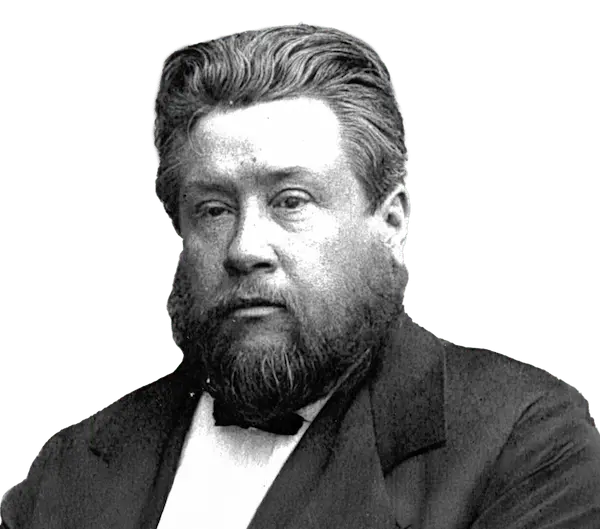
Charles Spurgeon Sermon
The True Priesthood, Temple, and Sacrifice
AT the outset, I call your special attention to the connection of the two verses. “To whom coming, as unto a living stone, ye also, as living stones, are built up,” or “To whom coming…ye become an holy priesthood.” Everywhere throughout Scripture the connection between the saints and their Head is perpetually mentioned.
“ In Christ ” is the very symbol of New Testament writers. Whatsoever things are mentioned choice and good concerning the saints, their privileges and honors, we are always reminded that they are only enjoyed in connection with the Lord Jesus, according as the Father has blessed us in Him and made us to be accepted in the Beloved.
Coming to Him as a foundation, we become a temple. Coming to Him as the Holy One of Israel, we become a holy priesthood, and resting in His sacrifice, we also offer spiritual sacrifices. Coming close to Him—for such is the force of the word—coming closer and closer, we grow up in all things into Him, and become perfect in Christ Jesus.
Realizing and consciously enjoying our vital union with Him, we obtain promises, receive blessings, possess privileges, and exercise offices which can only be ours in union with our Lord. It is only by coming to our great covenant foundation, and only in proportion as we daily come to Him, and rest upon Him, that God dwells in us as in a temple.
It is only as we are seen in union with the Apostle and High Priest of our profession that the Father allows us to serve Him as priests, and accepts the sacrifices which we present. Let this truth be always in your view, because there are many who judge us otherwise. The true judgment of any man is how he stands towards Christ, whether he be in Him and believes in Him or not.
If he believes on the Lord Jesus, he is in Him, and he is by coming to Him built up as a part of the spiritual house. But if he be not in Christ, he may call himself by what name he pleases, and may assume this or that lofty pretension, but he boasts himself beyond his line and beyond the truth.
Union to Christ is the text of union with the true church. If we are members of the most orthodox church in Christendom, it will avail us nothing, unless we are spiritually joined unto Christ Himself.
Without Christ we can do nothing, and we are nothing.
There are some who judge us because we follow not with them. They cry, “The temple of the LORD, the temple of the LORD are we.” They claim to be “the church” beyond whose pale there can be no salvation.
Brethren, regard them not, for if you be in Christ, you are built up as a spiritual house, and so are a portion of the true church. If you have come to Jesus by a living faith, and if it is your daily practice to come to your Lord, and live upon Him and unto Him, you are priests unto God and need not mind the censure of those who are ordained of men.
There are others who condemn us because we reject the pomp of their ceremonies, the prestige of their state connection, and the venerableness of their antiquity. These have weight with the unlearned and unspiritual, but those who are taught of God discern the vanity of their boasts.
Be not moved by their judgment, no, not for an hour, for if you indeed come to the Lord Jesus you are built up by Himself into a spiritual house, and that which He does does not lack for honor or reverence. It is enough of prestige, and of antiquity, for us to be accepted by our Lord Jesus. “Unto you that believe he is honour.” Whether your critics are so or not, you are beyond question living stones built up, a spiritual house, if indeed you are evermore coming to your Lord.
Some there be who in the serenity of their infallibility, because we cannot endorse their creed or pronounce their shibboleth, straightway cut us off and count us to be mere pretenders. But if we are in our very heart coming to Christ, if He be the end of our conversation, if we make Him Alpha and Omega, and if He is to us the beginning and the end of all things, we may make small account of the condemnation or the approval of the best of our brethren, since we are in Christ, and so we are a spiritual house built up for the inhabiting of God.
I remember an anecdote of the Jesuit Fathers of the South Seas which illustrates this. When they intruded themselves upon a native population who had been converted to Christ, they began to instruct them in their Popish idolatries by means of pictures, and among the rest, showed them a famous tree.
The natives asked, “What is this?” “It sets forth the church.” “And what is this root?” “O that is Jesus Christ.” “And this trunk, what is that?” “That is the succession of the Popes, who are the vicars of Christ.” “And these great branches, what are these?” “They are the cardinals.” “And these branches, what are they?” “They are the bishops of the church.” “And what are these small branches and little twigs?” “They are the priests and the faithful.” “And what are these poor twigs which are cut off and are falling into the fire?” “They are the heretics—such as Martin Luther, Calvin, and the like.” The natives looked at the picture for a while, rubbed their eyes, declared that they did not understand much about it, but with great glee exclaimed, “It is all right with us, for we have the root. We have the root.” So we can say if we have come to Jesus Christ our Lord, we are growing out of the root, and we need have no doubt as to our being in the right place. The branch which grows out of Him must be a true branch of the vine. The stone which rests upon Him as a foundation must be a true part of the spiritual temple. Our only hope lies in our being of Him and in Him. We know no other.
Whatever the dignity which men ascribe unto themselves apart from Him, verily I say unto you, we know them not, neither do we give place for subjection unto them. They may tell us of what they are, but we only know what Jesus is.
It is written, “The sheep hear his voice, and a stranger will they not follow, for they know not the voice of strangers.” We know not the many strange voices which are in the world, of those who would have us follow them, and yield to their authority. But we know the voice of the great King in Zion, and we rejoice to feel that if we are found in Him we are accepted in Him, and in Him today, as living stones, we are built up a spiritual house.
I propose, this morning, to show that we who are in Christ have the reality of all that which Ritualism pretends to possess. The votaries of that faith delight in the shadow, but we have the substance. For, first, we are a temple —“built up a spiritual house.” Secondly, we are a priesthood —“a holy priesthood.” And thirdly, we have our own peculiar sacrifices —“to offer up spiritual sacrifices acceptable to God by Jesus Christ.”
I. First then, all those who are coming to Christ, daily coming nearer and nearer to Him, are as living stones built up into A TEMPLE.
The saints in their corporate capacity are a holy temple unto the Lord. They are called a spiritual house in opposition to the old material house in which the emblem of the divine presence shone forth in the midst of Israel—that temple in which the Jew delighted—counting it to be beautiful for situation and the joy of the whole earth.
We have nothing to do with material temples now. We are quite clear of that, for the typical has given way to the real and spiritual. Solomon’s temple itself is ever to be spoken of with honor, seeing that God did for a time make it the center of His worship, yet it must not be too highly honored, for God never had any very great delight in its magnificence, and wrought but few mighty deeds amid its splendors.
You remember that when David proposed to build it, the Lord seemed rather to yield to the weakness of His servant than to rejoice in the proposal, for He said, “For I have not dwelt in an house since the day that I brought up Israel unto this day; but have gone from tent to tent, and from one tabernacle to another. Wheresoever I have walked with all Israel, spake I a word to any of the judges of Israel, whom I commanded to feed my people, saying, Why have ye not built me an house of cedars?” The Lord sought not for such a palace, nor when it was built did He much regard it, for He says by His servant Isaiah, “Thus saith the LORD, the heaven is my throne, and the earth is my footstool: where is the house that ye build unto me? and where is the place of my rest? For all those things hath my hand made, and all those things have been, saith the LORD: but to this man will I look, even to him that is poor and of contrite spirit, and trembleth at my word.” Stephen, in the latter day, when he was rehearsing the history of Israel, alludes to the temple, but he carefully guards himself from being supposed to attach any great importance to it. He says, “But Solomon built Him a house. Howbeit, the most High dwelleth not in temples made with hands,” and goes on to quote the passage from the prophet, which I have just mentioned.
When the apostles sat down opposite the temple which Herod had renovated, they were filled with wonder at the great stones whereof it was made. Our Lord did not seem at all to sympathize in their admiration of its glories, but He said, “There shall not be left one stone upon another that shall not be thrown down.” Had God cared for the temple, He could have preserved it to this day, but lo, like a dream of night it has passed away, and no order has since been given to the servants of the Lord to build temples. We have nobler work to do in building up the spiritual house, and need not be occupied with gorgeous architecture of buildings made with hands.
I fear that the pretentious architecture, which is now so much in vogue for professedly Christian places of worship, is only one of those ill signs of the times which indicate a departure from inward and spiritual worship. The prophet Hosea said of old, “Israel hath forgotten his Maker, and buildeth temples.” There is, I fear, everywhere too much going back to the beggarly elements of outward and materialistic worship, and a receding from pure spiritual adoration. Even the purer sort are hankering after visible show, and the delights of music and the fine arts as accessories to worship. God, the Everlasting One, has beneath yon blue canopy, studded with a thousand stars, a far more glorious temple than all that architects shall plan, or wealth of builders, and skill of masons shall ever be able to build.
All man’s architecture is but child’s play compared with the great universe of God, which is the temple of the infinite. And what seems to us the most enchanting music must surely be but discord in His ears.
It is significant that of heaven, where God is best worshipped, John says, “I saw no temple therein.” Where every place is holy, what needs a temple? And where every being shall be perfect and forever full of adoring love, there shall be no need of any select shrine or settled hour of assembly. When we become holy, as we should be, we shall count all places and all hours to be the Lord’s, and we shall always dwell in His temple because God is everywhere.
For one spot to be holy and not another is but to show how much of the earth we resign to the devil.
From this dreary superstition, I pray you shake yourselves loose. We have not so learned Christ as to count one edifice more sacred than another, for we know Him as cleansing all places and things, and henceforth nothing to us is common or unclean, save only as sin defiles and spreads pollution.
We are, then, a spiritual temple in opposition to all material temples, even that of Solomon included among the rest.
We are a spiritual temple, but not the less real . That which is spiritual is sometimes supposed to be mythical and imaginary, but indeed, it is not so. The things which are seen are the shadowy and the dreamy—the things which are not seen are the substantial and the eternal. Our Lord Jesus called His body the temple of God. He said, “Destroy this temple, and I will build it in three days.” As a temple of God, the body of Christ was most real. There was no fiction about His humanity. The Word was made flesh and tabernacled among us, so that the apostle John says, “We beheld his glory, the glory as of the only begotten of the Father, full of grace and truth.” His perfect body was a true temple which God had pitched and not men, and just as true and real is the spiritual temple of which the text speaks.
With equal truth, the apostle Paul tells us that our bodies are “the temple of the Holy Ghost, which is in us,” and that not by imagination but in reality, as the context of that expression proves, since he therefore bids us avoid all fornication (1Co 6:18-19). He would not use a mere fancy as a practical reason for guarding the purity of our bodies. The force of the argument must lie in its truthfulness, and so the bodies of the saints are really and indeed temples of the Holy Ghost.
Moreover, the whole church together, the whole body of the elect, the whole company of the redeemed, regenerate, and called, are “built together for an habitation of God through the Spirit,” and this also is most real.
Read verses sixteen and seventeen in the first of Corinthians and the third chapter, “Know ye not that ye are the temple of God, and that the Spirit of God dwelleth in you? If any man defile the temple of God, him shall God destroy; for the temple of God is holy, which temple ye are.” Surely this cannot relate to a fiction or a dream, or the punishment for defiling a mere notion would hardly be so terrible.
Yet while real, the temple of God in the saints is spiritual . A church is made up of spiritual men, and her temple form is spiritual. Your eye cannot as yet see the church in which God dwells. Words have come to be so misused nowadays that they call a steeple and a building made of stone or brick and mortar a church—which cannot possibly be correct—for a church is a company of faithful men.
Alas, they have yet further perverted language, and they make a company of ecclesiastics, whether regenerated or not, to be “the church.” “Going into the church” is a current phrase which shows the ignorance of those who use it. Nor is this all, there is no one visible church which can claim to be the church.
I tell you the church of Jesus Christ differs greatly from these associations which are called churches. The visible church contains a large part of the true church of Christ, but it is not identical with it. Like its Lord, the church is as yet hidden, and the creation itself waits for the manifestation of the sons of God.
The Lord has a people scattered abroad everywhere, whose lives are hid with Him in God, and these make up the real temple of God in which the Lord dwells. Men of every name and clime and age are quickened into life, made living stones, and then laid upon Christ––and these constitute the true temple, which God has built and not man. For He dwells not in temples made with hands, that is to say, of man’s building, but He dwells in a temple which He Himself has builded for His habitation forever, saying, “This is my rest for ever; here will I dwell, for I have desired it.” This temple is spiritual, and therefore it is living . A material temple is dead. A spiritual temple must be alive, and so the text tells us, “Ye also as living stones.” I cannot understand why the translators put the word “lively,” since it is precisely the same word in the original as above, where they have translated it “a living stone.” Those good men wished to infuse a little variety into their version, but this was hardly justifiable in interpreters, who ought to have given us the exact meaning, and have left the sacred style to take care of itself—even its monotony is more refreshing than the variety of any other book.
True believers are stones full of life, so joined to Christ as to be part of the live rock, instinct with spiritual vitality. God has quickened them from the dead. The Holy Spirit has come to take possession of them, and whereas once they were dead in trespasses and sins, they now live by the living seed which God has put into them, and the life that they live in the flesh is the life of Christ within them.
“I live, yet not I,” said the apostle, “but Christ liveth in me.” Can your eye of faith see that temple of God made up of living men and women, not alive through the life of the First Adam, but alive through that Second Adam, of whom it is said, “The second Adam is made a quickening Spirit”? Put those live people together in an organization which allows free action to the life within, and you have before you the divine cathedral in which JEHOVAH dwells forever and ever.
We are a spiritual house, my brethren, and therefore spiritually built up . Peter says, “Ye are built up”—built up by spiritual means. You cannot force men and women under rule and call them a church.
Nor even if they come together willingly will they be a temple for the Lord unless the divine Spirit shall fitly frame them together.
God’s temple does not build itself, neither does man build it, but it is the sole work of God. The Spirit of God quarries out of the pit of nature the stones which are as yet dead, separating them from the mass to which they adhered. He gives them life, and then He fashions, squares, polishes them, and they, without sound of axe or hammer, are brought each one to its appointed place, and built up into Christ Jesus.
The old heathen fabled of the music of Orpheus that it was so sweet that as he poured forth the mellifluous sounds, the rocks began to dance around him, and as he continued still to play, they piled themselves up into a temple at his bidding. This is true of our Lord Jesus—the music of whose divine Word by the Spirit brings us stones from different parts of the fields in which we lay, and fits us together, stone to His stone, till a holy temple in the Lord arises to His praise.
May the Holy Ghost work among us in this manner, and may we all become indwelt by the ever-blessed Spirit. As you and I, who have long been brought into the church, think of how we became built upon the foundation, let us praise the hand which laid us in our place. And as we cling closer and closer to the great Cornerstone to whom we are always coming, let us bless Him that the same love which in the beginning cemented us to the Cornerstone still holds us in our place so firmly that none shall separate us.
We are a spiritual house, dear friends, and therefore the more fit for the indwelling of God who is a Spirit . It is impossible, if you consider for a moment, to conceive of God dwelling within walls. The roof may be of cedar and the walls of polished marble overlaid with fine gold, but can Omnipresence be enclosed by a wall or surmounted by a roof? The infinite, who fills all things, and who makes all things, who stretches out the heavens like a tent to dwell in, who rides on the wings of the wind, does He dwell within walls of man’s building?
It can only be in some typical sense that He can be said to abide in a temple. But that He should dwell within spiritual beings whom He has created in His own image, should dwell in intellect, and thought, and love, and hope, and all those high and spiritual powers which adorn the minds of His people is most fitting.
A Spirit dwelling in a spiritual house, a Spirit inhabiting other spirits, and making them all to be resplendent with His excellence—this is a beautiful conception, and by no means impossible to realize.
Within the assemblies of the saints, God is known, loved, remembered, and consulted. In the church, He is heartily worshipped, for all true worship is in the hearts of His people, and all else is mockery.
Not at your altars, O you that pile up your hewn stones. Not under your groaning arches, O you who seek to show the skill of the stonemason. But in your hearts, believers, where God’s skill and power are seen—there is God worshipped, whether you are in cathedrals or by the wayside.
Jesus said to the Samaritan woman, “The hour cometh when ye shall neither in this mountain of Gerizim, nor yet at Jerusalem worship the Father, but the true worshippers shall worship the Father in spirit and in truth, for the Father seeketh such to worship him.” Material temples are abolished and a spiritual temple is instituted. It is in the church that God reveals Himself. If you would know the Lord’s love and power and grace, you must get among His people, hear their experiences, learn from them how God deals with them, and let them tell you, if you have grace to understand them, the height, and depth, and length, and breadth of the love of Christ, which passes knowledge, for He manifests Himself to them as He does not to the world.
Has He not said, “I will dwell in them and walk in them”? And it is out of the church, the spiritual palace of God, that His glory shines forth among men. The promise of the hundred and tenth Psalm is, “The LORD shall send the rod of thy strength out of Zion; rule thou in the midst of thine enemies.” If you desire to see God’s spiritual power, you will discern it best by seeing how it is exerted in and through spiritual men and spiritual women, built up together as a spiritual house.
The church of Christ is the camp from which the armies of the Lord go forth to conquer the nations.
It is the pavilion in which the Prince of Peace has fixed His headquarters during this last crusade. If you ask for the center of the nations, if you would discover the eye and soul of this poor world, if you would fain see the glory and excellence of the sons of men, find out the quickened stones that God has builded together, and you will see the habitation of the great King.
But I must now bring you back to the point from which I started, that all this is in subordination to Christ, “To whom coming, as unto a living stone, disallowed indeed of men, but chosen of God and precious, ye also, as living stones, are built up a spiritual house.” You live because He lives. You are a building because He is the Cornerstone. You are honored because, “to you that believe he is honour.” Of Him and through Him are all things. You are no member of the church unless you are a member of Christ. You are not a living stone unless you live by the life of Christ. You are not built up unless you are built up on Him. “What think ye of Christ?” That is the test of your whole state. Is He your Savior, your all in all? If He be, then, by this sign do you know that God has built you up into His temple. But if not, you are cast forth as a rejected stone.
God grant us grace to realize as a church that we are a temple of God, and realize it best by coming daily to Christ more and more closely, that we may be vitally one with Him.
II. In addition to being a temple, God’s people are said to be A PRIESTHOOD.
Observe that they are spoken of together, and not merely as individuals. They make up one indivisible priesthood—each one is a priest, but all standing together they are a priesthood, by virtue of their being one with Christ. “For we, being many, are one body in Christ.” Never let us cease to walk in unity and love, for we are all one in Christ Jesus, and what God has joined together let no man put asunder.
We are “a holy priesthood.” This stands in opposition to the nominal and worldly priesthood. I think I see the world’s priests, decorated with many divers robes and ornaments. A gallant show, indeed, for fools to stare at. I see them with their garments many, and their colors various, with their shaven heads or unshaven, as the case may be!
These are the priests of Baal, mere mimics, servants of a visible shrine, servitors of idols. These be not the priests of the living God, who is a Spirit, and is served by spiritual priests. It is of these outward priests that He says, “He that offereth an oblation is as if he offered swine’s blood, and he that burneth incense as if he blessed an idol.” There are no priests now save only those who are in Christ, and this priesthood belongs to all believers alike. When a man comes forward and claims that he is a priest, beyond and above the sense in which all Christians are so, we spit upon his pretensions. We utterly loathe the idea of fellowship with such falsehood, and we regard the poor mortal as going back to the elements of old Judaism, if not turning aside altogether unto antichrist.
All men and women who are in Christ, believing in Him, become sanctified by His Spirit, and so they become, not some of them but all of them, priests and kings unto God through Christ Jesus. This they are, not in themselves in any way, nor by any derivation of grace from men by apostolic succession and the like, but by the personal and direct union with their great High Priest, in whom alone they become a holy priesthood unto God.
“Blest inhabitants of Zion, Wash’d in the Redeemer’s blood, Jesus, whom their souls rely on, Makes them kings and priests to God. ’Tis His love His people raises Over self to reign as kings; And as priests, His solemn praises Each for a thank-offering brings.”
This priesthood is most real , although it be not of the outward and visible order, for God’s priests become priests after a true and notable fashion. The priests of Aaron’s line were priests by birth, and so are we—born again with a high and spiritual birth which brings the priesthood with it. In that day when we were begotten again unto a lively hope by the resurrection of Jesus Christ from the dead, we assumed our spiritual priesthood.
We are priests by anointing too, for if the Spirit of God dwell not in us, neither are we priests of God, by whatever names we may aspire to be called. But where the Spirit of God with His divine anointing has descended, that man, that woman, has become a priest unto the living God, for in Christ Jesus there is neither male nor female, but of whatever sex we be, we are alike qualified to exercise this priesthood.
If we have been anointed of the Holy Ghost, our orders are received from heaven, and none can make them void. And we have also been consecrated. Brethren, I shall leave it to yourselves as to the reality of that consecration, but some of us can solemnly declare that if anything was ever true in our lives, it was the giving up of ourselves to God.
The priest of old was touched with the blood upon his ear—and is not your ear the Lord’s to hear His Word? The blood was also smeared upon his thumb—and is not your hand the Lord’s, with all its dexterity and force consecrated to Him? He was also marked with blood upon his great toe, to show that his foot belonged to the Lord, and is it not so with you?
Do you not feel that you would run on His commandments, that you would work in His service, and that you would listen to the voice of His Word? You own that you are His. You confess that you are not your own, but bought with a price, and therefore you present yourselves to Him to be forever His, in spirit, soul, and body. This consecration is a part of the actual process by which you are in very deed constituted priests unto God.
We are priests, beloved friends, in the aspect of priesthood towards God . Priesthood meant in Israel that these men were set apart to speak with God on behalf of the rest of the congregation. They had to offer the daily sacrifice, and kindle the fire of the incense. Now, you who believe in Christ are all priests—priests for mankind—to speak for them to God.
As man is spokesman for a dumb world, so are you intercessor for a sinful race. Whereas fields and hills and rocks and cattle cannot speak, nor even the surging waves of the sea—man is the world’s eye and heart and tongue to speak for them all. But alas, men themselves have become as dumb as driven cattle towards God, and as dead as the earth they tread upon, and you, quickened into life, are to be the priesthood of the universe, the ordained intercessors for the sons of men.
You are to speak with God on man’s behalf, and bring down, each of you, according to the measure of your faith, the blessing upon the sons of men among whom you dwell. You stand before God to speak for your fellow men—take care that you do this with solemn earnestness.
And you are priests towards men also , for the priest was selected from among men to exercise necessary offices for man’s good. The priests’ lips should keep knowledge, and if you be as you should be, you hold fast the faith once delivered to the saints. The priests taught God’s Word, and so also must you publish among the people the divine message of grace. As lights, you must shine in the world, holding forth the Word of Life. It is yours to be the nation’s teachers. God has consecrated you to the office—do not neglect it, lest the blood of men’s souls should lie at your door.
The priest, in addition to being the instructor of the people, was also their intercessor. So must you be. Oh, cease not day or night to pray for men till God shall send forth His light into the darkest parts of the earth. You that make mention of the Lord, keep not silent till the time to favor Zion come.
The priests also were to arouse the people, and therefore they had the keeping of the silver trumpets.
It was theirs to blow them on the new moon, and to proclaim the Sabbath and the jubilee. It was theirs to give the alarm of war. It was theirs in the wilderness to summon the tribes together, to bid them march or bid them halt according as the Lord commanded.
O, believing men and women, you are to arouse the world. God has quickened you, not for your own sakes alone, for no man lives unto himself in this priesthood, but that you may have compassion on the ignorant and those that are out of the way, and may seek to awaken the careless and lead them to God.
The priests were to bless the people. It was their prerogative to pronounce God’s name upon them.
Oh, live a blessed life, and as your Master, as he rose to heaven, went there with outstretched hands blessing still His people, let your course on earth be like that of the Ascended One, a life scattering blessings among the sons of men, and let its closing scene be full of love to those you leave below. Thus shall you be practically the holy priesthood which God would have you to be.
This is to be your function and ministry always, and in every place . You are a holy priesthood, not only on the Lord’s day when you come into this house, but at all times. What is this house more than any other? You are a priesthood everywhere at all times, owing nothing to the place you stand in or to the garb you wear.
How this invests the Christian’s life with dignity. You are to eat, and drink, and sleep, and wake, and all along to abide in your priesthood. For you the chamber, and the parlor, and the workshop, and the open field, and the street are to be still a place for the exercise of your priestly functions. Do you not see that it must be so, for you carry your temple with you?
You yourselves make the temple, for you are the temple of God. You are always in your temple, for your body is your temple. You are always in your temple, for you are built up into it, and stones do not move when once built up, so that wherever you dwell, you are in the place of service and worship. Do you live up to this, my brethren?
Do you seek to do so? Do you make your ordinary meals into sacraments? Do you turn the common garments of your toil into vestments? Do you make your speech to be an offering of the sacrifice of thanksgiving? Do you cause your thoughts to be as a sweet perfume of incense unto the Most High?
This is whereunto you are called—to be a holy priesthood. Unholiness in you is a slight upon the office with which God has invested you. Unholiness in you is as though the High Priest put off His garments of beauty and glory, and robed himself in the motley of a fool.
Now, brethren, I call you back to the point from which we started. You are a holy priesthood only as you are in Christ. Christ is the elect of God, and you are elect in Him. He is a King, and therefore you are a royal priesthood in Him. He is a holy Prince, and you become a holy nation in Him. He is God’s peculiar treasure, and you become a peculiar people in Him.
But all this is in oneness with Him. If you can be severed from Christ, you have lost your priesthood.
Only as we abide in our Lord do we abide in our condition of honor and privilege.
III. We must now consider the SACRIFICES which we offer, “spiritual sacrifices, acceptable to God by Jesus Christ.” We offer spiritual sacrifices as opposed to the literal . There were sacrifices of bulls and goats under the law, as you know right well, yet the Lord never cared much for them, for the Holy Spirit, when He spake by men of old frequently set these things in the place of small esteem.
In an evangelical frame of mind, deeply penitent for sin, the patriarch David was able to see the inefficiency of the legal offerings, and he wrote thus, “Thou desirest not sacrifice, else would I give it; thou delightest not in burnt offering.” And again he says concerning thanksgiving, “This also shall please the LORD better than an ox or bullock that hath horns and hoofs.” To the same effect and even more comprehensive is that expression in the fortieth Psalm, “Sacrifice and offering thou didst not desire; burnt offering and sin offering hast thou not required.” And what follows, “Then said I, lo, I come; in the volume of the book it is written of me, I delight to do thy will, O my God; yea, thy law is within my heart.” Upon which remarkably clear passage Paul remarks, “He taketh away the first,” the sacrifices, “that he may establish the second,” or set up the doing of the divine will by Christ as the great sacrifice forever.
You and I bring no lambs or bulls, but we present a real sacrifice which is far more pleasing in His sight, for it is written, “The sacrifices of God are a broken spirit; a broken and a contrite heart, O God, thou wilt not despise.” The text which I have just quoted shows what our sacrifices are, for we imitate our Lord and say, “I delight to do thy will, O God.” This is the true sacrifice.
Had not the Lord before spoken by Samuel and said, “To obey is better than sacrifice, and to hearken than the fat of rams”? So this day, beloved, when you do the will of God from your heart, when you studiously strive to find out what God’s will is, and then conscientiously endeavor to attend to it, you are as priests offering spiritual sacrifices acceptable to God by Jesus Christ.
This sacrificing takes various forms. “I beseech you, brethren, that ye present your bodies a living sacrifice.” You are to present yourselves, spirit, soul, and body, as a sacrifice unto God. You are also to “do good and to communicate, for with such sacrifices God is well pleased.” To Him also you are to “offer the sacrifice of praise continually, the fruit of your lips giving glory to God.” To the Lord also you must present the incense of holy prayer. But all these are comprehended, I think, in the expression, “I delight to do thy will, O God.” That scribe spake discreetly who replied to our Lord, to love God with all the heart, and with all the understanding, and with all the soul, and with all the strength, and to love his neighbor as himself, is more than whole burnt offerings and sacrifices.
Oh, you saints, live to do JEHOVAH’S will. Lay self aside. Put self-seeking far away. Live wholly to make Jesus great, to make His Gospel known, and to perform the will of God which is your sanctification. Live unto God and so offer unceasing sacrifice.
We come back to where we began. The text says, “acceptable to God by Jesus Christ,” and so reminds us of our dependence upon our Lord Jesus. You have no sacrifice to bring, apart from His sacrifice, and it is only as you live in the spirit of the self-sacrificing Jesus that you can possibly offer unto God such sacrifice as He will accept.
I have done when I have said this much to you. Beloved believers, you see your honorable office— rejoice therein. Are you poor? Are you obscure? Have you to work hard for a living? Nevertheless, behave not yourselves before the sons of men as though you were of mean degree, for you are priests unto God.
I delight to think of God’s priests working in our fields and toiling in our shops, as well as gathered here at this time in a holy convocation. God’s priests as much in one place as in another. Such holy priests are all around you. You know them not by their wearing a biretta, or by that hideous long coat and Roman dog collar in which the world’s priests drape themselves, but you know the priests of God by their practical holiness.
If you are holy unto God, you have your priestly garments on, and if the world disallows you, as it disallowed its Lord, and rejects you as a stone not to be built into the temple, it does not matter, “The LORD knoweth them that are his.” He has built you into your place in His spiritual temple, and He will dwell with you, yea, does dwell with you, and will abide with you forever.
See now your responsibility, and walk circumspectly, because whatever you do will be a part of the acts of “the holy priesthood.” The priests of God must be pure. “Be ye clean that bear the vessels of the LORD.” The temple of the Lord must not have buyers and sellers, and thieves and robbers to defile it.
Christ would have it purged.
This puts you into such a responsible position that I would earnestly implore you, “Be ye perfect, even as your Father in heaven is perfect.” Set apart to such an office as this, everything about you should be marked with “Holiness unto the LORD.” And now see once more what grace has been bestowed upon you, that you should become priests, who in times past were enemies to God. You were not a people, but are now the people of God, who had not obtained mercy, but have now obtained mercy. You were sometimes in darkness, but now you are light in the Lord. You were once the servants of Satan, but now you are priests unto God.
Go, and so live, that men shall say of you, “They are the priests of the Lord.” May you show forth the virtues of your God and declare His praises. You have received the office—honor it, live up to it, ask for grace to fulfill it. Think how it dignifies you, for the text which I quoted just now says, “Unto you that believe he is honour”—that is the Greek word.
It is your honor to have Christ for your Savior, your honor to be Christ’s servants, your honor to be like Christ, your honor to be priests through His grace, and by and by it will be your honor to be with Him, world without end. Amen.