
The Weeding of the Garden
Charles Spurgeon Sermon
The Weeding of the Garden
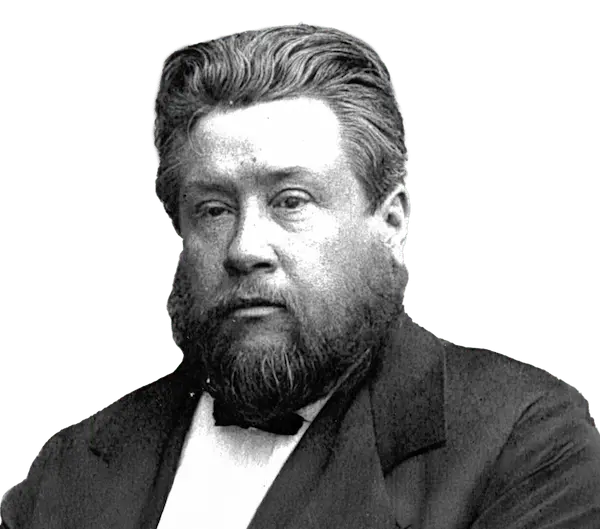
Charles Spurgeon Sermon
The Weeding of the Garden
JESUS CHRIST had spoken certain truths which were highly objectionable to the Pharisees. Some of His loving disciples were in great fright, and they came to Him and said, “Knowest thou not that the Pharisees are offended?” Now, our Savior, instead of making any apology for having offended the Pharisees, took it as a matter of course, and replied in a sentence which is well worthy to be called a proverb, “Every plant, which my heavenly Father hath not planted, shall be rooted up.” Now we have oftentimes, as Mathew Henry very tritely remarks, a number of good and affectionate but very weak hearers. They are always afraid that we shall offend other hearers. Hence, if the truth be spoken in a plain and pointed manner, and seems to come close to home to the conscience, they think that surely it ought not to have been spoken, because So-and-so, and So-and-so, and So-and-so took offense at it.
Truly, my brethren, we are not all slow to answer in this matter. If we never offended, it would be proof positive that we did not preach the Gospel . They who can please man will find it quite another thing to have pleased God. Do you suppose that men will love those who faithfully rebuke them? If you make the sinner’s heart to groan and waken his conscience, do you think he will pay you court and thank you for it?
Nay, not so. In fact, this ought to be one aim of our ministry, not to offend, but to test men and make them offended with themselves, so that their hearts may be exposed to their own inspection. Their being offended will discover of what sort they are.
A ministry that never uproots will never water. A ministry that does not pull down will never build up. He who knows not how to pluck up the plants which God hath not planted, scarcely understands how to be a worker of God in His vineyard. Our ministry ought always to be a killing as well as healing one—a ministry which kills all false hopes, blights all wrong confidences, and weeds out all foolish trusts, while at the same time it trains up the feeblest shoot of real hope, and tends comfort and encouragement even to the weakest of the sincere followers of Christ.
Do not, then, be needlessly alarmed about our ministry. Just give us plenty of elbow room to strike right and left. Let not our friends encumber us. Whether they be friends or foes, when we have to strike for God and His truth, we cannot spare whoever may stand in our way. To our own Master we stand or fall, but to no one else in heaven or on earth.
Well now, our Savior was thus led from the remark of His disciples to utter this memorable proverbial saying. If we understand it aright, it applies to every doctrine and to every false system of religion. Whatever God has not planted will be rooted up. As for heretical teachers, let them alone, they be blind leaders of the blind, and if the blind lead the blind, they shall both fall into the ditch.
Many good people are greatly concerned about the growth of papacy in England. They fear the day will come when papacy shall have quenched the light of Gospel grace. I trust, my brothers and sisters in Christ, you will not get nervous upon that point. It is of little consequence what men are, if they are not saved, if they are not brought to know the Lord.
I do not know that it is a very important item what kind of religion they have if they have not got the true one. They may receive the awful doom of unbelievers in Christ and enemies to the Gospel, as Romanists or Muslims, or like too many in this land, being merely professing Christians who deceive themselves and others, they may incur the same wrath of God and inherit the same condemnation.
But do not think for a moment that the harlot of the seven hills will ever prevail against the bride of Christ. Not she. The Lord will by and by, when her iniquity is full, utterly destroy her. Only be sure in your heart that God hath not planted it and you may be equally sure that He will pluck it up.
Prophets may plant it with their pretended revelations, martyrs may water it with their blood, confessor after confessor may defend it with his learning and with his courage, time may endear it, literature may protect it, and kings may keep guard about it, but He that rules in the heavens, and cares nought for human might, shall certainly grasp its trunk, and pulling it up, even though it be strong as a cedar, shall hurl it into the fire, because He has not planted it.
Yes, every hoary system of superstition, every ancient form of idolatry, every venerable species of will-worship, shall be as certainly overturned, as God is true. Leave them alone, be not over-anxious. He shall come by and by who shall cry, “Overturn, overturn, overturn.” And He shall pluck up by the roots everything which His own hand has not planted.
The advice of the Jewish orator was very sensible, when he said concerning certain men, “Refrain from these men, and let them alone, for if this counsel or this work be of men, it will come to nought; but if it be of God, ye cannot overthrow it.” When you see a new enterprise, some brethren very enthusiastic attempting something you cannot quite approve of, do not stand in their way. Let them have a fair trial. There is one at the helm who understands how to manage better than we do. Let them alone—if God has not the work in hand, it will come to nought, and if it should be God’s work then surely it will stand.
I am so constantly referred to for advice from all parts of the country that I am very often in the position of the Delphic oracle—not wishing to give wrong advice, and therefore hardly able to give any.
Among others, some time ago, I had an inquiry from a brother as to whether he ought to preach or not.
His minister told him he ought not and yet he felt he must. So I thought I would be safe and I said to him just this, “My brother, if God has opened your mouth the devil cannot shut it, but if the devil has opened it, I pray the Lord to shut it directly.” I was quite certain to be safe there. He took it as an encouragement to preach on. I think we may say the like with regard to all modern enterprises. Whenever a brother comes with something new that is to revive the church and to do good, we may say, “Well, if God has opened your mouth, I will not help Satan to shut it, but if Satan has opened your mouth, may God shut it. But it is not mine to do that work.
I must leave it to Him—to your own Master you shall stand or fall.” But while I have no doubt that this is the drift of the text and what the Savior specially aimed at, yet beyond a doubt, we may read this sentence as having reference to our own souls. And here may the Spirit of God give to us a deep solemnity of spirit, that we may be led to ask ourselves, and honestly to answer the inquiry, whether we are plants of God’s right-hand planting or not. May God the Holy Ghost have personal dealings with many of our souls tonight, and may this be a heart-searching and rein-trying hour!
First, I shall have something to say about those plants that God has not planted . Secondly, we will consider a little about their being rooted up . And then we will come to the examination as to whether we are plants that God has planted .
I. The Greek word not only signifies plants—for you know we are in the habit of calling a thing a plant which grows in the woods—but the Greek word has nicer discrimination. As Tyndal very well remarks, it is not merely a plant, but a root that has been designedly put into the ground and taken care of. We must not only be comparable to living plants, but we must be comparable to those which come under the gardener’s care, which are planted in the soil, tended by his skill, and looked upon with interest as being his own.
Now there are many professors who are like wild plants. They were never planted by any servant of God, much less by God Himself. They are thorns and briers, they bring forth wild fruits, noxious, bitter, poisonous, acrid, and deadly to the taste of the passer-by. They grow in abundance.
This London is like some wild heath that is covered with its ferns and gorse, and even with something worse than these—wild plants that spring up spontaneously. Now these will have to be rooted up. When the day comes for God to clear His commons, there will be a blaze indeed, when He shall say, “Gather them together in bundles to burn; but gather the wheat into my garner.” The drunkard, the swearer, the adulterer, those who live by cheating and robbing their neighbors, those who never darken the walls of God’s sanctuary, those to whom Sunday is the busiest day in the week, those who are without God, and without hope, and without Christ, these we may call self-sown plants, uncared for, untutored, and they must be rooted up, for He will say, “Gather out of my kingdom all things that offend and they that do iniquity.” There are other plants, however, that have evidently been planted by some hand. Some have been planted by the minister’s hand . There are the signs and marks about them that some pruning-knife has been at work. You know to what I refer. We all of us have some converts. God has His thousands I hope, in this place, but I have some of my own here who I could do better without. A man’s converts are always a disgrace to him. It is only those that God converts that will last.
When we go fresh into a place, there are always a number of people who hear with a degree of profit and who are affected by us. But let that minister be taken away and they go back again. One wave washes them up on the shore and the return wave sucks them back again into the great deeps. Why, see how it was with this congregation in years gone by, when they were smaller and fewer in number.
When my worthy predecessor, Mr. James Smith, preached the Word, there was a number of those who professed conversion, and what became of many when he went away, God alone knows. Save that we found some of them no better than they should be. And if I should die, there would be some of you that would do the same.
Take but away the leader and the soldier slinks back into his quarters. He has no objection to follow his captain while he sees him, but the man being the captain, if the standard-bearer falls, then he takes himself out of the conflict and is seen no more.
I do not know who planted you, but if you are only planted by man , though he were the best man that ever lived, you will be rooted up. If your conversion is only human, if you are only brought to God by mere moral persuasion, and have never been operated upon by the holy, divine, supernatural energy of the Holy Spirit, you will go back like the dog to his vomit and like the sow that was washed to her wallowing in the mire.
There are some too that were not planted by ministers, but they were planted by their fathers and mothers . They have got a kind of family religion. Well, I like to see the child follow his parent when the parent walks in the footsteps of Christ. It is a blessed thing when the old oak falls off to see half-a-dozen saplings sprung up round the spot where he stood.
But we must recollect that we have nothing to do with hereditary godliness, for hereditary godliness is not worth a straw. We must be personally saved. We cannot be saved in our father’s loins. What if the blood of martyrs be in my veins tonight, and if I traced back my pedigree, as I might do, through a line of preachers of the Word—what matters it, if I myself make shipwreck concerning faith and be a castaway? It shall be but the sorer condemnation for a child of the saints to perish as an heir of wrath.
Ah! there are many of you who have fathers and mothers in the church who look for your everlasting welfare with anxious desire. I pray you do not imagine that your father’s religion will save you. We will not baptize you, lest you should have that thought in your head. Till you have got religion of your own, we have nothing to do with you. Not until you have a personal faith dare we give you a baptism. We would not have you make a profession by proxy, nor would we have profession made for you while you are an unconscious baby.
True religion is personal to every man It is a matter of his own consciousness. He must in his own soul be lost or be saved. The battle of life can be fought in no battlefield but in our own personal consciousness, and he that attempts to shift the work or to shift the responsibility to another, goes on a fool’s errand, and he will surely fail in it. If you have not been planted thus, you will be rooted up.
And oh! how many there are of even professors of religion who are self-planted. By their own good deeds, and their own efforts, and their own strivings, and their own prayings, they hope to be saved. And having an experience which was not wrought in them, but which they borrowed from books, they have come, and oftentimes they have deceived the minister and been added to the church.
Ah, souls! you may paint yourselves as you will, but unless you have the genuine matter, you will never be able to pass the judgment seat of God. You may gild and varnish, but He will say, “Take it away,” and like the painted face of Jezebel, which the dogs did eat, despite the paint, so shall you yourselves be utterly devoured, despite the fair picture that you made.
There may be some such in this church. Human judgment cannot discover them. May the candle of the Lord search them out tonight. Soul! a homespun religion and a homemade godliness will fail us. We must have that which is the workmanship of God by the Holy Ghost. “Except a man be born again, he cannot see the kingdom of God,” and “Except a man is born of water and of the Spirit, he cannot enter into the kingdom of heaven.” Take care, you self-planted trees, lest when the Master comes by He shall say, “How came that plant there? I never put it in the garden, pluck it up.” And He shall throw it over the wall of the garden, just as the gardeners throw away their rubbish which is afterwards gathered up and burned in the fire.
Before I leave this point, I want to say two or three things. I speak in humble language, so that I may be understood, for in these solemn matters any soarings after fine language is but mocking the souls of men. Let me just notice that some of those plants that God never did plant are very beautiful . If you go into the fields, there are many plants that grow there that are quite as lovely as those in the garden. Look at the foxglove and the dog rose, look at many of the blossoms we pass by as insignificant, they are really beautiful, but they are not plants that have ever been planted.
Now, how many we have in our congregations who are really beautiful, yet they are none of God’s planting—men and women whose character is upright, whose manners are amiable, whose life is irreproachable. They are not immoral, they neither cheat nor lie, but they are exemplary. Their disposition is kind, tender-hearted, and affectionate.
Yes, but my dear hearer, there must be something more than this, for Jesus says, “Every plant, which my heavenly Father hath not planted, shall be rooted up.” Though it be a lovely plant, though it seem to be a fair flower externally, yet since the root of it has sucked its nourishment out of the wild wastes of sin, whether of infidelity or of lawlessness, it is evil in the eye of God and it must be plucked up.
Further, how many there are of our wild wood plants that even bring forth fruit . The schoolboy in the country can tell us that the wood is an orchard and that often he has had many a luscious meal from those wild fruits that grow there. Yet mark you, though the birds may come and satisfy their hunger from those wild fruits, and though the seeds may be in the winter the sparrow’s garner and the linnet’s storehouse, yet they are not planted and they do not come under the description of the text—plants that have been planted.
So too, there may be some of you who really do some good in the world. Without you a mother’s wants might not be provided for, from your table many of the poor are fed. Oh! this is good, this is good.
I would that all of you did more of it, but I pray you remember that this is not enough. There must be God’s planting in you or else the fruits you bring forth will be selfish fruits.
You will be like Israel who was denounced as being an empty vine, because he brought forth fruit unto himself. Charity is good. Noble charity, be you honored among men! But there must be faith, and if we have no faith in Christ, though we give our bodies to be burned and bestow our goods to feed the poor, yet where Christ is, we certainly can never come.
And I would hint just once more, that many of those wild plants have very strong roots . If you were to go and try to dig them up, you would have a task before you not easily accomplished. Look at the wild dock—did you seek to pull it up? Piece after piece it breaks away and you have to send some sharp instrument deep into the soil before you can root it out and even then, if there be but a piece left, it springs up and thrives again. Oh how many there are who have as much tenacity of life in their false confidence as there is in the dock—in its root!
Some of you cannot shake. “I never have a doubt,” said one, “I never had a doubt or a misgiving.” You remember Robert Hall said, “Allow me to doubt for you, sir,” because he knew the man to be a illliver. And so we have some—they are not in trouble as other men, neither are they plagued like other men. They speak with an air of satisfaction, their language sounds like assurance, but it is presumption.
It looks like confidence in Christ, but it is confidence in themselves.
And such will strike their roots very deep and they will be very strong indeed, so that you cannot shake them. Yet alas for them! they are not plants of the Lord’s right-hand planting, and therefore the sentence is passed and ere long it shall be executed without pity, “They shall be rooted up.”
II. And now, very briefly indeed, upon my second point—for time will fail us if we dwell long upon it—THEIR UPROOTING.
This uprooting sometimes comes in this life. Peradventure, they are tempted and they foully fall, or persecution comes and they desert the standard by which they swore to stand or die. Or if not, they come to die, and then death comes and takes hold of their profession, and strikes it to and fro like some great giant who is able to rend up an oak by its roots.
Perhaps for weeks the man holds his confidence and says, “It is well with me! It is well with me!” And we have known some plants with the roots so deep that Death himself could not tear them up. They have died deceived, they have perished with a false hope, and they have gone into the next world dreaming of heaven, and expecting to see the face of God.
But oh, their mistake! “Where am I?” said the soul, “This is not heaven.” And the mask was pulled off and the man saw himself all loathsome and leprous, and he said, “I thought I was fair and lovely.” Some rude hand plucked off his garment, and he saw his running sores and ulcers, and he said, “I thought I was soundly healed.” And he heard the voice of conscience saying, “You hypocrite! God never had a work in your soul— you did deceive yourself, you did cozen yourself into a pretended hope, and now where are you? The songs of the sanctuary change for the wailings of hell, your sittings at the Lord’s table end in dolorous feasts at the table of devils. Cast out, lost, banished, because God never planted you, therefore are you plucked up.”
III. This leads me to my final task—the WORK OF SELF-EXAMINATION.
Dear friends, let not any aged, confirmed Christians, here stand back from self-examination.
Minister, you too, O my own soul, and you, deacon, elder, aged professor—let each man among us put himself into the scale. Am I or am I not a plant of the Lord’s right-hand planting?
Well then, first and foremost, if I am a plant of the Lord’s planting, there was a time when I had to be taken out of the place where I once grew . Can I remember a time when He digged about me and dug me up till the roots of my heart began to bleed. My soul was loosened from the earth and the soil which it had loved, and though it did cling tenaciously to it, yet was I drawn out by superior power, taken out of the kingdom of darkness, and separated from the earthiness of my own works and self-righteousness.
Can I remember that?
Yes, blessed be God, some of us can say, “I can.” “One thing I know, whereas I was once blind now I see.” “Old things have passed away, behold all things have become new.” There must be a change. No matter how moral you may have been, there must be a change. There must be a change too, which you can feel yourself, even though others cannot see it. And when such a change does not amount—I will not merely say to the change in a sick man when he gets well, but to the change in a dead man when he comes to life—if there is no such change as this, we must fear that we are not plants of the Lord’s planting.
Again, if I have been planted by God, I do most thoroughly and unfeignedly mourn that I ever was anything but what I am, and I do most heartily pant to be made like unto Christ and to be conformed unto His image. If you have any love in your heart towards sin so as to willingly choose it, take care that you deceive not yourself as to the love of God being in you.
He that is saved hates sin and loathes it, and though he commits sin it is by infirmity, and even when his will gives consent to the sin, yet it gives a still deeper and more confident assent unto the law, and after it has sinned, it mourns and bemoans itself exceedingly on account of sin.
If you saw a fish in a tree, you would know it was not in its element. And if you see a Christian in sin, you will be able to discover that he is not in its element. If sin be a pleasure to you, if you can sail down its stream and rejoice in it, can drink its draughts and make merry with those that make merry therein—then deceive not yourself, for you are not a plant of the Lord’s right-hand planting.
Again, if you be such as God has made you, then you have learned your utter helplessness and emptiness apart from Christ as your righteousness and the Spirit of God as your strength. Have you anything of your own to boast of? He never planted you. Have you done anything that you can bring before God and claim as your own? He has had no dealings with you.
About this we are quite sure, for here the Lord makes clean work. Self-righteousness must not merely be wounded in the leg—it must have its brains dashed out and he that still clings to himself, and his strength and his works, has to begin anew, for he has not yet begun in God’s way.
Another essential mark of the plants of God’s planting is that they are all planted in one soil, and strange to say, all on a rock. They whom God has planted, put their trust in Jesus only. They have not the shadow or a shade of a suspicion of an idea of a hope anywhere but in Christ.
They say of Christ’s wounds, “They are the clefts of the rock in which we hide ourselves.” They say of Christ’s blood, “This has cleansed our sins.” They say of Christ Himself, “He is our law.” They say of His presence, “It is our delight.” They say of His Gospel, “It is our joy.” They say of His heaven, “It is our sure and everlasting reward.” I would that we had longer time—I knew not that the time was speeding at so great a rate—I would we had longer time to be testing and trying ourselves in this matter, but Scripture is so explicit as to what a believer is, and what he is not, that I need not enlarge, but rather stir up your hearts to make sure work here.
Professor, what if you should be deceived! If you should be! Do not say, “But.” I tell you again, it is possible, for others have been deceived. I beseech you, suppose it possible. O that you may say in your soul, “Well, if it be possible, if I am deceived, yet I am a sinner, and as a sinner I will go to Christ afresh tonight. If I am not a saint, I am a sinner and ‘This is a faithful saying, and worthy of all acceptation, that Christ Jesus came into the world to save sinners, of whom I am chief,’ so I will go to Him again.” But if you refuse to say this, I will put the “if” again. Jonathan Edwards remarks that in the great revival in New England, there were sinners of all sorts converted, except unconverted professors. And says he, “These unconverted professors are in the most dangerous state in which men can be.” Well, take that warning to yourselves.
Some of you say, “But I am not a professor.” Ah, but you are always here and people consider you such. Though you are not baptized and do not join the church, yet your constantly coming here identifies you with us and they consider that you make a profession, and so you do after a sort. Mark this, if you are still unconverted and keep on attending the means of grace year after year, you are getting into a more dangerous state.
It is not often we hear of men being converted when they have been hearing the Word twenty or thirty years without its having taken effect. Do then, I pray you, try yourselves. Make sure work for eternity. Build with stone and not with plaster. Build on the rock and not on the sand. “I counsel thee that thou buy of me gold tried in the fire,” says the Spirit. Oh! let not your faith be a mere spasm, the mere action of a moment. O that you may have the faith of God’s elect, which is of the operation of God the Holy Ghost!
Do you ask, “How is this to be had? How can I be saved?” Soul, I have a free Gospel to preach to you. A full Christ to empty sinners. A precious Christ for lawless outcasts. A rich Christ to beggarly and starving souls. “Whosoever will,” says Jesus, “let him come and take of the water of life freely.” “He that believeth on the Son hath everlasting life.” He that trusts Christ is a plant of God’s right-hand planting. O that you would trust Jesus now!
I know there is something which holds you back and you say, “I am not fit.” He needs no fitness.
Come as you are. Any man is fit to be washed that is black. Any man is fit to be made whole that is sick.
Any man is fit to be relieved that is poor. Ah! you have got the fitness in your unfitness, for your unfitness is all the fitness that He wants.
“But may I come?” say you. May you? Yes, if you need the Savior, you may come. Just as you may go to the fountain which stands in the street and sends forth its sparkling streams, that he who is thirsty may drink, so may you come now. “The greater the wretch,” said Rowland Hill in his hymn, “the welcomer here.” Christ loves to save big sinners. Black sinners, double-dyed sinners, crimson-dyed sinners, Jesus Christ delights to wash.
Oh! is there such a one here tonight? Is there a heart here that longs to have Christ to be his all in all?
Soul, if you are longing for Christ, He is longing for you. Let the match be made tonight, since you are both agreed. Since you are agreed to have Christ, and He wills to have you—here, strike hands tonight and take Him “to have and to hold, for better for worse, for life and for death,” yea, for all eternity!
What say you? “Oh! I am not worthy.” “Ah!” says He, “you are black, but you are comely in me, if you are but willing to come to Me now.” Has He made you willing to come to Christ? In Christ’s name, come! He bids you come. From heaven He speaks to you tonight through His ambassador, “Come and welcome, sinner, come!” The door is opened and the Master stands outside, and He says, “My oxen and my fatlings are killed. Come ye to the supper!” Trust Jesus, sinner! Down with you, down with you, flat on your face before Him! Trust Him with your soul just as it is! Away with your “buts” and “ifs,” and with your “tomorrows” and “peradventures,” and your carnal reasonings! Now with an empty hand, take a full Christ. Now, with empty, hungry mouths, receive the living food, “For he is able to save unto the uttermost them that come unto God by him!” One may grow hoarse in calling after poor souls, but they will never come unless our heavenly Father comes after them by His Spirit. But He often does come when the Word is preached with faithfulness and affection, God is in the Word—God wrestling with the souls of men, and going after the souls of men, and fetching in souls, as our church books testify every week.
Oh! I am loath to leave off tonight. Let me plead with you another moment! Poor heart! do you go away and say, “There is nothing for me”? How can this be? How can it be? Even if the text condemns you, still the Gospel is preached to you. Christ Jesus says, “Come unto me, all ye that labour and are heavy laden, and I will give you rest.” There is something for you—you that cannot see the preacher—down yonder in the lobbies—there is something for you. In your ears the Word sounds. “Ho, every one that thirsteth, come ye to the waters, and he that hath no money, come ye, buy and eat; yea, come, buy wine and milk without money and without price.” Trust Christ, sinner, and your soul is saved. A plant of the Father’s right-hand planting is that soul who has come to put his trust in Jesus. And the devil himself shall not be able to pluck you up.