
Thy Redeemer
Charles Spurgeon Sermon
Thy Redeemer
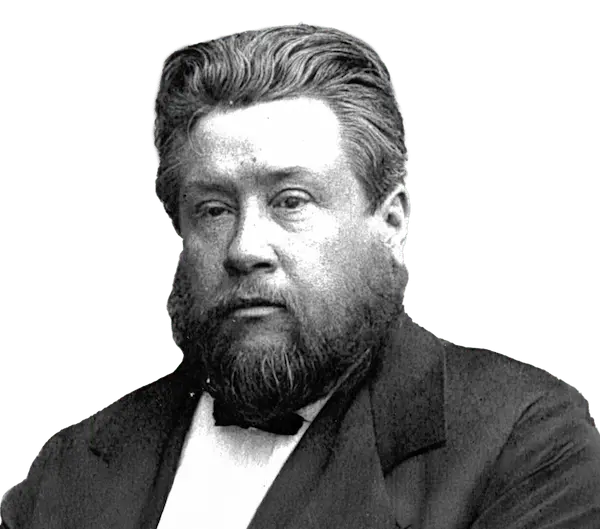
Charles Spurgeon Sermon
Thy Redeemer
AND why does it say, “And thy redeemer”? What was the use of appending the Redeemer’s name to this precious exhortation? By God’s help it shall be the business of this evening to show why there is a peculiar blessedness in the fact that God has not only said, “I will help thee, saith the LORD,” but has added, “and thy redeemer, the Holy One of Israel.” You will please notice that it looks as if this were a repetition by three different persons. Israel was cast down. And JEHOVAH, for that is the first word—(you will notice that the word “LORD” is in capitals and should be translated “JEHOVAH”)—says to His poor, tried, desponding servant, “I will help thee.” No sooner is that uttered than we think we shall not be straining the text, if we surmise that God the Holy Spirit, the Holy One of Israel, adds His solemn affidavit also, and declares by oath and covenant, “I will help thee.” Does not this, we say, look somewhat like repetition? Was it not sufficient that JEHOVAH the Father should declare that He would help His people! Why did the other persons of the divine Trinity unite in this solemn declaration?
We think we shall be able, if God shall help us, to show great usefulness therein, especially dwelling tonight upon that word, “thy redeemer,” and marking how the repetition of the word by our Lord Jesus Christ, our Redeemer, adds a peculiar blessedness to the exhortation—“Fear not, thou worm Jacob.” First, I think this was added for amplification . Secondly, for sweetness . Thirdly, for confirmation .
I. First, when it says, “and thy redeemer, the Holy One of Israel,” it was added FOR AMPLIFICATION.
There are some preachers from whom you will never learn anything—not because they do not say much which is instructive, but because they just mention the instructive thought once, and immediately pass on to another thought—never expanding upon the second thought—but immediately passing on, almost without connection, to a third—just casting forth, as it were, bare thoughts, without opening them up and explaining them to the people.
Such preachers are generally complained of as being very unprofitable to their hearers. “Why,” said the hearer, “it made no impression upon me. It was good, but there was so much of it that I could not recollect it. I had nothing to bring away.” Other preachers, on the other hand, follow a better method. Having given one idea, they endeavor to amplify it, so that their hearers, if they are not able to receive the idea in the abstract, at least are able to lay hold upon some of its points when they come to the amplification of it.
Now, God, the great Author of the book, God, the great Preacher of the truth by His prophets—when He would preach it and when He would write it, so amplifies a fact, so extends a truth, and enlarges upon a doctrine, says, “I will help thee, saith JEHOVAH.” That means Father, Son and Holy Spirit.
“Ah! but” said God, “My people will forget that unless I amplify the thought. So I will even break it up—I will remind them of My Trinity. They understand my Unity. I will bid them recollect that there are Three in the One, though these Three be One.” And He adds, “Thy redeemer, the Holy One of Israel.” JEHOVAH—Redeemer—Holy One of Israel—three persons, all included, indeed, in the word JEHOVAH , but very likely to be forgotten unless they had been distinctly enumerated.
Now, brethren, suffer your thoughts for a moment to enlarge upon the fact that the promise contained in this verse, “Fear not, I will help thee” ( I will help thee), is a promise from Three divine persons. Here is JEHOVAH, the Everlasting Father, saying, “I will help thee.” “Mine are the ages— before the ages began, when there were no worlds, when nought had been created, from everlasting I am your God.
“I am the God of election, the God of the decree, the God of the covenant. By My strength I did set fast the mountains; by My skill I laid the pillars of the earth, and the beams of the firmament of heaven.
I spread out the skies as a curtain and as a tent for s man to dwell in. I the Lord made all these things. ‘ I will help thee.’” Then comes JEHOVAH the Son. “And I also am thy redeemer. I am eternal. My name is wisdom. I was with God when there were no depths—before He had digged the rivers, I was there as one brought up with Him. I am Jesus, the God of ages. I am Jesus, the man of sorrows—‘I am he that liveth and was dead, I am alive for evermore.’ I am the High Priest of your profession, the Intercessor before the throne, the Representative of My people. I have power with God. ‘ I will help thee.’” Poor worm, thy redeemer vows to help you. By His bleeding hands He covenants to give you aid.
And then in comes the Holy Spirit. “And I,” says the Spirit, “am also God—not an influence, but a person—I, eternal and everlasting, co-existent with the Father and the Son—I, who did brood over chaos, when as yet the world was not brought into form and fashion, and did sow the earth with the seeds of life when I did brood over it.
“I, that brought again from the dead your Lord Jesus Christ, the Shepherd of the sheep—I, who am the Eternal Spirit, by whose power the Lord Jesus did arise from the thraldom of His tomb—I, by whom souls are quickened, by whom the elect are called out of darkness into light—I, who have power to maintain My children and preserve them to the end—‘ I will help thee.’” Now, soul, gather up these Three. And do you want more help than they can afford? What! do you need more strength than the Omnipotence of the United Trinity? Do you want more wisdom than exists in the Father, more love than displays itself in the Son, and more power than is manifest in the influences of the Spirit?
Bring hither your empty pitcher! Surely this well will fill it. Haste! Gather up your wants and bring them here—your emptiness, your woes, your needs. Behold, this river of God is full for your supply.
What can you want beside? Stand up, Christian, in this, your might—JEHOVAH Father, JEHOVAH Jesus, JEHOVAH Spirit—these are with you to help you. This is the first thing. It is an amplification .
II. And now, secondly, concerning that word, “thy redeemer,” it is a SWEETENING OF THE PROMISE.
Did you never notice that a promise always seems all the sweeter for having Jesus in it? All the promises are yea and amen in Him, but when a promise mentions the name of the Redeemer, it imparts a peculiar blessedness to it.
Brethren, it is something like, if I may represent it by such a figure, the beautiful effect of certain decorations of stained glass. There are some persons whose eyes are so weak that the light seems to be injurious to them, especially the red rays of the sun, and a glass has been invented which rejects the rays that are injurious and allows only those to pass which are softened and modified to the weakness of the eyes.
It seems as if the Lord Jesus were some such a glass as this. The grace of God the Trinity, shining through the man Christ Jesus, becomes a mellow, soft light, so that mortal eye can bear it. My God, I could not drink from Your well if You had not put there the earthen pitcher of my Savior. But with Him, living waters from Your sacred well I draw.
Heaven! you are too bright. I could not bear your insufferable light if I had not this shade with which I cover you. But through it, as through a mist, I do behold the halo of your glory, undiminished in its effulgence, but somewhat diminished in their potency which would be my destruction. The Savior seems to calm His glory, to tone it down to our poor feeble frame.
His name put into this wine of heaven does not diminish in the least degree its sparkling and its exhilarating power, but it takes out of it that deep strength which might upset an angel’s brain, if he could drink to his full. It takes away the profundity of mystery, which would make the deep old wine of the kingdom intoxicating rather than cheering.
Christ Jesus, cast into the river of God, makes all the streams more sweet. And when the believer sees God in the person of the Savior, he then sees the God whom he can love, and to whom with boldness he can approach. Surely I love this promise all the better, because I think I see my Savior, with His hands all bleeding, stamping His hand upon it and saying, “And thy redeemer”—and there is the blood-mark left upon the promise.
It does seem to me as if when God uttered that promise to the poor worm Jacob, Jesus Christ could not be still. He heard His Father say, “Fear not, worm Jacob,” and He saw the poor worm, with his head on one side, with his eyes all flowing with tears, with his heart palpitating with terror, and his arms folded in dismay—and when His Father had said, “Fear not,” He stepped from behind and whispered in a voice more soft than the voice of His Father, “Fear not, worm Jacob, it is God that speaks.” And then that soft voice said, “And it is thy Redeemer who speaks, too.” He says, “Fear not.” He who loves you, who knows you, who has felt what you feel, who has passed through the woes which you are now enduring—He who is your Kinsman and your Brother—He also says, “Fear not worm Jacob.” Oh, it is sweet, it is precious to look upon that word as spoken by our Redeemer.
III. And now, we come to the other point. I think this is put in by way of CONFIRMATION. “In the mouth of two or three witnesses surely the whole shall be established.” “Blind unbelief is sure to err.” It needs many witnesses to make such unbelieving souls as we are, believe the promises. “Now,” says God, “I will help thee.” Unbelief! will you doubt JEHOVAH? Can the “I Am that I Am” lie? Can the God of faithfulness and truth deceive you? O unbelief! infamous traitor! will you dare doubt Him?
Yes—and Christ knew it would. And so He comes in and He says, “And thy redeemer,” as a second witness, while the Spirit is the third.
“Your Redeemer,” volunteers to be the second guarantee, the other security to the faithfulness of this promise. The Father will lose His honor if He breaks His word. And I too do give as the security for the you worm!
And now, I want you to read the promise, recollecting that it says, “Thy redeemer.” And then, as you read it through, you will see how the word “redeemer” seems to confirm it all. Now begin. “ I will help thee”—lay a stress on that word. If you read it so, there is one blow at your unbelief. “ I will help thee,” says the Redeemer.
“Others may not, but I have loved you with an everlasting love and by the bands of My lovingkindness have I drawn you. ‘I will help thee,’ though the earth forsakes you, though your father and your mother forsake you, I will take you up. Will you doubt Me? I have proved My love to you.
Behold this gash, this spear thrust in My side. Look here at My hands—will you doubt Me? ’Tis I.’ I said that on the waters, and I said to My people, ‘Be not afraid; it is I.’ I say to you, now that you are on the waters, ‘Be not afraid; I will help thee.’ Sure you need not fear that I shall ever forget you. ‘Can a woman forget her sucking child, that she should not have compassion on the son of her womb? Yea, they may forget, yet will I not forget thee.’ ‘I have graven thee on my hands; thy walls are ever before Me.’ ‘ I will help thee.’” Now, you must just suppose the Savior standing here—that Man whose garments are red with blood—you must suppose Him standing where I stand tonight, and saying to you, personally, “Fear not, I will help you.” O my Lord, I have ungratefully doubted Your promise many a time, but methinks if I could see You in all Your woe and sorrow for me, if I could hear You say, “ I will help thee,” I should cast myself at Your feet and say, “Lord, I believe, help thou mine unbelief.” But though He is not here to speak it—though the lips that utter it are but the lips of man— remember that He speaks through me tonight and through His Word, as truly as if He spoke Himself. If some great man should by a servant or by a letter send to you this message, “I will keep you,” though you had not heard his own lips declare it, yet if you saw his own handwriting, you would say, “It is enough, I believe it.” H There is the Master’s handwriting—it is His own autograph, it is written by Himself. Behold the bloody signature! It is stamped with His cross and I His messenger am sent tonight to myself and to you—and I say to my own heart and to you—“Why art thou cast down, O my soul? Why art thou disquieted within me? Hope thou in God; for I shall yet praise him.” For the Redeemer says, “ I will help thee,” and if He says, “ I will help thee,” who can doubt Him? Who dare distrust Him?
And now let us read the promise again and lay the stress on the “will.” Oh, the “wills” and the “shalls”—they are the sweetest words in the Bible. “I will help thee.” When God says, “I will,” there is something in it, brethren. The will of God started worlds into existence. The will of God made nature leap from chaos—the will of God sustains all worlds, “bears the earth’s huge pillars up,” and establishes creation.
It is God’s “I will.” He lets the world live. They live on the “will” of God. And if He willed that they should die, they must sink as the bubble into the breaker, when its moment has arrived. And if the “will” of God is as strong as that, may we not lay a great stress upon it here—“I will help thee”? There is no doubt about it.
I do not say I may help you peradventure. No, I will . I do not say that possibly I may be persuaded to help you. No, I voluntarily will to help you. “I will help thee.” I do not say that in all probability— ninety-nine chances out of a hundred—it is likely I may help you. No, but without allowing any peradventure, or so much as a jot or tittle of hap or hazard, I will. Now, is there not strength in that? Indeed, my brethren, it is enough to cheer any man’s spirit, however much he may be cast down, if God the Holy Spirit does but breathe upon the text and lets its spices flow abroad into our poor souls. “Fear not, I will help thee.” And now, we lay stress on another word—“I will help thee.” That is very little for me to do, to help you. Consider what I have already done. What! not help you? Why, I bought you with My blood. What!
not help you? I have died for you. And if I have done the greater, will I not do the less? Help you, My beloved! It is the least thing I will ever do for you. I have done more and I will do more.
Before the daystar first began to shine I chose you. “I will help thee.” I made the covenant for you and exercised all the wisdom of My eternal mind in the scheming of the plan of salvation. “I will help thee.” I became a man for you. I doffed My diadem and laid aside My robe. I laid the purple of the universe aside to become a man for you. If I did this, I will help thee.
I gave My life, My soul, for you. I slumbered in the grave, I descended into Hades, all for you. I will help thee. It will cost Me nothing. Redeeming you cost Me much, but I have all and abound. In helping you, I am giving you what I have bought for you already. It is no new thing, I can do it easily. “Help you?” You need never fear that.
If you needed a thousand times as much help as you do need, I would give it you. But it is little that you do require compared with what I have to give. ’Tis great for you to need, but it is nothing for Me to bestow. “ Help you?” Fear not. If there were an ant at the door of your granary asking for help, it would not ruin you to give him a handful of your wheat. And you are nothing but a tiny insect at the door of My all-sufficiency. All that you could ever eat, all that you could ever take—if you were to take on to all eternity—would no more diminish My all-sufficiency, than the drinking of the fish would diminish the sea. No, “I will help thee.” If I have died for you, I will not leave you.
And now, just take the last word—“I will help thee .” Lay the stress there. “Fear not, thou worm Jacob; I will help thee .” If I let the stars fall, I will help thee . If I let all nature run to rack and ruin, I will help thee . If I permit the teeth of time to devour the solid pillars upon which the earth does stand, yet I will help thee .
I have made a covenant with the earth, “that seedtime and harvest, summer and winter, shall never cease.” But that covenant, though true, is not so great as the covenant that I have made concerning you . And if I keep My covenant with the earth, I will certainly keep My covenant with My Son. “Fear not. I will help thee .” Yea, thee!
You say, “I am too little for help.” But I will help thee to magnify My power. You say, “I am too vile to be helped,” but I will help thee to manifest My grace. You say, “I have been ungrateful for former help,” but I will help thee to manifest My faithfulness. You say, “But I shall still rebel, I shall still turn aside.” “I will help thee ,” to show forth My longsuffering. Let it be known, “I will help thee .” And now just conceive my Master on His cross bleeding there, looking down on you and on me.
Picture Him, whilst His voice falters with love and misery conjoined. And hear Him. He has just now spoken to the thief and He has said to Him, “To-day, shall thou be with me in paradise.” And after He has said that, He catches sight of you and of me, poor and depressed—and He says—“Fear not, worm Jacob; I will help thee . I helped the thief—I will help thee . I promised him that he should be with Me in paradise. I may well promise you that you shall be helped. I will help thee.” O Master! May Your love that prompts You thus to speak, prompt us to believe You.
And now hear Him again. He is exalted on high. He has “led captivity captive and received gifts for men”—now hear Him as in the midst of the solemn pomp of heaven, He is not unmindful of His poor relations. He looks down and He sees us in this world still struggling with sin and care and woe. He hears us claiming kingship with Himself. And He says, “Worm Jacob! though I now do reign exalted high, My love is still as great—I will help thee. ” I pray the Lord apply the sweetness of that pronoun to your hearts, my brethren, and to mine. “I will help thee .” O surely when the husband speaks to the wife in the hour of darkness and sorrow, and comforts her, you can easily understand what arguments he uses, when he says, “Wife of my youth! my joy, my delight, I will help thee !” You can easily conceive how he enumerates times of love, seasons when he stood by her in the hour of trouble. You can easily think how he reminds her of the days of their espousals, and tells her of their struggles, and of their joys—and he says, “Wife, can you doubt me? No, as I am a husband I will help thee. ” And now you hear the Savior speaking to His church, “Betrothed to Me ere time began, I have taken you into union with My adorable person. And O My bride, though My palace stand in ruins, and heaven itself should shake, I will help thee. Forget you? Forget My Bride? Be false to My troth? Forsake My covenant? No. Never. I will help thee .” Hear the mother speaking to her little child in great danger—“Child,” she says, “I will help thee. ” And then she reminds that child that she is its mother, that from her breast the child drew its needed nourishment in the days of weakness. She reminds it how she has nursed it and rocked it upon her knee, and how in every way she has been its solace and support. “Child!” says she and her heart runs over—“I will help thee .” Why, the child never doubts it. It says, “Yes, mother, I know you will. I am sure of that, I do not need to be told it. I was certain you would, for I have had such proofs of your love.” And now ought not we who love the Savior just to let our eyes run with tears and say, “O You blest Redeemer! You need not tell us You will help us, for we know You will. Oh do not suppose that we doubt You so much as to want to be told of it again. We know You will help us. We are sure of it. Your former love, Your ancient love, the love of Your espousals, Your deeds of kindness, Your everlasting drawings—all these declare that You never can forsake us.” No, no, “I will help thee .” And now, brethren, we are coming downstairs to eat the body of Christ and drink His blood in a spiritual manner. And I hope whilst we are partaking of that bread and wine—the emblems of the Savior—we shall think we hear every mouthful of bread and every sip of wine saying out in the Master’s behalf, “I will help thee. I will help thee .” And then let you and I just frighten Satan by cheering up our spirits through the power of the Holy Ghost, and buckling on our armor, let us go forth into the world tomorrow, to show what the Redeemer can do, when His promise is applied by the Spirit. “Fear not, thou worm Jacob, and ye men of Israel; I will help thee.” Come, bring your fears out tonight and serve them in the worst way you can. Hang them here upon the scaffold this night. Come now and blow them away at the great guns of the promises—let them be destroyed forever. They are renegade mutineers. Let them be cut off, let them be utterly destroyed, and let us go and sing, “Therefore will we not fear, though the earth be removed, and though the mountains be carried into the midst of the sea; though the waters thereof roar and be troubled, though the mountains shake with the swelling thereof.” “I will help thee ,” says the Redeemer.
O sinners, I pity you—this is not your promise. If this were all that you did lose by being out of Christ, it were enough to lose indeed. May God call you and help you to trust in the Redeemer’s blood.
Amen.