
Under His Shadow
Charles Spurgeon Sermon
Under His Shadow
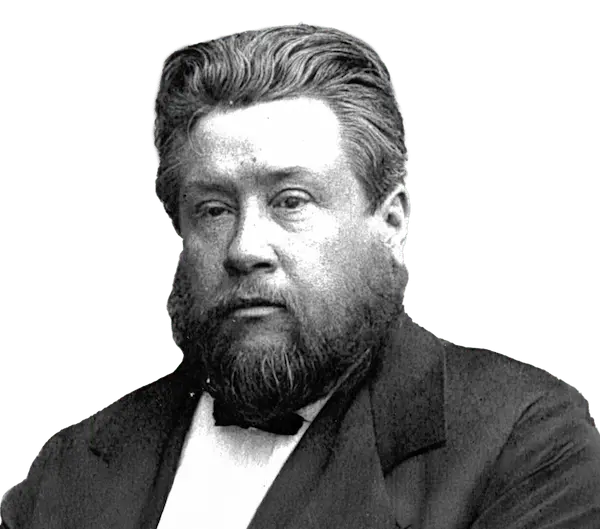
Charles Spurgeon Sermon
Under His Shadow
I MUST confess of my short discourse, as the man did of the axe which fell into the stream, that it is borrowed. The outline of it is taken from one who will never complain of me, for to the great loss of the church on earth she has left these lower choirs to sing above. Miss Havergal, last and loveliest of our modern poets, just when her tones were most mellow and her language most sublime, has been caught up to swell the music of heaven.
for the name. She said, “I should like the title to be ‘Under his shadow.’ I seem to see four pictures suggested by that—under the shadow of a rock in a weary plain; under the shadow of a tree; closer still, under the shadow of His wing; nearest and closest, in the shadow of His hand. Surely that hand must be the pierced hand that may oftentimes press us sorely, and yet evermore encircling, upholding, and shadowing.” “Under His shadow,” is our winsome subject, and we will in a few words enlarge on the Scriptural plan which Miss Havergal has bequeathed to us. Our text is, “He that dwelleth in the secret place of the most High shall abide under the shadow of the Almighty.” The shadow of God is not the occasional resort, but the constant abiding place of the saint. Here we find not only our consolation, but our habitation—not only a loved haunt, but a home. We ought never to be out of the shadow of God.
It is to dwellers, not to visitors, that the Lord promises His protection. “He that dwelleth in the secret place of the most High shall abide under the shadow of the Almighty.” And that shadow shall preserve him from nightly terror and ghostly ill, from the arrows of war and of pestilence, from death and from destruction.
Guarded by omnipotence, the chosen of the Lord are always safe, for as they dwell in the holy place, hard by the mercy seat, where the blood was sprinkled of old—the pillar of fire by night, and the pillar of cloud by day, which ever hang over the sanctuary, covers them also. Is it not written, “In the time of trouble he shall hide me in his pavilion, in the secret of his tabernacle shall he hide me”? What better security can we desire? As the people of God, we are always under the protection of the most High.
Wherever we go, whatever we suffer, whatever may be our difficulties, temptations, trials, or perplexities, we are always “under the shadow of the Almighty.” Over all who maintain their fellowship with God the most tender guardian care is extended. Their heavenly Father Himself interposes between them and their adversaries. The experience of the saints, albeit they are all under the shadow, yet differs as to the form in which that protection has been enjoyed by them—hence the value of the four figures which will now engage our attention.
I. We will begin with the first picture which Miss Havergal mentions, namely, THE ROCK sheltering the weary traveler.
“The shadow of a great rock in a weary land” (Isa 32:2). [See sermons #1243, Rivers of Water in a Dry Place; #2856, Our Hiding Place and #3031, Landlord and Tenant] Now, I take it that this is where we begin to know our Lord’s shadow. He was at the first to us a refuge in time of trouble. Weary was the way and great was the heat. Our lips were parched and our souls were fainting—we sought for shelter and we found none, for we were in the wilderness of sin and condemnation, and who could bring us deliverance, or even hope?
Then we cried unto the Lord in our trouble and He led us to the Rock of Ages, which of old was cleft for us. We saw our interposing Mediator coming between us and the fierce heat of justice, and we hailed the blessed screen. The Lord Jesus was unto us a covering for sin and so a covert from wrath. The sense of divine displeasure, which had beaten upon our conscience, was removed by the removal of the sin itself, which we saw to be laid on Jesus, who in our place and stead endured all its penalty.
The shadow of a rock is remarkably cooling, and so was the Lord Jesus eminently comforting to us.
The shadow of a rock is more dense, more complete, and more cool than any other shade—and so the peace which Jesus gives passes all understanding—there is none like it. No chance beam darts through the rock shade, nor can the heat penetrate as it will do in a measure through the foliage of a forest. Jesus is a complete shelter and blessed are they who are “under his shadow.” Let them take care that they abide there and never venture forth to answer for themselves or to brave the accusations of Satan.
As with sin, so with sorrow of every sort—the Lord is the rock of our refuge. No sun shall smite us, nor any heat, because we are never out of Christ. The saints know where to fly and they use their privilege.
“When troubles, like a burning sun, Beat heavy on their head, To Christ their mighty Rock they run, And find a pleasing shade.”
There is, however, something of awe about this great shadow. A rock is often so high as to be terrible and we tremble in the presence of its greatness. The idea of littleness hiding behind massive greatness is well set forth, but there is no attractive thought of fellowship or tenderness. Even so, at the first we view the Lord Jesus as our shelter from the consuming heat of well-deserved punishment and we know little more.
It is most pleasant to remember that this is only one panel of the fourfold picture. Inexpressibly dear to my soul is the deep cool rock-shade of my blessed Lord, as I stand in Him a sinner saved—yet is there more.
II. Our second picture, that of THE TREE, is to be found in the Song of Solomon 2:3—[See Sermon #1120, The Apple Tree in the Woods] “As the apple-tree among the trees of the wood, so is my beloved among the sons. I sat down under his shadow with great delight, and his fruit was sweet to my taste.” Here we have not so much refuge from trouble as special rest in times of joy . The spouse is happily wandering through a wood, glancing at many trees, and rejoicing in the music of the birds. One tree specially charms her—the citron with its golden fruit wins her admiration and she sits under its shadow with great delight. Such was her beloved to her, the best among the good, the fairest of the fair, the joy of her joy, the light of her delight. Such is Jesus to the believing soul.
The sweet influences of Christ are intended to give us a happy rest and we ought to avail ourselves of them. “I sat down under his shadow.” This was Mary’s better part, which Martha well-nigh missed by being cumbered. That is the good old way wherein we are to walk—the way in which we find rest unto our souls.
Papists and papistical persons, whose religion is all ceremonies, or all working, or all groaning, or all feeling, have never come to a satisfying end. We may say of their religion as of the law, that it made nothing perfect. But under the Gospel there is something finished—and that something is the sum and substance of our salvation and therefore there is rest for us, and we ought to sing, “I sat down.” Dear friends, is Christ to each one of us a place of sitting down? I do not mean a rest of idleness and self-content—God deliver us from that. But there is rest in a conscious grasp of Christ, a rest of contentment with Him, as our all in all. God give us to know more of this. This shadow is also meant to yield perpetual solace, for the spouse did not merely come under it, but there she sat down as one that meant to stay.
Continuance of repose and joy is purchased for us by our Lord’s perfected work. Under the shadow she found food. She had no need to leave it to find a single needful thing, for the tree which shaded also yielded fruit. Nor did she need even to rise from her rest, but sitting still she feasted on the delicious fruit. You who know the Lord Jesus know also what this means.
The spouse never wished to go beyond her Lord. She knew no higher life than that of sitting under the Well-beloved’s shadow. She passed the cedar, and oak, and every other goodly tree, but the apple tree held her, and there she sat down. “Many there be that say, who will show us any good? But as for us, O LORD, our heart is fixed, our heart is fixed, resting on thee. We will go no further, for thou art our dwelling-place, we feel at home with You and sit down beneath Your shadow.” Some Christians cultivate reverence at the expense of childlike love—they kneel down, but they dare not sit down. Our divine Friend and Lover wills not that it should be so. He would not have us stand on ceremony with Him, but come boldly unto Him.
“Let us be simple with Him, then, Not backward, stiff, or cold, As tho’ our Bethlehem could be What Sinai was of old.”
Let us use His sacred name as a common word, as a household word, and run to Him as to a dear familiar friend. Under His shadow we are to feel that we are at home and then He will make Himself at home to us by becoming food unto our souls, and giving spiritual refreshment to us while we rest.
The spouse does not here say that she reached up to the tree to gather its fruit, but she sat down on the ground in intense delight, and the fruit came to her where she sat. It is wonderful how Christ will come down to souls that sit beneath His shadow. If we can but be at home with Christ, He will sweetly commune with us. Has He not said, “Delight thyself also in the LORD, and he shall give thee the desires of thine heart”?
In this second form of the sacred shadow, the sense of awe gives place to that of restful delight in Christ. Have you ever figured in such a sense as the sitter beneath the grateful shade of the fruitful tree?
Have you not only possessed security, but experienced delight in Christ? Have you sung,
“I sat down under His shadow, Sat down with great delight; His fruit was sweet unto my taste, And pleasant to my sight”?
This is as necessary an experience as it is joyful—necessary for many uses. The joy of the Lord is our strength and it is when we delight ourselves in the Lord that we have assurance of power in prayer.
Here faith develops and hope grows bright, while love sheds abroad all the fragrance of her sweet spices. Oh! get you to the apple tree and find out who is fairest among the fair. Make the light of heaven the delight of your heart and then be filled with heart’s-ease and revel in complete contentment.
III. The third view of the one subject is—THE SHADOW OF HIS WINGS—a precious word.
I think the best specimen of it, for it occurs several times, is in that blessed psalm—Psalm 63 and the seventh verse. [See sermon #2166, Experience and Assurance] “Because thou hast been my help, therefore in the shadow of thy wings will I rejoice.” Does not this set forth our Lord as our trust in hours of depression ? In the psalm now open before us, David was banished from the means of grace to a dry and thirsty land, where there no water was. What is much worse, he was in a measure away from all conscious enjoyment of God. He says, “Early will I seek thee. My soul thirsteth for thee.” He sings of memories rather than of present communion with God. We also have come into this condition and have been unable to find any present comfort. “Thou hast been my help,” has been the highest note we could strike, and we have been glad to reach that. At such times, the light of God’s face has been withdrawn, but our faith has taught us to rejoice under the shadow of His wings.
Light there was none—we were altogether in the shade, but it was a warm shade. We felt that God who had been near must be near us still and therefore we were quieted. Our God cannot change and therefore as He was our help He must still be our help—our help even when He casts a shadow over us, for it must be the shadow of His own eternal wings.
The metaphor is, of course, derived from the nestling of little birds under the shadow of their mother’s wings and the picture is singularly touching and comforting. The little bird is not yet able to take care of itself, so it cowers down under the mother, and is there happy and safe. Disturb a hen for a moment and you will see all the little creatures huddling together—and by their chirps making a kind of song. Then they push their heads into her feathers and seem happy beyond measure in their warm abode.
When we are very sick and sorely depressed, when we are worried with the care of pining children and the troubles of a needy household, and the temptations of Satan—how comforting it is to run to our God—like the little chicks to the hen and hide away near His heart, beneath His wings.
Oh, tried ones, press closely to the loving heart of your Lord, hide yourselves entirely beneath His wings. Here awe has disappeared and rest itself is enhanced by the idea of loving trust. The little birds are safe in their mother’s love and we, too, are beyond measure secure and happy in the loving favor of the Lord.
IV. The last form of the shadow is that of THE HAND. And this it seems to me points to power and position in service. Turn to Isaiah 49:2— “And he hath made my mouth like a sharp sword; in the shadow of his hand hath he hid me, and made me a polished shaft; in his quiver hath he hid me.” This undoubtedly refers to the Savior, for the passage proceeds—“And said unto me, thou art my servant, O Israel, in whom I will be glorified. Then I said, I have labored in vain, I have spent my strength for nought, and in vain: yet surely my judgment is with the LORD, and my work with my God.
And now, saith the LORD that formed me from the womb to be his servant, to bring Jacob again to him, Though Israel be not gathered, yet shall I be glorious in the eyes of the LORD, and my God shall be my strength. And he said, It is a light thing that thou shouldest be my servant to raise up the tribes of Jacob, and to restore the preserved of Israel: I will also give thee for a light to the Gentiles, that thou mayest be my salvation unto the ends of the earth.” Our Lord Jesus Christ was hidden away in the hand of JEHOVAH, to be used by Him as a polished shaft for the overthrow of His enemies and the victory of His people. Yet, inasmuch as it is declared of Christ, it is true also of all Christ’s servants, since as He is so are we also in this world. And to make quite sure of it, we have the same expression used in the sixteenth verse of the fifty-first chapter, where, speaking of His people, He says, “I have covered thee in the shadow of mine hand.” Is not this an excellent minister’s text?
Every one of you who will speak a word for Jesus shall have a share in it. This is where those who are workers for Christ should long to be—“in the shadow of his hand”—to achieve His eternal purpose.
What are any of God’s servants without their Lord but weapons out of the warrior’s hand, having no power to do anything? We ought to be as arrows of the Lord which He shoots at His enemies, and so great is His hand of power and so little are we as His instruments, that He hides us away in the hollow of His hand, unseen until He darts us forth.
As workers, we are to be hidden away in the hand of God, or to quote the other figure, “in his quiver hath he hid me”—we are to be unseen till He uses us. It is impossible for us not to be known somewhat if the Lord uses us, but we may not aim at being noticed—on the contrary, if we be as much used as the very chief of the apostles, we must truthfully add, “though I am nothing.” Our desire should be that Christ should be glorified, and that self should be concealed.
Alas! there is a way of always showing self in what we do, and we are all too ready to fall into it.
You can visit the poor in such a way that they will feel that his lordship or her ladyship has condescended to call upon poor Betsy. But there is another way of doing the same thing so that the tried child of God shall know that a beloved brother or a dear sister in Christ has shown a fellow feeling for her and has talked to her heart.
There is a way of preaching in which a great divine has evidently displayed this vast learning and talent—and there is another way of preaching, in which a faithful servant of Jesus Christ, depending upon his Lord, has spoken in his Master’s name and left a rich unction behind. Within the hand of God is the place of acceptance and safety—and for service it is the place of power, as well as of concealment.
God only works with those who are in His hand, and the more we lie hidden there, the more surely will He use us ere long.
May the Lord do unto us according to His Word, “I have put my words in thy mouth, and I have covered thee in the shadow of my hand.” In this case we shall feel all the former emotions combined— awe that the Lord should condescend to take us into His hand, rest and delight that He should deign to use us, trust that out of weakness we shall now be made strong, and to this will be added an absolute assurance that the great end of our being must be answered, for that which is urged onward by the Almighty hand cannot miss its mark.
These are mere surface thoughts. The subject deserves a series of discourses. Your best course, my beloved friends, will be to enlarge upon these hints by a long personal experience of abiding under the shadow. May God the Holy Ghost lead you into it and keep you there, for Jesus’ sake.
EXPOSITION BY C. H. SPURGEON PSALMS 91 AND 63
A Psalm written for comfort, but it is not addressed to all mankind, neither, I venture to say, to all believers, but only those who are described in the first verse.
Verse 1. He that dwelleth in the secret place of the most High shall abide under the shadow of the Almighty.
It is not every worshipper that comes there who shall be thus privileged, but those who dwell there, as Simeon and Anna dwelt in the temple. So there are some that abide in Christ and His words abide in them. They live near God. They receive therefore choicer favors than those who do but come and go.
“He that dwelleth in the secret place of the most High.” He who has learnt to stand in the holy of holies, near the blood-besprinkled mercy seat, to whom prayer is a matter of constant privilege and enjoyment—he dwells in the secret place. Such a man, living near to God, shall abide under the shadow of the Almighty. You know when you walk with a friend, in certain positions of the sun, your friend’s shadow falls upon you, but you cannot expect to have the shadow of your friend unless you are near him.
We read in the Song, “I sat down under his shadow with great delight.” There must be nearness to get under the shadow. So there must be great access to God—great familiarity with Him—there must be something of the assurance of faith—before we shall be able to grip such a word as that which follows in this Psalm. Read it again, and if you have not attained to it, labor after it.
2. I will say of the Lord, He is my refuge and my fortress: my God; in him will I trust.
Observe the sweetness of making a personal application of any passage in the Word. “ I will say.” A general doctrine gives us little consolation till we can make a particular application of it. Oh, for faith – daring, personal faith to say, “ I will say of the Lord, He is my refuge and my fortress”.
That was saying a great deal, but it was saying a great deal more when the psalmist added, “My God.” He could not say more than that. God is a refuge and a fortress to us, but He is infinitely more than that. We cannot tell what He is. Rather, we cannot tell what He is not, but we sum it all up when we say, “My God.” And surely it is but natural to add, “In him will I trust.” Why, who could help it? If this God is our God, and such a God—such a refuge and such a fortress to His people—surely we must trust Him.
Come, if you are troubled tonight—if you have got any doubts and fears—may the Spirit of God enable you to make this the blessed resolution of your Spirit—“My God, in him will I trust.” 3. Surely he shall deliver thee from the snare of the fowler, You cannot see it. You do not know it to be a snare. The bird does not suspect the fowler. “Surely in vain is the net spread in the sight of any bird.” If the bird knew it was a net it would not fly into it. You do not know your temptation, young man. Nay, and the oldest and most experienced Christian is not aware of the traps which the fowler is setting for him.
But surely He shall deliver you if you abide near Him—so near that His shadow falls on you. If you dwell in secret with Him, surely, He shall deliver you from the snare of the fowler.
3. And from the noisome pestilence.
From the noisome pestilence of error which is the worst of pestilences, because it preys upon the soul. Foul air which injures the bodily frame is bad enough, but what is that foul teaching which destroys the soul—which would, if it were possible, deceive the very elect? But surely if you live near to Him, He shall deliver you from the noisome pestilence.
4. He shall cover thee with his feathers, and under his wings shalt thou trust: his truth shall be thy shield and buckler.
It is a marvelous verse. I do not think that any devout man would have been daring enough to use such language as this if he had not been led to do so by the Holy Spirit Himself. Where the Holy Spirit leads the way, we may safely follow. But it would have been unsafe for mere poetry’s sake to talk of God’s “feathers” and “wings.” Yet see the condescension of God. He likens Himself here to the hen that broods her little ones. O child of God, nestle down closely under the warm breast of everlasting love, and hide yourself beneath the mighty wings of the everlasting and eternal God. So shall you be secure.
5. Thou shalt not be afraid of the terror by night; nor for the arrow that flieth by day; For if this alludes to temporal dangers.
“Not a single shaft shall hit, Till the God of love sees fit.”
And if there be a covert allusion here to spiritual dangers—to the darts of the wicked one and to the alarms which fill the soul when the presence of God is withdrawn—if you dwell near to God you shall know no fear of these things, for neither death nor hell can injure the man that lives in God.
6-10. Nor for the pestilence that walketh in darkness; nor for the destruction that wasteth at noonday. A thousand shall fall at thy side, and ten thousand at thy right hand; but it shall not come nigh thee. Only with thine eyes shalt thou behold and see the reward of the wicked. Because thou hast made the LORD, which is my refuge, even the most High, thy habitation; there shall no evil befall thee, neither shall any plague come nigh thy dwelling.
And it is very wonderful when men have lived near to God and have received special faith to grasp such a promise as this, how they have outlived the most deadly pestilences. I collected some time ago a little list of names of devout men who in the times of pestilence remained in the field to visit the sick and to attend to those who were dying—and it is marvelous that they outlived all—and their names stand now upon the catalog of fame as benefactors of the race. They had special faith given and they used that faith in trusting in God.
I have already said that I do not believe that this applies to all believers, for good men die as well as bad men in days of pestilence, but there are some who dwell near to God to whom the promise comes with special power—and they have been able to do and dare for God without fear—and their faith has been abundantly rewarded.
11-12. For he shall give his angels charge over thee, to keep thee in all thy ways. They shall bear thee up in their hands, lest thou dash thy foot against a stone.
They get special commandment to take care of the saints of God—the angels—those unseen but swift and mighty messengers of heaven. When David had the troops paraded before him, when they were going out to fight Absalom, he gave them all a charge that they should not touch the young man, Absalom, and yet, you know, he died.
But God’s angels keep His commandments, hearkening to the voice of His word, and so when He gives them a charge of what to do He says, “O you angels, this day watch over My people. Keep them in all their ways. Be to them as a nurse who bears up her child in her hands, and if they are likely to meet with even some minor trial, lest they should slip and sin, bear them up lest they dash their foot against a stone.” Now comes a glorious promise.
13. Thou shalt tread upon the lion and adder: the young lion and the dragon thou shalt trample under feet.
God often gives victories like these to His people, so that Satan and all the powers of evil are trampled down by the holy child-like confidence of the man who is resolved to serve his God.
14. Because he hath set his love upon me, therefore will I deliver him: I will set him on high because he hath known my name.
He has no merits. He does not claim any. But he loves Me and therefore I love him and I will deliver him because he loves Me. Oh, love the Lord, all you saints, love Him more and more, for this love of yours shall bring to you a sweet reward.
15. He shall call upon me, and I will answer him:
Were there ever words fuller of consolation than these? “He shall call upon me.” Grace will take care to give us the spirit of prayer. “And I will answer him.” Grace will give the answer.
15-16. I will be with him in trouble; I will deliver him and honor him. With long life will I satisfy him, and show him my salvation.
Now, it is not a promise to every good man that he shall live for a long period, for some among the best of men die in very early youth, but still they have had a full life, for life must not be measured by years. Oh, how much do some men pack into a little time! How much of life there may be in the man whose course is finished ere he is thirty years of age and how little may some live who expand their days into eighty or ninety years.
Belzoni’s toad—you remember the piece of poetry into which some imaginative person has cast his diary, how once in a thousand years it crept from under a stone and winked with one eye? Well it did not live much in the course of two or three thousand years—it existed. But a man who is full of holy duties and earnest purposes lives long even though the time is short.
Psalm 63. A Psalm of David when he was in the wilderness of Judah— Exiled, ill at ease, hunted, exposed to danger. Yet he could sing. And some of the sweetest Psalms came out of the bitterest afflictions. God’s songsters are like nightingales that reserve their sweetest music for the night. Whenever you and I come to be in the wilderness, may we refresh ourselves with such a Psalm as this.
Verse 1. O God, thou art my God; Everything else has gone, but You are my God. There are gods of the heathen, but You, the true and real JEHOVAH, are my God. Oh, what a blessed thing it is to take a firm grip of God after this fashion, “O God, thou art my God.” “Oh,” says one, “why did he seek God if God was his?” Would you have him seek another man’s God, then? No, it is because He is ours that we seek Him and desire His company. If you know God to be your God, you will not be satisfied unless you are living near Him. “Early will I seek thee.” I will not wait. I cannot wait. I cannot tarry. I must not tarry. Early will I seek thee.
1. My soul thirsteth for thee, my flesh longeth for thee in a dry and thirsty land, where no water is; Thirst is one of the strongest longings of our nature. Hunger you can appease for a while, but thirst is awful. There is no staying that. When it is once upon a man, he must have water or die. “My soul thirsteth for thee. My flesh longeth for thee in a dry and thirsty land, where no water is.” No means of grace. Nothing to help me. No believers round about me. Left alone thirsting for my God. And yet it is so precious a thing, so sure a mark of grace to thirst for God anywhere that one may be thankful even to be in a dry and thirsty land if one possesses a true thirst after God.
2. To see thy power and thy glory, so as I have seen thee in the sanctuary.
He had seen God in His holy place, and he longs to see Him again. They that never knew God do not want to know Him. But they that have known Him desire to know Him more and more. If you do not long for the bread of heaven it is because you did never tasted it. He that has once tasted it will sigh and hunger till he is satisfied with it.
3. Because thy lovingkindness is better than life, my lips shall praise thee.
“Better than life.” And surely life is better than anything else. “Skin for skin, yea, all that a man hath will he give for his life.” Life is better than meat. Life is better than riches. And if the lovingkindness of God is better than life then we have a very high price set upon it, but none too high a price.
Oh, that you and I may know how sweet, how precious is the lovingkindness of God—and then we shall say that it is better than life. And because it is so my lips shall praise You. Not only my heart, but I will do it openly. I used to speak vanity when I served vanity. Shall I not now speak out for God when I have come to serve Him? My lips shall praise You.
4. Thus will I bless thee while I live: I will lift up my hands in thy name.
I will confess You. I will rejoice in You. I will work for You. I will encourage myself in You. I will lift up my hands in Your name. Are any of you cast down? Do your hands hang down? Then lift them up in God’s name. Nothing else can make you strong. The name of the Lord shall be your strength.
5-6. My soul shall be satisfied as with marrow and fatness; and my mouth shall praise thee with joyful lips: when I remember You upon my bed, and meditate on thee in the night watches.
God’s people know what perfect satisfaction means. When God reveals His love to them and Christ draws near in the fullness of His grace, then they would not change value with the kings of the earth.
Not all the richest dainties that were ever served up at royal banquets are equal to the love of God. My soul, not my body, but my inmost self, my very life, shall be satisfied even as with marrow and with fatness.
The Oriental’s idea of luxury is to eat fat. How they will eat what we could not endure, but we, dear friends, understand the metaphor and appreciate what is meant by David. God will satisfy us with the best of the best, with marrow and fatness. He will make that satisfaction double as with marrow and fatness—and we shall be so satisfied that we shall have nothing left to do but to praise. “My mouth shall praise.” Says our poet,
“All that remains for me, Is but to love and sing, And wait until the angels come To bear me to their King.”
He that wrote that verse knew what was meant by this, “My soul shall be satisfied as with marrow and fatness, and my mouth shall praise thee with joyful lips.’’ 7. Because thou hast been my help, therefore in the shadow of thy wings will I rejoice.
That is God’s logic. One likes to see “therefores” in Scripture. They are inferences drawn with great accuracy. You have been my helper. Well, then, You will be my helper, and if I cannot see Your face I will rejoice in the shadow of your wings. I know that You are there, if I cannot see You. And if I only know that You are there by the shade that You cast over me—that calming, cooling shade which damps the ardor of my worldly spirit—if this be all that I get from You, yet in the shadow of Your wings will I rejoice.
8. My soul followeth hard after thee:
I am after You, my God, hard after You, following hard after You, longing for You, like a dog at the heels of his master’s horse, going with all his might, following hard after You. Oh, this is a healthy condition to be in. If you cannot yet reach your God, yet if you follow hard after Him, it is well with you, for notice the next sentence— 8. Thy right hand upholdeth me.
No man follows after God unless God helps him to do so. It comes of the grace of God. When you are seeking God, it is because God is seeking you—and though you know it not, there is a vast amount of grace couched in this desire.
9-10. But those that seek my soul, to destroy it, shall go into the lower parts of the earth. They shall fall by the sword: they shall be a portion for foxes.
Or jackals, as his name did become.
11. But the king shall rejoice in God; every one that sweareth by him shall glory: but the mouth of them that speak lies shall be stopped.
Very hard work to stop it though, for they are always breaking out in a fresh place. They have always some new falsehood. A shovelful of earth will do it, if nothing else will. Let every one here who is accustomed to slander or to speak evil of his neighbor listen to this prophetic voice—“the mouth of them that speak lies shall be stopped.” But the mouths that speak the praises of God shall go on singing forever and ever. May such mouths be ours.