
Unseasonable Prayer
Charles Spurgeon Sermon
Unseasonable Prayer
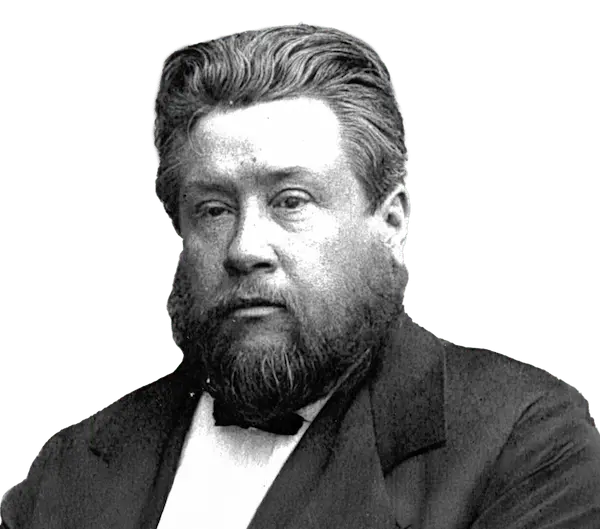
Charles Spurgeon Sermon
Unseasonable Prayer
AT first sight we might suppose that crying unto God was so good a thing that it would never be necessary for the Lord to ask the question, “Wherefore criest thou unto me?” But the question we are now to consider shows that there may be a time when, even to a man like Moses, it is needful for God to ask, “Wherefore criest thou unto me?” Think of the circumstances in which the Israelites then were, the Red Sea was before them and the Egyptians were behind, so that when the Lord said to Moses, “Wherefore criest thou unto me?” he might very properly have replied, “What else can I do? There are great multitudes of blood-thirsty foes behind us, and nothing but the roaring sea in front of us, what can we do except cry unto Thee?” But the fact was that the time for praying about the matter was past, and the time for acting had come, so the Lord said to Moses, in effect, “Speak not to Me, but ‘Speak unto the children of Israel, that they go forward’—forward through the sea that now rolls in front of them. That sea will divide as they march into it, so you need not pray any more about that difficulty. I will prepare a pathway for the people as they advance, and they shall go safely through the very midst of the sea.” There is a time for praying, but there is also a time for holy activity. Prayer is adapted for almost every season, yet not prayer alone, for there comes, every now and then, a time when even prayer must take a secondary place, and faith must come in and lead us not to cry unto God, but to act as He bids us, even as the Lord said to Moses, “Wherefore criest thou unto me? speak unto the children of Israel, that they go forward; but lift thou up thy rod, and stretch out thine hand over the sea, and divide it: and the children of Israel shall go on dry ground through the midst of the sea.” It is perfectly clear then, that there may come a time when crying unto God becomes unseasonable.
Our Lord’s command to His disciples is, “Ask,” but what follows that command? Why, the promise, “ye shall receive.” Then there must be a time for receiving, as well as season for asking. But if, instead of stretching out my hand gratefully to receive what God is waiting to give, I continue still to ask, and forget or neglect to receive, I put prayer out of its proper place.
Our Savior also said, “Seek, and ye shall find.” Well, if I have sought, and at last have found the treasure I have been seeking—if instead of perceiving that it is there, and taking possession of it, and blessing God that I have found it—if I still go on seeking for it, then I have forgotten that while there is a time to seek, there is also a time to find, and my seeking then becomes unseasonable.
It is the same with the command and promise, “Knock, and it shall be opened unto you.” Suppose that I have knocked, and that the door has been opened to me, but that I still stand knocking at it, it is manifest that I am acting foolishly and wrongly—that I am casting reflections upon the Owner of the house, and also upon the sincerity of my own knocking, for it is doubtful whether I really did knock with the honest purpose of getting the door opened if, when that opening has taken place, I do not avail myself of the opportunity to enter, but continue still to knock.
I do not say that we may not pray for something else, but I do say, in respect to the one thing which we have asked of God, that there comes a time for receiving rather than asking, with regard to the thing which we have sought at the Lord’s hands, there comes a time for finding, and concerning the door at which we have knocked, there comes a time for opening, and in each of these cases, the Lord’s question to Moses comes with appropriateness to each one of us, “Wherefore criest thou unto me?” When do you think, dear friends, that prayer about anything becomes out of date? I answer—When we ought to believe that we have the answer to our supplication. I do believe that many a time some of you go on asking for a certain blessing after you have received it though you are not conscious that you have it. I am glad that you still ask for it as you think that you have not received it, but it would be a better evidence of your spiritual growth if you perceived that when God has given you a certain thing in answer to your petitions, you certainly do not need still to ask for it. You have it, so rejoice over it, and bless the Lord for giving it to you.
I think there are some Christians who have received many blessings of which they are quite unaware. They have what they asked for, yet they still continue to pray for them. For instance, in some cases the prayer for assurance is offered long after assurance has been granted. Someone says that he believes the promise of God, but he wants to be more fully assured concerning it. My dear brother, what do you mean? To be more assured that God made the promise? Because if so, you will have to go into the question of the authenticity of that particular passage, and of the Bible in general.
“No,” you say, “I do not mean that, for I am quite sure that God gave that promise.” Then, do you mean that you doubt whether God will fulfill the promise that He has given? Because if so, I must say with all solemnity, that you ought to be assured that God cannot lie. This is not a thing for you to pray about, but for you to believe. It is the Lord’s due that you should not allow anything like a question to arise over this matter. “Hath he said, and shall he not do it? or hath he spoken, and shall he not make it good?” There is His definite promise, and yet I go and ask Him to give me an assurance concerning it. If I were to give a promise to any of you, and you were afterwards to come to me and say, “Give me further assurance,” I should feel that you did not believe that I could or would do what I had promised. If such treatment as that were meted out to me by any of you, I should not feel that you had done me any honor by finding it difficult to believe my word, yet why should I expect you to honor me?
But I do expect that a son should honor his own father, and I do expect that a child of God should so fully believe his heavenly Father that he should not talk about needing assurance of the truthfulness and reliability of His promises of grace. Instead of continuing to pray for God to keep His word, it would be far better for you to believe that He has done so, and that He always will do so.
“But it may be presumption,” says someone. No, it can never be presumption to believe God, it is presumption to ever doubt Him. However great His promise may be, it must be true, and it is presumptuous for anyone to ask, “Can this be true?” or “How can it be accomplished?” It would be enough for me that God has said it, how He will fulfill His promise is His business, not mine. I rest upon His word with a simple, childlike faith, and I am sorry if any of you are not doing the same. I feel that, sometimes, in the matter of assurance, God might say to us, “‘Wherefore criest thou unto me?’ Believe My word, and rest assured that I shall certainly fulfill all that I have promised.” It is the same also in plain matters of Christian duty. It is a very shocking thing, but I have known the case of a man—I hope a Christian man—knowing such and such a thing to be right, yet not attending to it, but saying that he was praying about it. He is quite certain about that particular thing, it could not possibly be plainer than it is, yet he is praying about it! Such and such a truth is revealed plainly enough in the Scriptures, the man could see it there, and did not doubt its authenticity, but he wanted it to be “brought home” to his conscience, so he said. Well, all I can say about such conduct as that is that it is a kind of rebellion against God, a shameful piece of hypocrisy, pretending to honor God in one duty while you know that you are neglecting another.
My dear brothers, if you are a believer in the Lord Jesus Christ, and you know that it is the will of Christ that all believers should be baptized even as He was, do not go home and pray about it, but be baptized. If you are not a member of a Christian church, and you know that it was the practice of the early Christians first to give themselves to the Lord, and afterwards to give themselves to His church, do not tell me that you have been praying about that matter for months, cease praying about it, and go and do it! It is idle to talk of praying about things which are clearly according to the will of God. Cease praying about them, and practice them.
You feel that you ought to have family prayer, yet you say that you have been praying about it!
Praying about it? That is not what you have been doing, you have only been trying to see whether you could not find a loophole by which you could escape from an uncongenial but recognized duty. Go and do it, dear friend, and do not any longer act the hypocrite’s part by pretending to pray about it. Yet this is the way in which some, who say that they love the Lord, try to play fast and loose with known precepts and duties. Do not let any of us fall into this sin, if we do, the Lord may well say to us, as he did to Moses—only He may say it to us with more anger—“‘Wherefore criest thou unto me’ about such a thing as that? Do what you know to be right.”
I. Now, leaving that part of our theme altogether, I come to a more general subject, which is this—IT IS GOOD FOR A MAN OFTEN TO ASK HIMSELF THE QUESTION, “WHY DO I PRAY? WHEREFORE DO I CRY UNTO GOD?” In some cases, I fear that the answer will be exceedingly unsatisfactory. One replies, “I pray because I was always trained to do so. My dear mother, now in heaven, taught me a form of prayer and that is why I continue to repeat it.” If your mother had taught you the Muslim form of prayer, I suppose you would have kept on repeating it, or if she had taught you to worship a block of wood or stone, you would have done so. I do not wish to speak with contempt concerning the influence of a mother’s teaching, but I must say that this alone is a very unsatisfactory reason for presenting a prayer to God.
Let me ask—Did your mother, when she taught you that form of prayer, merely mean that you should repeat those words, without any particular thought as to what they meant? If she did, your mother knew but little of vital godliness, and probably, you know even less. You must pray to God from your inmost heart, your soul must have real fellowship with Him, or else the prayer your mother taught you may be of no more avail for you than if you repeated the alphabet backwards or forwards.
I have heard of a man of seventy, who said that he always prayed night and morning. When he was asked what he said in his prayer, it turned out that he only repeated the form which he had been taught to say as a little child. Now, if you had taught a parrot to say a prayer like that, the parrot would not have been saved, nor will you, if that is all you have to depend upon. There must be something, as a reason for prayer, vastly superior to that, or else your prayer may be nothing but a mockery of supplication, a sepulcher of devotion with no life in it, an external form which cannot please God.
Another says, “I pray because prayer is a part of my religion.” Yes, and it is a part of every true Christian’s religion to pray, it must be an essential part of his religion. But what sort of prayer is this of yours which seeks to justify itself upon the ground of being a part of your religion, and what is the religion of which it is a part? Is it a religion which knows God, and draws near to Him? Is it a religion which leads you to seek the Lord in spirit and in truth? If so, God bless your religion, and the prayer that is a part of it!
But if your religion consists merely in attendance at church, or at the meeting house, so many times on the Lord’s day, and in the repetition of certain words which you have been taught, God deliver you from it! If your religion is to be worth anything, it must have a heart—there must be heart-work—the work of the Holy Spirit upon your hearts, and the drawing near of your soul unto God. Otherwise, all your outward performances, however excellent they may appear to be, will land you short of heaven.
Another friend replies, “I pray because it is a right thing to do.” There is something hopeful about that answer, but the question is, What sort of prayer do you pray? I make that inquiry because, although it is right to pray, it is not right to pray some sorts of prayer.
It is the right thing for a clerk in the telegraph office to work the telegraphic apparatus, but suppose that he should merely move a handle backwards and forwards for a whole day, yet never send a message or receive one, I should not think it was right for him to keep on moving that handle to no purpose.
Evidently a wire is broken, or something is out of order, there is no connection with the electric current, for the machinery does not work.
And in like manner, a prayer that never reaches the heart of God as it should, and never brings an answer to your suppliant soul—a prayer in which you have no fellowship with the invisible JEHOVAH—is not a right kind of prayer to pray, and I cannot say of such prayer that it has any good reason why it should be presented. If you do not mean the petitions that you present, you mock God when you utter them, for they are only words, and nothing but words.
There are some, who would not like to say, just in so many words, exactly what they think, but they really pray because they regard prayer as being more or less meritorious. They do not consider it so meritorious that they expect to be saved by it, but they have some kind of notion that it helps with a great many other things—among the rest, faith in Jesus Christ—to procure salvation for the soul. All these things go into the scale, and at last, they make up the weight required, that seems to be their idea.
In fact, according to some, our Lord Jesus Christ Himself is only a make-weight, and our prayers, and tears, and alms, and good works count for a great deal. These people do not quite advocate salvation by works, they do not go the full length of the road that the Romanist takes, but they go a very long way in the same direction through their belief that there is some kind of merit about various things appertaining to themselves, and especially, that their prayers are meritorious.
I will speak about this error very strongly, lest I should not be understood by all, and I state my final conviction that if any man thinks that his prayers have any merit in them of themselves, every prayer that he presents is an insult to the Lord Jesus Christ, for He is set forth as the only propitiation for sin. If you think that your prayers help in any degree to put away sin, you make an antichrist of your prayers.
Christ’s blood and righteousness form the only ground of your acceptance before God. If you reckon your prayers as a ground, or medium, or even a help to your acceptance with God, you so far push the cross of Christ into the background, and put your prayers into the place of the only Substitute for sinners, and the more you pile them up, the more you multiply your sin.
Possibly I have quoted the answers which would be given if I were to ask many of you why you cry unto the Lord in prayer. I would like to listen to the prayer of every man here present, without his knowing that I was doing so, I would like to put my ear to the keyhole of his room and hear the style of his praying, but as I cannot do that, I would like to ask whether you would wish anybody to hear it?
How does your prayer appear to the eye of God? Has it been humble, earnest, sincere, trustful, relying upon the atoning sacrifice of Christ, and upon the effectual working of the Holy Spirit? If so, it is well, but if not, it is only vanity of vanities. All is vanity.
How would it be with some of us if we were put into the condition of the Highland soldier of whom I have read? In our war with our American colonists, before they gained their freedom from this country, a certain Highland regiment was engaged. Every evening, one of the men was observed to go away from the camp into an adjacent wood, and it was suspected that he had gone to give information to the enemy.
He was, therefore, arrested and brought before the colonel of the regiment, and the other officers said to him, “Now tell us what you have been doing while you have been absent from the camp.” “Well,” he said, “I have been accustomed, whenever I can, to retire for an hour or two of private prayer.” The colonel happened to be a Scotchman and a Presbyterian, so he said to the soldier, “Well, you never had such reason to pray before as you have tonight. If you do go for an hour together to pray, you can pray, so let us hear you now.” The man knelt down and poured out his soul before God, seeking deliverance at the Lord’s hands, and resigning his spirit into the keeping of his heavenly Father, and he prayed with such an earnest, simple power that when he had finished, the colonel said to the other officers, “A man who can come on parade like that must have been drilled a good many times. I think we may confidently accept what he has said as being true. There is no doubt about his having been alone in prayer to God, now that he can pray like that before us.” Happy is the man whose prayer would bear to be listened to by his fellow men in such a critical season as that, so that they should be compelled to say of him, “That man has often prayed before tonight, he has the very brogue of one who communes with heaven.” But he, who gives such answers as I have been quoting, would certainly not be able to pray before others as that soldier did.
II. But now, secondly, THERE ARE SOME ANSWERS TO THIS QUESTION WHICH BETRAY A GREAT DEAL OF IGNORANCE.
“Wherefore criest thou unto me?” There are times, dear brethren and sisters, when a sinner’s crying to God in prayer hinders him from immediate repentance. The Gospel comes to each man and says, “Repent, and be converted.” The man says, “I will pray.” So he gets away alone and he prays, but such prayer as that cannot be acceptable to God. There is a favorite sin, of which he has long been guilty, he does not give it up, but he says that he will pray about it.
God says to such a man, “‘Wherefore criest thou unto me?’ Give up your sin, this is not a matter for you to pray about, but to repent of.” The man says, “I was asking for repentance.” Ask, if you will for repentance, but exercise it as well. Christ does not bid us pray to have our right hand cut off, or our right eye plucked out, but He says, “If your right eye offend thee, pluck it out, and cast it from you....And if thy right hand offend thee, cut it off, and cast it from thee.” It will never do for any man to hope to be saved by putting prayer into the place of genuine repentance and immediate forsaking of sin.
The same is true of those who put prayer into the place of believing in Christ. “I mean to pray about the salvation of my soul,” says someone. My dear friend, the Gospel says to you, “Believe on the Lord Jesus Christ, and thou shalt be saved.” “I have been praying for salvation, sir, and I hope to get it if I keep on praying.” No, you will not, on the contrary, you will be lost forever if you pray instead of believing in Christ. As surely as you live, if you will not accept God’s way of salvation, which is to believe in Jesus Christ, whether you pray or do not pray, you are a lost man.
“There,” says the Lord, “on yonder cross is your only hope, trust My Son, and you shall be saved.” “Lord,” you reply, “I will pray about the matter.” Again the Lord says to you, “You see My well-beloved Son hanging upon that tree. There is life for a look at Him.” “Lord, I will pray about the matter.” The Lord says, “I have said to you, ‘Hear, and your soul shall live.’ ‘Look unto me, and be ye saved.’” “Lord, I will pray.” To put the matter very strongly, might not the man almost as well say, “Lord, I will swear”? Is there not just as much of the spirit of rebellion in the one answer as in the other? He has chosen his own way instead of accepting God’s way! God’s way is, “He that believeth and is baptized shall be saved; but he that believeth not shall be damned,” and to this the man replies, “Lord, I will pray,” and if that is all he does, he sets his seal to his own condemnation.
In such a case, the Lord asks the question in my text, “Wherefore criest thou unto me?” What are you crying for? For another atonement beside that of the Lord Jesus Christ? Crying for God to save you in some other way than by believing in Jesus? Crying for somebody else to believe for you? Crying to the Holy Spirit to repent for you? Is that what you want? He will not do it, why should He repent for you? You must repent for yourself, and believe for yourself, for the Holy Spirit cannot repent for you, or believe for you.
If a man, instead of believing the truth of God, which is so plain, and which is evidently able to save him—if, instead of simply resting upon the atoning sacrifice of Christ—he says, “I will pray about the matter,” he betrays the fatal ignorance of his heart in supposing that God will make a new way of salvation for him instead of the one which He has plainly revealed in His Word.
Perhaps another one says, “I am in hopes that, by praying, I shall be made more fit for believing in Christ.” Fit for believing in Christ! You also are upon the wrong tack, like these others of whom I have been speaking. Your ignorance is misleading you. Fit for believing in Christ! A man is never so “fit for believing” as when, in himself, he is most unfit. It is unfitness, not fitness, that is really required. What is fitness for being washed? Filth, and filth alone. What is fitness for receiving alms? Poverty, abject need. What is fitness for receiving pardon? Guilt, and only guilt. It comes not as an act of grace, but as an act of justice if there be no guilt, but for the display of God’s pardoning grace, guilt is needed. If you are guilty, if you are black, if you are foul, you have all the fitness that is required, so, come, and find in Jesus Christ all that meets your greatest and most urgent need.
Does someone ask, “But must I not have a sense of my need?” Not as a fitness for coming to Christ, for the man who says, “I am quite fit to be saved, for I feel my need,” does not really feel his need as he should, and is the farthest off from Christ. O you who are most empty, most guilty, most lost, most ruined, you are the most “fit” for the great Savior to save! May the Holy Spirit enable you to realize this, and drive out of you the foolish notion that your praying is to help Christ to save you, and to take you part of the way on the road to heaven! Your prayer will not help the divine surgery which alone can cure you, so, just as you are, in all your wretchedness and sin, trust Christ to save you, for He is able to save you, from first to last, without any help of yours.
III. Now I am going to close by mentioning OTHER ANSWERS WHICH MAY BE GIVEN TO THIS QUESTION, “Wherefore criest thou unto me?” I will tell you my own answer to this question. I cry to God, principally, because I cannot help doing so. I cry to God for the same reason that I eat when I feel hungry, and for the same reason that I groan when I am in pain, it is the outward expression of the condition of my inward life. I cannot help praying.
I think if anyone were to say to me, “You must not kneel down to pray,” it would not make any difference to my praying. If I were not allowed to utter a word all day long, that would not affect my praying. If I could not have five minutes that I might spend in prayer by myself, I would pray all the same. Minute by minute, moment by moment, somehow or other, my heart must commune with my God. Prayer has become as essential to me as the heaving of my lungs, and the beating of my pulse. I do ask God to give me power in prayer, and I chide myself if I am lax in prayer.
Still, almost unconsciously, one gets praying in the streets, praying while preaching to you, ay, sometimes, one almost prays in his sleep. One gets so into the spirit of prayer that, without always knowing it, there is a prayer leaping from the heart, and the very glance of the eye becomes a means of communion with God. So, that is my answer to the Lord’s question, “Wherefore criest thou unto me?”— I pray because I cannot help doing so.
It is an equally good answer when anyone can say, “I pray because I delight in it. There is no holy exercise which is so sweet, so blessed, so delightful, so inspiring, so care-removing, as praying to my loving heavenly Father. Nothing brings me so near to heaven, or opens its gate so wide to me, or gives me such a foretaste of its glory, as prayer mingled with praise.” It would be also a good answer if you should say, “I pray because I have such great needs that I cannot help praying. I have such a little faith that I must pray for more, I have so many troubles that I must pray to be delivered out of them. I feel that I have so many sins that I must pray to be cleansed from them. I have so many desires after better things that I must pray for those things to be given to me.
I feel that not merely my happiness, but my sorrow also drives me to my knees.” I do not mind how you get to the mercy seat so long as you get there in spirit and in truth, and do really pray. But dear brothers and sisters in Christ, I do hope that these reasons for prayer are those that you would yourselves give if the Lord were to say to each one of you, “Wherefore criest thou unto me?” I think I hear another say, “I pray because what little repentance and faith I have can express themselves best in prayer. I tell the Lord how I hate my sin, and I ask Him to help me to hate it still more. I go to Him when I fall, and ask Him to hold me up for the future. I tell Him all my faults and follies, and I ask Him to teach me, and sanctify me. I find that my little faith is most at home and at ease when I go to God in prayer. I tell the Lord that I do trust Him, and I ask Him to increase my faith. I tell Him that if He should refuse to listen to me, I will still cling to the skirts of His garment, and if I perish, I will perish at the foot of His cross.” Well, that is the right way to pray—when prayer is the expression of penitence and faith.
“Ay,” says another, “but I pray because I get more repentance and more faith by praying.” Just so, they grow while they are exercising themselves. He that weeps for sin, will weep more as he prays, and he that believes in Christ will believe more strongly while he expresses that believing in prayer for yet greater faith.
All these are good reasons for praying without ceasing.
Perhaps one of the best is this. “I pray because I am nothing, and I want to get to the great ‘I AM.’ I pray because I have nothing, and I know that all I can have must come from Him. I pray because my poverty would gladly draw upon His infinite wealth—because my weakness would drink in His eternal strength—because my sin would be a partaker of His perfect holiness—because my nothingness would find itself lost in the all-sufficiency of God.” These are blessed reasons for praying, and if these are your reasons, pray on, brothers and sisters. Pray on, if you can thus answer the Lord’s question, “Wherefore criest thou unto me?” I suppose that there may have come into this place someone who never prays. If so, I do not know where you are, friend, I am glad I do not. I would look upon you with the greatest pity if I knew you.
The very thought of such a sad case as yours makes me feel heavy of heart.
A man who never speaks to his Maker! A man? Can he be a man? Let me look him up and down. A man, “fearfully and wonderfully made” by God, yet he never speaks to his Creator! O God, to what a terrible depth a man can sink if he can live without prayer! What a strange creature he is!
A little chicken drinks, and lifts its head each time it sips, “The ox knoweth his owner, and the ass”—you know how stupid the ass is, yet he knows “his master’s crib,” but here is a man, whom God has made, and kept in being all these years, and given to him a household, and made him well-to-do among his fellow men, and kept him out of the asylum, and out of the workhouse, and out of the jail, and out of hell, and yet he never prays! O knees that never bend before the Lord, O hearts that never yield yourselves to God, are you not accursed?
Ah, sirs! assuredly a curse rests upon the man who never prays. He who prays not, believes not, and what says the Word of God concerning the man who does not believe? “He that believeth not is condemned already, because he hath not believed in the name of the only begotten Son of God.” From my inmost soul, I pity even guilty men who are condemned to die because they have broken the laws of their country, and have taken the lives of their fellow creatures, yet, O you unbelievers, their condition only differs in degree from yours, for you also are “condemned already” because you have not believed on the only begotten Son of God!
Oh, I beseech you, turn unto Him before it is too late, and you are cast into hell, where the worm dieth not, and the fire is not quenched forever and ever! If you believe that what I have said is false, you will take no notice of it, but if you believe that this Book is indeed the Word of God—and most, if not all of you, know that it is—then, escape for your lives, look not behind you, but lay hold on eternal life, and may God the Holy Ghost enable you to do so this very moment!
It is not to prayer that I exhort you, but I urge you to obey that great Gospel command, “Believe on the Lord Jesus Christ, and thou shalt be saved,” and more than that, in the name of God, I command you to believe in Him whom He has sent as the only Savior of sinners. Believe on Him, trust in Him, and go your way forgiven. God grant it, for Jesus’ sake! Amen.
EXPOSITION BY C. H. SPURGEON LUKE 18:1-27 Verse 1. And he spake a parable unto them to this end, that men ought always to pray, and not to faint:
Especially, not to faint in prayer—not to become disheartened, or weary, even if their prayers should, for a long time, remain unanswered.
2-3. Saying, There was in a city a judge, which feared not God, neither regarded man: and there was a widow in that city; and she came unto him, saying, Avenge me of mine adversary.
He would not have interested himself in her case simply because she was a poor widow, He had no bowels of compassion for her, nor would it have concerned him at all that her adversary had wronged her. He did not trouble to discharge the duties appertaining to his office. No fear of God, and no respect for public opinion, affected him at all.
4. And he would not for a while: but afterward he said within himself, Though I fear not God, nor regard man;
He even boasted of the very thing of which he ought to have been ashamed, “‘I fear not God, nor regard man,’—I care for nobody, and defy everyone.”
5. Yet because this widow troubleth me, I will avenge her, lest by her continual coming she weary me.
He cared for nobody but himself. He was concerned about his own peace of mind. The poor woman could win, through his selfishness, what she could not get from his sense of justice, since that had no weight with him. Her importunity won for her what nothing else could procure.
6-8. And the Lord said, Hear what the unjust judge saith. And shall not God avenge his own elect, which cry day and night unto him, though he bear long with them? I tell you that he will avenge them speedily. Nevertheless when the Son of man cometh, shall he find faith on the earth?
God will hear the earnest, united, persistent cries of His people. His church, today, is like a widow left forlorn. Her cries go up to God, pleading that He will vindicate her cause, and He will do so. He may wait a while, but the prayers of His people are not lost. By and by, He will avenge His own elect.
So is it with regard to all true prayer. Though, for wise reasons, God may delay to reply, yet He files our petitions, they are registered in heaven. Their power is accumulating, it is all adding to the great pile of supplication which is the real strength of the church of Christ.
What a question that is—“When the Son of man cometh, shall he find faith on the earth?” He can find it if anybody can, for He knows what faith is, and where faith is, but will He find any? Well, He will find so little, even amongst the best of His people, that the question may well be put, and amongst a great many who profess to have faith, He will find none at all. Brethren, we pray so feebly, we expect so little, we ask with such diffidence, we have such slight courage in prayer, that if the Son of man Himself came among us to search us, how little faith He would discover!
9-12. And he spake this parable unto certain which trusted in themselves that they were righteous, and despised others: two men went up into the temple to pray; the one a Pharisee, and the other a publican. The Pharisee stood and prayed thus with himself, God, I thank thee, that I am not as other men are, extortioners, unjust, adulterers, or even as this publican. I fast twice in the week, I give tithes of all that I possess.
He could not even magnify his own excellences without sneering at the poor publican who had said nothing against him, or about him. That is a poor kind of religion which has to look down upon all others before it can look up to itself. What, O Pharisee, if others are not, apparently, so good as you are in some things? Yet, in other things, they probably excel you, and if you think yourself worthy of praise, you have never really seen yourself as you are in God’s sight! A correct knowledge of your own heart would have led you to a very different conclusion. It is a good thing that the Pharisee appeared to be thankful for something, but probably, that was merely a complimentary speech, which meant very little.
He did not thank God half as much as he praised himself.
13. And the publican, standing afar off,— Away in some distant corner,—
13. Would not lift up so much as his eyes unto heaven, but smote upon his breast, saying, God be merciful to me a sinner.
He makes no reflection upon others, but confesses his own sin and appeals to the great Propitiation, for the word he used means, “God be propitious to me, a sinner.”
14-15. I tell you, this man went down to his house justified rather than the other: for every one that exalteth himself shall be abased; and he that humbleth himself shall be exalted. And they brought unto him also infants, that he would touch them: but when his disciples saw it, they rebuked them.
Were not these children too little, and too unimportant for Christ to notice? Their understanding was not sufficiently developed to know anything that He might say, what was the use of bringing them for His blessing?
16. But Jesus called them unto him, and said, Suffer little children to come unto me, and forbid them not: for of such is the kingdom of God.
The Kingdom of God consists of childlike spirits, persons like these children. Instead of needing to grow bigger in order to be fit to be Christians, we need to grow smaller. It is not the supposed wisdom of manhood, but the simplicity of childhood, that will fit us for the reception of divine truth. Alas! we are often too much like men, if we were more like children, we would receive the kingdom of God far more readily.
17-19. Verily I say unto you, Whosoever shall not receive the kingdom of God as a little child shall in no wise enter therein. And a certain ruler asked him, saying, Good Master, what shall I do to inherit eternal life? And Jesus said unto him, Why callest thou me good? none is good, save one, that is, God.
Yet the ruler was right. He knew not that he was speaking to One who is, assuredly, God, and in the highest sense, good, but since he had asked, “What shall I do to inherit eternal life?” Christ answered his inquiry.
20-21. Thou knowest the commandments, Do not commit adultery, Do not kill, Do not steal, Do not bear false witness, honour thy father and thy mother. And he said, All these have I kept from my youth up.
All which appears to be simple enough if you only look on the surface, but when you come to recollect that there is an inward, spiritual meaning to all this—that a licentious look breaks the command about adultery—that a covetous desire is stealing—that the utterance of a slander is bearing false witness, and so on—who is he that shall enter into life upon such terms as these? Yet they cannot be lowered, for they are, spiritually, just and right.
22. Now when Jesus heard these things, he said unto him, Yet lackest thou one thing:
Christ gives him a test. If he is what he thinks he is, he will be ready to obey whatever command God lays upon him. Christ is about to lay one upon him, let us see whether he will obey that.
22. Sell all that thou hast, and distribute unto the poor, and thou shalt have treasure in heaven: and come, follow me.
Now, which will he love the more—the Son of God—or his wealth?
23-27. And when he heard this, he was very sorrowful: for he was very rich. And when Jesus saw that he was very sorrowful, he said, How hardly shall they that have riches enter into the kingdom of God! For it is easier for a camel to go through a needle’s eye, than for a rich man to enter into the kingdom of God. And they that heard it said, Who then can be saved? And he said, The things which are impossible with men are possible with God.
Yet some men spend all their lives in the earnest endeavor to make it hard for them to be saved.
They are trying, as much as ever they can, to block up the road to eternal life—hoarding up that which will be a grievous burden to them, even if God shall lead them in the way to heaven. How much better is it to live wholly unto God, and then, be we rich or be we poor, consecrate all to Him, and live to His praise and glory!