
Commentaries
8
Unto which (Τιν). "To which individual angel." As a class angels are called sons of God (Elohim) (Psalms 29:1), but no…

Albert Barnes
AlbertBarnes
For unto which oft he angels, etc. The object of this is to prove that the Son of God, who has spoken to men in these last days, is superi…

Charles Ellicott
CharlesEllicott
For unto which of the angels . . . . “God has spoken of the Messiah as His Son, a title which no angel ever receives from Him.” Th…
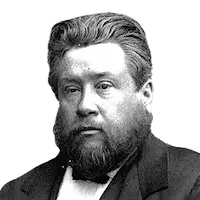
Charles Spurgeon
CharlesSpurgeon
They are servants, but they are not sons; they are created, but they are not begotten. You see what he says to the Son – I will be to him a Fat…

Expositor's Bible Commentary
Expositor'sBible Commentary
The opening question, “For to which of the angels did God ever say,” implies that Christ is to be seen in all the Scriptures because there is no ex…

John Gill
JohnGill
For unto which of the angels said he at any time
That is, he never said to any of the angels what he has said to Chr…

Matthew Henry
MatthewHenry
Many Jews had a superstitious or idolatrous respect for angels because they had received the law and other messages of the Divine will through thei…

Thomas Aquinas
ThomasAquinas
As mentioned, the Apostle devotes this entire first chapter to exalting Christ over the angels because of His excellence. Therefore, he lists four …
A.T. Robertson
A.T.Robertson