
A.T. Robertson Commentary John 16:13
A.T. Robertson Commentary
John 16:13
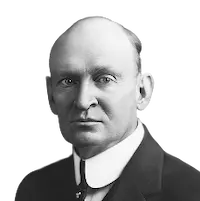
A.T. Robertson Commentary
John 16:13
SCRIPTURE
"Howbeit when he, the Spirit of truth, is come, he shall guide you into all the truth: for he shall not speak from himself; but what things soever he shall hear, [these] shall he speak: and he shall declare unto you the things that are to come." — John 16:13 (ASV)
Howbeit (δε). One of the most delicate and difficult particles to translate, varying from "and" to "but."
When he, the Spirit of truth, is come (οταν ελθη εκεινοσ, το πνευμα της αληθειας). Indefinite relative clause (οταν and the second aorist active subjunctive of ερχομα, no futurum exactum), "whenever he comes." Note εκεινος (masculine demonstrative pronoun, though followed by neuter πνευμα in apposition. See 15:26 for this phrase about the Holy Spirit. He shall guide you (οδηγησε υμας). Future active of old verb οδηγεω (from οδηγος, from οδος, way, ηγεομα, to lead). See Ps 24:5 for "lead me into thy truth" (οδηγησον με εις την αληθειαν σου). Christ is both the Way and the Truth (14:6) and the Holy Spirit is the Guide who shows the way to the Truth (verse 14). This he does gradually. We are still learning the truth in Christ.
From himself (αφ' εαυτου). In this he is like Christ (1:26; 12:49; 14:10).
He shall declare (αναγγελε). Future active of αναγγελλω, as in 4:25. See it also repeated in verse 14.
The things that are yet to come (τα ερχομενα). Neuter plural articular participle of ερχομα, "the coming things." This phrase only here in the N.T. The things already begun concerning the work of the Kingdom (Luke 7:19ff.; 18:30) not a chart of future history. See Lu 7:20; John 6:14; 11:27 for ο ερχομενος (the coming one) used of the Messiah.