
Charles Spurgeon Commentary John 10:1
Charles Spurgeon Commentary
John 10:1
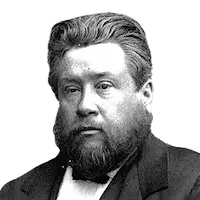
Charles Spurgeon Commentary
John 10:1
SCRIPTURE
"Verily, verily, I say unto you, He that entereth not by the door into the fold of the sheep, but climbeth up some other way, the same is a thief and a robber." — John 10:1 (ASV)
Verily, verily, I say unto you, He that entereth not by the door into the sheepfold, but climbeth up some other way, the same is a thief and a robber.
The positiveness of our Lord's teaching is noteworthy. Whatever may be said about dogmatical teaching now, it is certain that His teaching is of that character. He does not raise questions, but He solves them. He does not suggest probabilities, but He declares certainties.
This might be taken as the key-word to all the Saviour's teaching, Verily, verily. He makes a strong asseveration; He speaks as one having authority, not as the scribes who only claimed to have authority, but as the Sent One of the Father who really has it: Verily, verily, I say unto you. Whatever comes to us with the imprimatur of the Verily, verily, of the Son of God is not to be questioned or doubted by us for a single moment.
He that entereth not by the door into the sheepfold, but climbeth up some other way, the same is a thief and a robber. Christ Himself did enter by the door.
He came according to the ancient types, symbols, and prophecies. He came as God said that He would come. He entered by the door. There is no irregularity about Christ's office as the Shepherd of His sheep.
It is confirmed to Him by the sanction of the Holy Spirit. The witness of the Father is borne to Him: This is my beloved Son, in whom I am well pleased: hear ye him. We rejoice to think that Jesus our Saviour is also Christ the Anointed.
He is Jesus to us, but He is the Anointed of the Father. He comes by right as the appointed Shepherd of the sheep, entering in by the door.
Verily, verily, I say unto you,
Now we may be absolutely certain that there is something of the utmost importance whenever Christ uses the solemn affirmation Verily, verily—the same word is Amen, amen. It has been well observed that if it were not for Christ's "Amens," our "Amens" would be of little value.
It is because he who is the Amen, the Faithful and True Witness, pleads in heaven that our "Amens" are accepted there. If, dear friends, Christ pays earnest attention to our "Amens," how much more should we attend to his, especially when he doubles them—Amen, amen, I say unto you.