
Charles Spurgeon Commentary Romans 12
Charles Spurgeon Commentary
Romans 12
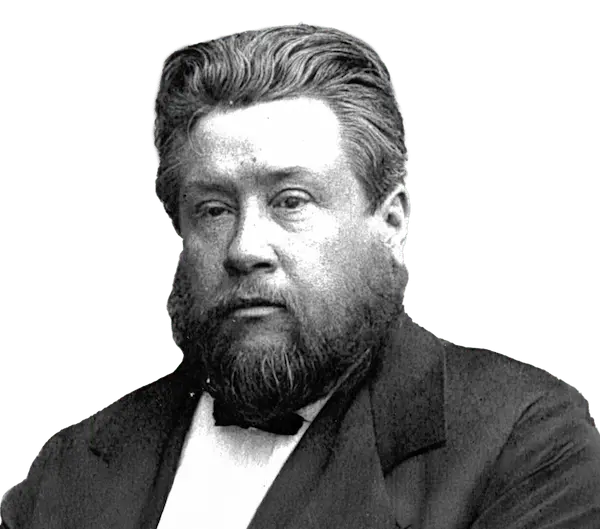
Charles Spurgeon Commentary
Romans 12
"I beseech you therefore, brethren, by the mercies of God, to present your bodies a living sacrifice, holy, acceptable to God, [which is] your spiritual service." — Romans 12:1 (ASV)
I beseech you therefore, brethren,
Paul is a calm reasoner. He is a bold starer of truth, but here he comes to pleading with us. I think that I see him lift the pen from the paper and look round upon us, as, with the accent of entreaty, he says, "I beseech you, therefore, brethren, by the mercies of God, by God's great mercy to you, his many mercies, his continued mercies." What stronger plea could the Apostle have? I beseech you therefore, brethren, by the mercies of God.
By the mercies of God, that you present your bodies a living sacrifice, holy, acceptable unto God, which is your reasonable service.
Though he beseeches you to do it, he claims a right to it. It is only your reasonable service. Do we need to be entreated to be reasonable? I am afraid that we do sometimes.
And what are we to do? To present our bodies to God, not our souls alone, to make real, practical work of it. Let this flesh and blood in which your body dwells be presented to God, not to be killed and to be a dead sacrifice, but to live and still to be a sacrifice, a living sacrifice to God, holy and acceptable to him.
This is reasonable. God help us to carry it out.
"And be not fashioned according to this world: but be ye transformed by the renewing of your mind, and ye may prove what is the good and acceptable and perfect will of God." — Romans 12:2 (ASV)
And be not conformed to this world:
Do not live as people of the world do. Do not follow the customs, the fashions, the principles of the world. Be not conformed to this world.
But be ye transformed
It is not enough to be nonconformists. Be transformed ones, altogether changed into another form.
By the renewing of your mind, that ye may prove what is that good, and acceptable, and perfect, will of God.
It is by holy living, by consecrated bodies, that we are to prove the will of God. We cannot know it, we cannot practically work it out, except by a complete consecration to God.
"For I say, through the grace that was given me, to every man that is among you, not to think of himself more highly than he ought to think; but to think as to think soberly, according as God hath dealt to each man a measure of faith." — Romans 12:3 (ASV)
Humility is sober thinking. Pride is drunken thinking. He who thinks more of himself than he should is, to that extent, intoxicated with conceit; but he who judges rightly, and is therefore humble, thinks soberly. May God grant us to be very sober in our thoughts of ourselves.
"For even as we have many members in one body, and all the members have not the same office: so we, who are many, are one body in Christ, and severally members one of another." — Romans 12:4-5 (ASV)
This is why there is diversity. If the hand were made exactly like the foot, it would not be one-tenth as useful; and if the eye only had the same ability as the ear, it would not be able to see, and the whole body would be a loser as a result. Do we begin to compare eyes, and ears, and feet, and hands, and say, "This is the better ability"? No.
They are each one necessary. So do not compare yourselves with one another, for if you are in the body of Christ, you are each one necessary. The distinctive trait that you possess, and the distinctive trait that your brother possesses, both have their place in the collective body and must be precious in God's sight.
"And having gifts differing according to the grace that was given to us, whether prophecy, [let us prophesy] according to the proportion of our faith; or ministry, [let us give ourselves] to our ministry; or he that teacheth, to his teaching; or he that exhorteth, to his exhorting: he that giveth, [let him do it] with liberality; he that ruleth, with diligence; he that showeth mercy, with cheerfulness." — Romans 12:6-8 (ASV)
Having then gifts differing according to the grace that is given to us, whether prophecy, let us prophesy according to the proportion of faith; Or ministry, let us wait on our ministering: or he that teacheth, on teaching; Or he that exhorteth, on exhortation:
Keep to your own work; stand in your own niche. If you are only an exhorter, do not pretend to teach. If your work is ministry, and you cannot prophesy, do not attempt to do it. Every man in his own order.
Jump to: