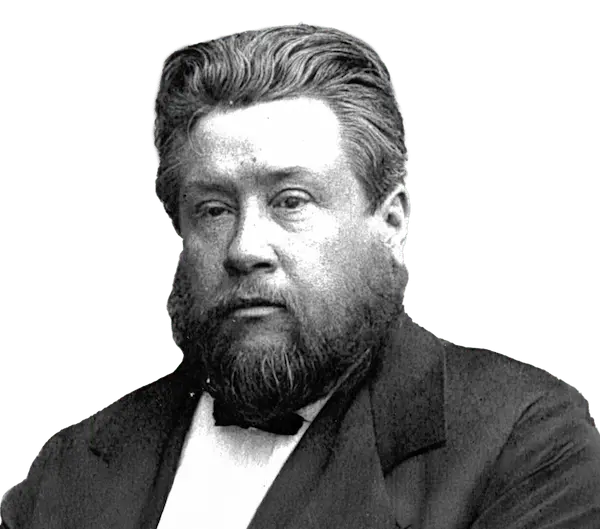
Charles Spurgeon • Oct 4, 1857
AND why does it say, “And thy redeemer”? What was the use of appending the Redeemer’s name to this precious exhortation? By God’s help it shall be the business of this evening to show why there is a peculiar blessedness in the fact that God has not only said,…
Charles Spurgeon • Nov 6, 1859
THERE are many ways by which the true believer draws near to God. The gates of the King’s palace are many, and through the love of Jesus, and the rich grace of His Spirit, it is our delight to enter and approach our heavenly Father. First and foremost among th…
Charles Spurgeon • Jun 28, 1857
IN reading the chapter, we have seen the great and exceeding precious promises which God had made to the favored nation of Israel. God in this verse declares, that though the promise was made and though He would fulfill it, yet He would not fulfill it until Hi…
Charles Spurgeon • Nov 9, 1856
THIS seems to be the only prayer the psalmist puts up in this psalm, as being of itself sufficient for the removal of all the ills over which he mourned. Though he sighs over the strife of neighbors and the ridicule of foes, and lamenting the ill condition of…
Charles Spurgeon • Aug 26, 1855
THERE is no point upon which men make greater mistakes than upon the relation which exists between the law and the Gospel. Some men put the law instead of the Gospel, others put the Gospel instead of the law. Some modify the law and the Gospel, and preach neit…
Charles Spurgeon • Nov 4, 1855
PAUL once advised the Romans to strive. Three verses before our text he actually gives them an exhortation to strive and yet he here utters a prayer that the God of peace might be with them all. Lest you should think him to be a man of strife, you must read th…
Charles Spurgeon • Aug 25, 1861
IT is very advantageous to the Christian mind to frequently consider the deep and unsearchable attributes of God. The beneficial effect is palpable in two ways, exerting a sacred influence both on the judgment and the heart. In respect to the one, it tends to…
Charles Spurgeon • Aug 28, 1859
MAN is always altering what God has ordained. Although God’s order is ever the best, yet man will never agree therewith. When God gave forth the law it was engraved upon two stones. The first table contained the commandments concerning man and God, the second…
Charles Spurgeon • Feb 25, 1855
ORIGINALLY, I have no doubt, these words referred to David. He was chosen out of the people.
Charles Spurgeon • Jul 19, 1863
THIS morning, according to my promise, I discourse upon the second part of this verse—“With the mouth confession is made unto salvation.” I feel a measure of regret that all my hearers of this morning were not present last Sunday, since you may wrongly imagine…
Charles Spurgeon • Oct 20, 1861
THERE is no occasion to inform the Christian heart who the person is to whom reference is here made. The name of Jesus is to you a household word. Nay, it is the word which will be found written upon your hearts when you die. That immortal word shall be the ke…
Charles Spurgeon • Jul 3, 1859
IT will not be needful for me this morning to be controversial in my discourse, for but two Sabbaths ago I addressed you from that text, “The mighty God,” and endeavored with the utmost of my ability to prove that Christ must be “very God of very God”—co-equal…
Charles Spurgeon • Feb 14, 1864
THIS particular text was originally addressed to the apostles when they were sent to teach and preach in the name of the Lord Jesus. Perhaps bright visions floated before their minds, of honor and esteem among men. It was no mean dignity to be among the twelve…
Charles Spurgeon • Aug 12, 1855
WHEN traveling through the country, you have often noticed that in different spots the old rocks peep out from under the soil, as if they would let us know what earth’s bones are made of and what are the solid foundations of this globe. So in searching through…
Charles Spurgeon • Jun 14, 1863
JESUS was pressing through the throng to the house of Jairus to raise the ruler’s dead daughter, but He is so profuse in goodness that He works another miracle while upon the road. While yet this rod of Aaron bears the blossom of an unaccomplished wonder, it y…
Charles Spurgeon • Jan 23, 1859
IF I chose to occupy your time with controversial matter, I might prove to a demonstration that the apostle Paul is here describing his own experience as a Christian. Some have affirmed that he is merely declaring what he was before conversion, and not what he…
Charles Spurgeon • Nov 8, 1863
HERE is the alarm of mercy declaring the sinner’s duty—“ Escape for your life .” Here is the work of grace, and the gratitude of the sinner after he is saved . “ Thou hast magnified thy mercy, which thou hast shewed unto me in saving my life .” The other day,…
Charles Spurgeon • Mar 4, 1855
THE sleep of the body is the gift of God. So said Homer of old, when he described it as descending from the clouds and resting on the tents of the warriors around old Troy. And so sang Virgil, when he spoke of Palinurus falling asleep upon the prow of the ship…
Charles Spurgeon • Mar 8, 1863
DURING the last few Sabbath-days, we have been considering the sufferings of our Lord Jesus Christ. We followed Him through the agony of the garden, the sorrows of the betrayal, the weariness and slander of His various trials, the shame and mockery of the sold…
Charles Spurgeon • Nov 30, 1856
MANASSEH is one of the most remarkable characters whose history is written in the sacred pages.
Charles Spurgeon • May 9, 1860
PARDON me, my brethren, if I attempt no exposition whatever of the text, but simply endeavor to address you upon what I think is an inference from it, or at least a reflection to which it might readily give rise. The psalmist is here describing the prosperity…
Charles Spurgeon • Nov 8, 1863
SICK! That is a sad thing. It moves your pity. “Sick of love”—love-sick! That stirs up other emotions which we shall presently attempt to explain. No doubt certain sicknesses are peculiar to the saints—the ungodly are never visited with them. Strange to say, t…
Charles Spurgeon • Jan 7, 1855
IT seems, then, that Christians may forget Christ. The text implies the possibility of forgetfulness concerning Him whom gratitude and affection should constrain them to remember. There could be no need for this loving exhortation if there were not a fearful s…
Charles Spurgeon
THE Mosaic law attached great importance to meats and drinks—the Christian religion attaches none. The apostle Peter was shown by the vision of a sheet let down from heaven, not only that all nations were now to receive the Gospel message, but that all kinds o…