
Preparing for Our Last Day
Augustine of Hippo Sermon
Preparing for Our Last Day
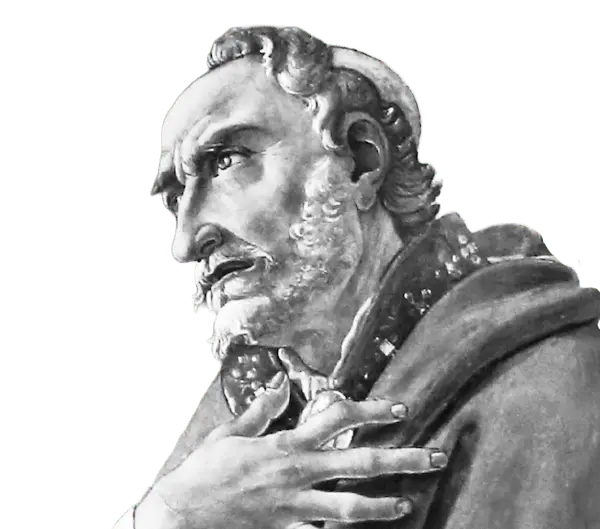
Augustine of Hippo Sermon
Preparing for Our Last Day
The Certainty of Death and Christ's Victory
1. The advice, brothers and sisters, which you have just heard Scripture give—to watch for the last day—should be applied by each of us to our own last day. Don't presume that the last day of the world is far away, and fall asleep regarding your own last day. You have heard what Jesus said concerning the last day of this world: "But about that day or hour no one knows, not even the angels in heaven, nor the Son, but only the Father" (Mark 13:32).
There is indeed a great difficulty here, lest we understand this in a simplistic way and think that the Father knows something that the Son doesn't know. For when Jesus said, "the Father knows it," He said this because in the Father the Son also knows it. For what is there in a day that was not made by the Word, by whom the day itself was made? Let no one, then, search out when the last day will be; instead, let us all live well, lest the last day of any one of us find us unprepared. For as a person departs from this life on their last day, so they will be found on the last day of the world. Nothing will help you then that you haven't already done here. Each person's own works will either support them or overwhelm them.
2. Why have we sung to the Lord in the Psalm, "Lord, have mercy on me, for people have trampled on me" (Psalm 56:1)? The word "people" here refers to those who live according to human ways. For it is said to those who live according to God, "You are gods, all of you children of the Most High" (Psalm 82:6). But to those who were called to be children of God yet preferred to be merely human—that is, to live according to human ways—God says, "But you will die like mere mortals; you will fall like every other ruler" (Psalm 82:7).
The fact that a person is mortal should serve as instruction, not as a cause for pride. What does a worm that will die tomorrow have to boast about? I say to you in love, brothers and sisters, that proud mortals should be put to shame by the devil. For although the devil is proud, he is at least immortal; he is a spirit, though an evil one. The last day is reserved for him as his final punishment, but he is not subject to the death that we must face.
But humanity received the sentence, "You will surely die" (Genesis 2:17). We should make good use of our punishment. What do I mean by "make good use of our punishment"? I mean don't use the very thing that brought your punishment as a reason for pride. Acknowledge that you are mortal, and let that break down your arrogance. Hear it said to you, "Why are earth and ashes proud?" (Sirach 10:9). Even if the devil is proud, he is not "earth and ashes." Therefore it was said, "But you will die like mere mortals and fall like every other ruler." You don't take into account that you are mortal, yet you are proud like the devil.
Let us make good use of our punishment, brothers and sisters. Let us use our mortality well to advance toward what is good. Who doesn't know that the inevitability of our death is a punishment? And it's more burdensome because we don't know when it will happen. The punishment is certain, the hour uncertain—and in the ordinary course of human affairs, that punishment alone is certain.
3. Everything else in our lives, both good and bad, is uncertain; only death is certain. What am I saying? A child is conceived—perhaps it will be born, perhaps it will be a miscarriage. So that's uncertain. Perhaps the child will grow up, perhaps not; perhaps will reach old age, perhaps not; perhaps will be rich, perhaps poor; perhaps distinguished, perhaps obscure; perhaps will have children, perhaps not; perhaps will marry, perhaps not—and so on with whatever good things you might name.
Now look at the possible evils of life: Perhaps the person will experience sickness, perhaps not; perhaps will be bitten by a snake, perhaps not; perhaps will be killed by a wild animal, perhaps not. Consider all evils—everywhere there's "perhaps it will happen" and "perhaps it won't." But can you say, "Perhaps the person will die" and "Perhaps they won't"? It's like when doctors examine a fatal illness and make their announcement: "The patient will die; they won't recover from this." From the moment of birth, it can be said, "They won't recover from this."
When a person is born, they begin to be ill. When they die, they end this particular ailment—but they don't know whether they might fall into something worse. The rich man in the Gospel ended his life of luxury only to begin a life of torment. But the poor man ended his suffering and arrived at perfect health (Luke 16:19-31). Each made their choice in this life about what they would have in the next; what they reaped there, they sowed here. Therefore, while we live, we ought to be watchful and choose what we want to possess in the world to come.
4. Let us not love the world. It overwhelms its lovers and leads them to no good. We should work harder to prevent it from seducing us than fear it might collapse. Look—the world is falling, but the Christian stands firm, because Christ does not fall.
Why does the Lord say, "Take courage! I have overcome the world" (John 16:33)? We might answer Him, "Rejoice—yes, You should rejoice. If You have overcome, You can rejoice. But why should we?" Why does He say to us, "Rejoice," except that He has overcome for our sake, fought for us?
How did He fight? By taking on human nature. Take away His birth from a virgin; take away that "He emptied Himself, taking the form of a servant, being made in human likeness, and found in appearance as a man" (Philippians 2:7). Take away this, and where is the combat, the contest? Where is the trial? Where is the victory that no battle preceded?
"In the beginning was the Word, and the Word was with God, and the Word was God. Through him all things were made; without him nothing was made that has been made" (John 1:1, 3). Could the Jews have crucified this Word? Could those wicked people have mocked this Word? Could this Word have been struck? Could this Word have been crowned with thorns? But in order to suffer all this, "the Word became flesh" (John 1:14). And after He had suffered all this, by rising again He "overcame." So He has overcome for us, to whom He has shown the assurance of His resurrection.
You say then to God, "Have mercy on me, Lord, for people trample me down" (Psalm 56:1). Don't trample yourself down, and others won't overcome you. For consider—some powerful person threatens you. How do they threaten? "I will ruin you, condemn you, torture you, kill you." And you cry, "Have mercy on me, Lord, for people trample me down."
If you're honest and look at yourself clearly, someone who is mortal "tramples you down" because you're afraid of human threats. People "trample you down" because you wouldn't be afraid if you weren't yourself merely human. What's the solution, then? O mortal, cling to God, by whom you were made human. Cling fast to Him, put your trust in Him, call upon Him, let Him be your strength.
Say to Him, "In You, Lord, is my strength" (Psalm 59:17). Then you will be able to sing in the face of human threats. And what you will sing later, the Lord Himself tells you: "In God I trust; I will not be afraid. What can mere mortals do to me?" (Psalm 56:11).