
The Eucharist, Grace, and the Danger of Self-Reliance
Augustine of Hippo Sermon
The Eucharist, Grace, and the Danger of Self-Reliance
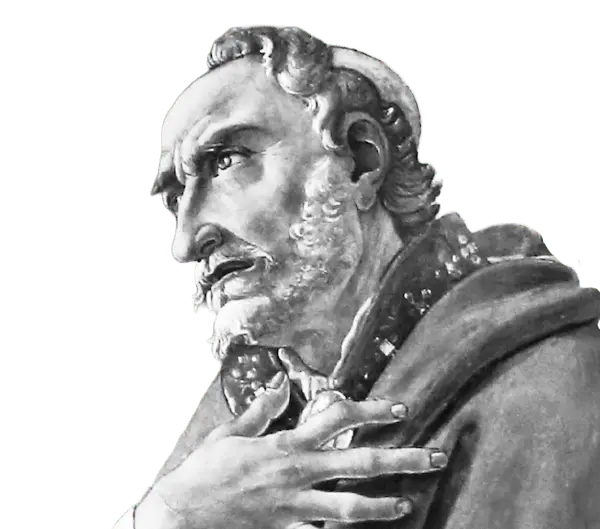
Augustine of Hippo Sermon
The Eucharist, Grace, and the Danger of Self-Reliance
The Mystery of Christ's Flesh and Blood
1. We have heard the True Master, the Divine Redeemer, the human Savior, commending to us our ransom, His own Blood. He spoke to us of His Body and Blood; He called His Body food and His Blood drink. Those who are baptized and faithful recognize this Sacrament. But those who are only hearers—what do they do but listen?
When commending such food and drink, He said, "Unless you eat My Flesh and drink My Blood, you shall have no life in you" (John 6:53). This statement about life could only come from Life itself. Anyone who rejects this will find not life but death. Many of His disciples were troubled, though not all, saying to themselves, "This is a hard saying; who can accept it?" (John 6:60).
When the Lord perceived in Himself their unspoken thoughts, He responded to these silent objections so they would understand they had been heard and might abandon such thoughts. What did He answer? "Does this offend you? What if you were to see the Son of Man ascend to where He was before?" (John 6:61-62). What does this mean? "Does this offend you? Do you think I will divide this body that you see and give you my severed limbs? What if you see the Son of Man ascend to where He was before?" Surely one who could ascend whole could not be consumed.
So He gave us His Body and Blood as a life-giving refreshment while briefly resolving questions about His physical wholeness. Let those who eat, eat on, and those who drink, drink; let them hunger and thirst; let them eat Life, drink Life. Eating means being refreshed, but what refreshes you doesn't diminish. Drinking here means living. Eat Life, drink Life; you will have life, and Life remains whole.
This becomes reality when what is visibly received in the Sacrament is in truth eaten spiritually and drunk spiritually. We have heard the Lord Himself saying, "It is the Spirit who gives life; the flesh profits nothing. The words I have spoken to you are spirit and life. But there are some of you who do not believe" (John 6:63-64). Such were those who said, "This is a hard saying; who can accept it?" It is hard, but only to the hardened; it is unbelievable, but only to the unbelieving.
2. To teach us that belief itself is a gift, not something we deserve, He says, "As I have told you, no one can come to Me unless it is granted by the Father" (John 6:65). If we recall the preceding words of the Gospel, we'll find He had said, "No one can come to Me unless the Father who sent Me draws him" (John 6:44).
He didn't say "lead" but "draw." This power acts on the heart, not the body. Don't be surprised by this! Believe, and you come; love, and you are drawn. Don't imagine harsh or unpleasant force; the attraction is gentle and sweet. Sweetness itself draws you.
Isn't a sheep drawn when fresh grass is shown to it when it's hungry? The sheep isn't physically dragged; it's bound by desire. You too can come to Christ this way. Don't think of long journeys; you come to Him by believing, not by traveling. We come to Him, who is everywhere, through love, not by sailing.
Even on this kind of voyage, waves and storms of various temptations abound. Believe in the Crucified One, so your faith can ascend the wood of the cross. You won't sink; you'll be carried by the wood. This is how, amid the world's waves, the Apostle sailed when he said, "Far be it from me to glory except in the cross of our Lord Jesus Christ" (Galatians 6:14).
3. It's remarkable that when Christ crucified is preached, two people hear the same message—one despises it, the other embraces it. The one who despises it should blame himself; the one who embraces it shouldn't take credit. He has heard from the True Master: "No one can come to Me unless it is granted by the Father" (John 6:65).
Let him rejoice that this has been granted, and give thanks to the Giver with a humble, not an arrogant, heart. Otherwise, what he gained through humility he'll lose through pride. Even those already walking the path of righteousness will perish from it if they attribute their progress to themselves and their own strength.
Scripture teaches us humility through the Apostle: "Work out your salvation with fear and trembling" (Philippians 2:12). To prevent any self-attribution because he said "work," he immediately added, "For it is God who works in you, both to will and to work for His good pleasure" (Philippians 2:13).
"It is God who works in you." Therefore, approach "with fear and trembling" —be like a valley that receives rain. Low places are filled; high places are dried up. Grace is like rain. Why be surprised that "God opposes the proud but gives grace to the humble" ? (James 4:6). Therefore, continue "with fear and trembling." Don't be proud, but fear. Fear being emptied; don't boast, lest you dry up.
4. But you might say, "I'm already on this path. Once I needed to learn and know the law's requirements, but now I have free choice. Who can remove me from this path?" If you read carefully, you'll find a certain man who began to exalt himself because of an abundance that he had nonetheless received. The Lord in mercy, to teach him humility, took away what He had given, and the man was suddenly reduced to poverty.
Recognizing God's mercy as he reflected, he said, "In my prosperity I said, 'I shall never be moved'" (Psalm 30:6). "In my prosperity I said." But I who said it am only human, and "all men are liars" (Psalm 116:11). So "in my prosperity I said" —such was my abundance that I dared to say, "I shall never be moved."
What happened next? "Lord, by Your favor You made my mountain stand strong; You hid Your face, and I was dismayed" (Psalm 30:7). He's saying, "You showed me that my abundance came from You. You showed me where I should seek, to whom I should attribute what I received, whom I should thank, to whom I should run in my thirst, from whom I could be filled, and with whom I should preserve what filled me.
"I will reserve my strength for You" (Psalm 59:9). By Your bounty I was filled; through Your protection I won't lose it. "I will reserve my strength for You." To show me this, "You hid Your face, and I was dismayed." Dismayed because dried up; dried up because exalted. Therefore, parched one, say so you may be filled again: "My soul thirsts for You like a dry land" (Psalm 143:6). Say "My soul thirsts for You like a dry land." You said, not the Lord, "I shall never be moved." You said it, presuming on your own strength, but it wasn't from yourself, though you thought it was.
5. What does the Lord say? "Serve the Lord with fear, and rejoice with trembling" (Psalm 2:11). The Apostle says similarly, "Work out your salvation with fear and trembling. For it is God who works in you" (Philippians 2:12-13). Therefore, rejoice with trembling. "Lest the Lord be angry" (Psalm 2:12).
I see you're anticipating my words by your exclamations. You know what I'm about to say. How do you know this, except that He taught you—the one to whom you've come through faith? The Lord says, listen to what you already know. I'm not teaching but reminding; I'm not teaching since you already know, nor reminding since you remember. Let's say together what we both retain:
"Take hold of instruction, and rejoice" (Psalm 2:12), but "with trembling," so you may humbly hold fast what you've received. "Lest the Lord be angry" —with the proud, of course, who attribute to themselves what they have, not thanking the One from whom they received it. "Lest the Lord be angry, and you perish from the righteous way" (Psalm 2:12).
Did he say, "Lest the Lord be angry, and you don't enter the righteous way"? Or, "Lest the Lord be angry, and He doesn't bring you to the righteous way"? You're walking in it already—don't be proud, lest you even fall from it. "And you perish," he says, "from the righteous way."
"When His wrath is kindled in a short time against you" (Psalm 2:12)—not in some distant future. As soon as you're proud, you immediately lose what you had received. As if someone terrified by this asked, "What shall I do?" It follows, "Blessed are all who take refuge in Him" (Psalm 2:12)—not in themselves, but in Him. "For by grace you have been saved through faith. And this is not your own doing; it is the gift of God" (Ephesians 2:8).
6. Perhaps you're saying, "Why does he keep repeating this? He says it a second and third time, and hardly ever speaks without saying it." If only I weren't saying it in vain! There are people ungrateful for grace, attributing too much to weak and disabled human nature.
It's true that when man was created, he received great power of free will, but he lost it through sin. He fell into death, became sick, and was left half-dead by robbers on the roadside. The Samaritan (which means "guardian") passing by lifted him onto his own animal. He's still being brought to the inn for treatment.
Why was he lifted up? He's still in the process of healing. But someone might say, "It's enough that I received forgiveness of all my sins in baptism." Because your wickedness was blotted out, has your weakness ended too? "I received," they say, "forgiveness of all sins." That's entirely true. All sins were blotted out in baptism—all of them: words, deeds, thoughts—all were completely erased.
But this is just the "oil and wine" poured on your wounds by the roadside. Remember, brothers, the man wounded by robbers and left half-dead on the road? How he received treatment, with oil and wine poured on his wounds? His sins were already forgiven, yet his weakness is still being healed at the inn.
The inn, if you recognize it, is the Church. Right now it's an inn because in this life we're passing through. It will become our home when we reach perfect health in the kingdom of heaven. Meanwhile, let's gladly receive treatment at the inn. While still weak, let's not boast of perfect health, lest our pride prevent us from ever being fully healed despite all our treatment.
7. "Bless the Lord, O my soul" (Psalm 103:1). Yes, say to your soul: You're still in this life, still carrying frail flesh; "the corruptible body still weighs down the soul" (Wisdom 9:15). Even after complete forgiveness of sins, you've still received the remedy of prayer. You still say, while your weaknesses are being healed, "Forgive us our debts" (Matthew 6:12).
Say then to your soul—you lowly valley, not exalted hill—say to your soul, "Bless the Lord, O my soul, and forget not all His benefits" (Psalm 103:2). What benefits? Tell them, count them, give thanks. What benefits? "Who forgives all your iniquity" (Psalm 103:3). This happened in baptism.
What happens now? "Who heals all your diseases" (Psalm 103:3). This is happening now; I acknowledge it. But as long as I'm here, "the corruptible body weighs down the soul" (Wisdom 9:15). Say then what comes next, "Who redeems your life from the pit" (Psalm 103:4).
After redemption from corruption, what remains? "When this corruptible puts on incorruption, and this mortal puts on immortality, then shall come to pass the saying that is written: 'Death is swallowed up in victory.' O death, where is your contention?" (1 Corinthians 15:54-55). There, rightly, "O death, where is your sting?" (1 Corinthians 15:55).
You look for its place but can't find it. What is "the sting of death" ? What means, "O death, where is your sting?" Where is sin? You search, but it's nowhere. For "the sting of death is sin" (1 Corinthians 15:56). These are the Apostle's words, not mine.
Then it will be said, "O death, where is your sting?" Sin will be nowhere—not to surprise you, attack you, or trouble your conscience. Then we won't say, "Forgive us our debts." Instead, we'll say, "O Lord our God, give us peace, for You have fulfilled everything for us" (Isaiah 26:12).
8. Finally, after redemption from all corruption, what remains but the crown of righteousness? This remains, but even with it, don't let your head swell with pride when receiving the crown. Listen closely to the Psalm about how this crown doesn't go to the proud.
After saying, "Who redeems your life from the pit," he adds, "Who crowns you" (Psalm 103:4). Here you might quickly say, "'Crowns you' acknowledges my merits; my own excellence achieved this; it's payment of a debt, not a gift." Listen instead to the Psalm.
It's you again making this claim, and "all men are liars" (Psalm 116:11). Hear what God says: "Who crowns you with steadfast love and mercy" (Psalm 103:4). He crowns you out of mercy, out of compassion. You had no merit that deserved His call; once called, you had no merit that deserved justification; once justified, you had no merit that deserved glorification.
"A remnant has been saved by the election of grace. But if by grace, then it is no longer of works; otherwise grace would no longer be grace" (Romans 11:5-6). "To the one who works, the wages are not counted as grace but as debt" (Romans 4:4). The Apostle says, "not according to grace, but according to debt."
But "He crowns you with mercy and compassion." If your own merits precede, God says to you, "Examine your merits well, and you will see they are My gifts."
9. This, then, is God's righteousness. It's called "the Lord's salvation"—not because the Lord is saved, but because He gives salvation to those He saves. Similarly, "the grace of God through Jesus Christ our Lord" is called "the righteousness of God"—not because the Lord is righteous by it, but because He makes righteous those whom He transforms from ungodly to godly.
But some, like the Jews of old, though they want to be called Christians, remain ignorant of God's righteousness and try to establish their own—even in our times, in this era of open grace, when what was once hidden is now fully revealed. This grace, which previously lay hidden in the fleece, is now manifest on the threshing floor.
I see some have understood me, while others haven't. I won't deprive them by remaining silent. Gideon, one of the ancient righteous men, asked the Lord for a sign: "Please, Lord, let this fleece that I put on the threshing floor be wet with dew, while the floor remains dry" (Judges 6:37). And it happened—the fleece was wet, but the entire floor was dry. In the morning, he wrung the fleece into a basin. Grace is given to the humble, and you know what the Lord did for His disciples with a basin.
Then he asked for another sign: "Lord, I would like the fleece to be dry and the floor covered with dew" (Judges 6:39). And it happened that way. Think about the Old Testament time: grace was hidden in a cloud, like dew in the fleece. Now consider the New Testament time and look at the Jewish nation—you'll find it like a dry fleece. Meanwhile, the whole world, like that threshing floor, is full of grace, no longer hidden but revealed.
This is why we deeply lament our brothers who strive not against hidden grace but against grace now openly manifested. The Jews have some excuse. But what shall we say of Christians? Why are you enemies of Christ's grace? Why do you rely on yourselves? Why are you ungrateful?
Why did Christ come if nature was already here? Nature was here before, but you only deceive yourselves by praising it excessively. Wasn't the Law here too? But the Apostle says, "If righteousness comes through the Law, then Christ died in vain" (Galatians 2:21). What the Apostle said about the Law, we say to these people about nature: "If righteousness comes through nature, then Christ died in vain."
10. What was said of the Jews applies completely to these men now. "They have a zeal for God; I can testify that they have a zeal for God, but not according to knowledge" (Romans 10:2). What does "not according to knowledge" mean? "Being ignorant of God's righteousness and seeking to establish their own, they have not submitted to God's righteousness" (Romans 10:3).
My brothers, share my sorrow about this. When you find such people, don't hide them. Don't show misguided mercy—when you find them, expose them. Refute those who contradict, and bring to us those who resist. Two councils have already addressed this question and sent reports to the Apostolic See, and directives have come back from there. The matter has been settled—may their error also be settled! We advise them to take heed, we teach them to be instructed, we pray that they may be changed. Let us turn to the Lord...