
The Hope of Eternal Life and Resurrection
Augustine of Hippo Sermon
The Hope of Eternal Life and Resurrection
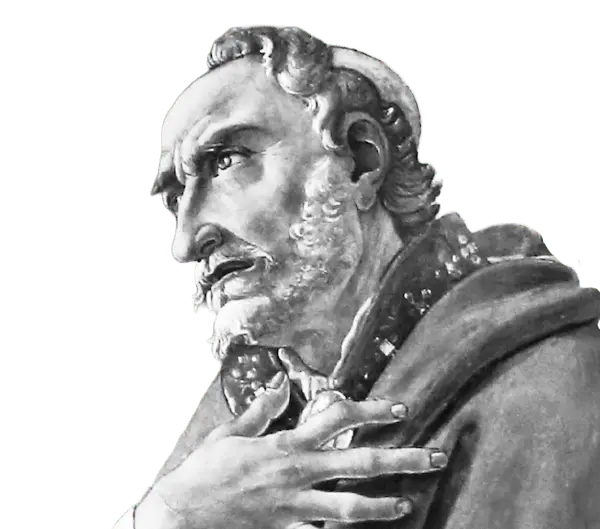
Augustine of Hippo Sermon
The Hope of Eternal Life and Resurrection
The Promise of Eternal Life
1. Our hope, brothers and sisters, is not of this present time, nor of this world, nor in that happiness by which people who forget God are blinded. Above all, we must know this and hold it firmly in our Christian hearts: we were not made Christians for the good things of the present time, but for something else which God promises but which humans cannot yet comprehend. About this future good, Scripture says, "Eye has not seen, nor ear heard, nor has it entered into the heart of man, what things God has prepared for those who love Him" (1 Corinthians 2:9).
Because this good is so great, so excellent, so inexpressible that it exceeds human understanding, it required God's promise. What's been promised, a person with a blinded heart cannot yet comprehend; nor can we show them now what they will one day become through God's promise.
Think of it like this: if an infant child could understand the words of someone speaking—though he couldn't yet speak or walk or do anything but lie there helpless—and someone told him, "Look, just as you see me walking, working, and speaking, after a few years you'll be like I am." The child, considering both himself and the speaker, would see what was promised. Yet looking at his own weakness, he might not believe it, even though he could see what was promised.
But with us who are like infants lying in our flesh and weakness, what is promised is both great and invisible. This is why faith is awakened in us—we believe what we don't see so that we may eventually see what we believe. Anyone who ridicules this faith, thinking they shouldn't believe what they don't see, will be put to shame when what they didn't believe arrives. Being confused, they'll be separated; being separated, they'll be condemned.
But whoever believes will be placed at God's right hand and will stand with great confidence and joy among those to whom it will be said, "Come, blessed of My Father, receive the kingdom which has been prepared for you from the beginning of the world" (Matthew 25:34). The Lord concluded by saying, "These will go into everlasting punishment, but the righteous into eternal life" (Matthew 25:46). This is the eternal life which is promised to us.
2. Because people love to live on this earth, life is promised to them; and because they greatly fear death, eternal life is promised. What do you love? To live. This you shall have. What do you fear? To die. You shall not experience it.
This seems enough for human weakness—to be told, "You shall have eternal life." Our minds, in their present state, can somewhat comprehend what is to come. But given our current imperfection, how fully can we understand it?
Because we're alive and don't want to die, we love eternal life—we want to live always, never to die. But those who will be tormented in punishment will wish to die and cannot. Living a long time or forever isn't by itself a great thing. The great thing is to live in blessedness.
Let us love eternal life, and by this we can recognize how much we should work for it, when we see people who love this present temporary life labor so hard for it. When death threatens, see how they struggle—by fleeing, hiding, giving away everything they own to buy more time, working, enduring torments and discomforts, calling doctors, and doing everything else within their power. With all this effort and expense, they can only manage to live a little longer; they cannot live forever.
If people strive with such labor, such effort, such cost, watchfulness, and care just to live a little longer, how should they strive to live forever? And if those who work to postpone death a few days are called wise, how foolish are those who live in such a way that they lose eternal life!
3. To help us understand God's gift of eternal life, let's start with what we know in this life. Let's imagine a life without all the unpleasant things we suffer here.
It's easier to identify what won't be there than what will be. Here we live; we'll live there too. Here we have health when we're not sick and feel no pain; we'll have health there too. Here when things go well, we suffer no punishment; we'll suffer none there either.
Imagine someone here on earth who's alive, in good health, and suffering no hardship. If someone promised this person they could remain like this forever—never dying—how greatly would they rejoice! How transported with joy they would be! They couldn't contain themselves—no pain, no torment, no end to life.
If God had promised us only this, which I've just described as best I could, at what price should we buy it if it were for sale? Would all your possessions be enough, even if you owned the whole world? Yet this promise is for sale. You can buy it—but don't worry about the price of something so valuable. Its price isn't beyond what you have. Its value is beyond price, but its cost is exactly what you possess.
To acquire any precious thing, you would gather gold, silver, money, or increase your property, crops, or livestock to buy some great and excellent thing to live happily on earth. You can buy eternal life too. Don't look for what you have, but for what you are. The price of eternal life is yourself. Give yourself, and you'll have it.
Why be troubled? Why anxious? Are you going to search for yourself or buy yourself? Look, give yourself as you are to God, and you'll have eternal life. "But," you say, "I'm wicked, and perhaps God won't accept me." By giving yourself to Him, you'll become good. The act of giving yourself to this faith and promise—this is what makes you good. When you become good, you'll be the price of this purchase and will receive not only health, safety, and life without end, but much more.
Let me remove some things that won't be there: no weariness, no sleep, no hunger, no thirst, no growth, no aging. There will be no births there because the number of the elect remains complete. There's no fear of decreasing numbers, so there's no need for increase. The number that exists there is whole—it doesn't need to grow since it can't diminish.
See how many things I've removed, yet I haven't described what will be there. I've mentioned life, safety, no hardships, no hunger, no thirst, no decline, no death. But I haven't yet said "what eye has not seen, nor ear heard, nor has it entered into the heart of man" (1 Corinthians 2:9). If I claimed to have described it, it would contradict what Scripture says. For how could it enter my heart to express something that "has not entered into the heart of man" ?
We believe what we cannot yet express. If it were expressed, it would be thought of; if thought of and expressed, it would enter human ears. Since it would only be expressed after being thought of, it would have entered the heart of man. But here we face a mystery— "eye has not seen, nor ear heard, nor has it entered into the heart of man." Even attempting to describe such a great thing disturbs us; we can't put it clearly into words. Who then could explain the reality itself?
4. Let's look at the Gospel. The Lord was speaking, and we should do what He said. "He who believes in Me," He says, "passes from death to life, and does not come into judgment. Truly I say to you, that the hour is coming, and now is, when the dead will hear the voice of the Son of God, and those who hear will live. For as the Father has life in Himself, so He has granted the Son to have life in Himself" (John 5:24-26).
By begetting the Son, the Father gave Him life. In begetting Him, He gave it. The Son is from the Father, not the Father from the Son. The Father is the Father of the Son, and the Son is the Son of the Father. The Son is begotten of the Father, not the Father of the Son. The Son was always begotten, always existed.
Who can comprehend this "always begotten"? When someone hears of a person being begotten, they naturally think, "Then there was a time when the one begotten didn't exist." What shall we say? Not so—there was no time before the Son, for "all things were made through Him" (John 1:3). If all things were made through Him, then times were also made through Him. How could times exist before the Son, when times themselves were made by Him?
Remove all concept of time—the Son was always with the Father. If the Son was always with the Father as the Son, He was always begotten. If He was always begotten, He was always with the Father who begot Him.
5. You might say, "I've never seen someone begetting who always had with him the one he begot. Normally the one who begets comes first, and the one begotten follows in time." You're right—"I've never seen this." This belongs to the category of "what eye has not seen." Do you ask how this might be expressed? It cannot be expressed because "ear has not heard, nor has it entered into the heart of man."
Let this be believed and adored. When we believe, we adore; when we adore, we grow; when we grow, we come to understand. While we're in this body, while we're absent from the Lord, compared to the holy angels who see these things, we're like infants nourished by faith, eventually to be fed by sight.
As the Apostle says, "While we are in the body, we are absent from the Lord. For we walk by faith, not by sight" (2 Corinthians 5:6-7). We'll eventually come to sight, which is promised to us by John in his letter: "Beloved, we are now children of God, and it has not yet been revealed what we shall be" (1 John 3:2). We are now God's children by grace, by faith, by the sacrament, by the blood of Christ, by the redemption of the Savior. "We are God's children, and it has not yet been revealed what we shall be. We know that when He appears, we shall be like Him, for we shall see Him as He is" (1 John 3:2).
6. Consider what we're being prepared to comprehend. Consider what we're being nourished to embrace and enjoy. Yet what we feed on is not diminished, and the one who feeds is sustained. When we eat ordinary food, it supports us but is itself diminished. But when we feed on righteousness, on wisdom, on immortal food, we are sustained, yet that food isn't diminished.
Think about how the eye feeds on light, yet doesn't diminish the light. The light isn't reduced because more people see it. It feeds many eyes, yet remains just as bright. Both the eyes are nourished, and the light is unchanged. If God has granted this to the physical light He created for our eyes, what is He Himself, the Light for the eyes of our hearts?
If you were told about a choice meal on which you'd dine, you would prepare your stomach. God is the feast being offered to you—prepare your heart.
7. Listen to what your Lord says: "The hour is coming," He says, "and now is." "The hour is coming," yes, that very hour, "now is, when—" what? "When the dead will hear the voice of the Son of God, and those who hear will live" (John 5:25). Those who don't hear will not live.
What does "those who hear" mean? It means those who obey. What is "those who hear" ? Those who believe and obey—they will live. So before they believed and obeyed, they were dead. They walked around, but they were dead. What good was it that they walked, being dead? If any of them died physically, people would run, prepare the grave, wrap them, carry them out, bury them—the dead burying the dead. About these, it is said, "Let the dead bury their dead" (Matthew 8:22).
Such dead as these are raised by God's Word to live in faith. Those who were dead in unbelief are awakened by the Word. Of this hour the Lord said, "The hour is coming, and now is." With His own Word, He raised those who were dead in unbelief, of whom the Apostle says, "Awake, you who sleep, and arise from the dead, and Christ will give you light" (Ephesians 5:14). This is the resurrection of hearts, the resurrection of the inner person, the resurrection of the soul.
8. But this isn't the only resurrection. There remains also the resurrection of the body. Whoever is raised in soul will also be raised in body to blessedness. Not all are raised in soul—only those who believe and obey, for "those who hear will live." As the Apostle says, "Not all have faith" (2 Thessalonians 3:2). If not all have faith, not all rise again in soul.
When the hour of bodily resurrection comes, all will rise again, whether good or bad—all will rise. But whoever first rises in soul, rises in body to blessing. Whoever doesn't first rise in soul, rises in body to condemnation. Whoever rises in soul, rises in body to life; whoever doesn't rise in soul, rises in body to punishment.
Since the Lord has impressed upon us the resurrection of souls, which we should all strive for and labor to live in (and living, persevere to the end), it remained for Him to impress upon us also the resurrection of bodies, which will happen at the end of the world. Now hear how He explained this too.
9. After saying, "Truly I say to you, the hour is coming, and now is, when the dead" —that is, unbelievers— "will hear the voice of the Son of God" —that is, the Gospel— "and those who hear" —that is, who obey— "will live" —that is, will be justified and will no longer be unbelievers; when He had said this, seeing that we needed instruction about the resurrection of the flesh as well, He continued, "For as the Father has life in Himself, so He has granted the Son to have life in Himself" (John 5:26).
This refers to the resurrection of souls, to the giving of life to souls. Then He added, "And He has given Him authority to execute judgment also, because He is the Son of Man" (John 5:27). This Son of God is the Son of Man. If the Son of God had remained only the Son of God and not become the Son of Man, He would not have delivered the sons of men. He who had made man was Himself made what He had made, so that what He had made might not perish.
Yet He was made the Son of Man in such a way that He remained the Son of God. He was made human by assuming what He was not, not by losing what He was. Remaining God, He was made human. He took on our humanity; He was not consumed by it. As the Son of God and Son of Man, the Maker and the Made, the Creator and the Created, the Creator of His mother, created from His mother—such was He who came to us.
Regarding His being the Son of God, He says, "The hour is coming, and now is, when the dead will hear the voice of the Son of God." He didn't say, "of the Son of Man," because He was emphasizing the truth in which He is equal to the Father. "And those who hear will live. For as the Father has life in Himself, so He has granted the Son to have life in Himself." This is not by participation but by His divine nature. The Father has life in Himself, and He begot a Son who would also have life in Himself—not made a partaker of life but Himself being Life, of which we become partakers. He has life in Himself, and He Himself is Life.
To become the Son of Man, He took our nature. The Son of God exists in His own right; to be the Son of Man, He took from us. What is less, He took from us; what is more, He gave to us. For He died in His human nature, not in His divine nature. The Son of God died, but He died regarding the flesh, not regarding "the Word which was made flesh and dwelt among us" (John 1:14).
So in what He died, He died of what was ours; in what we live, we live of what is His. He could not die from what was His own, nor could we live from what is our own. As God, as the Only-Begotten, as equal with the Father, the Lord Jesus taught us that if we hear, we shall live.
10. But, He says, "He has given Him authority to execute judgment also, because He is the Son of Man" (John 5:27). So this human form will come to judgment. This form of Man will judge; therefore He said, "He has given Him authority to execute judgment also, because He is the Son of Man." The Judge here will be the Son of Man; that form will judge which was judged. Listen and understand: the Prophet had already said, "They will look on Him whom they pierced" (Zechariah 12:10). That very form they struck with a spear will they see. He will sit as Judge, who stood before the judge. He will condemn the truly guilty, who was falsely made a criminal. He will come in the same form.
You find this in the Gospel too: when He was ascending to heaven before His disciples' eyes, they stood looking on, and the angelic voice said, "Men of Galilee, why do you stand gazing up into heaven? This same Jesus will come in like manner as you saw Him go into heaven" (Acts 1:11). What does "will come in like manner" mean? He will come in this same form. For "He has given Him authority to execute judgment, because He is the Son of Man."
Now see the principle behind this: it was fitting that those who were to be judged should see the Judge. Both good and bad were to be judged. "Blessed are the pure in heart, for they shall see God" (Matthew 5:8). It was appropriate that at the judgment, the form of the servant should be shown to both good and bad, while the form of God would be reserved for the good alone.
11. What will the good receive? Look, I'm now expressing what I didn't express a little earlier; yet in expressing it, I still don't fully express it. I said we would be in good health, safe, living, without hardships, without hunger and thirst, without decline, without loss of our eyes. All this I said, but what we will have beyond that, I didn't say.
We shall see God. This will be so great that in comparison, everything else is nothing. I said we would be living, safe and sound, suffering no hunger or thirst, not experiencing fatigue or sleep. All this—what is it compared to that happiness by which we shall see God?
Since God cannot now be shown as He is, whom we shall nevertheless see, therefore, "what eye has not seen, nor ear heard" —this the good will see, the godly will see, the merciful will see, the faithful will see. They will see who have a good place in the resurrection of the body, because they had a good obedience in the resurrection of the heart.
12. Will the wicked person see God too? Isaiah says, "Let the wicked be taken away, that he may not see the glory of God" (Isaiah 26:10). Both the wicked and the godly will see that human form; and when the sentence, "Let the wicked be taken away that he may not see the glory of God," has been pronounced, what remains for the godly and good but what the Lord Himself promised when He was here in the flesh?
He spoke among both good and evil, and was seen by all—as God, hidden; as Man, revealed. He spoke, I say, among them and said, "Whoever loves Me keeps My commandments; and he who loves Me will be loved by My Father, and I will love him" (John 14:21). And as if asked, "What will You give him?" He said, "I will manifest Myself to him" (John 14:21).
When did He say this? When He was seen by people. When did He say this? When He was seen even by those who didn't love Him. How then was He to manifest Himself to those who loved Him, except in a form that those who didn't love Him couldn't see?
Since the form of God was being reserved and the form of man revealed, by the form of man, speaking to people, visible and apparent, He revealed Himself to all, both good and bad. He reserved Himself in His divine form for those who loved Him.
13. When will He reveal Himself to those who love Him? After the resurrection of the body, when "the wicked shall be taken away that he may not see the glory of God." Then "we shall be like Him, for we shall see Him as He is" (1 John 3:2). This is life eternal.
Everything we've discussed before is nothing compared to that life. That we live—what is it? That we are in health—what is it? That we shall see God—this is a great thing. This is life eternal; as He Himself has said, "This is eternal life, that they may know You, the only true God, and Jesus Christ whom You have sent" (John 17:3).
This is life eternal—that they may know, see, comprehend, and become familiar with what they had believed, that they may perceive what they were not yet able to comprehend. Then the mind may see what "eye has not seen, nor ear heard, neither has entered into the heart of man." This shall be said to them at the end, "Come, you blessed of My Father, inherit the kingdom prepared for you from the foundation of the world" (Matthew 25:34).
Then the wicked will go into everlasting fire. But the righteous—where? Into life eternal. What is life eternal? "This is life eternal, that they may know You, the only true God, and Jesus Christ whom You have sent" (John 17:3).
14. Speaking then of the future resurrection of the body and not leaving us with only that, He says, "He has given Him authority to execute judgment also, because He is the Son of Man. Do not marvel at this, for the hour is coming" (John 5:27-28). He did not add here, "and now is," because this hour will be in the future, at the end of the world—it will be the last hour, at the last trumpet.
"Do not marvel at this," because I said, "He has given Him authority to execute judgment also, because He is the Son of Man. Do not marvel." I've said this because it's necessary for Him as Man to be judged by men. And what men will He judge? Those whom He finds alive? Not only those, but what? "The hour is coming when those who are in the graves" (John 5:28).
How did He describe those who are dead in the flesh? "Those who are in the graves," whose bodies lie buried, whose ashes are covered, whose bones are scattered—whose flesh is no longer flesh, yet is entirely preserved to God. "The hour is coming when all who are in the graves will hear His voice and come forth" (John 5:28-29).
Whether good or bad, they will hear His voice and come forth. All the bonds of the grave will burst; everything that was lost, or rather was thought to be lost, will be restored. For if God made man who was not, can He not remake what already was?
15. When it is said, "God will raise the dead," nothing incredible is claimed, because it is God, not man, who does it. It is a great thing that will be done, an incredible thing that will be done. But let it not be incredible, because consider who is doing it. He who will raise you is the One who created you.
You did not exist, and you came to be. Would you not believe that what once existed can exist again? Is this the gratitude we return to God—we who were not, and were made—that we refuse to believe He can raise what He has made?
Is this how His creature repays Him? "Have I therefore," God says to you, "made you, O man, before you existed, that you would not believe I can make you again what you once were, when you've already experienced that I could make you what you never were before?"
But you'll say, "Look at what I see in the tomb—dust, ashes, bones—will this receive life again, skin, substance, flesh, and rise again? What? These ashes, these bones that I see in the tomb?" Well, at least you see ashes and bones. In your mother's womb, there was nothing. This you see—at least there are ashes and bones; before you existed, there were neither ashes nor bones.
You were made when you were not at all, and don't you believe that these bones (whatever state they're in) will receive the form they had, when you've received what you didn't have before? Believe! For if you believe this, then your soul will be raised up now. "The hour is coming, and now is." Then, to your blessing, your flesh will rise again, "when the hour comes when all who are in the graves will hear His voice and come forth."
But you mustn't rejoice simply because you hear "and come forth." Listen to what follows: "Those who have done good, to the resurrection of life, and those who have done evil, to the resurrection of condemnation" (John 5:29).