
The Paradox of Fear: What Christians Should Truly Fear
Augustine of Hippo Sermon
The Paradox of Fear: What Christians Should Truly Fear
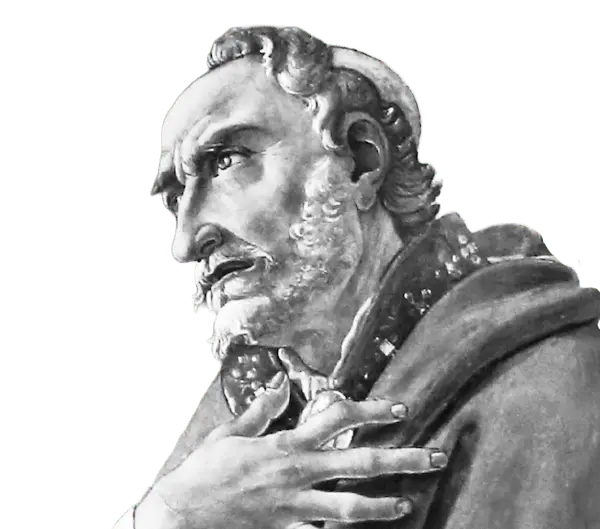
Augustine of Hippo Sermon
The Paradox of Fear: What Christians Should Truly Fear
Learning to Fear Rightly
1. The divine words we have just heard teach us both in fearing not to fear, and in not fearing to fear. You noticed when the Holy Gospel was being read that our Lord God, before He died for us, wanted us to be steadfast—doing this by instructing us "not" to fear, and yet also to fear. For He said, "Do not fear those who kill the body, but cannot kill the soul" (Matthew 10:28). See where He advised us not to fear. But now see where He advised us to fear: "But rather fear Him who is able to destroy both soul and body in hell."
Let us fear, therefore, so that we may not fear. Fear seems related to cowardice and appears to be a characteristic of the weak, not the strong. But hear what Scripture says: "The fear of the Lord is the hope of strength" (Proverbs 14:26). Let us fear, then, that we may not fear—that is, let us fear wisely, so that we may not fear foolishly. The holy martyrs, on whose feast day this Gospel lesson was read, in their fearing, did not fear—because in fearing God, they disregarded men.
2. For what should one person fear from another? What can one person do to make another fear, since both are mortal? One threatens and says, "I will kill you," yet does not fear that after making this threat, he himself might die before fulfilling it. "I will kill you," he says. But who says it, and to whom? I hear two people, one threatening and the other alarmed—one seemingly powerful, the other obviously weak, yet both equally mortal.
Why does the one who is temporarily elevated in position so overextend himself with his threats? In status he may be somewhat more inflated, but in his body he shares the same weakness. Let him confidently threaten death who does not fear death himself. But if he fears the very thing he uses to create fear in others, let him consider himself and compare himself with the one he is threatening. Let him recognize in the other a similar mortal condition, and together with that person, let him seek mercy from the same Lord. For he is just a man threatening another man, a creature threatening another creature—one puffed up under his Creator's gaze, and the other fleeing for refuge to that same Creator.
The Courage of Martyrs
3. Let the steadfast martyr, then, as he stands before another man, say: "I do not fear because I do fear." You cannot do what you are threatening unless He permits it. But what He threatens, no one can prevent Him from doing. And besides, what are you threatening, and what can you do even if you are permitted? Your violence extends only to the flesh; my soul is safe from you. You cannot kill what you cannot see. You, visible yourself, threaten what is visible in me.
But we both have an invisible Creator whom we both should fear. He made man visible from the earth, and with His breath He breathed into him an invisible spirit. Therefore the invisible part of me—that is, my soul, which has raised from the earth the earth as it lay—does not fear when you attack the earth that is my body. You can strike my dwelling place, but can you strike the one who lives there?
When the chain of flesh is broken, the one who was bound escapes and will now be crowned in the presence of God. Why then do you threaten me, who can do nothing to my soul? Through the merit of that part of me to which you can do nothing, even the part to which your power extends will rise again. For through the soul's merit, the flesh will also rise again and be restored to its inhabitant, never again to perish, but to endure forever.
Look, I am saying in the words of a martyr: I do not even fear your threats regarding my body. My body is indeed subject to your power, but even the hairs of my head are numbered by my Creator (Matthew 10:30). Why should I fear losing my body when I cannot even lose a hair? How could He not care for my body when even my smallest parts are so well known to Him? This body, which can be wounded and killed, will be ashes for a time, but it will exist forever in immortality. But for whom will this be? For whom will the body be restored to eternal life, even though it has been slain, destroyed, and scattered to the winds? For the one who has not been afraid to lay down his own life, since he does not fear having his body killed.
Understanding the Soul's Immortality
4. The soul is said to be immortal, brothers, and indeed it is immortal according to a certain manner of its own. For it is a kind of life capable of giving life to the body by its presence. The body lives through the soul. This life cannot die, and therefore the soul is immortal. Why then did I say "according to a certain manner of its own"? Listen to the reason.
There is a true immortality, an immortality that is complete unchangeability, of which the Apostle speaks regarding God: "Who alone has immortality, dwelling in unapproachable light, whom no man has seen or can see, to whom be honor and everlasting power. Amen" (1 Timothy 6:16). If God alone has immortality, then the soul must be mortal in some way. So you see why I said the soul is immortal in a certain manner of its own. For in fact it can die. I dare to say the soul can die, can be killed. Yet it is undoubtedly immortal.
See, I venture to say it is both immortal and can be killed. Therefore I said there is a kind of immortality—complete unchangeability—that belongs to God alone, of whom it is said, "Who alone has immortality." For if the soul cannot be killed, how did the Lord Himself say, when He wanted to make us fear, "Fear Him who has power to destroy both soul and body in hell" ?
5. So far I have confirmed the difficulty, not solved it. I've shown that the soul can be killed. The Gospel cannot be contradicted, except by an ungodly soul. Something occurs to me here that helps explain this. Life cannot be contradicted except by a dead soul. The Gospel is life; impiety and unbelief are the death of the soul. You see then that the soul can die, yet it is still immortal. How is it immortal? Because there is always a kind of life that is never extinguished in it. And how does it die? Not by ceasing to be life, but by losing its true life.
For the soul is both life to something else and has its own proper life. Consider the order of creation: The soul is the life of the body; God is the life of the soul. Just as the soul, which is the body's life, must be present with the body for the body not to die, so the life of the soul—that is, God—must be with the soul for the soul not to die.
How does the body die? By the soul leaving it. The body dies when the soul leaves it, and it lies as a mere corpse, what was a little before an attractive object, now contemptible. Its various members are still there—the eyes and ears—but these are only the windows of the house; its inhabitant has gone. Those who mourn the dead cry in vain at the windows of the house; there is no one inside to hear.
How many things does the grief of the mourner express! How many qualities and tokens of goodness does he recall and mention! And with what a frenzy of sorrow, so to speak, does he address the dead as if they were conscious, when he is really speaking to one who is no longer there! He recounts the dead person's good qualities and the evidence of their kindness toward himself: "It was you who gave me this; you did this and that for me; it was you who acted thus, and who so dearly loved me."
But if you would only consider and understand, and restrain the madness of your grief—the one who once loved you is gone. The house receives your knocking in vain; you cannot find anyone living there.
The True Death of the Soul
6. Let us return to what I was saying a little while ago. The body is dead. Why? Because its life—that is, the soul—is gone. Again, the body is alive, but the person is impious, unbelieving, hard of heart, and incorrigible. In this case, while the body is alive, the soul by which the body lives is dead.
The soul is such an excellent thing that even when dead itself, it has power to give life to the body. So excellent is it, I say, so remarkable a creature, that even though dead, it can still enliven the body. For the soul of the impious, unbelieving, disobedient person is dead, and yet through it, though dead, the body lives. It sets the hands to work and the feet to walk; it directs the eye to see and the ear to hear; it distinguishes tastes, avoids pain, and seeks pleasure.
All these are signs that the body is alive, but they come from the presence of the soul. If I were to ask a body whether it was alive, it would answer: "You see me walking and working, you hear me talking, you notice that I have certain desires and aversions—don't you understand that the body is alive?" By these activities of the soul within, I understand that the body is alive.
I ask the soul also whether it is alive. It too has its own distinctive activities that demonstrate its life. The feet walk—by this I understand that the body is alive, but only through the presence of the soul. I now ask: Is the soul itself alive? These feet walk. (To speak only of this one action.) I am questioning both body and soul about their life. The feet walk; I understand the body is alive. But where do they walk? "To commit adultery," it is said. Then the soul is dead.
For Scripture has clearly stated, "The widow who lives in pleasure is dead while she lives" (1 Timothy 5:6). Since there is a great difference between pleasure and adultery, how can the soul that is said to be dead in pleasure be alive in adultery? It is surely dead. But the soul can be dead even aside from such obvious cases.
I hear a person speaking; the body must be alive. The tongue could not move in the mouth and form articulate sounds unless there were an inhabitant within—a musician, as it were, using the instrument of the tongue. I understand perfectly. The body speaks, so the body is alive. But I ask: Is the soul alive too?
The body speaks and is alive. But what does it speak? As I said regarding the feet (they walk, so the body is alive, and I then asked where they walk to determine whether the soul was alive), so also when I hear someone speak, I understand the body is alive. I ask what they speak about to know whether the soul is alive also. If the person speaks a lie, then the soul is dead. How do we prove this? Let us ask Truth itself, which says, "The mouth that speaks lies slays the soul" (Wisdom 1:11).
I ask: Why is the soul dead? I ask as I did earlier: Why is the body dead? Because the soul, its life, has departed. Why is the soul dead? Because God, its life, has forsaken it.
7. After this brief examination, then, know and hold as certain that the body is dead without the soul, and the soul is dead without God. Every person without God has a dead soul. You mourn the dead—mourn rather the sinner; mourn rather the ungodly person; mourn the unbeliever. Scripture says, "The mourning for the dead is seven days, but for a fool and an ungodly man, all the days of his life" (Sirach 22:12).
Are there no feelings of Christian compassion in you, that you mourn for a body from which the soul has departed, yet do not mourn for the soul from which God has departed? Let the martyr, remembering this, answer the one who threatens: "Why do you force me to deny Christ?" Would you force me to deny the truth? And if I refuse, what will you do?
You will attack my body so that my soul departs from it. But my soul values its body only for the soul's sake. It is not so foolish or unwise. You would wound my body—but would you have me, through fear that you might wound my body and my soul might depart from it, wound my own soul so that my God departs from it?
Do not fear, O martyr, the sword of your executioner; fear only your own tongue, lest you execute judgment on yourself and slay not your body but your soul. Fear for your soul, lest it die in the fire of hell.
The Ultimate Death to Fear
8. Therefore the Lord said, "Fear Him who has power to destroy both soul and body in hell" (Matthew 10:28). How? When the ungodly are cast into hell, will their bodies and souls burn there? The everlasting punishment will be the death of the body; the absence of God will be the death of the soul. Would you know what the death of the soul is? Understand the prophet who says, "Let the ungodly be taken away, that he may not see the glory of the Lord" (Isaiah 26:10).
Let the soul, then, fear its proper death, and not fear the death of its body. Because if it fears its own death and so lives in its God by not offending and pushing Him away, it will be found worthy to receive its body again at the end—not for everlasting punishment, like the ungodly, but for eternal life, like the righteous.
By fearing this death and loving that life, the martyrs, in hope of God's promises and in contempt of their persecutors' threats, attained themselves to be crowned with God, and have left to us the celebration of these feast days.