
The Scribe of the Kingdom: Old and New Treasures
Augustine of Hippo Sermon
The Scribe of the Kingdom: Old and New Treasures
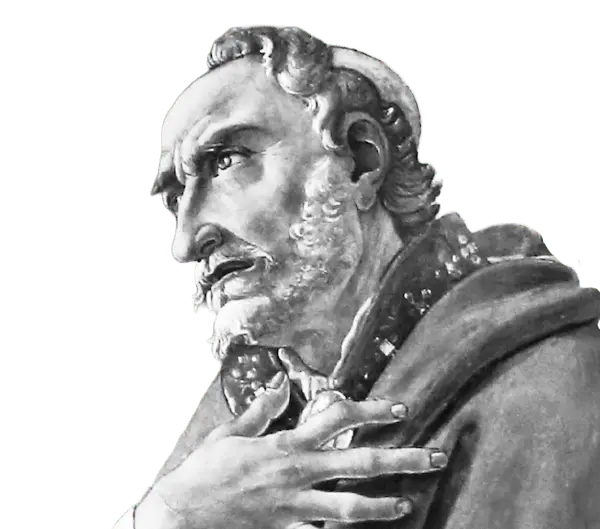
Augustine of Hippo Sermon
The Scribe of the Kingdom: Old and New Treasures
Understanding Scripture's Old and New Treasures
1. The Gospel lesson prompts me to explain to you, beloved, as the Lord gives me ability, who is that "scribe instructed in the kingdom of God, who is like a householder bringing out of his treasure things new and old" (Matthew 13:52). The reading ended there. We know who the ancient Scriptures called "scribes"—those who claimed expertise in the Law. These were called scribes among the Jewish people, not like those now called scribes in the service of judges or in government administration.
We must not enter this discussion unprepared, but must understand how Scripture uses this term. Otherwise, when Scripture mentions something that has another meaning in ordinary speech, the listener might misunderstand by thinking of the word's common meaning rather than its scriptural sense. The scribes, then, were those who specialized in knowledge of the Law. Their responsibilities included preserving, studying, copying, and interpreting the books of the Law.
2. These were the people whom our Lord Jesus Christ rebukes because "they have the keys of the kingdom of heaven, and would neither enter in themselves, nor allow others to enter" (Matthew 23:13). With these words, He criticizes the Pharisees and scribes, the Jewish legal experts. About them He says elsewhere, "Whatever they tell you to observe, observe and do, but do not do according to their works; for they say and do not do" (Matthew 23:3).
Why does He say, "They say and do not do"? Because there are some who clearly demonstrate what the Apostle describes: "You who preach that a man should not steal, do you steal? You who say a man should not commit adultery, do you commit adultery? You who abhor idols, do you rob temples? You who make your boast in the law, do you dishonor God through breaking the law? For 'the name of God is blasphemed among the Gentiles because of you'" (Romans 2:21-24). It's clear the Lord is speaking of such people when He says, "They say and do not do." They are indeed scribes, but not "instructed in the kingdom of God."
3. Perhaps some of you will ask, "How can a bad person speak what is good, when it is written in the Lord's own words, 'A good man out of the good treasure of his heart brings forth good things, and an evil man out of the evil treasure of his heart brings forth evil things. You hypocrites! How can you, being evil, speak good things?'" (Matthew 12:34-35). In one place He says, "How can you, being evil, speak good things?" but in another, "Whatever they tell you to observe, observe and do, but do not do according to their works. For they say and do not do." If "they say and do not do," they are evil. If they are evil, they cannot "speak good things." How then are we to do what we hear from them, when we cannot hear anything good from them?
Pay attention, holy and beloved ones, to how this question may be resolved. Whatever an evil man produces from himself is evil. Whatever an evil man brings out of his own heart is evil, because that's where the evil treasure is. But whatever a good man brings out of his heart is good, because there is the good treasure. So how did those evil men produce good teachings?
Because "they sat in Moses' seat" (Matthew 23:2). Had Jesus not first said, "They sit in Moses' seat," He would never have instructed us to listen to evil men. What they produced from the evil treasure of their own hearts was one thing; what they proclaimed from Moses' seat—acting as legal heralds, so to speak—was another.
What an official herald says is never attributed to him when he speaks in the judge's presence. What the herald says in his own home differs from what he says when relaying the judge's words. Whether he likes it or not, the herald must announce the sentence of punishment even for his own friend. And whether he likes it or not, he must announce the acquittal even of his own enemy.
Imagine him speaking from his own heart—he would acquit his friend and condemn his enemy. But imagine him speaking from the judge's chair—he condemns his friend and acquits his enemy. The same applies to the scribes. If they speak from their own hearts, you'll hear, "Let us eat and drink, for tomorrow we die" (1 Corinthians 15:32). But if they speak from Moses' seat, you'll hear, "You shall not murder. You shall not commit adultery. You shall not steal. You shall not bear false witness. Honor your father and your mother. You shall love your neighbor as yourself" (Exodus 20:12-16; Leviticus 19:18).
Therefore, do what is proclaimed from the official seat through the scribes' mouths, not what their hearts produce. By accepting both of the Lord's judgments, you won't be obedient in one and disobedient in the other. You'll understand that both statements agree: both that "a good man out of the good treasure of his heart brings forth good things, and an evil man out of the evil treasure brings forth evil things," and also that those scribes did not speak good things from the evil treasure of their hearts, but were able to speak good things from the treasure of Moses' seat.
4. So the Lord's words will not confuse you when He says, "Every tree is known by its own fruit. Do men gather grapes from thornbushes, or figs from thistles?" (Luke 6:44). The Jewish scribes and Pharisees were indeed thorns and thistles, and yet, "Whatever they tell you to observe, observe and do, but do not do according to their works." So grapes are gathered from thorns, and figs from thistles, as He has helped you understand according to the explanation I just gave.
Sometimes in a vineyard's thorny hedge, the vines become entangled, and clusters of grapes hang from the brambles. When you hear the word "thorns," you might be ready to reject the grapes. But look for the root of the thorns, and you'll see where they come from. Then follow the root of the hanging cluster, and you'll see where it comes from too. Understand that one represents the Pharisee's heart, the other Moses' seat.
5. But why were they like this? Because, as St. Paul says, "the veil is upon their heart. And they do not see that the old things are passed away, and all things have become new" (2 Corinthians 3:15-17). This is why they were that way, as are others like them today. Why are these called "old things"? Because they have been proclaimed for a long time. Why "new"? Because they relate to the kingdom of God.
The Apostle himself tells us how the veil is removed: "But when one turns to the Lord, the veil is taken away" (2 Corinthians 3:16). So the Jew who doesn't turn to the Lord fails to see the purpose with the eyes of his mind. Just as in those days, the Israelites in this symbolism did not direct their gaze "to the end," that is, to Moses' face. Moses' shining face represented the truth, but a veil was placed between them because the Israelites could not yet look upon the glory of his face.
This symbol "is done away with" (2 Corinthians 3:14). The Apostle said, "is done away with." Why is it done away with? Because when the emperor arrives, his images are removed. The image is displayed when the emperor is absent; but where the emperor himself is present, his image is taken away. There were images carried before our Emperor, the Lord Jesus Christ, came. When the images were removed, the glory of the Emperor's presence is seen. Therefore, "when one turns to the Lord, the veil is taken away."
Moses' voice sounded through the veil, but Moses' face was not seen. Similarly, Christ's voice now sounds to the Jews through the old Scriptures: they hear the voice, but they don't see the face of the One who speaks. Do they want the veil removed? "Let them turn to the Lord." When they do, the old things aren't discarded but stored in a treasury, so that the scribe may now be "instructed in the kingdom of God, bringing out of his treasure" not "new things" only, nor "old things" only.
If he brings out "new things" only or "old things" only, he is not "a scribe instructed in the kingdom of God, bringing out of his treasure things new and old." If he says these things but doesn't do them, he brings them out from the official seat, not from the treasure of his heart. And (we speak the truth, holy brothers and sisters) the old things are illuminated by the new. Therefore, "we turn to the Lord, so that the veil may be taken away."