
The Transfiguration: From Vision to Service
Augustine of Hippo Sermon
The Transfiguration: From Vision to Service
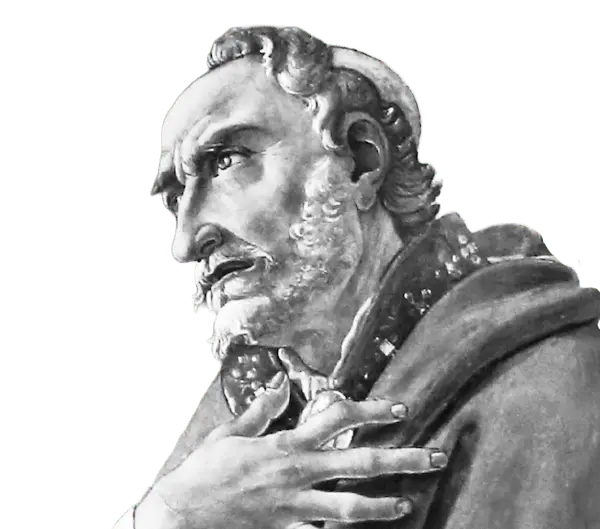
Augustine of Hippo Sermon
The Transfiguration: From Vision to Service
The Mountain Vision and Its Meaning
1. We must now examine and interpret the vision which the Lord revealed on the mountain. This is what He was referring to when He said, "Truly I say to you, some standing here will not taste death until they see the Son of Man in His kingdom" (Matthew 16:28). Then follows the passage just read: "After six days Jesus took three disciples—Peter, James, and John—and went up on a mountain" (Matthew 17:1). These three were the "some" of whom He had said, "There are some standing here who will not taste death until they see the Son of Man in His kingdom."
There's a difficulty here. For that mountain wasn't the full extent of His kingdom. What is a mountain to Him who possesses the heavens? This we not only read that He does, but in some way we see it with the eyes of our heart. He calls "His kingdom" what He often calls the "kingdom of heaven." Now the kingdom of heaven is the kingdom of the saints. "For the heavens declare the glory of God" (Psalm 19:1). And immediately after, the Psalm says of these heavens, "There is no speech nor language where their voice is not heard. Their sound has gone out through all the earth, and their words to the end of the world" (Psalm 19:3-4). Whose words, but those of the heavens? And these refer to the Apostles and all faithful preachers of God's word. These heavens, therefore, will reign together with Him who made the heavens. Now let's consider what happened to make this clear.
2. The Lord Jesus Himself shone bright as the sun; His clothing became white as snow; and Moses and Elijah talked with Him. Jesus Himself indeed shone like the sun, signifying that "He is the light which gives light to everyone coming into the world" (John 1:9). What the physical sun is to our bodily eyes, Christ is to the eyes of our heart. What the sun is to human flesh, He is to human hearts.
His clothing represents His Church. For if clothing isn't held together by the one wearing it, it will fall off. Of this clothing, Paul was like a border. For he says of himself, "I am the least of the apostles" (1 Corinthians 15:9). And in another place, "I am the last of the apostles" (1 Corinthians 15:8-9). Now in a garment, the border is the last and least part. Therefore, just as the woman suffering from bleeding was healed when she touched the Lord's border, so the Church that came from the Gentiles was made whole through Paul's preaching.
Is it any wonder the Church is represented by white clothing, when you hear the prophet Isaiah saying, "Though your sins are like scarlet, I will make them white as snow" (Isaiah 1:18)? Moses and Elijah, that is, the Law and the Prophets—what good are they unless they converse with the Lord? Unless they bear witness to the Lord, who would read the Law or the Prophets? Notice how concisely the Apostle expresses this: "For by the law is the knowledge of sin" (Romans 3:20); "but now the righteousness of God apart from the law is revealed" —behold the sun— "being witnessed by the Law and the Prophets" (Romans 3:21)—behold the shining of the Sun.
3. Peter sees this, and speaking as someone focused on human concerns says, "Lord, it is good for us to be here" (Matthew 17:4). He had been wearied by the crowds; now he had found solitude on the mountain. There he had Christ, the Bread of the soul. Why should he leave this place to return to labor and pain? Filled with holy love for God and living a good life, he wished well for himself. So he added, "If You wish, let us make three tabernacles: one for You, one for Moses, and one for Elijah."
The Lord gave no answer to this, but Peter received a response nonetheless. "While he was still speaking, a bright cloud came and overshadowed them" (Matthew 17:5). He wanted three tabernacles, but the heavenly response showed him that we have One, which human judgment wanted to divide. Christ is the Word of God—the Word of God in the Law, the Word in the Prophets. Why, Peter, do you seek to divide them? It would be better for you to join them. You seek three; understand that they are One.
4. As the cloud overshadowed them, creating in a way one tabernacle for them, "a voice also came from the cloud, saying, 'This is My beloved Son'" (Matthew 17:5). Moses was there; Elijah was there; yet it wasn't said, "These are My beloved sons." For the Only Son is one thing; adopted sons another. The One in whom the Law and the Prophets were glorified was singled out. "This is My beloved Son, in whom I am well pleased. Hear Him!" Because you have heard Him in the Prophets, and you have heard Him in the Law. Indeed, where have you not heard Him?
"When they heard this, they fell to the ground" (Matthew 17:6). See then how the Kingdom of God is revealed in the Church. Here is the Lord, here are the Law and the Prophets—but the Lord as the Lord; the Law in Moses, Prophecy in Elijah. Yet they are servants and ministers. They are vessels; He is the fountain. Moses and the Prophets spoke and wrote, but when they poured out their words, they were filled from Him.
5. But the Lord stretched out His hand and raised them as they lay. "And when they looked up, they saw no one but Jesus only" (Matthew 17:8). What does this mean? When the Apostle was being read, you heard, "For now we see in a mirror, dimly, but then face to face" (1 Corinthians 13:12). And "tongues will cease" (1 Corinthians 13:8) when what we now hope for and believe finally comes.
When they fell to the ground, they symbolized our death, for it was said to the flesh, "You are dust, and to dust you shall return" (Genesis 3:19). But when the Lord raised them up, He signified the resurrection. After the resurrection, what use will the Law be to you? What use Prophecy? Therefore, neither Moses nor Elijah is seen. Only He remains for you, "Who in the beginning was the Word, and the Word was with God, and the Word was God" (John 1:1). He remains for you, "that God may be all in all" (1 Corinthians 15:28).
Moses will be there; but no longer as the Law. We'll see Elijah there too, but no longer as the Prophet. For the Law and the Prophets have only given witness to Christ, "that it was necessary for Him to suffer and to rise from the dead on the third day, and to enter into His glory" (Luke 24:26-46). In this glory is fulfilled what He has promised to those who love Him: "He who loves Me will be loved by My Father, and I will love him" (John 14:21). And as if someone asked, "What will You give him, since You will love him?" "And I will manifest Myself to him" (John 14:21).
What a great gift! What a great promise! God doesn't reserve for you as a reward anything of His own—only Himself. O greedy one, why isn't what Christ promises enough for you? You may think yourself rich, but if you don't have God, what do you have? Another person may be poor, yet if they have God, what don't they have?
6. Come down, Peter! You were wanting to rest on the mountain; come down. "Preach the word! Be ready in season and out of season. Convince, rebuke, exhort, with all longsuffering and teaching" (2 Timothy 4:2). Endure, work hard, bear your share of suffering, so that you may possess what is symbolized by the Lord's white clothing—through the brightness and beauty of righteous labor in love.
When the Apostle's letter was read, we heard charity praised: "Love does not seek its own" (1 Corinthians 13:5). "It does not seek its own" because it gives what it has. In another place there's a more dangerous statement, if you don't understand it correctly. The Apostle, instructing the faithful members of Christ according to this rule of charity, says, "Let no one seek his own, but each one the other's well-being" (1 Corinthians 10:24).
Upon hearing this, greed is ready with its deceptions. In business dealings, under the pretense of seeking another's good, greed may defraud someone, thus "not seeking its own, but another's." But let greed restrain itself, let justice come forth; then let us hear and understand. It's to love that it's said, "Let no one seek his own, but each one the other's well-being."
Now, O greedy one, if you still resist and twist the instruction to mean you should covet what belongs to others, then lose what is your own. But as I know you well, you want to have both your own and others'. You'll commit fraud to have what belongs to others; then submit to robbery and lose what's yours. You don't wish to seek your own, yet you take away what is another's. If you do this, you don't do well.
Listen, you greedy one; the Apostle explains elsewhere more clearly what he meant: "Let no one seek his own, but each one the other's well-being." He says of himself, "I don't seek my own profit but the profit of many, that they may be saved" (1 Corinthians 10:33).
Peter didn't understand this yet when he wanted to live on the mountain with Christ. The Lord was reserving this for you, Peter, after death. But now He says, "Come down to labor on earth; to serve on earth, to be despised and crucified on earth. Life came down that He might be killed; Bread came down that He might hunger; the Way came down that He might grow weary on the journey; the Fountain came down that He might thirst—and do you refuse to work? 'Don't seek your own interests.' Have love, preach the truth; then you'll come to eternity, where you'll find security."