
The Wedding Garment of Love
Augustine of Hippo Sermon
The Wedding Garment of Love
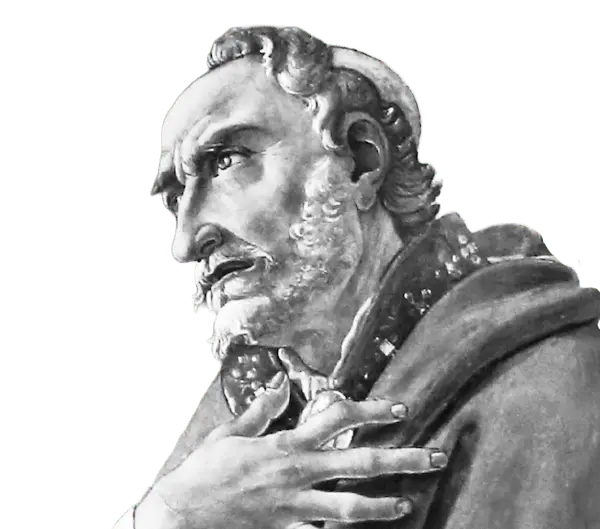
Augustine of Hippo Sermon
The Wedding Garment of Love
The Meaning of the Wedding Feast
1. All the faithful know the parable of the king's son's wedding and the feast. The Lord's Table is open to all who will come. But what matters is how each person approaches, even when not forbidden to approach. The Holy Scriptures teach us that there are two feasts of the Lord: one to which both good and evil come, another to which the evil cannot come.
The feast we just heard about in the Gospel has both good and evil guests. All who excused themselves from coming are evil, but not all who entered are good. I address you who are good guests at this feast, you who keep in mind the words, "Whoever eats and drinks unworthily eats and drinks judgment to himself" (1 Corinthians 11:29). I urge all of you who are such not to look for the good outside, but to bear with the evil inside.
2. I'm sure you want to know, beloved, who I was referring to when I said they "should not look for the good outside and should bear with the evil within." If all within are evil, whom am I addressing? If all within are good, whom did I advise to bear with evil people? Let me first address this difficulty with the Lord's help.
If you consider "good" in the perfect and strict sense, only God is good. As the Lord Himself said, "Why do you call Me good? No one is good but One, that is, God" (Mark 10:18). How then can this wedding feast have both good and bad guests if "no one is good but God alone" ?
First, you should know that in a certain sense, we are all evil. Yes, in a certain sense we are all evil, but in no sense are we all good. Could we compare ourselves with the apostles, to whom the Lord Himself said, "If you then, being evil, know how to give good gifts to your children?" (Matthew 7:11).
Scripture shows there was only one evil person among the twelve apostles, concerning whom the Lord said, "And you are clean, but not all" (John 13:10). Yet when addressing them all together, He said, "If you, being evil." Peter heard this, John heard this, Andrew heard this—all eleven apostles heard it.
What did they hear? "If you, being evil, know how to give good gifts to your children, how much more will your Father in heaven give good things to those who ask Him?" (Matthew 7:11). When they heard they were evil, they might have despaired, but when they heard that God in heaven was their Father, they revived. "You, being evil" —what does evil deserve but punishment? "How much more will your Father in heaven?" —what do children deserve but reward? In the word "evil" is the fear of punishment; in the word "children" is the hope of heirs.
3. According to one perspective they were evil, yet according to another they were good. To those addressed as "You, being evil, know how to give good gifts to your children," it was immediately added, "How much more will your Father in heaven?" He is then the Father of the evil, but not of those who are to remain evil, because He is the Physician of those who need healing.
In one sense, then, they were evil. And yet I don't think those wedding guests, of whom it was said "they invited good and bad," should be counted among the bad who were cast out—like the man without a wedding garment. According to one perspective they were bad but yet good; and according to another they were good yet bad.
Listen to John explain in what sense they were bad: "If we say that we have no sin, we deceive ourselves, and the truth is not in us" (1 John 1:8). There's how they were bad—because they had sin. But in what sense were they good? "If we confess our sins, He is faithful and just to forgive us our sins and to cleanse us from all unrighteousness" (1 John 1:9).
If we wanted to interpret the words "they invited good and bad" according to this reasoning—that the same people are both good and bad in different ways—we can't do so because of the one guest who was found without a wedding garment. He wasn't merely removed from the feast but condemned to eternal darkness.
4. Someone might say, "What's the significance of one man? What great matter is it if one person without a wedding garment slipped in unnoticed by the servants?" But pay attention, my brothers, and understand. That one man represented an entire category; there were many like him. Listen carefully, and I'll prove it clearly. God will help me explain this through His own words right here in the text.
"The master of the house came in to see the guests" (Matthew 22:11). Notice, my brothers, that the servants' job was only to invite and bring in both good and bad. The text doesn't say the servants noticed a man without a wedding garment and spoke to him. This isn't written. The master of the house saw him; the master of the house discovered him; the master of the house examined him; the master of the house separated him out.
I need to establish that this one person represents many. "The master of the house came in to see the guests, and he saw there a man who did not have on a wedding garment. And he said to him, 'Friend, how did you come in here without a wedding garment?' And he was speechless" (Matthew 22:11-12). The one who questioned him was Someone to whom he could give no false answer. The garment that was required is worn in the heart, not on the body. Had it been worn externally, it couldn't have been hidden even from the servants.
Where must this wedding garment be worn? Listen to these words: "Let your priests be clothed with righteousness" (Psalm 132:9). The Apostle speaks of this garment: "If indeed, having been clothed, we shall not be found naked" (2 Corinthians 5:3).
So the master discovered him, questioned him, and the man was speechless. He was bound, thrown out, and condemned—one man representing many. I tell you, Lord, that in this You are warning us all. Remember with me, my brothers, the words you've heard, and you'll immediately recognize that this one man represents many. It's true that the Lord questioned just one man: "Friend, how did you come in here?" Just one was speechless, and of this same one it was said, "Bind him hand and foot, and cast him into outer darkness; there will be weeping and gnashing of teeth" (Matthew 22:13). Why? "For many are called, but few are chosen" (Matthew 22:14).
How can anyone deny this clear truth? "Cast him," He says, "into outer darkness." That one man, certainly, of whom the Lord says, "for many are called, but few are chosen." So the few are those who aren't cast out. That man was indeed just one person, yet he represents the many who outnumber the good. The good are also many, but compared to the bad, they are few.
In the harvest there is much wheat, but compared to the chaff, the grains are few. The same people considered in themselves are many, but compared to the bad they are few. How do we prove that in themselves they are many? "Many will come from east and west" (Matthew 8:11). To what feast will they come? To the feast where both good and bad enter. But speaking of another feast, He added, "and sit down with Abraham, Isaac, and Jacob in the kingdom of heaven" (Matthew 8:11). That's the feast the bad cannot approach.
May we receive this present feast worthily so that we may attain to the other. The same people, then, are many but also few—many in themselves, few compared to the bad. What does the Lord say? He found one man and said, "Let the many be cast out, let the few remain." To say "many are called, but few are chosen" is simply to show clearly who at this present feast are considered worthy to be brought to that other feast where no bad person will come.
The Wedding Garment of Love
5. I wouldn't want all of you who approach the Lord's Table in this life to be among the many who will be excluded, but among the few who will be kept. How can you achieve this? Take the "wedding garment." You'll ask, "Explain this 'wedding garment' to us."
Without a doubt, that's the garment that only the good have, who will remain at the feast and be brought safely to that other feast where no bad person approaches. These have the "wedding garment." Let's look among the faithful for something the bad don't have, and this will be the "wedding garment."
If we're talking about sacraments, you see that these are shared by both bad and good. Is it Baptism? Without Baptism, it's true that no one reaches God, but not everyone with Baptism reaches Him. I cannot consider Baptism itself—the Sacrament, that is—to be the "wedding garment," for I see this garment on the good but also on the bad.
Perhaps it's the Altar, or what is received at the Altar? But again, many "eat and drink judgment to themselves" (1 Corinthians 11:29). What about fasting? The wicked fast too. Church attendance? The wicked come there too. Finally, what about miracles? Not only do both good and bad perform them, but sometimes the good don't perform them at all.
Look at the ancient peoples: Pharaoh's magicians performed miracles, but the Israelites did not. Among the Israelites, only Moses and Aaron worked miracles; the rest couldn't, but they saw, feared, and believed. Were Pharaoh's magicians, who performed miracles, better than God's people who couldn't? No, God's people were still God's people.
In the Church itself, listen to the Apostle: "Are all prophets? Do all have gifts of healings? Do all speak with tongues?" (1 Corinthians 12:29-30).
6. What, then, is the "wedding garment"? The Apostle tells us: "Now the purpose of the commandment is love from a pure heart, from a good conscience, and from sincere faith" (1 Timothy 1:5). This is the wedding garment.
Not just any kind of love, for very often those who share in wrongdoing seem to love each other. Those who commit robbery together, who love sorcery and the theater together, who join together in shouting at chariot races or wild beast fights—these often love one another. But this is not "love from a pure heart, from a good conscience, and from sincere faith." The wedding garment is this kind of love.
"Though I speak with the tongues of men and of angels, but have not love, I have become sounding brass or a clanging cymbal" (1 Corinthians 13:1). These people have come with tongues alone, and to them it is said, "How did you come in here without a wedding garment?"
"Though I have the gift of prophecy, and understand all mysteries and all knowledge, and though I have all faith, so that I could remove mountains, but have not love, I am nothing" (1 Corinthians 13:2). These are the miracles that people often perform who don't have the wedding garment.
"Though I have all these and have not Christ, I am nothing." Is the gift of prophecy nothing? Is the knowledge of mysteries nothing? No, these things aren't nothing, but "I, if I have them and don't have love, am nothing."
How many good things profit nothing without the one good thing of love! Even if I give generously to the poor or face martyrdom by fire, these things can be done even from the love of glory, and so they are worthless. Because they can be done from the love of glory and not through the rich love of godly affection, the Apostle names all these things explicitly: "Though I distribute all my goods to feed the poor, and though I give my body to be burned, but have not love, it profits me nothing" (1 Corinthians 13:3).
This, then, is the wedding garment. Examine yourselves; if you have it, you can be without fear at the Lord's feast. Two things exist in one person: love and desire. Let love be born in you if it's not yet born, and if it's born, let it be nourished, fostered, and increased.
As for desire, though in this life it can't be completely extinguished (for "if we say we have no sin, we deceive ourselves, and the truth is not in us" [1 John 1:8]), as far as desire remains in us, we are not without sin. But let love increase and desire decrease, so that one day love will be perfected and desire consumed.
Put on the wedding garment. I'm speaking to you who don't yet have it. You're already inside, you're approaching the feast, but you still don't have the garment that honors the bridegroom. You're still seeking your own interests, not the things of Jesus Christ. The wedding garment is worn in honor of the union—the union of the Bridegroom to the Bride.
You know the Bridegroom—it's Christ. You know the Bride—it's the Church. Honor the Bride, honor the Bridegroom. If you honor them both properly, you will be their children. Therefore, grow in this. Love the Lord, and so learn to love yourselves, so that when by loving the Lord you have loved yourselves properly, you can securely love your neighbor as yourself.
When I find someone who doesn't love himself, how can I entrust to him his neighbor whom he should love as himself? And who, you might ask, doesn't love himself? Look: "He who loves wrongdoing hates his own soul" (Psalm 11:5). Does someone love himself who loves his body but hates his soul, harming both body and soul? And who loves his own soul? The one who loves God with all his heart and mind. To such a person I would entrust his neighbor. "Love your neighbor as yourself" (Matthew 22:39).
Loving Our Enemies
7. Someone might ask, "Who is my neighbor?" Every person is your neighbor. Don't we all have the same two parents? Animals of each species are neighbors to one another—dove to dove, leopard to leopard, snake to snake, sheep to sheep—and isn't a person a neighbor to another person?
Remember the order of creation. God spoke, and the waters brought forth swimming creatures, great whales, fish, birds, and such creatures. Did all birds come from one bird? Did all vultures come from one vulture? All doves from one dove? All snakes from one snake? All fish from one fish? All sheep from one sheep? No, the earth certainly brought forth all these kinds together.
But when it came to humans, the earth didn't produce them. One father was made for us, not even two parents—one father, I say, not even two, father and mother. Rather, from that one father came the one mother. Our one father came from no one but was created by God, and our one mother came from him.
Consider, then, the nature of our race: we flowed from one fountain. Because that one source became bitter, we all became from a good olive tree a wild one. Then grace also came. One person brought us to sin and death, yet as one race, as neighbors to one another, not merely similar but related to each other. Then came One against one—against the one who scattered, One who gathers.
"For as in Adam all die, even so in Christ all shall be made alive" (1 Corinthians 15:22). Just as whoever is born of the first dies, so whoever believes in Christ is made alive—provided they have the wedding garment and are invited as ones who will remain, not who will be cast out.
8. So, my brothers, have love. I've explained that this is the wedding garment. Faith is praised, certainly, but the Apostle distinguishes what kind of faith. Some boast of faith but don't live well, and the Apostle James rebukes them: "You believe that there is one God. You do well. Even the demons believe—and tremble!" (James 2:19).
Remember what Peter was praised for, what made him blessed. Was it because he said, "You are the Christ, the Son of the living God" (Matthew 16:16)? The One who called him blessed wasn't looking at the sound of the words but at the feeling in his heart. Do you want to know that Peter's blessedness wasn't in these words? The demons said the same thing: "We know who You are, the Son of God" (Mark 1:24).
Peter confessed Him as the Son of God; the demons confessed Him as the Son of God. "Distinguish between the two, Lord." I do make a clear distinction: Peter spoke from love, the demons from fear. Peter says, "I am with You, even to death" (Matthew 26:35). The demons say, "What have we to do with You?" (Mark 1:24).
So if you've come to the feast, don't boast of faith alone. Distinguish the nature of this faith. The Apostle makes the distinction; let him teach us: "Neither circumcision nor uncircumcision avails anything, but faith" (Galatians 5:6). Tell us, what faith? Don't even the demons believe and tremble? I'll tell you, he says, just listen: "Faith working through love" (Galatians 5:6).
What faith, then, and of what kind? "That which works through love." "Though I have all knowledge and all faith so that I could remove mountains, but have not love, I am nothing." Have faith with love, for you cannot have love without faith. This I warn you, this I exhort you, this in the Lord's name I teach you, beloved: have faith with love, for you may possibly have faith without love. I don't encourage you just to have faith, but love. For you cannot have love without faith. How can someone love God if they don't believe in God?
How can a fool love God when he "says in his heart, 'There is no God'" (Psalm 14:1)? It's possible to believe that Christ has come and not love Christ. But it's not possible to love Christ and still say Christ hasn't come.
9. So then, have faith with love. This is the wedding garment. You who love Christ, love one another, love your friends, love your enemies. Don't find this difficult. What do you lose by doing so, when you gain so much?
Do you ask God for the special favor that your enemy might die? This is not the wedding garment. Consider the Bridegroom Himself hanging on the cross for you and praying for His enemies: "Father," He says, "forgive them, for they do not know what they do" (Luke 23:34).
You've seen the Bridegroom speaking this way; now look at His friend wearing the wedding garment. Look at the blessed Stephen. See how he rebukes the Jews as if in anger: "You stiff-necked and uncircumcised in heart and ears! You always resist the Holy Spirit. Which of the prophets did your fathers not persecute?" (Acts 7:51-52). You've heard how severe he was with his words.
And immediately you're ready to speak against anyone who offends you. I wish it were against the one who offends God, not just you. Someone offends God, and you say nothing; someone offends you, and you cry out. Where is that wedding garment?
You've heard how Stephen was severe; now hear how he loved. He offended those he was rebuking, and they stoned him. As he was being overwhelmed and crushed to death by their furious hands and the blows of stones, he first said, "Lord Jesus, receive my spirit" (Acts 7:59). Then, after praying for himself while standing, he knelt for those who were stoning him and said, "Lord, do not charge them with this sin" (Acts 7:60). Let me die in body, but don't let them die in their souls. "And when he had said this, he fell asleep" (Acts 7:60). After these words he added no more; he spoke them and departed. His last prayer was for his enemies.
Learn from this how to have the wedding garment. You too should kneel and strike your forehead on the ground. As you approach the Lord's Table, the feast of Holy Scripture, don't say, "If only my enemy would die! Lord, if I've earned anything from you, kill my enemy." But if you say this, don't you fear that He might answer you, "If I were to kill your enemy, I would first kill you. Why do you rejoice because you've been invited here? Think about what you were just a short time ago. Haven't you blasphemed Me? Haven't you mocked Me? Didn't you want to eliminate My name from the earth? Yet now you congratulate yourself for being invited here! If I had killed you when you were My enemy, how could I have made you My friend? Why, through your wicked prayers, do you teach Me to do what I didn't do in your case?"
God says to you, "Let Me teach you to imitate Me. When I was hanging on the cross, I said, 'Father, forgive them, for they do not know what they do.' This lesson I taught My brave soldier. Be My recruit against the devil." You will only fight successfully if you pray for your enemies.
Yet by all means ask God to persecute your enemy, but ask with discernment. Distinguish what you ask for. A person is your enemy. Answer me: what part of him is hostile to you? Is it his humanity that makes him your enemy? No. What then? His evil nature. God says to you, "I didn't make humans evil; they became evil through disobedience, obeying the devil rather than God. What he's made himself into is hostile to you—his evil nature is your enemy, not his humanity."
I hear the terms "human" and "evil." One is the name of nature, the other of sin. I heal the sin and preserve the nature. Your God says to you, "See, I avenge you, I kill your enemy: I take away what makes him evil, I preserve what makes him human. If I make him a good person, haven't I killed your enemy and made him your friend?"
So ask for what you should ask for—not that people may die, but that their hostility may die. If you pray for the person to die, it's one evil person praying against another. When you say, "Kill the wicked one," God answers, "Which one of you?"
10. Extend your love, then, and don't limit it to spouses and children. Even beasts and sparrows have that kind of love. You know how sparrows and swallows love their mates, how they hatch their eggs together and feed their young together, with a free and natural kindness, without thought of any return.
The sparrow doesn't say, "I'll feed my young so when I'm old, they'll feed me." It has no such thought. It loves and feeds them out of affection, displaying parental care without expecting anything in return. And I know you love your children the same way. "For the children ought not to lay up for the parents, but the parents for the children" (2 Corinthians 12:14).
Many of you use this excuse for your greed, claiming you're acquiring wealth and saving for your children. But I say, extend your love, let this love grow. Loving spouses and children is not yet the wedding garment. Have faith toward God. First love God. Extend yourselves toward God, and bring as many as you can to God.
There is your enemy; draw him to God. There is your child, your spouse, your servant; draw them all to God. There is a stranger; draw him to God. There is an enemy; draw him to God. Draw your enemy to God, and by drawing him, he will cease to be your enemy.
Let love advance and be nourished so that, being nourished, it may be perfected. Put on the wedding garment; engrave anew in yourselves the image of God after which we were created. For by sin that image was damaged and worn away. How was it damaged? How worn away? When it was rubbed against the earth. And what does "rubbed against the earth" mean? When it was worn down by earthly desires. For "though man walks in this image, yet he is disquieted in vain" (Psalm 39:6).
Truth is sought in God's image, not vanity. Through love of truth, then, let that image after which we were created be engraved anew, and His own tribute rendered to our Caesar. For you've heard the Lord's answer when the Jews tested Him. He said, "Why do you test Me, you hypocrites? Show Me the tax money" (Matthew 22:18-19)—that is, the coin bearing the image and inscription. "Show Me what you pay, what you prepare, what is required of you."
They showed Him a denarius, and "He asked whose image and inscription it had. They answered, 'Caesar's'" (Matthew 22:20-21). Caesar looks for his own image. It isn't Caesar's will that what he ordered to be made should be lost to him, and it isn't God's will that what He has made should be lost to Him.
Caesar, my brothers, didn't make the money; the mint masters make it. The workers have their orders, and he issues commands to his ministers. His image was stamped on the money. On the money was Caesar's image. Yet he requires what others have stamped; he puts it in his treasuries and doesn't want it refused.
Christ's coin is humanity. In us is Christ's image, Christ's name, Christ's gifts, Christ's rules of duty.