
The Word Made Flesh: God's Wondrous Exchange
Augustine of Hippo Sermon
The Word Made Flesh: God's Wondrous Exchange
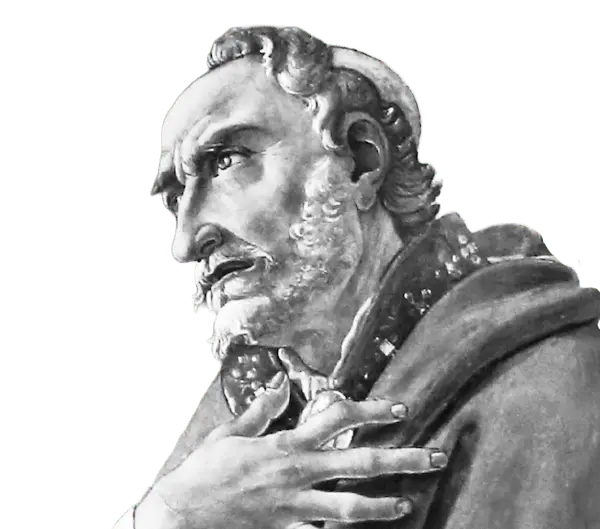
Augustine of Hippo Sermon
The Word Made Flesh: God's Wondrous Exchange
The Word Dwells Among Us
1. We read in Scripture, "The world was made through Him, and the world did not know Him" (John 1:10). What world was made through Him, and what world did not know Him? It's not the same world that was made through Him which did not know Him. What is the world that was made through Him? The heaven and earth. How could the heaven not know Him, when at His crucifixion the sun was darkened? How could the earth not know Him, when as He hung on the cross, it shook?
But "the world did not know Him" refers to the world whose prince He mentioned when He said, "Behold, the prince of this world comes, and has nothing in Me" (John 14:30). Wicked people are called "the world." Unbelieving people are called "the world." They get this name from what they love. Through the love of God we are made gods; likewise, through the love of the world, we are called the world. But "God was in Christ reconciling the world to Himself" (2 Corinthians 5:19). "The world" then "did not know Him." What? All people?
2. "He came to His own, and His own did not receive Him" (John 1:11). All things are His, but they are called "His own" referring to the people among whom His mother was, among whom He took on flesh, to whom He had sent the heralds of His coming, to whom He had given the law, whom He had delivered from Egyptian slavery, whose father Abraham according to the flesh He had chosen.
For He spoke the truth when He said, "Before Abraham was, I AM" (John 8:58). He did not say, "Before Abraham was, I was," or "Before Abraham existed, I was made." For "in the beginning was the Word" —not "was made" (John 1:1). So then "He came to His own," He came to the Jews. "And His own did not receive Him."
3. "But as many as received Him" (John 1:12). The apostles were certainly there, and they "received Him." There were those who carried branches before His donkey. They went ahead and followed after, and spread their garments on the road, and cried out with a loud voice, "Hosanna to the Son of David! Blessed is He who comes in the name of the Lord!" (Matthew 21:9).
Then the Pharisees said to Him, "Restrain the children from shouting these things to You." And He said, "If these should keep silent, the stones would immediately cry out" (Luke 19:40). He saw us when He spoke these words: "If these should keep silent, the stones would immediately cry out." Who are these stones but those who worship stones? If the Jewish children keep silent, the Gentiles, both young and old, will cry out.
Who are the stones but those of whom John speaks—John who came "to bear witness to the Light" (John 1:8)? When he saw these same Jews taking pride in their descent from Abraham, he said to them, "Brood of vipers!" (Matthew 3:7). They called themselves the children of Abraham, but he addressed them as a "brood of vipers." Did he do Abraham wrong? By no means! He gave them a name that matched their character.
For if they were truly Abraham's children, they would imitate Abraham. Jesus tells those who say to Him, "We are free, and have never been in bondage to anyone. We have Abraham as our father" (John 8:33). And He said, "If you were Abraham's children, you would do the works of Abraham. But now you seek to kill Me, a Man who has told you the truth. This Abraham did not do" (John 8:39-40). You come from his lineage, but you are a degenerate stock.
So what did John say? "Brood of vipers! Who warned you to flee from the wrath to come?" (Matthew 3:7). They came to be baptized with John's baptism of repentance. "Who warned you to flee from the wrath to come? Therefore bear fruits worthy of repentance. And do not think to say to yourselves, 'We have Abraham as our father.' For I say to you that God is able to raise up children to Abraham from these stones" (Matthew 3:7-9).
God can raise up children to Abraham from these stones which John saw in the Spirit. He was speaking to them but foreseeing us: "God is able to raise up children to Abraham from these stones." From what stones? "If these should keep silent, the stones would immediately cry out." You have just now heard and cried out. It is fulfilled: "The stones will cry out."
We came from among the Gentiles. In our ancestors, we worshiped stones. That's why we're called dogs too. Remember what that woman heard who cried out after the Lord. She was a Canaanite woman, an idol worshiper, a servant of demons. What did Jesus say to her? "It is not good to take the children's bread and throw it to the dogs" (Matthew 15:26).
Have you ever noticed how dogs will lick greasy stones? That's what all idolaters were like. But grace has come to you. "But as many as received Him, to them He gave the right to become children of God" (John 1:12). See, some have just now been born. To them "He gave the right to become children of God." To whom did He give this right? "To those who believe in His name."
4. And how do they become children of God? "Who were born, not of blood, nor of the will of the flesh, nor of the will of man, but of God" (John 1:13). Having received the power to become children of God, they are born of God. Note this carefully: They are born of God, "not of blood," unlike their first birth—that wretched birth that comes from wretchedness. But what were those who are now born of God? How were they first born? Of blood, of the joint blood of male and female, of the carnal union of male and female—this is how they were first born. From what source are they born now? They are born of God. The first birth was from man and woman; the second birth is from God and the church.
5. How is it brought about that they should be born of God, these who were first born of human beings? How does this happen? "And the Word became flesh and dwelt among us" (John 1:14). What an amazing exchange! He became flesh; they became spirit. What does this mean? What condescension is here, my brothers! Lift up your minds to the hope and understanding of better things. Don't give yourselves over to worldly desires.
"You were bought at a price" (1 Corinthians 6:20). For your sake, the Word became flesh. For your sake, He who was the Son of God was made the Son of Man—so that you who were sons of men might be made sons of God. What was He? What was He made? What were you? What were you made? He was the Son of God. What was He made? The Son of Man. You were sons of men. What were you made? Sons of God.
He shared our troubles with us to give us His blessings. But even in becoming the Son of Man, He is very different from us. We are sons of men through physical desire; He is the Son of Man through a virgin's faith. Any other person's mother conceives through physical union, and everyone is born of human parents—father and mother. But Christ was born of the Holy Spirit and the Virgin Mary.
He came to us but never departed far from Himself. As God, He never left Himself at all, but He added our nature to what He was. He came to what He was not without losing what He was. He was made the Son of Man but did not cease to be the Son of God. This is how the Mediator stands in the middle. What does "in the middle" mean? Neither completely above nor completely below. How is He neither completely above nor completely below? Not completely above, since He is flesh; not completely below, since He is without sin. Yet as God, He is always above.
He did not come to us in such a way as to leave the Father. He went from us but did not leave us. He will come to us again but will not leave the Father.