
The Gospel Genealogies of Christ
Augustine of Hippo Sermon
The Gospel Genealogies of Christ
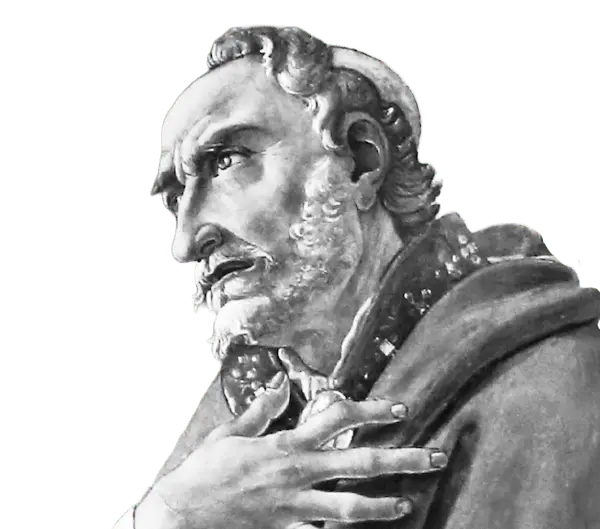
Augustine of Hippo Sermon
The Gospel Genealogies of Christ
The Agreement of Matthew and Luke in Christ's Genealogy
1. May He who has awakened your expectation fulfill it! Though I feel confident that what I have to say is not my own but God's, I still say what the Apostle Paul said in his humility: "We have this treasure in earthen vessels, that the excellence of the power may be of God and not of us" (2 Corinthians 4:7). I don't doubt that you remember my promise. I made it through the Lord, and now through Him I fulfill it, for both when I made the promise and now as I fulfill it, I receive it from Him.
You'll remember that during the morning service on Christmas day, I postponed resolving a question I had proposed because many were with us celebrating that day's customary observances, and for them the word of God is often burdensome. But now I believe no one has come except those who want to hear, so I'm not speaking to deaf ears or minds that will scorn the word. This very expectation of yours is a prayer for me.
There's another consideration: the day of public entertainment has scattered many from here. For their salvation I urge you to share my great concern, and with sincere hearts pray to God for those who aren't yet drawn to the truth's spectacle but are completely given up to worldly spectacles. I know with certainty that among you today are those who have rejected these entertainments and broken the bonds of their ingrained habits.
People change both for better and worse. We rejoice over the reformed and grieve over the corrupted. That's why the Lord doesn't say that those who begin will be saved, but "he who endures to the end shall be saved" (Matthew 10:22).
2. What more marvelous thing could our Lord Jesus Christ, the Son of God and also the Son of Man (for He graciously became this too), grant us than to gather into His fold not only spectators of foolish shows but even some of the performers? He has battled for the salvation not only of those who love watching men fight beasts, but even the combatants themselves, for He Himself became a spectacle.
Listen to how He tells us this. He foretold it and through prophecy announced in advance what would come to pass, speaking in the Psalms as if it had already happened: "They pierced My hands and My feet, they counted all My bones" (Psalm 22:16-17). See how He was made a spectacle, for His bones to be counted! He expresses more clearly this spectacle: "They looked and stared at Me." He was made a spectacle and an object of derision by those who showed Him no favor during that spectacle but were furious against Him. This is how at first He made His martyrs spectacles too, as the Apostle says, "We have been made a spectacle to the world, both to angels and to men" (1 Corinthians 4:9).
Two kinds of people watch such spectacles: the carnal and the spiritual. Carnal people look on, thinking those martyrs thrown to beasts, beheaded, or burned in flames are wretched, and they detest and abhor them. But spiritual people look on, not seeing the mangling of bodies but admiring the unimpaired purity of faith. What a grand spectacle for the heart's eye is a whole mind in a mangled body!
When these things are read in church, you observe them with pleasure through these eyes of your heart. If you saw nothing, you would hear nothing. So you haven't neglected the spectacles today but have chosen better ones. May God be with you and give you grace to gently persuade your friends whom you were grieved to see running to the amphitheater today instead of coming to church. May they too learn to despise those things whose love has made them contemptible, and with you, learn to love God, of whom no one who loves Him can ever be ashamed.
Love God, who cannot be overcome. Love Christ, who by the very thing through which He seemed to be conquered, overcame the whole world. As we see, brothers, He has overcome the world. He has subdued all authorities and kings—not with military pride but through the shame of the cross, not by the fury of the sword but by hanging on the wood, by suffering in body and working in Spirit.
His body was lifted up on the cross, and so He subdued souls to the cross. Now what jewel in their crown is more precious than the cross of Christ on the foreheads of kings? In loving Him you will never be ashamed. How many return defeated from the amphitheater because those they support are defeated! Even worse would be their moral defeat if their favorites had won. Then they would be enslaved to empty joy and a corrupt desire—conquered by the very fact of running to such shows.
How many of our brothers do you think were hesitating today whether to come here or go there? Those who in this hesitation turned their thoughts to Christ and have run to the church have overcome, not some person, but the devil himself, who hunts after the souls of the whole world. But those who in that hesitation chose to run to the amphitheater have certainly been overcome by the one whom the others conquered—overcome through Him who says, "Be of good cheer, I have overcome the world" (John 16:33). For the Captain allowed Himself to be tested only to teach His soldiers how to fight.
3. Our Lord Jesus Christ did this by becoming the Son of Man, born of a woman. But someone might ask, "Would He have been any less a man if He hadn't been born of the Virgin Mary? He wanted to be a man—fine—but He could have been one without being born of a woman, since He didn't make the first man from a woman."
Here's my answer to this question: Why did He choose to be born of a woman? I ask in return, why should He have avoided being born of a woman? Even if I couldn't show that He chose to be born of a woman, you should show why He needed to avoid it.
I've already said at other times that if He had avoided a woman's womb, it might have suggested He could have been defiled by her. But the more incapable He was of defilement in His divine nature, the less reason He had to fear a woman's womb as though He could be defiled by it. Instead, by being born of a woman, He intended to reveal some profound mystery.
Truly, brothers, we also believe that if the Lord had wanted to become a man without being born of a woman, it would have been easy for His sovereign majesty. Just as He could be born of a woman without a man's involvement, He could also have been born without a woman. But He has shown us this: that no human of either sex should despair of their salvation, for human beings are male and female.
If He, being a man, had not been born of a woman, women might have despaired of themselves. They might have remembered their first sin, when the first man was deceived by a woman, and thought they had no hope in Christ. Therefore He came as a man and was born of a woman to console the female sex. It's as if He addressed them saying, "So you may know that no creature of God is bad, but that disordered desire perverts it, when in the beginning I made humanity, I made them male and female. I don't condemn the creation I made, but the sins I didn't make."
Let each sex see its honor and confess its wickedness, and let both hope for salvation. The poison that deceived man was offered by woman; through woman let salvation for man's recovery be presented. Let woman make amends for the sin by which she deceived the man, by giving birth to Christ.
For this same reason, women were the first to announce the resurrection of God to the apostles. The woman in Paradise announced death to her husband; the women in the Church announced salvation to men. The apostles were to proclaim Christ's resurrection to the nations; the women announced it to the apostles. Let no one, then, reproach Christ for His birth from a woman, a birth by which the Deliverer could not be defiled and which the Creator intended to honor.
4. But they say, "How are we to believe that Christ was born of a woman?" I would answer: by the Gospel that has been and is still being preached to the whole world. But these blind people, aiming to blind others, not seeing what they should see, and trying to shake what should be believed, attempt to raise doubts about something now believed throughout the earth.
They answer: "Don't try to overwhelm us with the authority of the whole world. Let's look at Scripture itself. Don't use arguments about numbers against us, for the misled majority favors you."
To this I answer first, "Does the misled majority favor me?" This majority was once small. How did this multitude grow, which was announced so long before? For this multitude that has been seen to increase is exactly what was foreseen beforehand.
I don't need to say it was once small—once it was just Abraham alone in the whole world. Consider, brothers: it was Abraham alone throughout the entire world at that time, among all people and all nations. To him it was said, "In your seed all nations shall be blessed" (Genesis 22:18). What he alone believed about his own person is now present for many to see in his multitude of descendants.
Then it wasn't seen, yet it was believed. Now it is seen, yet it is contested. What was said then to one man and believed by that one, is disputed now by a few when in many it is clearly fulfilled. The One who made His disciples fishers of men enclosed within His nets every kind of authority.
If large numbers are to be believed, what is more widely diffused over the whole world than the Church? If the rich are to be believed, consider how many rich people He has taken. If the poor, consider the thousands of poor. If nobles, almost all nobility is within the Church. If kings, let them see all of them subjected to Christ. If the more eloquent, wise, and learned, see how many orators, experts, and philosophers of this world have been caught by those fishermen, to be drawn from the deep to salvation.
Consider the One who came down to heal the great evil of human pride by the example of His own humility. He "chose the weak things of the world to shame the things which are mighty, and the foolish things of the world to shame the wise" (not the truly wise, but those who seemed wise), "and the base things of the world, and things which are despised, and things which are not, to bring to nothing things that are" (1 Corinthians 1:27-28).
5. "Whatever you may say," they argue, "we find that where we read Christ was born, the Gospels disagree with each other, and two things that disagree cannot both be true." "Once I've proved this disagreement," one says, "I may rightly reject belief in it—or at least you who accept belief in it should show the agreement."
What disagreement will you prove, I ask? "A clear one," he says, "which no one can deny."
With what security, brothers, you hear all this, because you are believers! Pay attention, dear friends, and see what wholesome advice the Apostle gives: "As you have therefore received Christ Jesus the Lord, so walk in Him, rooted and built up in Him, and established in the faith" (Colossians 2:6-7). With this simple and confident faith we should remain steadfast in Him, so that He Himself may reveal to the faithful what is hidden in Him. As the same Apostle says, "In Him are hidden all the treasures of wisdom and knowledge" (Colossians 2:3).
He doesn't hide these treasures to withhold them, but to stimulate desire for what is hidden. This is the advantage of their being hidden. Honor in Him what you don't yet understand, and all the more as you see more veils suspended. For the higher someone's honor, the more veils are suspended in his palace. The veils make what is kept secret honored, and for those who honor it, the veils are lifted. But those who mock at the veils are driven away from even approaching them. Because we "turn to Christ, the veil is taken away" (2 Corinthians 3:16).
6. They bring forward their arguments and say, "You acknowledge Matthew is an Evangelist." We answer with a reverent confession and a devoted heart, having no doubt at all, "Yes indeed, Matthew is an Evangelist."
"Do you believe him?" they ask. Who wouldn't answer, "I do"? How clearly your reverent murmur conveys your agreement!
So, brothers, you believe it with complete assurance. You have no reason to be ashamed of it. I'm speaking to you as someone who was once deceived. In my early youth, I chose to approach the Scriptures with a critical attitude before developing the reverent disposition of someone seeking truth. By my disordered life, I closed the door of my Lord against myself. When I should have knocked for it to be opened, I made it shut more tightly, for I dared to search with pride for what only the humble can discover.
How much more blessed you are now! With what confidence you learn, and in what safety, as you are still young in the nest of faith and receive spiritual food. Whereas I, thinking myself ready to fly, left the nest and fell before I could fly. But the Lord in His mercy lifted me up, so I wouldn't be trampled to death by passersby, and put me back in the nest. The same issues that troubled me then are what I'm now calmly explaining to you in the name of the Lord.
7. As I began to say, they argue this way: "Matthew is an Evangelist, and you believe him?" As soon as we acknowledge him to be an Evangelist, we necessarily believe him. Now pay attention to the generations of Christ that Matthew has set down.
"The book of the genealogy of Jesus Christ, the Son of David, the Son of Abraham" (Matthew 1:1). How can He be the Son of David and the Son of Abraham? He could only be shown to be so by the succession of generations. Certainly, when the Lord was born of the Virgin Mary, neither Abraham nor David was alive in this world. Yet you say the same man is both the Son of David and the Son of Abraham?
Let's say to Matthew, as it were, "Prove your claim, for I'm waiting for the succession of Christ's generations." "Abraham begot Isaac, and Isaac begot Jacob, and Jacob begot Judah and his brothers..." and so he continues the genealogy all the way to Joseph, the husband of Mary, of whom Jesus was born (Matthew 1:2-16).
8. Now, upon this faithfully narrated account, they raise their first objection. Matthew goes on to say, "So all the generations from Abraham to David are fourteen generations, from David until the captivity in Babylon are fourteen generations, and from the captivity in Babylon until Christ are fourteen generations" (Matthew 1:17).
Then, to tell us how Christ was born of the Virgin Mary, he continues, "Now the birth of Jesus Christ was as follows..." (Matthew 1:18). Through this line of generations he had shown why Christ is called the Son of David and the Son of Abraham. But now it was necessary to show how He was born and appeared among men. So there follows immediately the narrative by which we believe that our Lord Jesus Christ was not only born of the eternal God, coeternal with the Father before all times and all creation, by whom all things were made, but also now born through the Holy Spirit of the Virgin Mary.
This we equally confess with the other truth—you know and understand that I'm speaking to Catholics, to my brothers—that this is our faith, this we profess and confess. For this faith thousands of martyrs have shed their blood throughout the world.
9. What follows next they like to mock, those who wish to destroy the authority of the Gospels, thinking they can show we have believed without good reason. They focus on this passage:
"When His mother Mary was betrothed to Joseph, before they came together, she was found with child of the Holy Spirit. Then Joseph her husband, being a just man, and not wanting to make her a public example, was minded to put her away secretly" (Matthew 1:18-19).
Because Joseph knew he wasn't the father, he thought Mary must necessarily be an adulteress. "Being a just man," as Scripture says, "and not wanting to make her a public example" (that is, to expose the matter publicly, for so it reads in many manuscripts), "he was minded to put her away secretly."
The husband was indeed troubled, but being a just man, he acts without harshness. Such justice is attributed to this man that he neither wished to keep an adulterous wife nor could bring himself to punish and expose her. "He was minded to put her away secretly," because he was unwilling not only to punish but even to betray her. Notice his genuine justice. He didn't wish to spare her because he had a desire to keep her. Many men spare their adulterous wives because of a fleshly love, choosing to keep them though unfaithful to satisfy a carnal desire.
But this just man had no wish to keep her, so he didn't love her in any improper way. Yet he didn't wish to punish her either. So in his mercy he spared her. How truly just a man he was! He would neither keep an adulteress, which might suggest he spared her because of an impure attachment, nor would he punish or betray her. He was deservedly chosen as a witness to his wife's virginity.
10. The Evangelist continues: "But while he thought about these things, behold, an angel of the Lord appeared to him in a dream, saying, 'Joseph, son of David, do not be afraid to take to you Mary your wife, for that which is conceived in her is of the Holy Spirit. And she will bring forth a Son, and you shall call His name Jesus'" (Matthew 1:20-21).
Why Jesus? "For He will save His people from their sins." It's well known that "Jesus" in Hebrew means "Savior" in Latin, which we see from this very explanation. As if someone had asked, "Why Jesus?" he immediately explains, "For He will save His people from their sins."
This, then, we religiously believe, this we most firmly hold fast, that Christ was born by the Holy Spirit of the Virgin Mary.
11. "What do our adversaries say?" "If," says one, "I discover a lie, surely you won't believe it all; and I have discovered one." Let's see. I'll count the generations, for through their malicious objections, they invite and bring us to this—to knowledge of mysteries.
Notice then, holy brothers, the usefulness of heretics—their usefulness in terms of God's design, who makes good use even of those who are bad. As for themselves, the fruit of their own designs is given to them, not the good that God brings out of them. It's just as in the case of Judas. What great good he did! Through the Lord's Passion, all nations are saved. But for the Lord to suffer, Judas betrayed Him.
God both delivers the nations through His Son's Passion and punishes Judas for his wickedness. The mysteries hidden in Scripture would not be searched out by anyone content with the simplicity of faith. Since no one would search them out, no one would discover them without critics who force us to look deeper. When heretics criticize, the little ones are disturbed. When disturbed, they search, and their search is like the beating of a head at a mother's breasts, so they might yield as much milk as these little ones need.
They search because they're troubled, but those who know and have learned these things, because they've investigated them and God has opened to their knocking, they in turn explain to those who are troubled. So it happens that heretics serve a useful purpose in discovering truth, while they try to lead people into error. "For there must also be heresies among you, that those who are approved may be recognized among you" (1 Corinthians 11:19).
12. What do they say? "See, Matthew lists the generations and says that 'from Abraham to David are fourteen generations, and from David until the captivity in Babylon are fourteen generations, and from the captivity in Babylon until Christ are fourteen generations.' Now three times fourteen makes forty-two. Yet they count them and find only forty-one generations. Immediately they bring up their objection and mockery, saying, 'What does it mean when in the Gospel it states there are three times fourteen generations, yet when counted, they're found to be not forty-two but forty-one?'"
Surely there's a great mystery here. We're glad and thank the Lord that by the criticism of our opponents, we've discovered something that gives us more pleasure in its discovery because it was obscure when we searched for it. As I've said before, we're presenting a spectacle to your minds.
From Abraham to David are fourteen generations. After that, the count begins with Solomon, David's son, and reaches to Jechoniah, during whose lifetime the deportation to Babylon occurred. So there are another fourteen generations, counting Solomon at the head of the second group and Jechoniah also, with whom that group ends to make up the number fourteen. The third group begins with this same Jechoniah.
13. Pay attention, holy brothers, to this circumstance, at once mysterious and delightful. I'm sharing the feeling of my own heart, and when I've explained it and you've understood it, I believe you'll feel the same way. Listen carefully. In the third group, beginning from Jechoniah to the Lord Jesus Christ, fourteen generations are found. But Jechoniah is counted twice, as the last of the former group and as the first of the following section.
Someone might ask, "Why is Jechoniah counted twice?" Nothing happened in the past among the people of Israel that wasn't a symbolic picture of things to come. There's a good reason why Jechoniah is counted twice. He serves as a boundary between two fields, like a stone or dividing wall. When you measure from one side, you count up to the wall, and when measuring from the other side, you begin your count again from the same wall.
But why wasn't this done with the first connecting link, when we count from Abraham to David fourteen generations, and begin to count the next fourteen not from David again but from Solomon? This reason contains an important mystery.
Pay attention. The deportation to Babylon took place when Jechoniah was appointed king in place of his deceased father. The kingdom was taken from him, and another appointed in his place. Yet the deportation to the Gentiles occurred during Jechoniah's lifetime. No fault of Jechoniah is mentioned as the reason he lost the kingdom; rather, the sins of those who succeeded him are noted.
So then the Captivity and exile to Babylon follows, and the wicked don't go alone—the holy ones go with them too. In that Captivity were the prophets Ezekiel and Daniel, and the Three Children who were thrown into the flames and thus made famous. They all went according to the prophecy of Jeremiah.
14. Remember then that Jechoniah, rejected without any fault of his own, ceased to reign and was taken to the Gentiles when the deportation to Babylon occurred. Now observe what this foreshadowed concerning the Lord Jesus Christ.
The Jews refused to have our Lord Jesus Christ reign over them, yet they found no fault in Him. He was rejected in His own person and in that of His servants as well, and so they passed over to the Gentiles as into Babylon in a symbolic way. Jeremiah prophesied that the Lord commanded them to go to Babylon, and he condemned as false prophets any other prophets who told the people not to go there.
Let those who read the Scriptures remember this as we do, and let those who don't read them take our word for it. Jeremiah threatened those who wouldn't go to Babylon on God's behalf, while to those who would go, he promised rest there and a kind of happiness in the cultivation of their vineyards, the planting of their gardens, and the abundance of their fruits.
How then does the people of Israel, not now in symbol but in reality, pass over to Babylon? Where did the apostles come from? Were they not from the nation of the Jews? Where did Paul himself come from? As he says, "I also am an Israelite, of the seed of Abraham, of the tribe of Benjamin" (Romans 11:1).
Many of the Jews, then, believed in the Lord. From them the apostles were chosen, and more than five hundred brethren to whom the Lord appeared after His resurrection, and the hundred and twenty in the house when the Holy Spirit came down.
But what does the Apostle say in the Acts of the Apostles when the Jews rejected the word of truth? "We were sent to you, but since you have rejected the word of God, behold, we turn to the Gentiles" (Acts 13:46).
The true passing over to Babylon, which was prefigured in Jeremiah's time, took place in the spiritual era of the Lord's incarnation. But what does Jeremiah say about these Babylonians to those who were going over to them? "For in their peace will be your peace" (Jeremiah 29:7).
When Israel then passed over to Babylon through Christ and the apostles—that is, when the Gospel came to the Gentiles—what does the Apostle say, as if through the mouth of Jeremiah of old? "I exhort first of all that supplications, prayers, intercessions, and giving of thanks be made for all men, for kings and all who are in authority, that we may lead a quiet and peaceable life in all godliness and reverence" (1 Timothy 2:1-2).
For the kings were not yet Christians, yet he prayed for them. Israel, praying in Babylon, has been heard. The prayers of the Church have been heard, and the kings have become Christians. You now see fulfilled what was then spoken in symbol: "In their peace will be your peace." For they have received the peace of Christ and have stopped persecuting Christians, so that now in the secure peace of tranquility, churches might be built and peoples planted in God's garden, with all nations bearing fruit in faith, hope, and love, which is in Christ.
15. The deportation to Babylon took place through Jechoniah, who was not permitted to reign over the Jewish nation, as a type of Christ, whom the Jews refused to have reign over them. Israel passed over to the Gentiles—that is, the preachers of the Gospel passed over to the Gentile peoples.
What wonder, then, that Jechoniah is counted twice? If he was a figure of Christ passing over from the Jews to the Gentiles, consider only what Christ is between the Jews and Gentiles. Is He not the corner stone? In a corner stone, you see the end of one wall and the beginning of another. You measure one wall up to that stone, and another from it. Therefore, the corner stone that connects both walls is counted twice.
Jechoniah, then, as prefiguring the Lord, was a type of the corner stone. Just as Jechoniah was not permitted to reign over the Jews, and they went to Babylon, so Christ, "the stone which the builders rejected, has become the chief cornerstone" (Psalm 118:22), so that the Gospel might reach the Gentiles.
Don't hesitate, then, to count the head of the corner twice, and you'll have the exact number written. So there are fourteen in each of the three divisions, yet altogether the generations are not forty-two but forty-one. For just as when the order of stones runs in a straight line, they're all counted only once, but when there's a change in direction to make an angle, that stone where the turn begins must be counted twice (because it belongs both to the line that ends at it and to the line that begins from it), so as long as the order of generations continued in the Jewish people, it made no angle in the regular division of fourteen. But when the line turned so the people might pass over to Babylon, a kind of angle, as it were, was made at Jechoniah, making it necessary to count him twice as the symbol of that precious cornerstone.
16. They have another objection: "The generations of Christ," they say, "are traced through Joseph, not through Mary." Listen a moment, brothers. "It shouldn't be through Joseph," they insist. Why not? Wasn't Joseph Mary's husband? "No," they say.
Who says this? For Scripture affirms by the Angel's authority that he was her husband: "Do not be afraid to take Mary your wife, for that which is conceived in her is of the Holy Spirit" (Matthew 1:20). Again, he was commanded to name the Child, though Jesus wasn't born of Joseph's seed: "She will bring forth a Son, and you shall call His name Jesus."
Scripture seeks to show He wasn't born of Joseph's seed when Joseph is told in his distress about Mary's pregnancy, "He is of the Holy Spirit." Yet his fatherly authority isn't taken away, since he's commanded to name the Child. Finally, even the Virgin Mary, who knew very well that Christ wasn't conceived by Joseph, still calls him the father of Christ.
17. Consider when this happened. When the Lord Jesus, as to His human nature, was twelve years old (for as to His divine nature, He exists before all times and without time), He stayed behind in the temple and debated with the elders, who were amazed at His teaching. His parents, returning from Jerusalem, looked for Him among their traveling companions. When they couldn't find Him, they returned troubled to Jerusalem and found Him debating in the temple with the elders, when He was, as I said, twelve years old.
But what wonder? The Word of God is never silent, though it isn't always heard. He's found in the temple, and His mother says to Him, "Why have You done this to us? Your father and I have sought You anxiously." And He said, "Did you not know that I must be about My Father's business?" (Luke 2:48-49).
He said this because the Son of God was in the temple of God, for that temple was not Joseph's but God's. Some might say, "See, He didn't allow that He was the son of Joseph." Wait, brothers, with a little patience, because of our limited time. When Mary had said, "Your father and I have sought You anxiously," He answered, "Did you not know that I must be about My Father's business?" He wouldn't be their son in such a way as not to be understood to be also the Son of God.
For He was the Son of God—always the Son of God—Creator even of themselves who spoke to Him. But He was the Son of Man in time, born of a Virgin without the involvement of her husband, yet the son of both parents. How do we prove this? We've already proved it by Mary's words: "Your father and I have sought You anxiously."
18. First, for the instruction of the women, our sisters, the holy modesty of the Virgin Mary should not be overlooked, brothers. She had given birth to Christ—the Angel had come to her and said, "Behold, you will conceive in your womb and bring forth a Son, and shall call His name Jesus. He will be great, and will be called the Son of the Highest" (Luke 1:31-32).
She had been found worthy to give birth to the Son of the Highest, yet she was most humble. She didn't put herself before her husband, even in the order of naming him, saying, "I and Your father," but "Your father and I." She didn't consider the high honor of her womb but regarded the proper order of marriage. For Christ in His humility wouldn't have taught His mother to be proud.
"Your father and I have sought You anxiously." "Your father and I," she says, "for the husband is head of the wife" (Ephesians 5:23). How much less, then, should other women be proud!
Mary herself is also called a woman, not because she lost her virginity, but by an expression peculiar to her people. The Apostle also said of the Lord Jesus, "born of a woman" (Galatians 4:4), yet there's no break in our Creed where we confess "He was born of the Holy Spirit and the Virgin Mary." For as a virgin she conceived Him, as a virgin she gave birth to Him, and a virgin she remained.
But all females were called "women" in the Hebrew language. Hear a very clear example of this. The first woman whom God made, having taken her from the man's side, was called a woman before she had relations with her husband, which we're told didn't happen until after they left Paradise, for Scripture says, "He made her a woman" (Genesis 2:22).
19. The Lord Jesus Christ's answer, "I must be about My Father's business," doesn't declare God to be His Father in such a way as to deny that Joseph was His father too. How do we prove this? By Scripture, which says, "He said to them, 'Did you not know that I must be about My Father's business?' But they did not understand what He spoke to them. Then He went down with them and came to Nazareth, and was subject to them" (Luke 2:49-51).
It doesn't say, "He was subject to His mother," or "was subject to her," but "He was subject to them." To whom was He subject? Wasn't it to His parents? It was to both His parents that He was subject, by the same gracious act by which He was the Son of Man.
A little earlier, women received their instructions. Now let children receive theirs—to obey their parents and be subject to them. The world was subject to Christ, and Christ was subject to His parents.
20. You see then, brothers, that He didn't say, "I must be about My Father's business," in any way that we should understand Him to have said, "You are not my parents." They were His parents in time, God was His Father eternally. They were the parents of the Son of Man; He was the Father of His Word, Wisdom, and Power, by whom He made all things.
But if all things were made by that Wisdom "which reaches from one end to another mightily, and sweetly orders all things" (Wisdom 8:1), then they too were made by the Son of God, to whom as Son of Man He was afterwards to be subject. The Apostle calls Him the son of David: "who was born of the seed of David according to the flesh" (Romans 1:3).
But yet the Lord Himself poses a question to the Jews, which the Apostle resolves in these very words. When he said, "who was born of the seed of David," he added, "according to the flesh," so that it might be understood that He is not the Son of David according to His divinity, but that the Son of God is David's Lord.
For in another place, when setting forth the privileges of the Jewish people, the Apostle says, "whose are the fathers and from whom, according to the flesh, Christ came, who is over all, God blessed forever" (Romans 9:5). According to the flesh, He is David's Son, but as being "God over all, blessed forever," He is David's Lord.
The Lord asks the Jews, "What do you think about the Christ? Whose Son is He?" They answered, "The Son of David" (Matthew 22:42). For they knew this as they had learned it easily from the prophets' preaching. And truly, He was of David's seed, "according to the flesh," through the Virgin Mary, who was engaged to Joseph.
When they answered that Christ was David's Son, Jesus said to them, "How then does David in spirit call Him Lord, saying, 'The LORD said to my Lord, "Sit at My right hand till I make Your enemies Your footstool"'? If David then calls Him Lord, how is He his son?" (Matthew 22:43-45). And the Jews couldn't answer Him.
So we have it in the Gospel. He didn't deny that He was David's Son, so they couldn't understand that He was also David's Lord. For they acknowledged in Christ what He became in time, but they didn't understand in Him what He was in all eternity.
So, wishing to teach them His divinity, He posed a question concerning His humanity, as if to say, "You know that Christ is David's Son; answer Me, how is He also David's Lord?" And lest they say, "He is not David's Lord," He introduced the testimony of David himself. "For the Lord said to my Lord, 'Sit at My right hand.'"
You can wonder that David's Son is his Lord, when you see that Mary was the mother of her Lord. He is David's Lord, then, as being God—Lord of all—and David's Son as being man. He is both Lord and Son: Lord of David as being God, and David's Son as being the son of man. In the same way, Mary is both the mother and the handmaid of the Lord: the mother as related to His humanity, the handmaid as related to His divinity.
Why Joseph Is Included in the Genealogy
21. Joseph was no less a father because he didn't know the mother of our Lord through physical intimacy, as though sexual desire and not marriage affection constitutes the marriage bond. Pay attention, holy brothers. Christ's Apostle would later say in the Church, "It remains that those who have wives should be as though they had none" (1 Corinthians 7:29).
We know many of our brothers bearing fruit through grace who, for Christ's name, practice complete mutual restraint, yet suffer no diminishment of true marital affection. In fact, the more physical relations are restrained, the more marital love is strengthened and confirmed.
Are they not married couples who live this way, not requiring physical intimacy from each other? They are still husband and wife, and all the more so in proportion to their greater purity. Their marriage is so real that "the wife does not have authority over her own body, but the husband does" (1 Corinthians 7:4); and likewise the husband doesn't have authority over his own body, but the wife does.
Paul clearly shows this distinctive feature of marriage when he says, "Do you not know that your bodies are members of Christ? Shall I then take the members of Christ and make them members of a harlot? Certainly not!" (1 Corinthians 6:15). As though he were saying, "How can you think I would allow you to belong to a harlot, when your bodies are already Christ's members?"
Therefore, since a man might give his wife to another, as so many Romans did (lending their wives to their friends!), the Apostle clarifies what the true "rights" of marriage are. He says, "The wife does not have authority over her own body, but the husband does; and likewise the husband does not have authority over his own body, but the wife does." When he says that the husband doesn't have authority over his own body, but the wife does, he prohibits lending the wife to another man. For no one can do something with what he doesn't have authority over.
So don't separate those who have the power to practice mutual restraint, and don't deny that the man is a husband or the woman a wife just because there's no physical intimacy between them, but only the union of hearts.
22. Understand then, brothers, the meaning of Scripture concerning our ancient fathers, whose sole purpose in marriage was to have children by their wives. Even those who, according to the custom of their time and nation, had several wives, lived in such purity with them as not to approach their bed except for the purpose of procreation, thus treating them with honor.
Anyone who exceeds the limits that this rule prescribes for fulfilling the purpose of marriage acts contrary to the very contract by which he took his wife. The contract is read out in the presence of all the witnesses, and an express clause states that they marry "for the procreation of children." This is called the marriage contract.
If it wasn't for this that wives were given and taken in marriage, what father could without blushing give up his daughter to satisfy any man's desires? But now, so that parents need not blush and can give their daughters in honorable marriage, not to shame, the contract is read out. And what does it say? It states the clause "for the sake of the procreation of children."
When this is heard, the parent's brow is cleared and calmed. Let's consider again the feelings of the husband who takes his wife. The husband himself would blush to receive her with any other intention, if the father would blush to give her with any other intention.
Nevertheless, if they cannot practice restraint (as I've said on other occasions), let them request what is due from each other, and let them not go to others than those from whom it is due. Let neither the husband go to any other woman, nor the wife to any other man, for from this adultery gets its name, as though it were "a going to another."
If they exceed the bounds of the marriage contract, let them at least not exceed the bonds of conjugal fidelity. Is it not a sin for married people to demand from one another more than the necessity of procreation requires? It's doubtless a sin, though a venial one.
The Apostle says, "But I say this as a concession, not as a commandment" (1 Corinthians 7:6), when discussing this matter. "Do not deprive one another except with consent for a time, that you may give yourselves to fasting and prayer; and come together again so that Satan does not tempt you because of your lack of self-control" (1 Corinthians 7:5).
What does this mean? That you should not impose upon yourselves anything beyond your strength, that through your mutual restraint you don't fall into adultery. "So that Satan does not tempt you because of your lack of self-control." And that he might not seem to be commanding what he was only allowing (for it's one thing to give precepts to strength of virtue, and another to make allowance for weakness), he immediately adds: "But I say this as a concession, not as a commandment. For I wish that all men were even as I myself am" (1 Corinthians 7:6-7). As though he would say, "I don't command you to do this, but I pardon you if you do."
23. So then, my brothers, pay attention. Those famous men who married wives only for the procreation of children, such as we read the Patriarchs to have been (and we know this by many proofs and the clear testimony of the sacred books)—whoever they are who married wives for this purpose only—if they could have had children without relations with their wives, wouldn't they have embraced such a blessing with unspeakable joy? Wouldn't they have accepted it with great delight?
For there are two physical functions by which humanity is preserved. To both of these, the wise and holy descend as a matter of duty, but the unwise rush headlong into them through the disordered desire of the flesh. These two are very different things.
What are these two things by which humanity is preserved? The first, which relates to our own nourishment (and which cannot be taken without some gratification of the flesh), is eating and drinking. If you don't do this, you will die. By this one necessity of eating and drinking, the human race is sustained, but only as far as individuals are concerned.
The second function relates to the propagation of the race. Here, no matter how much care they exercise, people cannot live forever. There has to be a second provision: that those who are newly born may replace those who die. For the human race is, as Scripture says, like the leaves on a tree, an olive, a laurel, or some tree of this sort, which is never without foliage, yet whose leaves are not always the same.
As it is written, "It puts forth some, and casts others off" (Sirach 14:18), because those that sprout afresh replace the others as they fall. The tree is always casting its leaves, yet is always clothed with leaves. In the same way, the human race doesn't feel the loss of those who die day by day, because of the supply of those who are newly born. The whole race of mankind is sustained according to its own laws, and as leaves are always seen on the trees, so is the earth always full of people. If they were only to die, and no fresh ones be born, the earth would be stripped of all its inhabitants, as certain trees are of all their leaves.
24. Since the human race endures in this way, and these two supports are necessary to it, the wise and understanding person approaches both as a matter of duty and doesn't fall into them through disordered desire.
But how many are there who rush greedily to their eating and drinking and make their whole life consist in them, as if they lived to eat rather than eating to live! These gluttons, drunkards, and those whose "god is their belly" (Philippians 3:19) will be condemned by every wise person, and especially by Holy Scripture. Nothing but the lusts of the flesh, not the need for nourishment, carries them to the table.
Those who descend to dining from the duty of supporting life don't live to eat, but eat to live. Accordingly, if these wise and temperate people were offered the chance to live without food or drink, with what great joy would they embrace the offer!
They wouldn't even have to descend to that which they never fell into through disordered desire, but they could be lifted up always in the Lord, and no necessity of repairing the body's deterioration would make them set aside their fixed attention toward Him.
How do you think that the holy Elijah received the jar of water and the cake of bread to sustain him for forty days? With great joy, no doubt, because he ate and drank to live, not to serve the desires of the flesh.
But try to bring this about for someone who, like the beast in its stall, places all his happiness in the pleasures of the table. He would hate your offer and thrust it away, considering it a punishment.
And so in that other duty of marriage, some seek wives only to satisfy their sensuality, and therefore in the end are scarcely satisfied even with their wives. I wish that if they cannot or will not cure their sensuality, they would at least not let it go beyond the limit which conjugal duty allows, I mean even that which is granted to human weakness.
Nevertheless, if you were to say to such a man, "Why do you marry?" he would probably answer, out of shame, "For the sake of children." But if someone he trusted completely were to say to him, "God is able to give you children without your having relations with your wife, and indeed will give you children this way," he would surely be compelled to admit that it wasn't for the sake of children that he was seeking a wife.
Let him then acknowledge his weakness and accept that which he pretended to accept only as a matter of duty.
25. It was thus that those holy men of former times, those men of God, sought and desired children. They had this one purpose—the procreation of children—for their relations with their wives. It's for this reason that they were allowed to have multiple wives.
For if disordered desire in these matters had been pleasing to God, it would have been just as allowable at that time for one woman to have many husbands as for one husband to have many wives. But why did all chaste women have no more than one husband, while one man had many wives, except that a man having many wives serves the purpose of multiplying offspring, whereas a woman having many husbands would not give birth to more children, no matter how many more husbands she might have?
Therefore, brothers, if our fathers' union with their wives had no other purpose but the procreation of children, it would have been a great joy to them if they could have had children without that physical union, since they descended to it only through duty, not rushing into it through desire.
So then, was Joseph not a father because he had a son without any physical desire? God forbid that Christian purity should entertain a thought which even Jewish purity didn't entertain!
Love your wives, then, but love them chastely. In your relations with them, keep yourselves within the bounds necessary for the procreation of children. And since you cannot have them otherwise, approach this duty with regret.
For this necessity is the punishment of that Adam from whom we are descended. Let's not make a pride of our punishment. It's his punishment who, because he was made mortal by sin, was condemned to bring forth only a mortal posterity. God has not withdrawn this punishment, so that we might remember from what state we are called away, and to what state we are called, and might seek for that union in which there can be no corruption.
26. Among that people, then, it was necessary to have an abundant increase until Christ came. The many descendants of Abraham's line would prefigure all that was to instruct the Church. It was a duty to marry wives, through whom that people might increase, in which the Church was to be prefigured.
But when the King of all nations Himself was born, then the honor of virginity began with the mother of the Lord, who had the privilege of bearing a Son without any loss of her virgin purity.
As that was a true marriage, and a marriage free from all corruption, why shouldn't the husband chastely receive what his wife had chastely brought forth? For as she was a wife in purity, so was he in purity a husband; and as she was in purity a mother, so was he in purity a father.
Whoever says he shouldn't be called father because he didn't father his Son in the usual way looks rather to the satisfaction of passion in the procreation of children, and not to the natural feeling of affection. What others desire to fulfill in the flesh, he in a more excellent way fulfilled in the spirit.
For thus they who adopt children beget them by the heart in greater purity, whom they cannot beget by the flesh. Consider, brothers, the laws of adoption: how a man becomes the son of another of whom he was not born, so that the choice of the person who adopts has more right in him than the nature of him who begets him has.
Not only then must Joseph be a father, but in a most excellent manner a father. For men beget children with women who are not their wives, and they are called natural children, and the children of legal marriage are placed above them. As far as the manner of their birth, they are born alike, so why are the legitimate children set above the others, except because the love of a wife, from whom children are born, is purer?
The union of the sexes is not the issue here, for this is the same in both cases. Where does the wife have the pre-eminence but in her fidelity, her wedded love, her more genuine and pure affection? If then a man could have children by his wife without any physical relations, shouldn't he have all the more joy, given the greater purity of the wife he loves most?
27. See how it may happen that one man can have not just two sons but also two fathers. Through adoption, it can occur to you that this is possible. For it's said that a man can have two sons, but not two fathers. Yet the truth is that he can have two fathers if one has fathered him physically and another has adopted him in love.
If one man can have two fathers, Joseph could also have had two fathers—he might have been begotten by one and adopted by another. And if this is so, what do their objections mean when they insist that Matthew follows one set of generations and Luke another?
In fact, we find that this is exactly the case, for Matthew gives Jacob as the father of Joseph, and Luke says it was Heli. It might seem at first as if one and the same man, whose son Joseph was, had two names. But when the grandfathers and all the other progenitors they list are different, and in the very number of generations, one has more and the other fewer, Joseph is plainly shown to have had two fathers.
Having disposed of this objection, since clear reasoning has shown that the man who has fathered a child may be one father, and he who has adopted him another, supposing two fathers, it's not strange if the grandfathers and great-grandfathers, and the rest in the line upwards who are listed, should be different as coming from different fathers.
28. Don't let the law of adoption seem foreign to our Scriptures, as if it were recognized only in human laws and couldn't be compatible with the authority of the divine books. It's a long-established practice, frequently mentioned in the Ecclesiastical books, that not only natural birth but also the free choice of the will can give birth to a child.
For women, if they had no children of their own, used to adopt children born to their husbands by their maidservants, and even required their husbands to father children this way, as Sarah, Rachel, and Leah did. In doing this, the husbands didn't commit adultery, in that they obeyed their wives in a matter of conjugal duty, according to what the Apostle says: "The wife does not have authority over her own body, but the husband does; and likewise the husband does not have authority over his own body, but the wife does" (1 Corinthians 7:4).
Moses too, who was born of a Hebrew mother and was exposed, was adopted by Pharaoh's daughter. The same forms of law didn't exist then as now, but the choice of the will was taken for the rule of law, as the Apostle says in another place, "The Gentiles, who do not have the law, by nature do the things in the law" (Romans 2:14).
If women are permitted to make those their children whom they haven't given birth to, why shouldn't it be allowed for men to do so with those whom they haven't physically fathered, but only through the love of adoption?
We read that the patriarch Jacob, the father of so many children, made his grandchildren, the sons of Joseph, his own children, using these words: "These also will be mine, and they will receive the land with their brothers, and those which you beget after them will be yours" (Genesis 48:5-6).
But someone will say, perhaps, that the word "adoption" is not found in the Holy Scriptures. As though it matters what name it's called by, when the reality is there—for a woman to have a child to whom she has not given birth, or a man a child whom he has not physically fathered.
I may, without any objection from me, refuse to call Joseph "adopted," provided it's granted that he could have been the son of a man from whose body he was not born. Yet the Apostle Paul continually uses this very word "adoption," and to express a great mystery.
For though Scripture testifies that our Lord Jesus Christ is the only Son of God, it says that we who have been called to eternal salvation are made His brothers and co-heirs by a kind of adoption through divine grace.
"When the fullness of the time had come," says the Apostle, "God sent forth His Son, born of a woman, born under the law, to redeem those who were under the law, that we might receive the adoption as sons" (Galatians 4:4-5).
And in another place: "We groan within ourselves, eagerly waiting for the adoption, the redemption of our body" (Romans 8:23).
And again, when speaking of the Jews: "I could wish that I myself were accursed from Christ for my brethren, my countrymen according to the flesh, who are Israelites, to whom pertain the adoption, the glory, the covenants, the giving of the law, the service of God, and the promises; of whom are the fathers and from whom, according to the flesh, Christ came, who is over all, the eternally blessed God" (Romans 9:3-5).
Here he shows that the word "adoption," or at least the thing that it signifies, was of ancient use among the Jews, just as were the covenants and the giving of the Law, which he mentions together with it.
29. Besides this, there was another way peculiar to the Jews, in which a man might be the son of another from whom he was not born physically. For kinsmen used to marry the wives of their next of kin who died without children, to raise up offspring for the deceased. Thus the one who was born was both the son of the man from whom he was physically born and the son of the deceased, in whose line of succession he was born.
I've said all this so that no one, thinking it impossible for two fathers to be properly mentioned for one man, should imagine that either of the Evangelists who have narrated the generations of the Lord are to be charged with falsehood by an impious criticism—especially when we can see that we're warned against this by their very words.
For Matthew, who is understood to mention the father from whom Joseph was born, enumerates the generations thus: "This one begot the other," so as to come to what he says at the end, "Jacob begot Joseph."
But Luke—because it cannot properly be said that someone is "begotten" who is made a child either by adoption or who is born in the succession of the deceased from his wife—did not say, "Heli begot Joseph," or "Joseph whom Heli begot," but "who was the son of Heli," whether by adoption or as being born of the next of kin in the succession of one deceased.
30. Enough has now been said to show that the question of why the generations are traced through Joseph and not through Mary should not perplex us. For as she was a mother without carnal desire, so was he a father without any physical union. Let the generations both ascend and descend through him.
Let's not exclude him from being a father because he had none of this physical desire. Let his greater purity only confirm rather his relationship of father, so that the holy Mary herself may not reproach us. For she would not put her own name before her husband's, but said, "Your father and I have sought You anxiously" (Luke 2:48).
Let's not, then, do what the chaste spouse of Joseph refused to do. Let's count through Joseph, because as he is in purity a husband, so is he in purity a father. And let's put the man before the woman, according to the order of nature and the law of God.
For if we cast him aside and trace the line only through her, he would say, and rightly so, "Why have you excluded me? Why don't the generations ascend and descend through me?" Shall we say to him, "Because you didn't father Him physically?" Surely he would answer, "And did the Virgin bear Him through physical means? What the Holy Spirit accomplished, He accomplished for both of us."
"Being a just man," says the Gospel (Matthew 1:19). The husband was just and the wife was just. The Holy Spirit, resting in the justice of them both, gave to both a Son. In that gender which is by nature fitted to give birth, He accomplished that birth that was for the husband also. Therefore, the Angel tells them both to name the Child, and hereby is the authority of both parents established.
For when Zacharias was still unable to speak, the mother gave a name to her newborn son. And when those present "made signs to his father what he would have him called, he asked for a writing tablet and wrote" the name that she had already said.
So to Mary also the Angel says, "Behold, you will conceive in your womb and bring forth a Son, and shall call His name Jesus" (Luke 1:31). And to Joseph also he says, "Joseph, son of David, do not be afraid to take to you Mary your wife, for that which is conceived in her is of the Holy Spirit. And she will bring forth a Son, and you shall call His name Jesus, for He will save His people from their sins" (Matthew 1:20-21).
Again it is said, "And she brought forth a Son to him," by which Joseph is established to be a father, not in physical relation, but in love. Let's acknowledge him to be a father, as truly he is. For the Evangelists most wisely reckon through him, whether Matthew in descending from Abraham down to Christ, or Luke in ascending from Christ through Abraham up to God.
One reckons in a descending, the other in an ascending order, but both through Joseph. And why? Because he is the father. How is he the father? Because he is all the more undeniably a father in proportion as he is more chastely one.
It's true he was thought to be the father of our Lord Jesus Christ in another way: that is, as other parents are according to physical birth, not through the fruitfulness of a wholly spiritual love. For Luke said, "who was supposed to be the father of Jesus" (Luke 3:23).
Why supposed? Because human thought and supposition were directed to what is usually the case with men. The Lord, then, was not of Joseph's seed, though He was supposed to be. Yet nevertheless, the Son of the Virgin Mary, who is also the Son of God, was born to Joseph as the fruit of his piety and love.
The Purpose of the Two Genealogies
31. But why does Matthew count in a descending and Luke in an ascending order? Please give attentive ear to what the Lord may help me to say on this matter—now with your minds at ease and free from all the perplexity of those criticisms.
Matthew descends through his generations to signify our Lord Jesus Christ descending to bear our sins, so that in the seed of Abraham all nations might be blessed. Therefore, he doesn't begin with Adam, from whom comes the whole human race, nor with Noah, from whose family again, after the flood, all humanity is descended. These ancestors could not contribute to the fulfillment of prophecy concerning Christ.
He starts with Abraham, who at that time was chosen so that all nations should be blessed in his seed, when the earth was already full of nations. But Luke reckons in an ascending order, and doesn't begin to enumerate the generations from the beginning of the account of our Lord's birth, but from that place where he relates His baptism by John.
Now, just as in the Lord's incarnation, human sins are taken upon Him to be borne, so in the consecration of His baptism, they are taken on to be cleansed. Accordingly, Matthew, representing His descent to bear our sins, enumerates the generations in a descending order. But Luke, representing the cleansing of sins, not His own, of course, but our sins, enumerates them in an ascending order.
Again, Matthew descends through Solomon, by whose mother David sinned. Luke ascends through Nathan, another son of the same David, through whom he was purged from his sin. For we read that Nathan was sent to him to reprove him, so that through repentance he might be healed.
Both Evangelists meet in David, one in descending, the other in ascending. And from David to Abraham, or from Abraham to David, there's no difference in any generation. So Christ, both the Son of David and the Son of Abraham, comes up to God. For to God we must be brought back, when renewed in baptism, from the abolition of sins.
32. In the generations that Matthew enumerates, the predominant number is forty. For it's a custom of the Holy Scriptures not to reckon what is over and above certain round numbers. For instance, it's said to be four hundred years after which the people of Israel went out of Egypt, whereas it's actually four hundred and thirty. And so here the one generation that exceeds the fortieth doesn't take away the predominance of that number.
Now this number signifies the life in which we labor in this world, as long as we are absent from the Lord, during which the temporal dispensation of the preaching of the truth is necessary. The number ten, by which the perfection of blessedness is signified, multiplied four times, because of the fourfold division of the seasons and the fourfold divisions of the world, makes the number forty.
That's why Moses and Elijah, and the Mediator Himself, our Lord Jesus Christ, fasted forty days, because in the time of this life, restraint from the enticements of the body is necessary. Forty years also did the people wander in the wilderness. Forty days the waters of the flood lasted. Forty days after His resurrection did the Lord converse with the disciples, persuading them of the reality of His risen body, whereby He showed that in this life, "wherein we are absent from the Lord" (which the number forty mystically represents), we need to celebrate the memory of the Lord's Body, which we do in the Church, until He comes.
Therefore, as our Lord descended to this life, and "the Word became flesh" (John 1:14), "that He might be delivered for our offenses, and raised again for our justification" (Romans 4:25), Matthew followed the number forty. So the one generation which exceeds that number either doesn't hinder its predominance, or it has this further meaning: that the Lord Himself, by the addition of whom the forty-one is made up, so descended to this life to bear our sins as yet, by a peculiar and special excellence, to be found to be excepted from this life.
For of Him alone is that said which could never be said of any holy person, however perfected in wisdom and righteousness: "The Word became flesh."
33. But Luke, who ascends up through the generations from the baptism of the Lord, makes up the number seventy-seven, beginning to ascend from our Lord Jesus Christ Himself through Joseph, and coming through Adam up to God. This is because by this number is signified the abolition of all sins, which takes place in baptism.
Not that the Lord Himself had anything to be forgiven Him in baptism, but by His humility He demonstrated its usefulness to us. And though that was only the baptism of John, yet there appeared in it to outward sense the Trinity of the Father, the Son, and the Holy Spirit, and by this the Baptism of Christ Himself was consecrated, by which Christians were to be baptized.
The Father appeared in the voice which came from heaven, the Son in the person of the Mediator Himself, the Holy Spirit in the dove.
34. Now, why the number seventy-seven should contain all sins which are remitted in baptism? Here's a possible explanation. The number ten implies the perfection of all righteousness and blessedness when the created being symbolized by the number seven cleaves to the Trinity of the Creator. From this, the Decalogue of the Law was established in ten precepts.
The "transgression" of the number ten is symbolized by the number eleven. And sin is known to be transgression when a person, in seeking something "more," exceeds the rule of justice. That's why the Apostle calls greed "the root of all kinds of evil" (1 Timothy 6:10).
And to the soul that goes astray from God, it's said, in the person of the same Lord, "You hoped, if you departed from Me, that you would have something more." Because the sinner has in his transgression—that is, in his sin—regard to himself alone, in that he wishes to gratify himself by some private good of his own (which is why those are condemned "who seek their own, not the things which are Christ's," and love is commended "which does not seek its own" ), therefore this number eleven, by which transgression is signified, is multiplied not ten times but seven, and so makes seventy-seven.
For transgression doesn't focus on the Trinity of the Creator but on the creature, that is, on the person himself, which the number seven signifies. Three, because of the soul, in which there's a kind of image of the Trinity of the Creator (for it's in the soul that humans are made in the image of God), and four, because of the body. For the four elements of which the body is formed are known by all.
Forasmuch as sins are committed either by the mind, as in the will only, or by the works of the body also—and so visibly—therefore the Prophet Amos continually introduces God as threatening and saying, "For three transgressions and for four I will not turn away its punishment" (Amos 1:3). Three, because of the nature of the soul; four, because of that of the body; of these two, human beings consist.
35. So, then, seven times eleven, that is, as has been explained, the transgression of righteousness, which has regard only to the sinner himself, makes up the number seventy-seven, in which it's indicated that all sins which are remitted in baptism are contained.
Hence it is that Luke ascends through seventy-seven generations to God, as showing that humanity is reconciled to God by the abolition of all sin. That's why the Lord Himself says to Peter, who asked Him how often he ought to forgive a brother, "I do not say to you up to seven times, but up to seventy times seven" (Matthew 18:22).
Now, whatever else can be drawn out of these recesses and treasures of God's mysteries by those who are more diligent and more worthy than I, receive it. Yet I've spoken according to my poor ability, as the Lord has aided and given me power, and as best I could, considering also the limited time I had.
If any of you is capable of anything further, let him knock at the door of Him from whom I too receive what I'm able to receive and speak. But above all things, remember this: don't be disturbed by the Scriptures that you don't yet understand, nor be puffed up by what you do understand. What you don't understand, with submission wait for, and what you do understand, hold fast with love.